
EPISODE · May 1, 2020 · 32 MIN
#014 Samantha North - Dissecting Disinformation
from On The Edge · host We Are Liminal
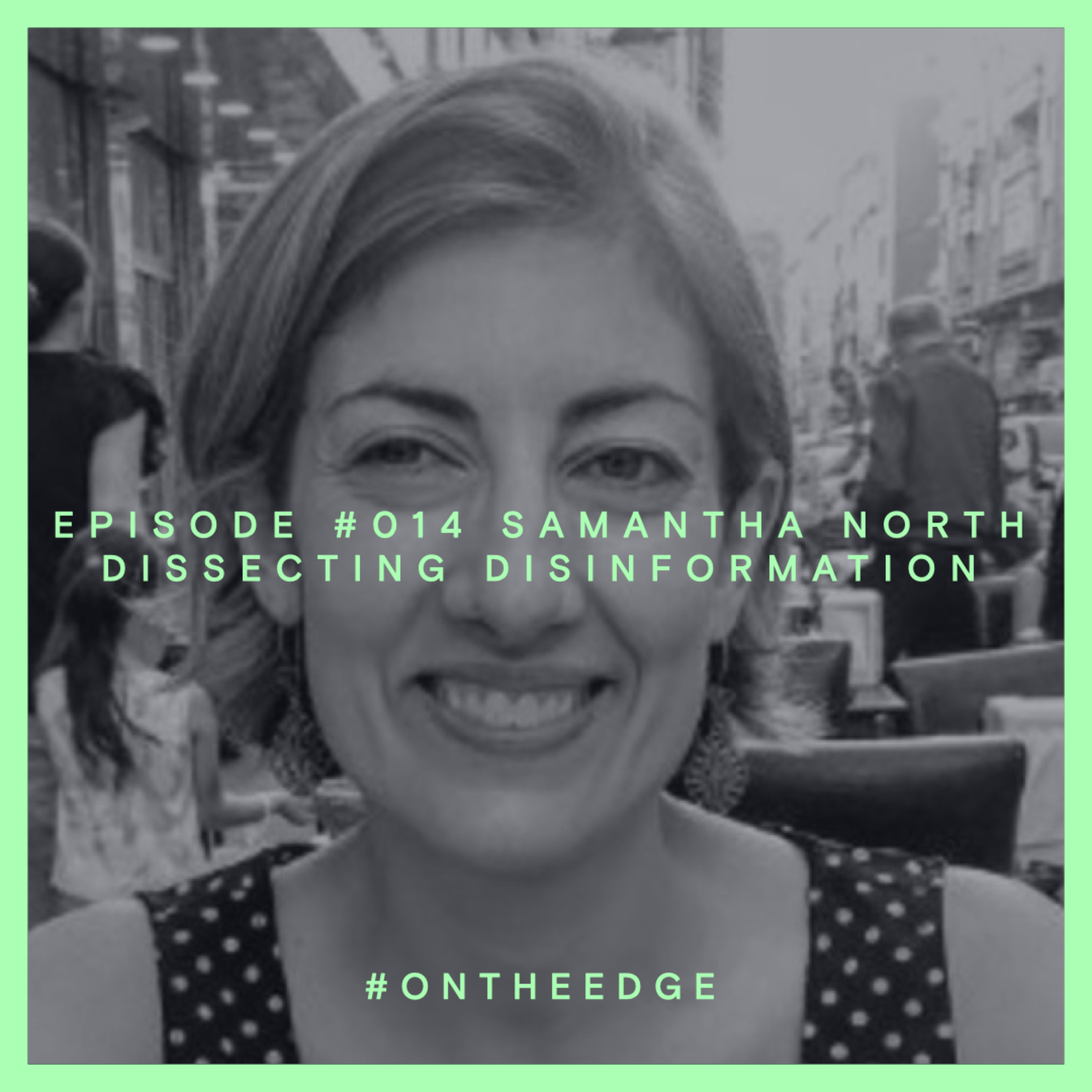
In this episode we are pleased to welcome Samantha North, who is a freelance disinformation investigator, who helps organisations to track coordinated and inauthentic online behaviour. She is also doing a PhD at the moment in computational social science at the University of Bath, researching the drivers of political tribalism on social media. She wrote a great blog post that she wrote a few weeks ago called “6 Things I’ve Learned from Tracking Coronavirus Disinformation” and we thought she would be interesting to talk to on this podcast, given that in a previous episode we spoke with Valdis Krebs about managing disinformation which in many ways more difficult than managing that the biological epidemic itself. We had a really interesting conversation about the contemporary challenges of truth and trust, including what is the incentive or motivation for creating/sharing/spreading disinformation, and what are the main tactics for dealing with it? Episode Notes and Links: For weekly posts on disinfo, conspiracy theories and the infodemic: https://samanthanorth.com Astroturfing of US anti-lockdown protests: https://www.nbcnews.com/tech/social-media/conservative-activist-family-behind-grassroots-anti-quarantine-facebook-events-n1188021 NHS fake Twitter accounts story: https://www.theguardian.com/technology/2020/apr/21/no-evidence-of-nhs-government-covid-bot-networks-says-twitter Minimal group paradigm study (the coin toss): Tajfel H, Billig M G, Bundy R P & Flament C. (1971) Social categorization and intergroup behaviour. Eur. J. Soc. Psychol. 1:149-77 Original backfire effect study: Nyhan, B., & Reifler, J. (2010). When Corrections Fail: The Persistence of Political Misperceptions. Political Behavior, 32(2), 303–330. The 'elusive' backfire effect study: Wood, T., & Porter, E. (2018). The elusive backfire effect: mass attitudes’ steadfast factual adherence. Political Behavior. https://doi.org/10.7910/DVN/AGRX5U First Draft News, The disinformation typology: https://medium.com/1st-draft/information-disorder-part-3-useful-graphics-2446c7dbb485 Explainer on bots, botnets and trolls: https://ijnet.org/en/story/understanding-bots-botnets-and-trolls https://en.wikipedia.org/wiki/The_Sneetches_and_Other_Stories https://faculty.chicagobooth.edu/ronald.burt/research/index.html http://socialintelligence.labinthewild.org/mite/
What this episode covers
In this episode we are pleased to welcome Samantha North, who is a freelance disinformation investigator, who helps organisations to track coordinated and inauthentic online behaviour. She is also doing a PhD at the moment in computational social science at the University of Bath, researching the drivers of political tribalism on social media. She wrote a great blog post that she wrote a few weeks ago called “6 Things I’ve Learned from Tracking Coronavirus Disinformation” and we thought she would be interesting to talk to on this podcast, given that in a previous episode we spoke with Valdis Krebs about managing disinformation which in many ways more difficult than managing that the biological epidemic itself. We had a really interesting conversation about the contemporary challenges of truth and trust, including what is the incentive or motivation for creating/sharing/spreading disinformation, and what are the main tactics for dealing with it? Episode Notes and Links: For weekly posts on disinfo, conspiracy theories and the infodemic: https://samanthanorth.com Astroturfing of US anti-lockdown protests: https://www.nbcnews.com/tech/social-media/conservative-activist-family-behind-grassroots-anti-quarantine-facebook-events-n1188021 NHS fake Twitter accounts story: https://www.theguardian.com/technology/2020/apr/21/no-evidence-of-nhs-government-covid-bot-networks-says-twitter Minimal group paradigm study (the coin toss): Tajfel H, Billig M G, Bundy R P & Flament C. (1971) Social categorization and intergroup behaviour. Eur. J. Soc. Psychol. 1:149-77 Original backfire effect study: Nyhan, B., & Reifler, J. (2010). When Corrections Fail: The Persistence of Political Misperceptions. Political Behavior, 32(2), 303–330. The 'elusive' backfire effect study: Wood, T., & Porter, E. (2018). The elusive backfire effect: mass attitudes’ steadfast factual adherence. Political Behavior. https://doi.org/10.7910/DVN/AGRX5U First Draft News, The disinformation typology: https://medium.com/1st-draft/information-disorder-part-3-useful-graphics-2446c7dbb485 Explainer on bots, botnets and trolls: https://ijnet.org/en/story/understanding-bots-botnets-and-trolls https://en.wikipedia.org/wiki/The_Sneetches_and_Other_Stories https://faculty.chicagobooth.edu/ronald.burt/research/index.html http://socialintelligence.labinthewild.org/mite/
NOW PLAYING
#014 Samantha North - Dissecting Disinformation
No transcript for this episode yet
Similar Episodes
Mar 26, 2026 ·1m
Mar 19, 2026 ·34m
Feb 18, 2026 ·11m
Feb 11, 2026 ·45m