
EPISODE · Mar 3, 2026 · 3 MIN
03 - Etruscan dominance.
from History of Rome. · host Popular Culture and Religion.
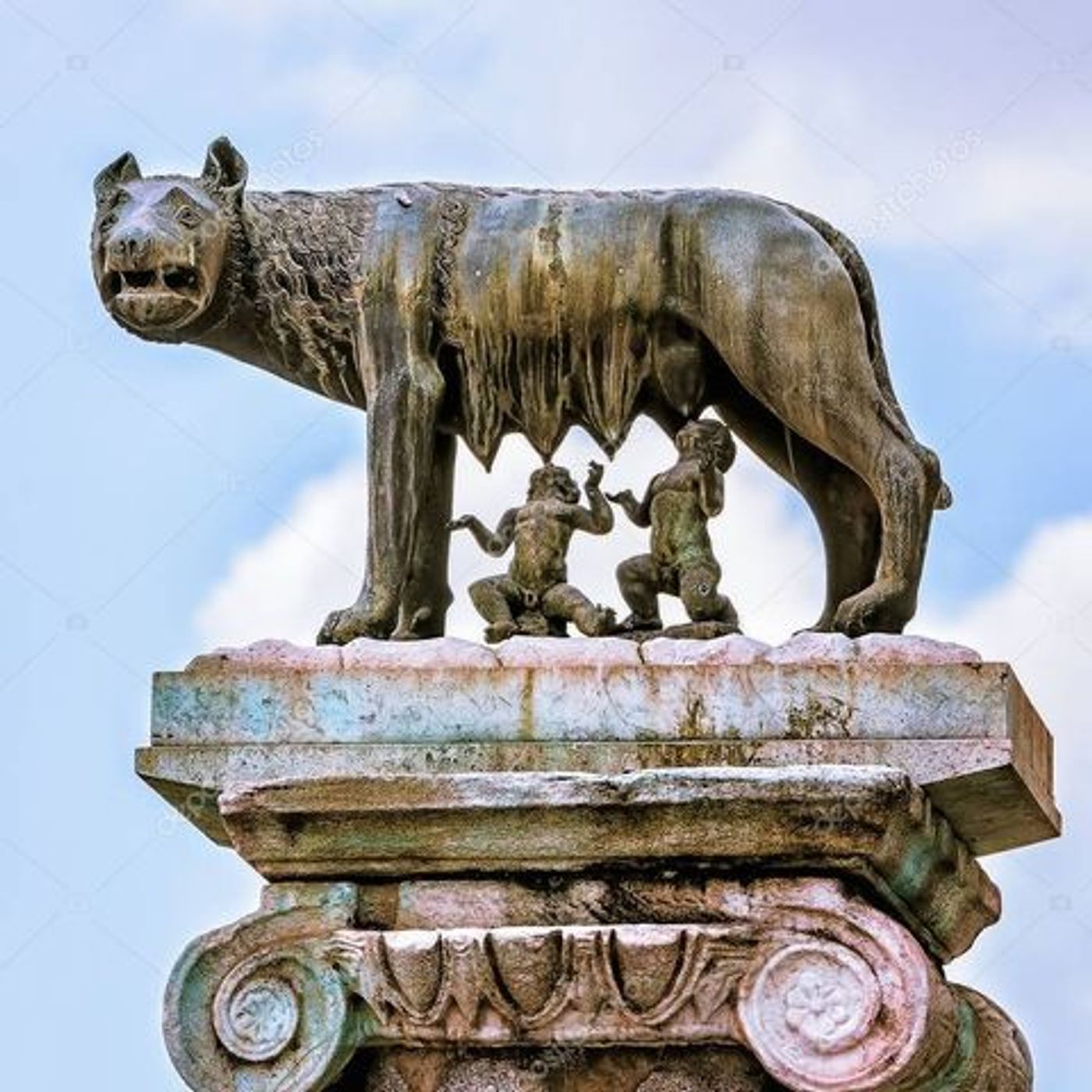
Etruscan dominance. After 650 BC, the Etruscans became dominant in Italy and expanded into north-central Italy. Roman tradition claimed that Rome had been under the control of seven kings from 753 to 509 BC beginning with the mythical Romulus who was said to have founded the city of Rome along with his brother Remus. The last three kings were said to be Etruscan (at least partially)—namely Tarquinius Priscus, Servius Tullius and Tarquinius Superbus. (Priscus is said by the ancient literary sources to be the son of a Greek refugee and an Etruscan mother.) Their names refer to the Etruscan town of Tarquinia. Livy, Plutarch, Dionysius of Halicarnassus, and others claim that Rome was ruled during its first centuries by a succession of seven kings. The traditional chronology, as codified by Varro, allots 243 years for their reigns, an average of almost 35 years, which has been generally discounted by modern scholarship since the work of Barthold Georg Niebuhr. The Gauls destroyed much of Rome's historical records when they sacked the city after the Battle of the Allia in 390 BC (according to Polybius, the battle occurred in 387/386) and what was left was eventually lost to time or theft. With no contemporary records of the kingdom existing, all accounts of the kings must be carefully questioned. The list of kings is also of dubious historical value, though the last-named kings may be historical figures. It is believed by some historians (again, this is disputed) that Rome was under the influence of the Etruscans for about a century. During this period, a bridge was built called the Pons Sublicius to replace the Tiber ford, and the Cloaca Maxima was also built; the Etruscans are said to have been great engineers of this type of structure. From a cultural and technical point of view, Etruscans had arguably the second-greatest impact on Roman development, only surpassed by the Greeks. Expanding further south, the Etruscans came into direct contact with the Greeks and initially had success in conflicts with the Greek colonists; after which, Etruria went into a decline. Taking advantage of this, Rome rebelled and gained independence from the Etruscans around 500 BC. It also abandoned monarchy in favour of a republican system based on a Senate, composed of the nobles of the city, along with popular assemblies which ensured political participation for most of the freeborn men and elected magistrates annually. The Etruscans left a lasting influence on Rome. The Romans learned to build temples from them, and the Etruscans may have introduced the worship of a triad of gods—Juno, Minerva, and Jupiter—from the Etruscan gods: Uni, Menrva, and Tinia. However, the influence of Etruscan people in the development of Rome is often overstated. Rome was primarily a Latin city. It never became fully Etruscan. Also, evidence shows that Romans were heavily influenced by the Greek cities in the South, mainly through trade. Wikipedia: Text is available under the Creative Commons Attribution-ShareAlike 4.0 License.This episode includes AI-generated content.
What this episode covers
Etruscan dominance. After 650 BC, the Etruscans became dominant in Italy and expanded into north-central Italy. Roman tradition claimed that Rome had been under the control of seven kings from 753 to 509 BC beginning with the mythical Romulus who was said to have founded the city of Rome along with his brother Remus. The last three kings were said to be Etruscan (at least partially)—namely Tarquinius Priscus, Servius Tullius and Tarquinius Superbus. (Priscus is said by the ancient literary sources to be the son of a Greek refugee and an Etruscan mother.) Their names refer to the Etruscan town of Tarquinia. Livy, Plutarch, Dionysius of Halicarnassus, and others claim that Rome was ruled during its first centuries by a succession of seven kings. The traditional chronology, as codified by Varro, allots 243 years for their reigns, an average of almost 35 years, which has been generally discounted by modern scholarship since the work of Barthold Georg Niebuhr. The Gauls destroyed much of Rome's historical records when they sacked the city after the Battle of the Allia in 390 BC (according to Polybius, the battle occurred in 387/386) and what was left was eventually lost to time or theft. With no contemporary records of the kingdom existing, all accounts of the kings must be carefully questioned. The list of kings is also of dubious historical value, though the last-named kings may be historical figures. It is believed by some historians (again, this is disputed) that Rome was under the influence of the Etruscans for about a century. During this period, a bridge was built called the Pons Sublicius to replace the Tiber ford, and the Cloaca Maxima was also built; the Etruscans are said to have been great engineers of this type of structure. From a cultural and technical point of view, Etruscans had arguably the second-greatest impact on Roman development, only surpassed by the Greeks. Expanding further south, the Etruscans came into direct contact with the Greeks and initially had success in conflicts with the Greek colonists; after which, Etruria went into a decline. Taking advantage of this, Rome rebelled and gained independence from the Etruscans around 500 BC. It also abandoned monarchy in favour of a republican system based on a Senate, composed of the nobles of the city, along with popular assemblies which ensured political participation for most of the freeborn men and elected magistrates annually. The Etruscans left a lasting influence on Rome. The Romans learned to build temples from them, and the Etruscans may have introduced the worship of a triad of gods—Juno, Minerva, and Jupiter—from the Etruscan gods: Uni, Menrva, and Tinia. However, the influence of Etruscan people in the development of Rome is often overstated. Rome was primarily a Latin city. It never became fully Etruscan. Also, evidence shows that Romans were heavily influenced by the Greek cities in the South, mainly through trade. Wikipedia: Text is available under the Creative Commons Attribution-ShareAlike 4.0 License.This episode includes AI-generated content.
NOW PLAYING
03 - Etruscan dominance.
No transcript for this episode yet
Similar Episodes
Dec 5, 2025 ·50m
Oct 9, 2025 ·33m
Oct 3, 2025 ·40m
Sep 11, 2025 ·31m
Aug 27, 2025 ·39m
Aug 18, 2025 ·54m