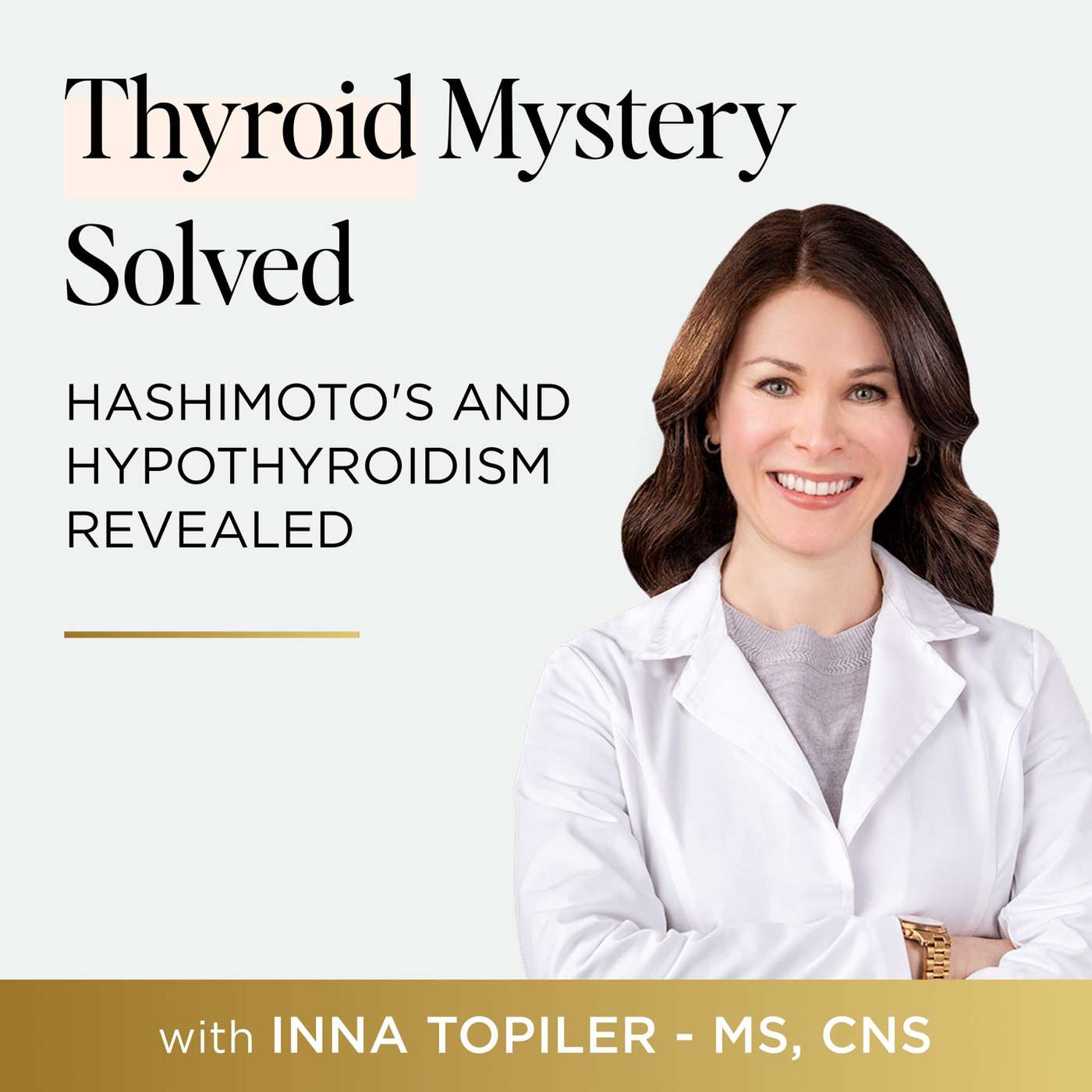
035 The Case of Unpredictable Anxiety w/ Trudy Scott episode artwork

EPISODE · Nov 14, 2019 · 41 MIN

035 The Case of Unpredictable Anxiety w/ Trudy Scott

from Thyroid Mystery Solved: Hashimoto's and Hypothyroidism Revealed · host Inna Topiler

The Case:  Lauren is 32 and has been dealing with anxiety most of her life She noticed that her anxiety can be worse during stressful times and during the winter. She was  on anti-anxiety medication but they made her feel flat. She tried meditation for anxiety but this wasn't enough and didn’t completely resolve the panic attacks.  The Investigation Lauren’s situation is pretty common and I knew that we had to get to the root of the problem if we were going to help her deal with her anxiety. I suspected her neurotransmitters were part of the solution so that’s where I started investigating.   Trudy Scott is a certified nutritionist and food-mood expert. She’s the author of The Anti-anxiety Food Solution: How the Foods You Eat Can Help You Calm Your Anxious Mind, Improve Your Mood and End Cravings and is the host of The Anxiety Summit.  Neurotransmitters Role in Anxiety While anxiety is seldom only caused by neurotransmitters, there are several that can play a role. In this week’s episode, and for Lauren’s case, we look at two neurotransmitters - serotonin and gaba - which are both proven to impact our ability to handle stress and deal with different types of anxiety. Can Low Serotonin Causes Anxiety? Most people understand the relationship between serotonin and depression but they don’t realize that it also impacts anxiety. Low serotonin results in a specific type of anxiety, according to Trudy. She explains that it is linked to anxiety that may present as negative self talk, low mood, lack of confidence and self-esteem. Low serotonin can also result in panic attacks, phobias, ruminating thoughts (where you replay past events or constantly re-processing things) obsessive behaviors or obsessive thinking (often lying awake at night thinking about things). Another tell tale sign of low-serotonin-anxiety is afternoon and evening cravings were the only way to calm the anxiety is with eating (fulfilling the craving). Because serotonin naturally slows down during the darker winter months, anxiety can be seasonal.  Low GABA Triggers Anxiety Anxiety triggered by low GABA (Gamma-Aminobutyric Acid) presents differently than anxiety caused by low serotonin. Low GABA anxiety is physical. This might present as general stiffness and tension in the body. You may lay awake at night feeling physically tense which stops you from being able to sleep. Often, low GABA suffers will feel tension in the gut, they may even feel sick to their stomach. Unlike those with low-serotonin anxiety who may self-medicate with food, those with low-GABA anxiety are more likely to self-medicate with alcohol.  Diagnosing Neurotransmitter Triggered Anxiety There are a few tests (like urinary neurotransmitter tests and platelet serotonin tests) that can determine serotonin or GABA levels that can help determine if this might be the root cause of the anxiety. However, Trudy prefers to use a questionnaire to pinpoint the symptoms and then do a trial. For this, she has patients rank specific anxieties and then gives them a small dose, sublingually, of either GABA or an amino acid that replicates serotonin. She then re-administers the questionnaire. If there is a significant drop in their anxiety response, then she proceeds with a treatment plan.  Treating Anxiety Caused by Low Serotonin  Instead of just replacing the serotonin with a supplement, Trudy likes to help the body relearn how to make its own. Each treatment is highly individualized but a common plan would include amino acids including 5HTP and Tryptophan. These amino acids are considered substrates or precursors to us for us to make serotonin. There are some other nutrients that are needed like zinc, vitamin B6, magnesium, that are all cofactors that, together with tryptophan and 5HTP, help us to make our own serotonin.This supplement protocol, should be done along with dietary and lifestyle changes. Whatever caused the serotonin to slow down in the first place needs to also be addressed. This may be things like a gluten sensitivity, dysbiosis, parasites, autoimmune disease  (like Hashimoto’s), or chronic stress. Treating Anxiety Caused by Low GABA Again, the treatment needs to be individualized and go hand in hand with diet or lifestyle changes that relate back to the root cause of the lower GABA production. Trudy prefers to use sublingual GABA supplements because its faster and it also ensures that there aren’t any issues with digestion. In this episode, she also addresses the controversial theory that GABA can’t cross the blood/brain barrier. There are different GABA receptors in the body (including muscle and gut) which she outlines as part of the reason that she feels GABA can still be effective. GABA has other benefits such as supporting the endocrine system,  pancreas, liver, and fluoride-induced hypothyroidism. There are also benefits for people with diabetes.  The Gut Connection to Anxiety So many things that happen in the gut can cause reduced levels of serotonin and GABA. 95% of our serotonin originates in the gut, so that is the first place to look when trying to determine the root cause of low-serotonin anxiety. Studies have found that 5HTP can improve motility. Poor motility is often linked to gut issues like SIBO (Small Intestinal Bacterial Overgrowth) so an added benefit to treating low-serotonin is that it improves gut health, which we know in turn improves communication through the vagus nerve resulting in decreased depression and anxiety.  Additionally, studies have shown that lactobacillus rhamnosus probiotics not only affect GABA receptors, they also lowers cortisol. High levels of cortisol are often related to depression and anxiety. So, this probiotic is improving gut health and simultaneously altering GABA and cortisol levels.  Deficiencies Related to Anxiety Trudy also tests patient levels of B12, methylmalonic acid, and homocysteine. These can often contribute to anxiety. Constipation may also indicate a B12 deficiency and, as mentioned above, can contribute to anxiety through poor gut health. This may be treated with a B12 supplement. Cautions About Supplements and Anxiety Each protocol is highly individualized because there may be other factors to consider. For example, if someone is on an antidepressant or anti-anxiety medication, natural treatments must be monitored carefully. Additionally, if someone has Lyme disease, an auto-immune disease or heavy metal toxicity, the protocol needs to be altered. Some do find that by getting to the root cause, dealing with it, and then retraining the body to produce adequate amounts of serotonin or GABA results in them being able to stop taking medication - but that would need to be determined by the individuals professional health team.  Mystery Solved When we looked at Lauren’s symptoms in light of a potential neurotransmitter issues, they pointed directly to low serotonin. Here’s what she was experiencing:   Anxiety Panic attacks or phobias  Feeling worried or fearful  Obsessive thoughts or behaviors  Perfectionism or being overly controlling 

The Case:  Lauren is 32 and has been dealing with anxiety most of her life She noticed that her anxiety can be worse during stressful times and during the winter. She was  on anti-anxiety medication but they made her feel flat. She tried meditation for anxiety but this wasn't enough and didn’t completely resolve the panic attacks.  The Investigation Lauren’s situation is pretty common and I knew that we had to get to the root of the problem if we were going to help her deal with her anxiety. I suspected her neurotransmitters were part of the solution so that’s where I started investigating.   Trudy Scott is a certified nutritionist and food-mood expert. She’s the author of The Anti-anxiety Food Solution: How the Foods You Eat Can Help You Calm Your Anxious Mind, Improve Your Mood and End Cravings and is the host of The Anxiety Summit.  Neurotransmitters Role in Anxiety While anxiety is seldom only caused by neurotransmitters, there are several that can play a role. In this week’s episode, and for Lauren’s case, we look at two neurotransmitters - serotonin and gaba - which are both proven to impact our ability to handle stress and deal with different types of anxiety. Can Low Serotonin Causes Anxiety? Most people understand the relationship between serotonin and depression but they don’t realize that it also impacts anxiety. Low serotonin results in a specific type of anxiety, according to Trudy. She explains that it is linked to anxiety that may present as negative self talk, low mood, lack of confidence and self-esteem. Low serotonin can also result in panic attacks, phobias, ruminating thoughts (where you replay past events or constantly re-processing things) obsessive behaviors or obsessive thinking (often lying awake at night thinking about things). Another tell tale sign of low-serotonin-anxiety is afternoon and evening cravings were the only way to calm the anxiety is with eating (fulfilling the craving). Because serotonin naturally slows down during the darker winter months, anxiety can be seasonal.  Low GABA Triggers Anxiety Anxiety triggered by low GABA (Gamma-Aminobutyric Acid) presents differently than anxiety caused by low serotonin. Low GABA anxiety is physical. This might present as general stiffness and tension in the body. You may lay awake at night feeling physically tense which stops you from being able to sleep. Often, low GABA suffers will feel tension in the gut, they may even feel sick to their stomach. Unlike those with low-serotonin anxiety who may self-medicate with food, those with low-GABA anxiety are more likely to self-medicate with alcohol.  Diagnosing Neurotransmitter Triggered Anxiety There are a few tests (like urinary neurotransmitter tests and platelet serotonin tests) that can determine serotonin or GABA levels that can help determine if this might be the root cause of the anxiety. However, Trudy prefers to use a questionnaire to pinpoint the symptoms and then do a trial. For this, she has patients rank specific anxieties and then gives them a small dose, sublingually, of either GABA or an amino acid that replicates serotonin. She then re-administers the questionnaire. If there is a significant drop in their anxiety response, then she proceeds with a treatment plan.  Treating Anxiety Caused by Low Serotonin  Instead of just replacing the serotonin with a supplement, Trudy likes to help the body relearn how to make its own. Each treatment is highly individualized but a common plan would include amino acids including 5HTP and Tryptophan. These amino acids are considered substrates or precursors to us for us to make serotonin. There are some other nutrients that are needed like zinc, vitamin B6, magnesium, that are all cofactors that, together with tryptophan and 5HTP, help us to make our own serotonin.This supplement protocol, should be done along with dietary and lifestyle changes. Whatever caused the serotonin to slow down in the first place needs to also be addressed. This may be things like a gluten sensitivity, dysbiosis, parasites, autoimmune disease  (like Hashimoto’s), or chronic stress. Treating Anxiety Caused by Low GABA Again, the treatment needs to be individualized and go hand in hand with diet or lifestyle changes that relate back to the root cause of the lower GABA production. Trudy prefers to use sublingual GABA supplements because its faster and it also ensures that there aren’t any issues with digestion. In this episode, she also addresses the controversial theory that GABA can’t cross the blood/brain barrier. There are different GABA receptors in the body (including muscle and gut) which she outlines as part of the reason that she feels GABA can still be effective. GABA has other benefits such as supporting the endocrine system,  pancreas, liver, and fluoride-induced hypothyroidism. There are also benefits for people with diabetes.  The Gut Connection to Anxiety So many things that happen in the gut can cause reduced levels of serotonin and GABA....

NOW PLAYING

035 The Case of Unpredictable Anxiety w/ Trudy Scott

0:00 41:55

No transcript for this episode yet

We transcribe on demand. Request one and we'll notify you when it's ready — usually under 10 minutes.

MG Show MG Show The MG Show, hosted by Jeffrey Pedersen and Shannon Townsend, is a leading alternative media platform dedicated to uncovering the truth behind today’s most pressing political issues. Launched in 2019, the show has grown exponentially, offering unfiltered insights, comprehensive research, and real-time analysis. With a commitment to independent journalism and factual integrity, the MG Show empowers its audience with knowledge and encourages active participation in the political discourse. Breaking News Show | eTurboNews Juergen Thomas Steinmetz News is relevant to the global travel and tourism industry, human rights and global issues.Breaking news when it happens and only from the source. Eat to Live Jenna Fuhrman, Dr. Fuhrman Our health is our most precious gift and smart nutrition can change your life. Each month, join Dr. Fuhrman and his daughter, Jenna Fuhrman as they discuss important topics in the world of nutrition. Eat to Live will change the way you eat and think about food. French Your Way Jessica: Native French teacher founder of French Your Way Boost your French listening skills and test your comprehension with this one of a kind series of podcasts. Get the chance to listen to a real conversation between native speakers talking at normal speed AND customise your learning experience through carefully designed sets of questions (2 levels of difficulty) available for download at www.frenchvoicespodcast.com. All interviews also come with the transcript. French teacher Jessica interviews native speakers of French from around the world who share a bit of their life and passion. Where else would you meet in one same place a French yoga teacher based in Melbourne, a soap manufacturer from Provence, or a couple cycling around the world?

Frequently Asked Questions

How long is this episode of Thyroid Mystery Solved: Hashimoto's and Hypothyroidism Revealed?

This episode is 41 minutes long.

When was this Thyroid Mystery Solved: Hashimoto's and Hypothyroidism Revealed episode published?

This episode was published on November 14, 2019.

What is this episode about?

The Case:  Lauren is 32 and has been dealing with anxiety most of her life She noticed that her anxiety can be worse during stressful times and during the winter. She was  on anti-anxiety medication but they made her feel flat. She tried meditation...

Can I download this Thyroid Mystery Solved: Hashimoto's and Hypothyroidism Revealed episode?

Yes, you can download this episode by clicking the download button on the episode player, or subscribe to the podcast in your preferred podcast app for automatic downloads.
URL copied to clipboard!