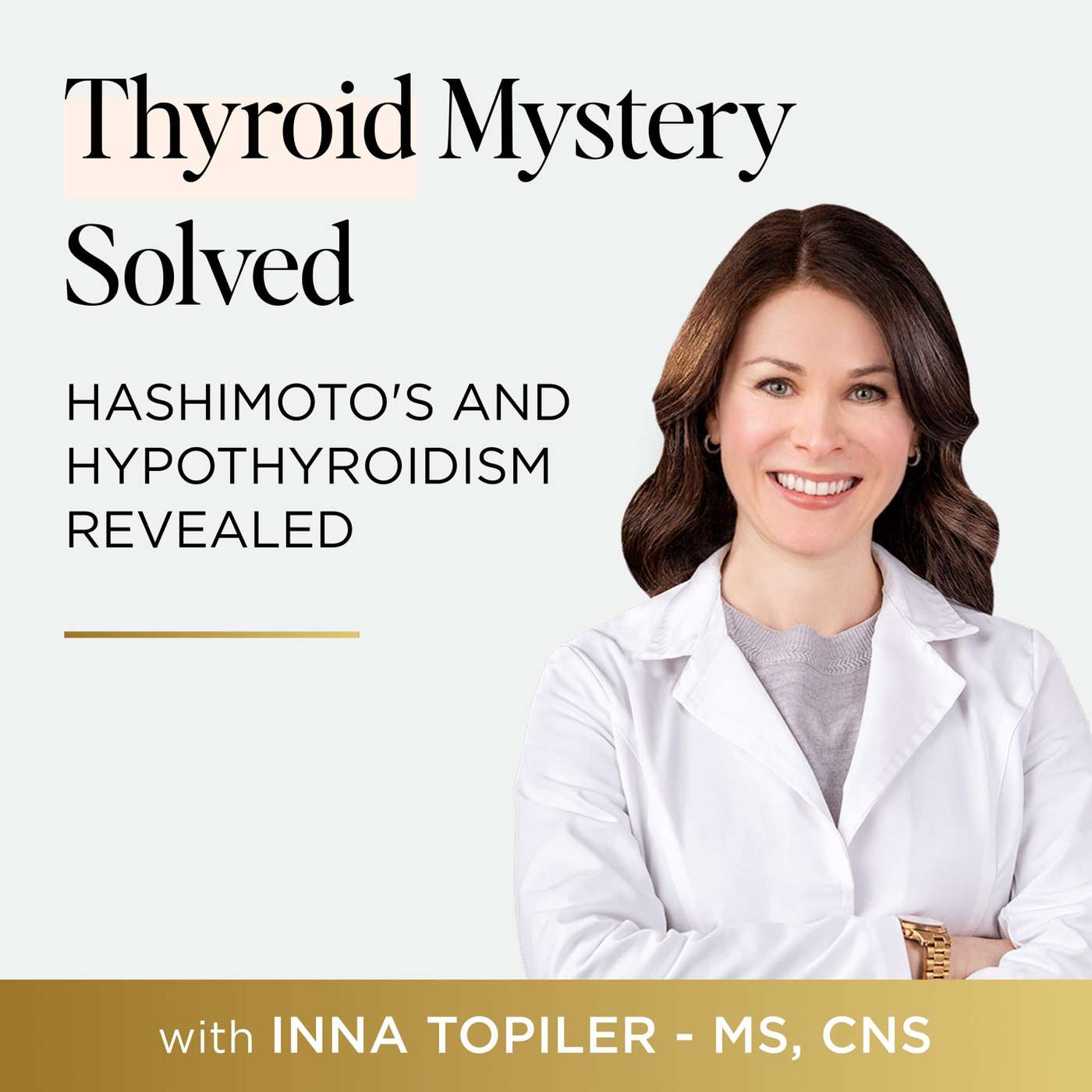
085 The Case of the Unnecessary Thyroid Medication episode artwork

EPISODE · Feb 4, 2021 · 12 MIN

085 The Case of the Unnecessary Thyroid Medication

from Thyroid Mystery Solved: Hashimoto's and Hypothyroidism Revealed · host Inna Topiler

The Case:  Linda was having trouble with anxiety and sleep Routine blood work revealed a very high TSH (thyroid stimulating hormone) and she was given a medication to treat hypothyroidism. Linda wondered why she didn’t have many of the typical symptoms for hypothyroidism and worried that going on medication might be the wrong move.   Even though Linda was happy to have an answer, something didn’t add up. She was told to get on the medication, regardless of whether she showed typical symptoms or not. Linda wasn’t convinced. That’s when she came to see me.    The Investigation Linda was right to question her results and her treatment even though her numbers were very high. I knew I needed to figure out the root cause of her elevated TSH and determine if there might be a way to get her back into optimal range.    Normal Range for Thyroid Stimulating Hormone (TSH)  The regular lab range for TSH is between .5 and 4.5, but the more functional range that we want to aim for is really between 1.8 and 3 if not medicated. Linda’s TSH was at 19, which was why her doctor was immediately alarmed.    Evaluating Thyroid Markers or Why You Need To Test All Thyroid Markers In order to truly evaluate the thyroid, it is very important to test all of the thyroid markers (as I explained in Episodes 27 & 28). We ran a second blood test with TSH and all the thyroid hormones as well as all 3 antibodies: TPO, thyroglobulin, and TSI antibodies. When the results came back with high TSH (even higher than before!), the interesting thing was that the other actual thyroid hormone markers were completely normal. Linda’s T3 and T4 were at optimal levels. Typically, when those thyroid hormones drop, the body’s signal to correct that would be raising the TSH. We were able to see here that the other hormones had not dropped in the first place, so that was not the reason the TSH was up.    High TSH with High Thyroid Antibodies  In Linda’s case, she didn’t have typical hypothyroid or slow thyroid symptoms and her thyroid hormones were normal. Her TPO antibodies however were 529, which is quite high. Her thyroglobulin antibodies were also slightly elevated at 42 and her TSI antibodies were negative. TSI antibodies are representatives of Graves disease, so she didn’t have that, but TPO and Thyroglobulin antibodies are representative of Hashimoto’s. Linda’s results were positive for TPO and Thyroglobulin, which showed us that she had Hashimoto’s.    Hashimoto’s and Thyroid Inflammation When there is Hashimoto’s there can also be thyroid inflammation. I have found that when the thyroid is inflamed, the TSH can go up without it triggering any low thyroid hormones. This is not what the textbooks say in typical cases, but as we know here at Health Mysteries Solved, many of us are not textbook cases, and issues can be complex!   Misdiagnosed Hypothyroidism  Our bodies have tons of feedback loops and when all the loops work like they are supposed to, then we can follow a textbook pathway to healing. But, in many cases, there are other issues at play from stress to autoimmunity to toxicity, to the foods that we eat. It’s not uncommon that the feedback loops may not work the way we think they should. In this case, High TSH is showing inflammation of the thyroid rather than an actually slow thyroid. This not only explains why she didn’t have hypothyroidism symptoms, but also that the inflammation could have actually been triggering the anxiety and sleep issues.    Medication when Necessary I was so happy that I met Linda so that we could work on the inflammation. In her case, medication was actually not necessary because her thyroid hormones were normal.  Even though I am always trying to find natural solutions, I am not anti-medication when truly necessary. Especially when it comes to thyroid medication. As some of you may know, I take a small dose of compounded thyroid medication because I have hypothyroidism. My perspective is that when the thyroid truly is slow, medication is replacing something that the body can’t make but absolutely needs. This is a very important medication for me to have. However using it when you don't need it is a different story.   The Link Between Hashimoto’s and Hypothyroidism? While many people with Hashimoto’s do in fact have hypothyroidism (because of damage to the thyroid), other times, we can catch the Hashimoto’s and the inflammation it may cause early before the thyroid gets damaged. In this case, if we address the inflammation and underlying immune triggers driving the autoimmune response, it is possible to save the thyroid from being destroyed.  By the time I found out I had Hashimoto's, my thyroid was already affected but even if that is the case for you, there is still a lot you can do to stop the progression of the attack by addressing the triggers.   Next Steps For Linda, we caught the Hashimoto’s early before it actually damaged her thyroid. We worked on lowering inflammation and calming her adrenal glands (the glands that deal with stress), which was one of her triggers. We did a genetic test for gluten, the D2 DQ8 which showed that she was positive for both the DQ8 and D2 (meaning her body was not genetically predisposed to process gluten). There is a big connection between gluten and Hashimoto’s due to molecular mimicry (where there are similar molecules at play so the body attacks all of them by mistake). We took gluten out of her diet and used PS 150 and liquid GABA to help lower her cortisol and support her adrenals and sleep. Stress can be both physical as well as emotional and so for Linda, we reduced the physical stress caused by her body trying to process gluten. She also added mindfulness exercises to further lower her cortisol. This  helped her calm down, relax and feel less anxious which, along with the GABA, improved her sleep.  The better she slept, the more her adrenals were able to heal. We retested her full thyroid panel of markers in 6 weeks and her TSH had returned to normal! We were both thrilled. Eliminating Health Mysteries Can you see how this could have become quite a health mystery had she not explored this further? I am so glad she did reach out for support, and hope you can keep her story in mind in case you ever get similar results. For Linda, we were able to find that missing piece of the health puzzle so she could regain her health. Could this be the missing clue for you or someone in your life?    Links: Suggested Products Liquid GABA PS 150 Related Podcast Episodes: EPISODE #028 Navigating the Thyroid Treatment Mystery with Inna Topiler EPISODE #027 Solving the Thyroid Mystery w/ Inna Topiler EPISODE #080 The Link Betw...

The Case:  Linda was having trouble with anxiety and sleep Routine blood work revealed a very high TSH (thyroid stimulating hormone) and she was given a medication to treat hypothyroidism. Linda wondered why she didn’t have many of the typical symptoms for hypothyroidism and worried that going on medication might be the wrong move.   Even though Linda was happy to have an answer, something didn’t add up. She was told to get on the medication, regardless of whether she showed typical symptoms or not. Linda wasn’t convinced. That’s when she came to see me.    The Investigation Linda was right to question her results and her treatment even though her numbers were very high. I knew I needed to figure out the root cause of her elevated TSH and determine if there might be a way to get her back into optimal range.    Normal Range for Thyroid Stimulating Hormone (TSH)  The regular lab range for TSH is between .5 and 4.5, but the more functional range that we want to aim for is really between 1.8 and 3 if not medicated. Linda’s TSH was at 19, which was why her doctor was immediately alarmed.    Evaluating Thyroid Markers or Why You Need To Test All Thyroid Markers In order to truly evaluate the thyroid, it is very important to test all of the thyroid markers (as I explained in Episodes 27 & 28). We ran a second blood test with TSH and all the thyroid hormones as well as all 3 antibodies: TPO, thyroglobulin, and TSI antibodies. When the results came back with high TSH (even higher than before!), the interesting thing was that the other actual thyroid hormone markers were completely normal. Linda’s T3 and T4 were at optimal levels. Typically, when those thyroid hormones drop, the body’s signal to correct that would be raising the TSH. We were able to see here that the other hormones had not dropped in the first place, so that was not the reason the TSH was up.    High TSH with High Thyroid Antibodies  In Linda’s case, she didn’t have typical hypothyroid or slow thyroid symptoms and her thyroid hormones were normal. Her TPO antibodies however were 529, which is quite high. Her thyroglobulin antibodies were also slightly elevated at 42 and her TSI antibodies were negative. TSI antibodies are representatives of Graves disease, so she didn’t have that, but TPO and Thyroglobulin antibodies are representative of Hashimoto’s. Linda’s results were positive for TPO and Thyroglobulin, which showed us that she had Hashimoto’s.    Hashimoto’s and Thyroid Inflammation When there is Hashimoto’s there can also be thyroid inflammation. I have found that when the thyroid is inflamed, the TSH can go up without it triggering any low thyroid hormones. This is not what the textbooks say in typical cases, but as we know here at Health Mysteries Solved, many of us are not textbook cases, and issues can be complex!   Misdiagnosed Hypothyroidism  Our bodies have tons of feedback loops and when all the loops work like they are supposed to, then we can follow a textbook pathway to healing. But, in many cases, there are other issues at play from stress to autoimmunity to toxicity, to the foods that we eat. It’s not uncommon that the feedback loops may not work the way we think they should. In this case, High TSH is showing inflammation of the thyroid rather than an actually slow thyroid. This not only explains why she didn’t have hypothyroidism symptoms, but also that the inflammation could have actually been triggering the anxiety and sleep issues.    Medication when Necessary I was so happy that I met Linda so that we could work on the inflammation. In her case, medication was actually not necessary because her thyroid hormones were normal.  Even though I am always trying to find natural solutions, I am not anti-medication when truly necessary. Especially when it comes to thyroid medication. As some of you may know, I take a small dose of compounded thyroid medication because I have hypothyroidism. My perspective is that when the thyroid truly is slow, medication is replacing something that the body can’t make but absolutely needs. This is a very important medication for me to have. However using it when you don't need it is a different story.   The Link Between Hashimoto’s and Hypothyroidism? While many people with Hashimoto’s do in fact have hypothyroidism (because of damage to the thyroid), other times, we can catch the Hashimoto’s and the inflammation it may cause early before the thyroid gets damaged. In this case, if we address the inflammation and underlying immune triggers driving the autoimmune response, it is possible to save the thyroid from being destroyed.  By the time I found out I had Hashimoto's, my thyroid was already affected but even if that is the case for you, there is still a lot you can do to stop the progression of the attack by addressing the triggers.   Next Steps For Linda, we caught the Hashimoto’s early before it actually damaged her thyroid. We worked on lowering inflammation and calming her adrenal glands ...

NOW PLAYING

085 The Case of the Unnecessary Thyroid Medication

0:00 12:20

No transcript for this episode yet

We transcribe on demand. Request one and we'll notify you when it's ready — usually under 10 minutes.

MG Show MG Show The MG Show, hosted by Jeffrey Pedersen and Shannon Townsend, is a leading alternative media platform dedicated to uncovering the truth behind today’s most pressing political issues. Launched in 2019, the show has grown exponentially, offering unfiltered insights, comprehensive research, and real-time analysis. With a commitment to independent journalism and factual integrity, the MG Show empowers its audience with knowledge and encourages active participation in the political discourse. Breaking News Show | eTurboNews Juergen Thomas Steinmetz News is relevant to the global travel and tourism industry, human rights and global issues.Breaking news when it happens and only from the source. Eat to Live Jenna Fuhrman, Dr. Fuhrman Our health is our most precious gift and smart nutrition can change your life. Each month, join Dr. Fuhrman and his daughter, Jenna Fuhrman as they discuss important topics in the world of nutrition. Eat to Live will change the way you eat and think about food. French Your Way Jessica: Native French teacher founder of French Your Way Boost your French listening skills and test your comprehension with this one of a kind series of podcasts. Get the chance to listen to a real conversation between native speakers talking at normal speed AND customise your learning experience through carefully designed sets of questions (2 levels of difficulty) available for download at www.frenchvoicespodcast.com. All interviews also come with the transcript. French teacher Jessica interviews native speakers of French from around the world who share a bit of their life and passion. Where else would you meet in one same place a French yoga teacher based in Melbourne, a soap manufacturer from Provence, or a couple cycling around the world?

Frequently Asked Questions

How long is this episode of Thyroid Mystery Solved: Hashimoto's and Hypothyroidism Revealed?

This episode is 12 minutes long.

When was this Thyroid Mystery Solved: Hashimoto's and Hypothyroidism Revealed episode published?

This episode was published on February 4, 2021.

What is this episode about?

The Case:  Linda was having trouble with anxiety and sleep Routine blood work revealed a very high TSH (thyroid stimulating hormone) and she was given a medication to treat hypothyroidism. Linda wondered why she didn’t have many of the typical...

Can I download this Thyroid Mystery Solved: Hashimoto's and Hypothyroidism Revealed episode?

Yes, you can download this episode by clicking the download button on the episode player, or subscribe to the podcast in your preferred podcast app for automatic downloads.
URL copied to clipboard!