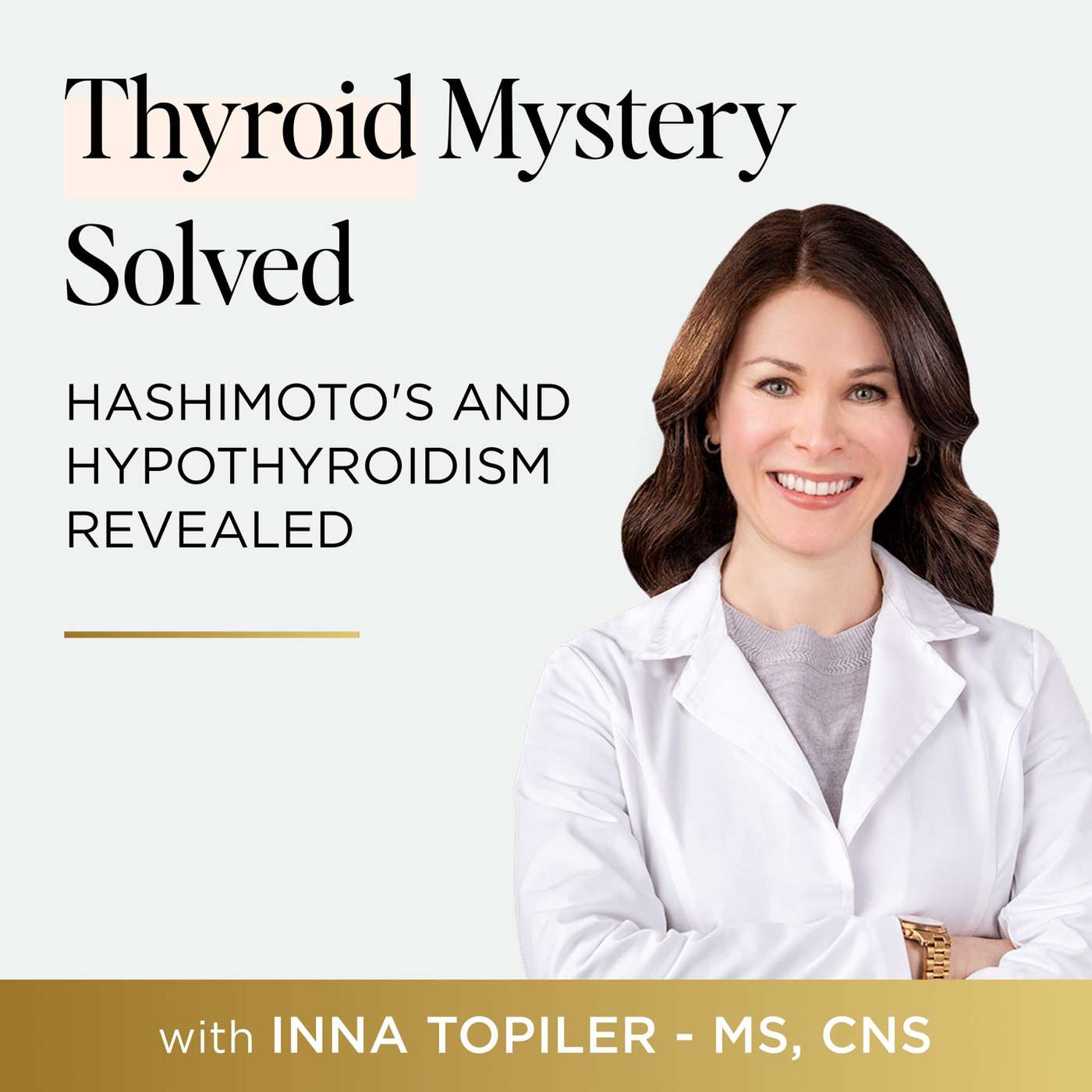
106 Why You Don’t Want to Ignore Symptoms of a Hyperactive Thyroid with Juli Keene episode artwork

EPISODE · Nov 25, 2021 · 48 MIN

106 Why You Don’t Want to Ignore Symptoms of a Hyperactive Thyroid with Juli Keene

from Thyroid Mystery Solved: Hashimoto's and Hypothyroidism Revealed · host Inna Topiler with Guest Juli Keene

The InvestigationThyroid issues can be so frustrating because often doctors will say there is nothing to be done other than taking medication.We talk a lot about hypothyroidism and Hashimoto’s Disease (an autoimmune disease that attacks the thyroid resulting in not enough thyroid hormone) but there is another side to thyroid issues. It is also possible for there to be too much thyroid hormone being produced. This is called hyperthyroidism and the autoimmune disease that can cause this is Graves' Disease. But it is also possible for those with Hashimoto’s disease to experience periods of hyperthyroidism - which just adds to the thyroid mystery. In this episode of Health Mysteries Solved, we’re exploring hyperthyroid symptoms in Graves' as well as in Hashimoto’s. To help with this discussion, I invited fellow clinical nutritionist, Juli Keene, on the show. She’s based in Los Angeles and has been in practice for over 25 years often helping professional athletes and high-functioning folks with complicated health issues. She’s also a real expert on Graves' Disease.  What is Graves' Disease?Graves' Disease is an autoimmune disease affecting the thyroid. What’s happening with Graves' is that there is an immune attack and antibodies get created. These antibodies attack the thyroid and stimulate the hormone receptors. This results in an overproduction of thyroid hormones and a hyperactive thyroid.It can be very dangerous to have too much thyroid hormone and needs to be addressed right away. The Difference Between Graves' Disease and Hashimoto’s DiseaseWith Hashimoto’s, the immune system is attacking the thyroid resulting in reduced hormone production (hypothyroidism) and with Graves' it’s the opposite. However, the nuances between the two autoimmune diseases are more complex, especially if you have Hashimoto’s. With Graves', the levels continuously escalate. However, with Hashimoto’s, there can be flare ups that present like Graves' where the thyroid swings from not producing enough to overproducing. So, someone with Hashimoto’s might have a flare up and suddenly have hyperthyroid symptoms.It’s also worth noting that someone with Hashimoto’s can also have Graves' disease too (although it’s not common). It’s all in how and when the immune system produces the different antibodies and how these antibodies succeed in destroying the thyroid. Symptoms of Graves' DiseaseUnlike the symptom of Hashimoto’s where people feel sluggish (when not in a flareup that is), people with Graves' might report feeling great. They have lots of energy, their weight is good, and they are often in a good mood. But soon, this can slide into feelings of anxiety, sometimes a sense of feeling manic, and even experiencing heart palpitations. Soon, they may also swing into weight loss, and brain fog.With Graves', the symptoms can go up and down but generally progress.The most common symptoms include:Irregular & rapid heartbeatHeart palpitationsHand and finger tremorsAnxiety and irritabilityUnexplained weight loss paired with insatiable hungerHeat sensitivity (sweating and hot flashes)Muscle weaknessHair loss.Visibly enlarged thyroid gland (sometimes it can develop into a goiter)Menstrual cycle irregularitiesLow or no sex driveDiarrhea or IBSInsomniaDecreased bone density and low calcium levelsDiagnosing Graves' DiseaseGraves' disease can be diagnosed with a blood test. Generally, this includes a full thyroid panel and TSI Antibodies. If you are talking with a conventional doctor because you have symptoms that might indicate Graves' it’s important to ask for the full thyroid panel and look specifically at the TSI antibodies. Conventional Treatment for Graves' DiseaseGraves' is a dangerous condition. Doctors usually put the patient on thyroid suppressing hormone medication. They may also add a beta blocker to slow down heart palpitations.Many conventional doctors will also recommend a treatment that destroys the thyroid and requires the patient to be on thyroid replacement medication after the procedure to have a better handle on thyroid hormone levels.  Contributing Factors to Graves' Disease From An Integrative PerspectiveAs mentioned, Graves' disease or symptoms and labs that suggest Graves' need to be taken seriously. Ideally, you would see an endocrinologist as well as an integrative doctor or nutritionist who understands Graves' and can look at some of the underlying issues that conventional doctors may miss that could be contributing to the severity of your condition.Potential contributing factors could include:Infections or viruses (like H. Pylori or Epstein Barr)Gut pathogens (yeast, SIBO)Intestinal permeability (leaky gut)StressEnvironmental toxin exposure like mold, mercury, glyphosate, and copper.Hormonal shiftsYou may be noticing that many of these potential contributing factors are very similar to the ones we speak about in Hashimoto’s triggers because the issue here is the immune system that is confused. Integrative Support for Graves' DiseaseSome integrative doctors will recommend supplements aimed at supporting the slowing down of the thyroid. They may also recommend supplements to reduce the risk of worsening health issues caused by the symptoms of Graves' disease like depleted calcium.In addition, testing for and supporting underlying issues may reduce Graves' symptoms. Juli shared an example of a patient who was taking excessive amounts of spirulina believing increased amounts of a health product would result in increased health benefits. Instead, the high doses of spirulina resulted in an overload of iodine which even further increased thyroid function. This is why it’s important to look at the whole picture.Additionally, patients typically see that dealing with dysbiosis, adrenal imbalances, H. Pylori infections, or removing toxins from their day to day environment reduce their symptoms and help calm the immune response.These are positive steps to take and getting to the root cause of what is creating the immune response my be able to reduce the chances that the thyroid will need to be removed or destroyed. These options however should be considered with the guidance of an endocrinologist and (ideally) also a functional medicine doctor. Testing for Triggers and Contributing IssuesFinding what may have triggered a symptom or lead to Graves' disease can be a real health mystery. Juli likes to test for viruses when she is on the hunt for a root cause. She will run a variety of tests looking for antibodies to see if there is an active virus. This viral panel will also reveal if  Epstein Barr Virus might be at play. Treating Triggers and Potential Root Causes of Graves' DiseaseTreating triggers and dealing with potential root causes may require a combination of integrative health and conventional medicine solutions. For example, Juli explains that antiviral medication sometimes just works faster including valacyclovir and acyclovir.Additionally, correcting any mineral deficiencies or excesses can be very helpful in decreasing symptoms and supporting the immune system.Having said that, Graves' is not the kind of disease where you can get sympto...

The Investigation Thyroid issues can be so frustrating because often doctors will say there is nothing to be done other than taking medication. We talk a lot about hypothyroidism and Hashimoto’s Disease (an autoimmune disease that attacks the thyroid resulting in not enough thyroid hormone) but there is another side to thyroid issues.  It is also possible for there to be too much thyroid hormone being produced. This is called hyperthyroidism and the autoimmune disease that can cause this is Graves' Disease.  But it is also possible for those with Hashimoto’s disease to experience periods of hyperthyroidism - which just adds to the thyroid mystery.  In this episode of Health Mysteries Solved, we’re exploring hyperthyroid symptoms in Graves' as well as in Hashimoto’s. To help with this discussion, I invited fellow clinical nutritionist, Juli Keene, on the show. She’s based in Los Angeles and has been in practice for over 25 years often helping professional athletes and high-functioning folks with complicated health issues. She’s also a real expert on Graves' Disease.    What is Graves' Disease? Graves' Disease is an autoimmune disease affecting the thyroid. What’s happening with Graves' is that there is an immune attack and antibodies get created. These antibodies attack the thyroid and stimulate the hormone receptors. This results in an overproduction of thyroid hormones and a hyperactive thyroid. It can be very dangerous to have too much thyroid hormone and needs to be addressed right away.   The Difference Between Graves' Disease and Hashimoto’s Disease With Hashimoto’s, the immune system is attacking the thyroid resulting in reduced hormone production (hypothyroidism) and with Graves' it’s the opposite. However, the nuances between the two autoimmune diseases are more complex, especially if you have Hashimoto’s. With Graves', the levels continuously escalate. However, with Hashimoto’s, there can be flare ups that present like Graves' where the thyroid swings from not producing enough to overproducing. So, someone with Hashimoto’s might have a flare up and suddenly have hyperthyroid symptoms. It’s also worth noting that someone with Hashimoto’s can also have Graves' disease too (although it’s not common). It’s all in how and when the immune system produces the different antibodies and how these antibodies succeed in destroying the thyroid.   Symptoms of Graves' Disease Unlike the symptom of Hashimoto’s where people feel sluggish (when not in a flareup that is), people with Graves' might report feeling great. They have lots of energy, their weight is good, and they are often in a good mood. But soon, this can slide into feelings of anxiety, sometimes a sense of feeling manic, and even experiencing heart palpitations. Soon, they may also swing into weight loss, and brain fog. With Graves', the symptoms can go up and down but generally progress. The most common symptoms include: Irregular & rapid heartbeat Heart palpitations Hand and finger tremors Anxiety and irritability Unexplained weight loss paired with insatiable hunger Heat sensitivity (sweating and hot flashes) Muscle weakness Hair loss. Visibly enlarged thyroid gland (sometimes it can develop into a goiter) Menstrual cycle irregularities Low or no sex drive Diarrhea or IBS Insomnia Decreased bone density and low calcium levels Diagnosing Graves' Disease Graves' disease can be diagnosed with a blood test. Generally, this includes a full thyroid panel and TSI Antibodies.  If you are talking with a conventional doctor because you have symptoms that might indicate Graves' it’s important to ask for the full thyroid panel and look specifically at the TSI antibodies.   Conventional Treatment for Graves' Disease Graves' is a dangerous condition. Doctors usually put the patient on thyroid suppressing hormone medication. They may also add a beta blocker to slow down heart palpitations. Many conventional doctors will also recommend a treatment that destroys the thyroid and requires the patient to be on thyroid replacement medication after the procedure to have a better handle on thyroid hormone levels.    Contributing Factors to Graves' Disease From An Integrative Perspective As mentioned, Graves' disease or symptoms and labs that suggest Graves' need to be taken seriously. Ideally, you would see an endocrinologist as well as an integrative doctor or nutritionist who understands Graves' and can look at some of the underlying issues that conventional doctors may miss that could be contributing to the severity of your condition. Potential contributing factors could include: Infections or viruses (like H. Pylori or Epstein Barr) Gut pathogens (yeast, SIBO) Intestinal permeability (leaky gut) Stress Environmental toxin exposure like mold, mercury, glyphosate, and copper. Hormonal shifts You may be noticing that many of these potential contributing factors are very similar to the ones we speak about in Hashimoto’s triggers because the issue here is the immune...

NOW PLAYING

106 Why You Don’t Want to Ignore Symptoms of a Hyperactive Thyroid with Juli Keene

0:00 48:26

No transcript for this episode yet

We transcribe on demand. Request one and we'll notify you when it's ready — usually under 10 minutes.

MG Show MG Show The MG Show, hosted by Jeffrey Pedersen and Shannon Townsend, is a leading alternative media platform dedicated to uncovering the truth behind today’s most pressing political issues. Launched in 2019, the show has grown exponentially, offering unfiltered insights, comprehensive research, and real-time analysis. With a commitment to independent journalism and factual integrity, the MG Show empowers its audience with knowledge and encourages active participation in the political discourse. Breaking News Show | eTurboNews Juergen Thomas Steinmetz News is relevant to the global travel and tourism industry, human rights and global issues.Breaking news when it happens and only from the source. Eat to Live Jenna Fuhrman, Dr. Fuhrman Our health is our most precious gift and smart nutrition can change your life. Each month, join Dr. Fuhrman and his daughter, Jenna Fuhrman as they discuss important topics in the world of nutrition. Eat to Live will change the way you eat and think about food. French Your Way Jessica: Native French teacher founder of French Your Way Boost your French listening skills and test your comprehension with this one of a kind series of podcasts. Get the chance to listen to a real conversation between native speakers talking at normal speed AND customise your learning experience through carefully designed sets of questions (2 levels of difficulty) available for download at www.frenchvoicespodcast.com. All interviews also come with the transcript. French teacher Jessica interviews native speakers of French from around the world who share a bit of their life and passion. Where else would you meet in one same place a French yoga teacher based in Melbourne, a soap manufacturer from Provence, or a couple cycling around the world?

Frequently Asked Questions

How long is this episode of Thyroid Mystery Solved: Hashimoto's and Hypothyroidism Revealed?

This episode is 48 minutes long.

When was this Thyroid Mystery Solved: Hashimoto's and Hypothyroidism Revealed episode published?

This episode was published on November 25, 2021.

What is this episode about?

The InvestigationThyroid issues can be so frustrating because often doctors will say there is nothing to be done other than taking medication.We talk a lot about hypothyroidism and Hashimoto’s Disease (an autoimmune disease that attacks the thyroid...

Can I download this Thyroid Mystery Solved: Hashimoto's and Hypothyroidism Revealed episode?

Yes, you can download this episode by clicking the download button on the episode player, or subscribe to the podcast in your preferred podcast app for automatic downloads.
URL copied to clipboard!