PodParley PodParley

12 Years a Slave

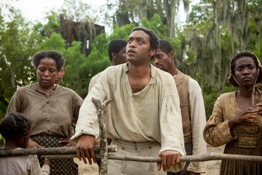
It’s remarkable, when you think about it, how few serious American film dramas have dealt with the subject of American slavery. Of course we think of Roots, and there are others…but not many. Maybe slavery is so painful a subject that most filmmakers just don’t want to go there. I think also there’s shame—shame about this huge ugly stain on our history and on our country. Now we have a new film, 12 Years a Slave, direct and graphic in the depiction of slavery to a greater degree than any other film I know of. British director Steve McQueen has apparently never minded having the same name as an iconic American actor. He’s made his own mark in his first two features with bold and uncompromising political and sexual themes—and his third feature is his best yet. He and veteran screenwriter John Ridley have taken a true story—the 1853 account by Solomon Northup, a free black man from upstate New York, of his abduction and subsequent enslavement for twelve years in Louisiana—and made it into a fine film. McQueen quite deliberately refuses to soften the reality of Northup’s story. Even with the best, most well-intentioned previous efforts on the subject, there was always a sense of distance and play-acting. Here we are confronted, as much as such a thing is possible in a film, with the horrifying truth. Chewitel Ejiofor stars as the main character, Northup, and the range he displays is astonishing. The film starts in the middle, with Northup on a plantation, cutting sugar cane from sunrise to sunset. After this painful orientation, in which we taste the man’s weariness, loneliness, and despair, we flash back to his life in Saratoga Springs, New York, as a fairly prosperous musician with a wife and two children. Lured to WashingtonD.C. by a pair posing as showmen, he is plied with drink, and then wakes up the next morning in chains. His journey then typifies, in devastating fashion, the many aspects of a slave-based society. There are the vicious whippings and beatings, a constant throughout the film. The sale of human beings at market follows, with men and women displayed naked like animals. His first master has a kind aspect, but he’s still a slave master, and Northup falls victim to an overseer played by Paul Dano, one of those poor whites whose low rank and condition encourages his contempt for blacks, if only to be superior to somebody. Later Northup is sold to a much worse master named Epps, played by McQueen stalwart Michael Fassbender. Here we witness the full corruption and depravity of the institution, with Epps using the Bible as justification for his cruelties. The film also shows us the sexual violence and oppression in the form of Epps’ lust for the slave Patsey, wonderfully played by newcomer Lupita Nyong’o. It is no privilege to be singled out for repeated rapes by the master, while also being persecuted by the master’s jealous wife. Ejiofor brilliantly portrays the terrible transformation, the degradation of a soul enslaved for a dozen years, in his speech, in his eyes, and in the way he walks. The film also lets us glimpse the unspeakable tragedy of an entire culture sunk in this brutal and dehumanizing system. 12 Years of a Slave is by no means an easy film to watch. It rips the curtain away from the truth many of us would rather not see. It’s a tremendous achievement, a landmark really, and I hope and trust there will be more to follow.

An episode of the Flicks with The Film Snob podcast, hosted by Chris Dashiell, titled "12 Years a Slave" was published on January 16, 2014.

January 16, 2014 · Flicks with The Film Snob

0:00 / 0:00

It’s remarkable, when you think about it, how few serious American film dramas have dealt with the subject of American slavery. Of course we think of Roots, and there are others…but not many. Maybe slavery is so painful a subject that most filmmakers just don’t want to go there. I think also there’s shame—shame about this huge ugly stain on our history and on our country. Now we have a new film, 12 Years a Slave, direct and graphic in the depiction of slavery to a greater degree than any other film I know of. British director Steve McQueen has apparently never minded having the same name as an iconic American actor. He’s made his own mark in his first two features with bold and uncompromising political and sexual themes—and his third feature is his best yet. He and veteran screenwriter John Ridley have taken a true story—the 1853 account by Solomon Northup, a free black man from upstate New York, of his abduction and subsequent enslavement for twelve years in Louisiana—and made it into a fine film. McQueen quite deliberately refuses to soften the reality of Northup’s story. Even with the best, most well-intentioned previous efforts on the subject, there was always a sense of distance and play-acting. Here we are confronted, as much as such a thing is possible in a film, with the horrifying truth. Chewitel Ejiofor stars as the main character, Northup, and the range he displays is astonishing. The film starts in the middle, with Northup on a plantation, cutting sugar cane from sunrise to sunset. After this painful orientation, in which we taste the man’s weariness, loneliness, and despair, we flash back to his life in Saratoga Springs, New York, as a fairly prosperous musician with a wife and two children. Lured to WashingtonD.C. by a pair posing as showmen, he is plied with drink, and then wakes up the next morning in chains. His journey then typifies, in devastating fashion, the many aspects of a slave-based society. There are the vicious whippings and beatings, a constant throughout the film. The sale of human beings at market follows, with men and women displayed naked like animals. His first master has a kind aspect, but he’s still a slave master, and Northup falls victim to an overseer played by Paul Dano, one of those poor whites whose low rank and condition encourages his contempt for blacks, if only to be superior to somebody. Later Northup is sold to a much worse master named Epps, played by McQueen stalwart Michael Fassbender. Here we witness the full corruption and depravity of the institution, with Epps using the Bible as justification for his cruelties. The film also shows us the sexual violence and oppression in the form of Epps’ lust for the slave Patsey, wonderfully played by newcomer Lupita Nyong’o. It is no privilege to be singled out for repeated rapes by the master, while also being persecuted by the master’s jealous wife. Ejiofor brilliantly portrays the terrible transformation, the degradation of a soul enslaved for a dozen years, in his speech, in his eyes, and in the way he walks. The film also lets us glimpse the unspeakable tragedy of an entire culture sunk in this brutal and dehumanizing system. 12 Years of a Slave is by no means an easy film to watch. It rips the curtain away from the truth many of us would rather not see. It’s a tremendous achievement, a landmark really, and I hope and trust there will be more to follow.

TWELVE YEARS A SLAVE It’s remarkable, when you think about it, how few serious American film dramas have dealt with the subject of American slavery. Of course we think of Roots, and there are others…but not many. Maybe slavery is so painful a subject that most filmmakers just don’t want to go there. I think also there’s shame—shame about this huge ugly stain on our history and on our country.

Now we have a new film, 12 Years a Slave, direct and graphic in the depiction of slavery to a greater degree than any other film I know of. British director Steve McQueen has apparently never minded having the same name as an iconic American actor. He’s made his own mark in his first two features with bold and uncompromising political and sexual themes—and his third feature is his best yet. He and veteran screenwriter John Ridley have taken a true story—the 1853 account by Solomon Northup, a free black man from upstate New York, of his abduction and subsequent enslavement for twelve years in Louisiana—and made it into a fine film. McQueen quite deliberately refuses to soften the reality of Northup’s story. Even with the best, most well-intentioned previous efforts on the subject, there was always a sense of distance and play-acting. Here we are confronted, as much as such a thing is possible in a film, with the horrifying truth.

Chewitel Ejiofor stars as the main character, Northup, and the range he displays is astonishing. The film starts in the middle, with Northup on a plantation, cutting sugar cane from sunrise to sunset. After this painful orientation, in which we taste the man’s weariness, loneliness, and despair, we flash back to his life in Saratoga Springs, New York, as a fairly prosperous musician with a wife and two children. Lured to WashingtonD.C. by a pair posing as showmen, he is plied with drink, and then wakes up the next morning in chains. His journey then typifies, in devastating fashion, the many aspects of a slave-based society. There are the vicious whippings and beatings, a constant throughout the film. The sale of human beings at market follows, with men and women displayed naked like animals. His first master has a kind aspect, but he’s still a slave master, and Northup falls victim to an overseer played by Paul Dano, one of those poor whites whose low rank and condition encourages his contempt for blacks, if only to be superior to somebody. Later Northup is sold to a much worse master named Epps, played by McQueen stalwart Michael Fassbender. Here we witness the full corruption and depravity of the institution, with Epps using the Bible as justification for his cruelties. The film also shows us the sexual violence and oppression in the form of Epps’ lust for the slave Patsey, wonderfully played by newcomer Lupita Nyong’o. It is no privilege to be singled out for repeated rapes by the master, while also being persecuted by the master’s jealous wife.

Ejiofor brilliantly portrays the terrible transformation, the degradation of a soul enslaved for a dozen years, in his speech, in his eyes, and in the way he walks. The film also lets us glimpse the unspeakable tragedy of an entire culture sunk in this brutal and dehumanizing system. 12 Years of a Slave is by no means an easy film to watch. It rips the curtain away from the truth many of us would rather not see. It’s a tremendous achievement, a landmark really, and I hope and trust there will be more to follow.

Future Flicks with Billiam The SomewhatNerdy Podcast Network Future Flicks is a podcast about flicks that come out, wait for it, in the future! In this podcast your host Billiam from SomewhatNerdy.com will go over all the movies coming out during the week, tell you his pick, and throw in his thoughts and occasionally trivia and news. He’ll also throw in a movie review every podcast or two for a suggestion on what to watch during a night in. So check out Future Flicks because why use Google to tell you what movies are coming out when you can have an opinionated Nerd do it for you. Box Office Premiere Podcasts Box Office is a weekly film show on Virgin Media Two, which takes a look at the pick of the flicks in cinemas, along with a host of fun film features. Flick Switch Flickswitch Flick Switch is far more than a rigging rental company. We have built our business on delivering high quality solutions with years of experience in a wide variety of markets, including film, television, live events, international touring and theatre.With our years of experience in audio, lighting, screens, sets, (and the list goes on) we can go further than just the support rigging. We are also able to rig the equipment too. Planning and installing the power and data distribution, fixtures, fly systems and other equipment, fine tuning, focusing and operating.When you engage Flick Switch yo Mark Fricks - The Road Less Traveled Mark Fricks Federal Employees - The Retirement Road Less Traveled with Financial Adviser and Federal Employee Advocate Mark Fricks. Mark Shares the mission behind the 2nd edition of The Book "The Road Less Traveled." This is a Financial Roadmap for Federal Employees seeking a secure retirement.
URL copied to clipboard!