
EPISODE · Jan 15, 2026 · 17 MIN
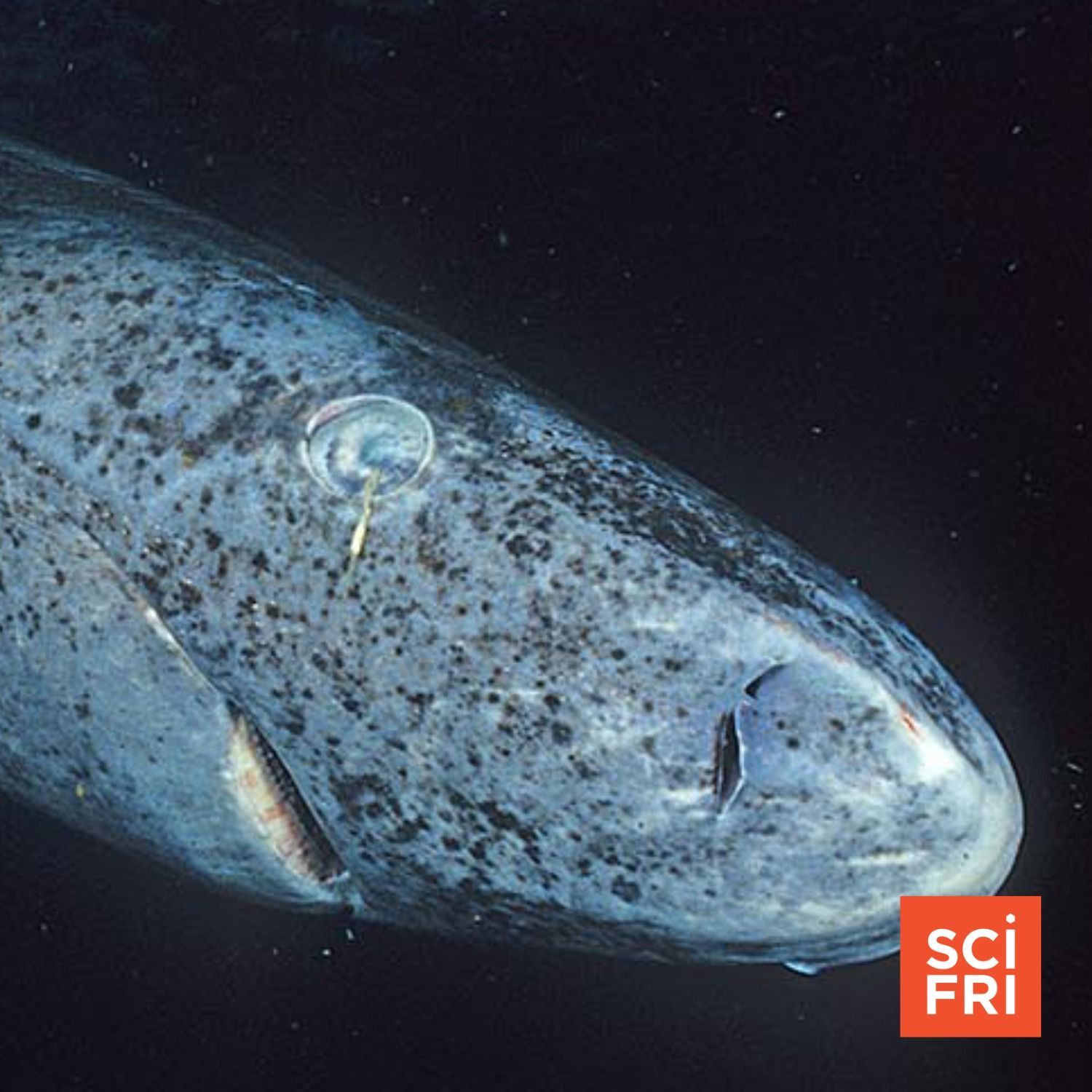
1211: What Greenland Sharks Are Teaching Us About Aging Eyes
from Science Friday · host Science Friday
As we age, our vision gets blurrier, we form cataracts, and we have a higher risk of glaucoma. But Greenland sharks live for hundreds of years and still maintain healthy, functional eyeballs. So what gives?Host Ira Flatow talks with molecular biologist Dorota Skowronska-Krawczyk, who studies the mechanisms of aging, about what we can learn from these fishy eyeballs and how it could help us.Plus, listener Leon called us with a question: Is it true that the James Webb Space Telescope’s gold-plated mirror is so perfectly flat that if it were the size of the United States, the highest bump would be the size of a baseball? Not quite. Host Flora Lichtman discusses this feat of engineering with JWST project scientist Macarena Garcia Marin.Guests:Dr. Dorota Skowronska-Krawczyk is a molecular biologist and associate professor at the University of California, Irvine. She studies the mechanisms of aging.Dr. Macarena Garcia Marin is a project scientist for the James Webb Space Telescope at the Space Telescope and Science Institute in Baltimore, Maryland.Transcripts for each episode are available within 1-3 days at sciencefriday.com.Subscribe to this podcast. Plus, to stay updated on all things science, sign up for Science Friday's newsletters.
Embed this episode
What this episode covers
Greenland sharks' eyes never seem to get old. Plus, exactly how flawless is the greatest eye in the sky, the James Webb Space Telescope?
NOW PLAYING
1211: What Greenland Sharks Are Teaching Us About Aging Eyes
No transcript for this episode yet
Similar Episodes
No similar episodes found.