
EPISODE · Feb 28, 2025 · 36 MIN
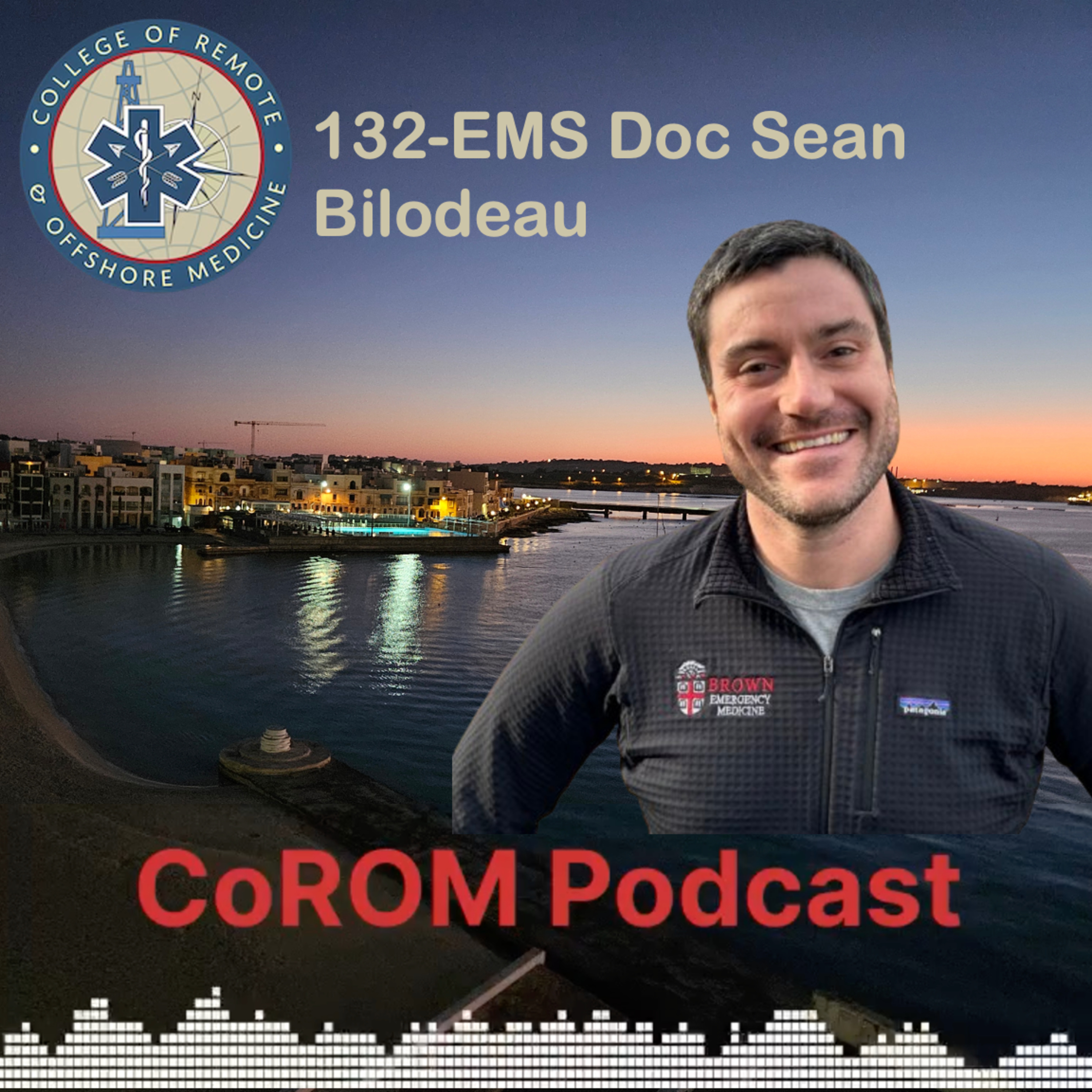
132-EMS Doc Sean Bilodeau
from CoROM cast. Wilderness, Austere, Remote and Resource-limited Medicine. · host College of Remote and Offshore Medicine
This week, Aebhric O’Kelly talks with the new CoROM faculty, Dr Sean Bilodeau, an emergency physician and EMS fellow, and discusses his experiences and insights into the field of emergency medicine, mainly focusing on pre-hospital care and the evolving roles of paramedics. He highlights the differences between the US and European models of emergency medical services, the importance of education and training for paramedics, and the critical need for blood management in emergencies. Dr Bilodeau also shares his plans for research and education within the EMS field, emphasising the importance of community buy-in and the need for systemic changes in delivering pre-hospital care.TakeawaysDr Bilodeau is an ER doctor in Maine, completing an EMS Fellowship.He emphasises the importance of education in pre-hospital care.The US EMS model differs significantly from European models, particularly in physician involvement.There is a need for cultural change regarding paramedic roles in the US.Dr Bilodeau advocates for treating and releasing patients in the field when appropriate.He is involved in research on teaching critical skills to paramedics.The conversation highlights the logistical challenges of blood management in emergency care.Dr Bilodeau discusses the potential of using freeze-dried plasma in austere environments.He encourages new practitioners to seek opportunities and engage in projects actively.The finger thoracostomy is presented as a more effective technique than traditional needle decompression.Chapters00:00 Introduction to Dr Sean Bilodeau01:01 Emergency Medicine and EMS Fellowship02:34 Differences in Pre-Hospital Care Models05:31 Reimagining Paramedic Roles11:49 Future Plans and Research in EMS16:34 Global Perspectives on EMS Education21:55 The Importance of Blood in Emergency Care27:21 Challenges in Wilderness Medicine34:15 Advice for New Practitioners in Austere Medicine
Embed this episode
NOW PLAYING
132-EMS Doc Sean Bilodeau
No transcript for this episode yet
Similar Episodes
No similar episodes found.
Similar Podcasts
No similar podcasts found.