
EPISODE · Mar 3, 2026 · 4 MIN
14 - Founding of Rome.
from History of Rome. · host Popular Culture and Religion.
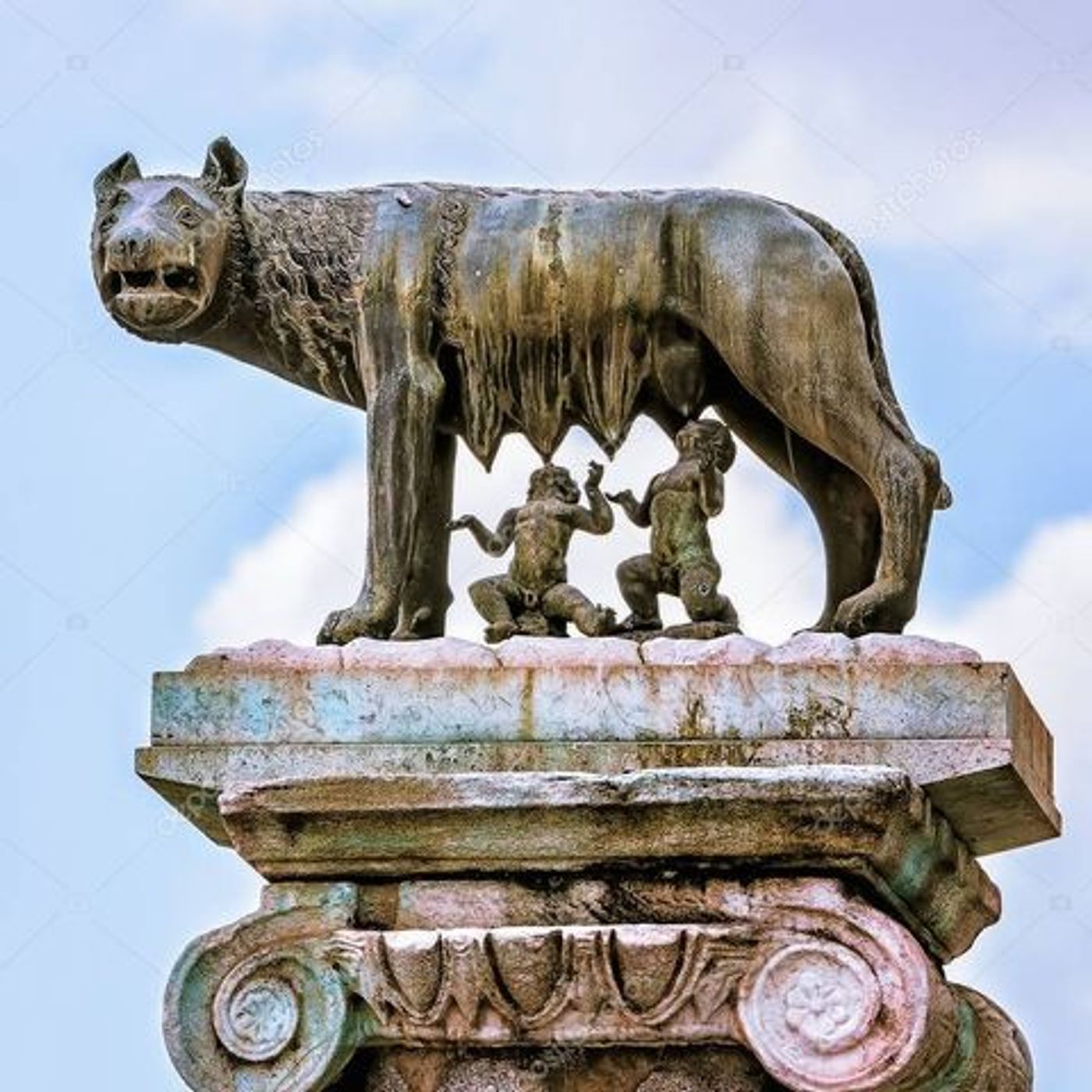
Founding of Rome. The founding of Rome was a prehistoric event or process later greatly embellished by Roman historians and poets. Archaeological evidence indicates that Rome developed from the gradual union of several hilltop villages during the Final Bronze Age or early Iron Age. Prehistoric habitation of the Italian Peninsula occurred by 48,000 years ago, with the area of Rome being settled by around 1600 BC. Some evidence on the Capitoline Hill possibly dates as early as about 1700 BC and the nearby valley that later housed the Roman Forum had a developed necropolis by at least 1000 BC. The combination of the hilltop settlements into a single polity by the later 8th century BC was probably influenced by the trend for city-state formation emerging from ancient Greece. Roman myth held that their city was founded by Romulus, son of the war god Mars and the Vestal virgin Rhea Silvia, fallen princess of Alba Longa and descendant of Aeneas of Troy. Exposed on the Tiber river, Romulus and his twin Remus were suckled by a she-wolf at the Lupercal before being raised by the shepherd Faustulus, taking revenge on their usurping great-uncle Amulius, and restoring Alba Longa to their grandfather Numitor. The brothers then decided to establish a new town but quarreled over some details, ending with Remus's murder and the establishment of Rome on the Palatine Hill. The year of the supposed founding was variously computed by ancient historians, but the two dates seeming to be officially sanctioned were the Varronian chronology's 753 BC (used by Claudius's Secular Games and Hadrian's Romaea) and the adjacent year of 752 BC (used by the Fasti and the Secular Games of Antoninus Pius and Philip I). Despite known errors in Varro's calculations, it is the 753 BC date that continues to form the basis for most modern calculations of the AUC calendar era.The legendary account was still much discussed and celebrated in Roman times. The Parilia Festival on 21 April was considered to commemorate the anniversary of the city's founding during the late Republic and that aspect of the holiday grew in importance under the Empire until it was fully transformed into the Romaea in AD 121. Most modern historians dismiss these ancient accounts of a single founder descended from a Trojan lineage establishing the city at specific point in time as fiction. Cultural context. The conventional division of pre-Roman cultures in Italy deals with cultures which spoke Indo-European and non-Indo-European languages. The Italic languages, which include Latin, are Indo-European and were spoken, according to inscriptions, in the lower Tiber Valley. It was once thought that Faliscan – spoken north of Veii on the right bank of the Tiber – was a separate language, but inscriptions discovered in the 1980s indicate that Latin was spoken more generally in the area. Etruscan speakers were concentrated in modern Tuscany with a similar language called Raetic spoken on the upper Adige (the foothills of the eastern Italian Alps). When drawing a connection between peoples and their languages, a reconstruction emerges with Indo-European peoples arriving in various waves of migrations during the first and second millennia BC: first a western Italic group (including Latin), followed by a central Italic group of Osco-Umbrian dialects, with a late arrival of Greek and Celtic on the Italian peninsula, from across the Adriatic and Alps, respectively. These migrations are generally believed to have displaced speakers of Etruscan and other pre-Indo-European languages; although it is possible that Etruscan arrived also by migration, almost certainly before 2000 BC. The start of the Iron age saw a gradual increase in social complexity and population that led to the emergence of proto-urban settlements in central and northern Italy writ large. These proto-urban agglomerations were normally clusters of smaller settlements that were insufficiently distant to be separated communities; over time, they would unify. Wikipedia: Text is available under the Creative Commons Attribution-ShareAlike 4.0 License.This episode includes AI-generated content.
What this episode covers
Founding of Rome. The founding of Rome was a prehistoric event or process later greatly embellished by Roman historians and poets. Archaeological evidence indicates that Rome developed from the gradual union of several hilltop villages during the Final Bronze Age or early Iron Age. Prehistoric habitation of the Italian Peninsula occurred by 48,000 years ago, with the area of Rome being settled by around 1600 BC. Some evidence on the Capitoline Hill possibly dates as early as about 1700 BC and the nearby valley that later housed the Roman Forum had a developed necropolis by at least 1000 BC. The combination of the hilltop settlements into a single polity by the later 8th century BC was probably influenced by the trend for city-state formation emerging from ancient Greece. Roman myth held that their city was founded by Romulus, son of the war god Mars and the Vestal virgin Rhea Silvia, fallen princess of Alba Longa and descendant of Aeneas of Troy. Exposed on the Tiber river, Romulus and his twin Remus were suckled by a she-wolf at the Lupercal before being raised by the shepherd Faustulus, taking revenge on their usurping great-uncle Amulius, and restoring Alba Longa to their grandfather Numitor. The brothers then decided to establish a new town but quarreled over some details, ending with Remus's murder and the establishment of Rome on the Palatine Hill. The year of the supposed founding was variously computed by ancient historians, but the two dates seeming to be officially sanctioned were the Varronian chronology's 753 BC (used by Claudius's Secular Games and Hadrian's Romaea) and the adjacent year of 752 BC (used by the Fasti and the Secular Games of Antoninus Pius and Philip I). Despite known errors in Varro's calculations, it is the 753 BC date that continues to form the basis for most modern calculations of the AUC calendar era.The legendary account was still much discussed and celebrated in Roman times. The Parilia Festival on 21 April was considered to commemorate the anniversary of the city's founding during the late Republic and that aspect of the holiday grew in importance under the Empire until it was fully transformed into the Romaea in AD 121. Most modern historians dismiss these ancient accounts of a single founder descended from a Trojan lineage establishing the city at specific point in time as fiction. Cultural context. The conventional division of pre-Roman cultures in Italy deals with cultures which spoke Indo-European and non-Indo-European languages. The Italic languages, which include Latin, are Indo-European and were spoken, according to inscriptions, in the lower Tiber Valley. It was once thought that Faliscan – spoken north of Veii on the right bank of the Tiber – was a separate language, but inscriptions discovered in the 1980s indicate that Latin was spoken more generally in the area. Etruscan speakers were concentrated in modern Tuscany with a similar language called Raetic spoken on the upper Adige (the foothills of the eastern Italian Alps). When drawing a connection between peoples and their languages, a reconstruction emerges with Indo-European peoples arriving in various waves of migrations during the first and second millennia BC: first a western Italic group (including Latin), followed by a central Italic group of Osco-Umbrian dialects, with a late arrival of Greek and Celtic on the Italian peninsula, from across the Adriatic and Alps, respectively. These migrations are generally believed to have displaced speakers of Etruscan and other pre-Indo-European languages; although it is possible that Etruscan arrived also by migration, almost certainly before 2000 BC. The start of the Iron age saw a gradual increase in social complexity and population that led to the emergence of proto-urban settlements in central and northern Italy writ large. These proto-urban agglomerations were normally clusters of smaller settlements that were...
NOW PLAYING
14 - Founding of Rome.
No transcript for this episode yet
Similar Episodes
Dec 5, 2025 ·50m
Oct 9, 2025 ·33m
Oct 3, 2025 ·40m
Sep 11, 2025 ·31m
Aug 27, 2025 ·39m
Aug 18, 2025 ·54m