
EPISODE · Mar 3, 2026 · 4 MIN
16 - Ancient tradition and founding myths.
from History of Rome. · host Popular Culture and Religion.
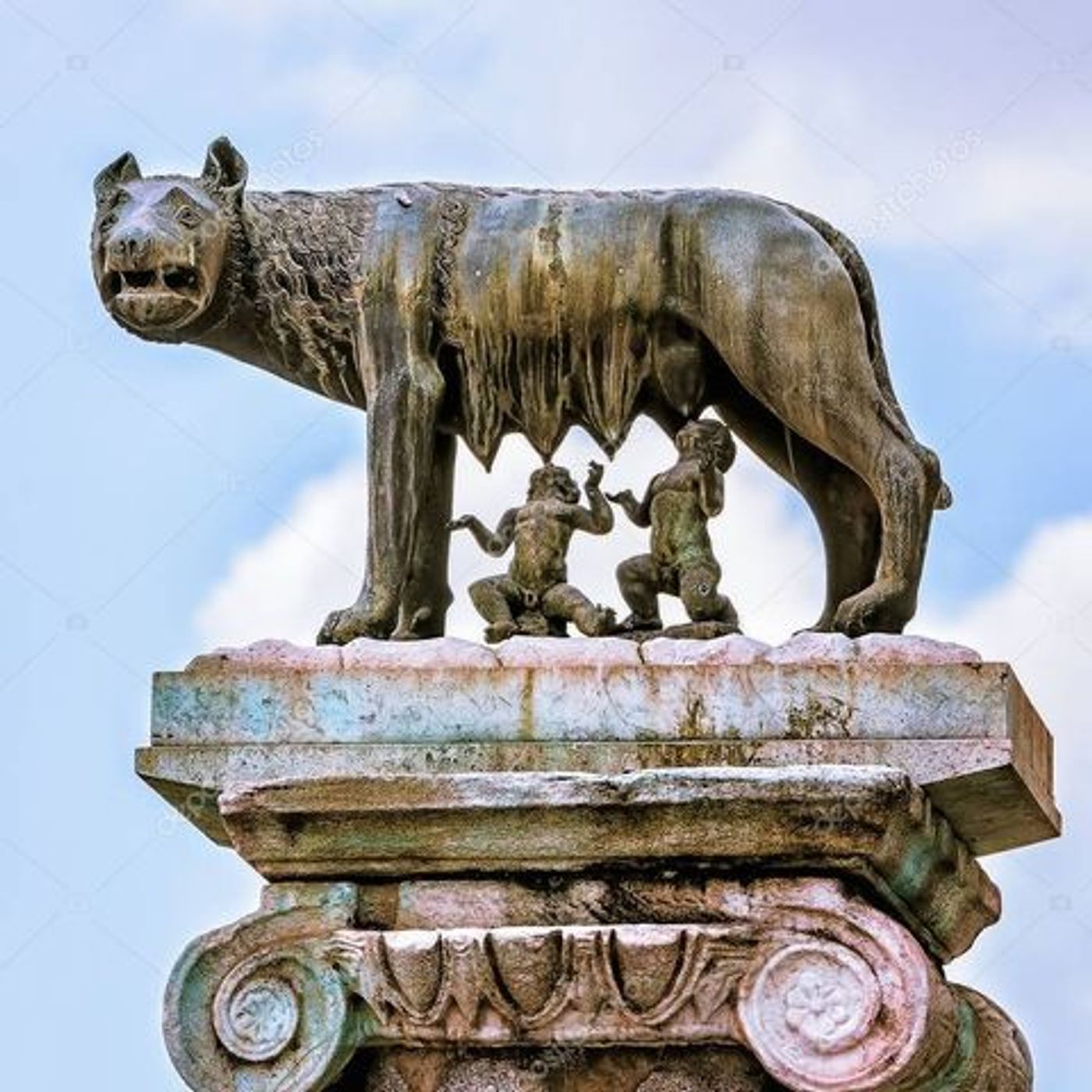
Ancient tradition and founding myths. By the late Republic, the usual Roman origin myth held that their city was founded by a Latin named Romulus on the day of the Parilia Festival (21 April) in some year around 750 BC. Important aspects of the myth concerned Romulus's murder of his twin Remus, the brothers' descent from the god Mars and the royal family of Alba Longa, and that dynasty's supposed descent from Aeneas, himself supposedly descended from the goddess Aphrodite and the royal family of Troy. The accounts in the first book of Livy's History of Rome and in Vergil's Aeneid were particularly influential. Some accounts further asserted that there had been a Mycenaean Greek settlement on the Palatine (later dubbed Pallantium) even earlier than Romulus and Remus, at some time prior to the Trojan War. Modern scholars disregard most of the traditional accounts as myths. There is no persuasive archaeological evidence for either the Romulan foundation or for the idea of an early Greek settlement. Even the name Romulus is now generally believed to have been retrojected from the city's name – glossed as "Mr Rome" by the classicist Mary Beard – rather than reflecting a historical or actual figure. Some scholars, particularly Andrea Carandini, have argued that it remains possible that these foundation myths reflect actual historical events in some form and that the city and Roman Kingdom were in fact founded by a single actor in some way. This remains a minority viewpoint in present scholarship and highly controversial in the absence of further evidence, with the arguments made by Carandini and others appearing to rest on highly tendentious interpretations of what is currently known with certainty from scientific excavations. The Romans' origin myths, however, provide evidence of how the Romans conceived of themselves as a mixture of different ethnic groups and foreign influences, The Romans took the foundation of their own new cities seriously, undertaking many rituals and attributing many of them to remote antiquity. They long maintained the Hut of Romulus, a primitive dwelling on the Palatine attributed to their founder, although they had no firm basis for associating it with him specifically. Chronological disagreements. While the Romans believed that their city had been founded by an eponymous founder at a specific time, when that occurred was disputed by the ancient historians. The earliest dates placed it c. 1100 BC out of a belief that Romulus had been Aeneas's grandson. This moved Rome's foundation much closer to the fall of Troy, dated by Eratosthenes to 1184–83 BC; these dates are attested as early as the 4th century BC. Romulus was later chronologically connected to Aeneas and the time of the Trojan War by introducing a line of Alban kings, which scholars consider to be entirely spurious. Most scholars view the move from a foundation date in the 1100s to one in the 700s to have come from Roman calculations from estimates of the lengths of the republican and regal periods. Their attempts to estimate how long the regal period lasted, however, are largely rejected as synthetic calculations. It may also be that the date of the city's foundation was assigned from Greek historiography, especially influenced by Timaeus of Tauromenium (born c. 350 BC) who may have been the first to move the founding of the city from the era of the Trojan war to the more historical 814 BC. A later intervention, possibly at the hands of Fabius Pictor (born c. 270 BC) or his source Diocles of Peparethus, then placed the foundation date within the Olympiads (ie within "historical" time), settling eventually on c. 750 BC. Dionysius of Halicarnassus (born c. 60 BC) placed it in the first year of the 7th Olympiad, that is, 752/51 BC. From Claudius's Secular Games in AD 47 to Hadrian's Romaea in AD 121, the official date seems to have used the chronology established by Varro in the late 1st century BC, placing Rome's founding in 753 BC. Augustus's Fasti running to AD 13 and the Secular Games celebrated at Rome's 900th and 1000th anniversaries under Antoninus Pius and Philip I, meanwhile, used dates computed from a foundation a year later in 752 BC. Despite known errors in Varro's work,[63] it is the former date that has become the most repeated in modernity and is still used for computing the AUC calendar era. Wikipedia: Text is available under the Creative Commons Attribution-ShareAlike 4.0 License.This episode includes AI-generated content.
What this episode covers
Ancient tradition and founding myths. By the late Republic, the usual Roman origin myth held that their city was founded by a Latin named Romulus on the day of the Parilia Festival (21 April) in some year around 750 BC. Important aspects of the myth concerned Romulus's murder of his twin Remus, the brothers' descent from the god Mars and the royal family of Alba Longa, and that dynasty's supposed descent from Aeneas, himself supposedly descended from the goddess Aphrodite and the royal family of Troy. The accounts in the first book of Livy's History of Rome and in Vergil's Aeneid were particularly influential. Some accounts further asserted that there had been a Mycenaean Greek settlement on the Palatine (later dubbed Pallantium) even earlier than Romulus and Remus, at some time prior to the Trojan War. Modern scholars disregard most of the traditional accounts as myths. There is no persuasive archaeological evidence for either the Romulan foundation or for the idea of an early Greek settlement. Even the name Romulus is now generally believed to have been retrojected from the city's name – glossed as "Mr Rome" by the classicist Mary Beard – rather than reflecting a historical or actual figure. Some scholars, particularly Andrea Carandini, have argued that it remains possible that these foundation myths reflect actual historical events in some form and that the city and Roman Kingdom were in fact founded by a single actor in some way. This remains a minority viewpoint in present scholarship and highly controversial in the absence of further evidence, with the arguments made by Carandini and others appearing to rest on highly tendentious interpretations of what is currently known with certainty from scientific excavations. The Romans' origin myths, however, provide evidence of how the Romans conceived of themselves as a mixture of different ethnic groups and foreign influences, The Romans took the foundation of their own new cities seriously, undertaking many rituals and attributing many of them to remote antiquity. They long maintained the Hut of Romulus, a primitive dwelling on the Palatine attributed to their founder, although they had no firm basis for associating it with him specifically. Chronological disagreements. While the Romans believed that their city had been founded by an eponymous founder at a specific time, when that occurred was disputed by the ancient historians. The earliest dates placed it c. 1100 BC out of a belief that Romulus had been Aeneas's grandson. This moved Rome's foundation much closer to the fall of Troy, dated by Eratosthenes to 1184–83 BC; these dates are attested as early as the 4th century BC. Romulus was later chronologically connected to Aeneas and the time of the Trojan War by introducing a line of Alban kings, which scholars consider to be entirely spurious. Most scholars view the move from a foundation date in the 1100s to one in the 700s to have come from Roman calculations from estimates of the lengths of the republican and regal periods. Their attempts to estimate how long the regal period lasted, however, are largely rejected as synthetic calculations. It may also be that the date of the city's foundation was assigned from Greek historiography, especially influenced by Timaeus of Tauromenium (born c. 350 BC) who may have been the first to move the founding of the city from the era of the Trojan war to the more historical 814 BC. A later intervention, possibly at the hands of Fabius Pictor (born c. 270 BC) or his source Diocles of Peparethus, then placed the foundation date within the Olympiads (ie within "historical" time), settling eventually on c. 750 BC. Dionysius of Halicarnassus (born c. 60 BC) placed it in the first year of the 7th Olympiad, that is, 752/51 BC. From Claudius's Secular Games in AD 47 to Hadrian's Romaea in AD 121, the official date seems to have used the chronology established by Varro in the late 1st century...
NOW PLAYING
16 - Ancient tradition and founding myths.
No transcript for this episode yet
Similar Episodes
Dec 5, 2025 ·50m
Oct 9, 2025 ·33m
Oct 3, 2025 ·40m
Sep 11, 2025 ·31m
Aug 27, 2025 ·39m
Aug 18, 2025 ·54m