
EPISODE · Feb 3, 2026 · 7 MIN
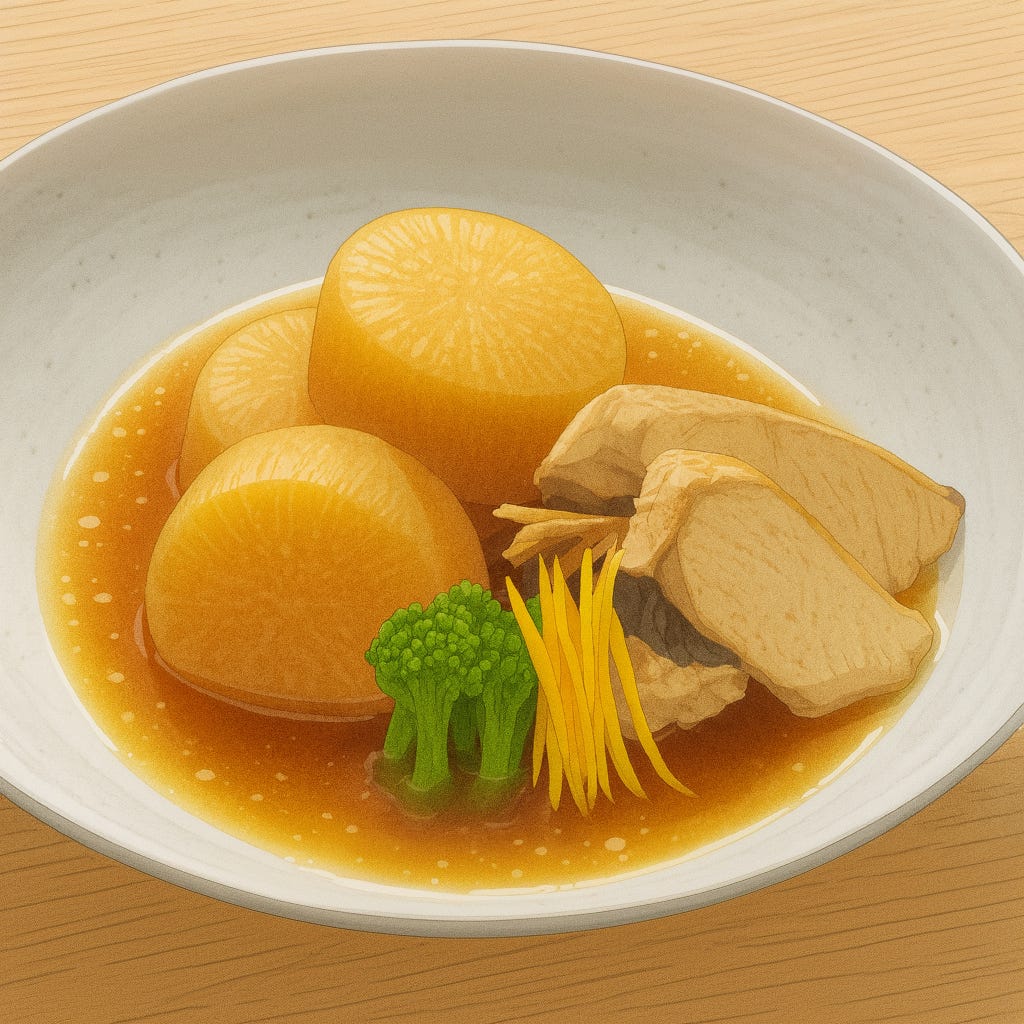
#21 Learn Japanese: Ingredient Quality | Izakaya Recipe: Buri Daikon (Week 1)
from Learn Delicious Japanese · host Learn Delicious Japanese
This is a free preview of a paid episode. To hear more, visit learndeliciousjapanese.substack.com#21 Learn Japanese: Ingredient Quality | Izakaya Recipe: Buri Daikon (Week 1)Discover the secret to delicious Japanese winter cooking — it's all about きせつのざいりょう (seasonal ingredients)! Week 1 of Level 2's Buri Daikon series presents a lively conversation where Nami asks her cooking teacher Namihei exactly what makes ぶりだいこん so special, and learns that the quality of each ingredient changes dramatically with the seasons. Master essential conversation patterns: きをつける (to pay attention to), やっぱり (as expected), 〜ってきいたことがある (I've heard that ~), どうして〜なの?(Why is it that ~?), へえ!しらなかった (Wow! I didn't know that). Learn key seasonal cooking vocabulary: きせつ (season), ざいりょう (ingredients), しつ (quality), かんぶり (winter yellowtail), とうぶん (starch), あまい (sweet), やわらかい (tender), あぶら (fat), みがあつい (thick flesh), あじがこい (rich flavor), にる (to simmer), よわび (low heat), おとしぶた (drop lid), しもふり (frost-fall technique), くさみ (fishy smell). Discover why winter is the perfect season for this dish: why かんぶり is the most flavorful yellowtail of the year — winter buri builds up fat for survival, making the flesh rich and intensely savory, especially from the Sea of Japan near とっとりけん and いしかわけん. Learn why ふゆのだいこん is sweeter than any other season — cold weather triggers the daikon plant to convert starch into sugars, creating naturally sweet, tender radish perfect for simmering. Cook a complete step-by-step ぶりだいこん recipe featuring professional Japanese techniques: しもふり (the frost-fall method for removing fishy smell by pouring boiling water over the fish) and おとしぶた (using a drop lid to circulate broth evenly and prevent ingredients from breaking apart while simmering on よわび). Explore Japan's seasonal ingredient philosophy across all four seasons: spring's たけのこ and わさび, summer's たこ and うなぎ, autumn's さんま and くり, and winter's かんぶり, だいこん, and たら. Perfect for intermediate learners (JLPT N4-N3) ready to discuss food quality, ask natural "why" questions, and share what they've heard — all while cooking one of Japan's most comforting winter dishes!📚Check Out the Full Study Guide on Substack https://learndeliciousjapanese.substack.com/
Embed this episode
NOW PLAYING
#21 Learn Japanese: Ingredient Quality | Izakaya Recipe: Buri Daikon (Week 1)
No transcript for this episode yet
Similar Episodes
No similar episodes found.
Similar Podcasts
No similar podcasts found.