PodParley PodParley

23 Points About Streaming: Part 2

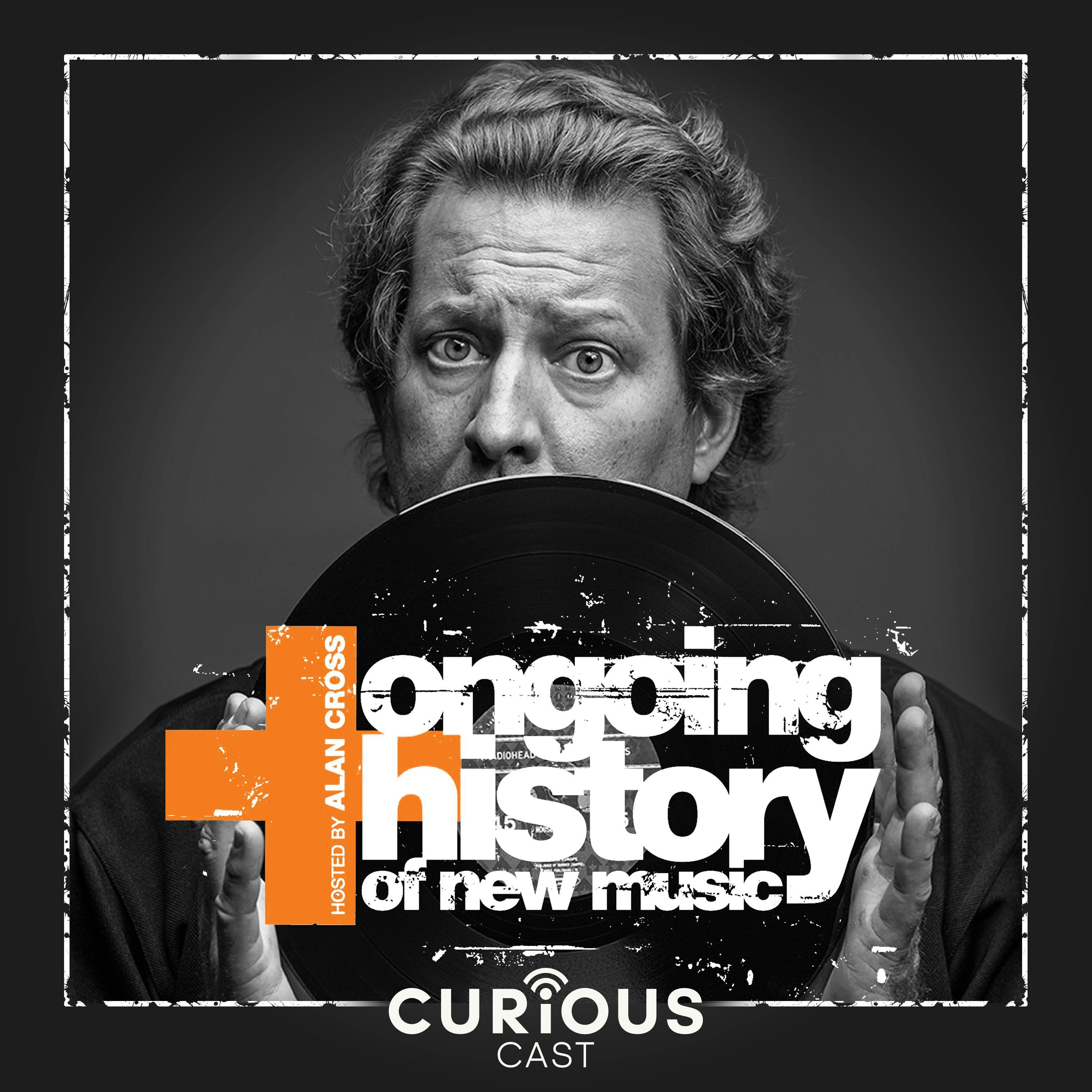
Episode 298 of the Ongoing History of New Music podcast, hosted by Curiouscast, titled "23 Points About Streaming: Part 2" was published on November 17, 2021 and runs 34 minutes.

November 17, 2021 ·34m · Ongoing History of New Music

0:00 / 0:00

Once upon a time many centuries ago, someone came up with the idea of taking all the world’s available knowledge and storing it one place…that way everyone who had questions had somewhere to go to get the answers…and thus the concept of the library was born… Considerably later, this same concept was applied to recorded music and governments, public broadcasters and companies began collecting together as much of humankind’s recorded audio as they could… The BBC famously has hundreds of kilometers of shelving for physical media…there’s a guy in Brazil named Zero Freitas who is on a quest to create a private collection of all the records ever made…he has at least 8 million records and more than 100,000 compact discs… Nice…but this still doesn’t cover everything… In the 80s, some people started to conceive of a giant computer somewhere that could hold humanity’s music in digital form…if you needed a song—any song—it would be available from that computer instantly… In 1994, a law professor named Paul Goldstein popularized the term “celestial jukebox”…in his mind, this would be networked database available to anyone with a connection or this thing called the “internet”… Five years later, napster went online...suddenly, it seemed that you could download any song you wanted—however illegal that might be… Then, in 2003, came the iTunes music store…starting with several hundred thousand songs, it has since expanded to about 60 million tracks that are all for sale…but that still doesn’t quite cut it because it still involved buying this music… Today, we have streaming…all the platforms draw from a digital music library that contains at least 75 million songs—and more are being added every day…and we can access this music anytime we want, from wherever we are, using whatever device we happen to have…and the price?...given what we’re able to do, it’s negligible…in fact, it can even be totally free… Think about that: we can listen to virtually any song ever recorded in seconds and pay nothing…we now have theoretical celestial jukebox, something that was considered science fiction not that long ago…question: how well do you know how all this works?...this is 23 points you might not know about streaming, part 2”… Learn more about your ad choices. Visit megaphone.fm/adchoices

Once upon a time many centuries ago, someone came up with the idea of taking all the world’s available knowledge and storing it one place…that way everyone who had questions had somewhere to go to get the answers…and thus the concept of the library was born… Considerably later, this same concept was applied to recorded music and governments, public broadcasters and companies began collecting together as much of humankind’s recorded audio as they could… The BBC famously has hundreds of kilometers of shelving for physical media…there’s a guy in Brazil named Zero Freitas who is on a quest to create a private collection of all the records ever made…he has at least 8 million records and more than 100,000 compact discs… Nice…but this still doesn’t cover everything… In the 80s, some people started to conceive of a giant computer somewhere that could hold humanity’s music in digital form…if you needed a song—any song—it would be available from that computer instantly… In 1994, a law professor named Paul Goldstein popularized the term “celestial jukebox”…in his mind, this would be networked database available to anyone with a connection or this thing called the “internet”… Five years later, napster went online...suddenly, it seemed that you could download any song you wanted—however illegal that might be… Then, in 2003, came the iTunes music store…starting with several hundred thousand songs, it has since expanded to about 60 million tracks that are all for sale…but that still doesn’t quite cut it because it still involved buying this music… Today, we have streaming…all the platforms draw from a digital music library that contains at least 75 million songs—and more are being added every day…and we can access this music anytime we want, from wherever we are, using whatever device we happen to have…and the price?...given what we’re able to do, it’s negligible…in fact, it can even be totally free… Think about that: we can listen to virtually any song ever recorded in seconds and pay nothing…we now have theoretical celestial jukebox, something that was considered science fiction not that long ago…question: how well do you know how all this works?...this is 23 points you might not know about streaming, part 2”… Learn more about your ad choices. Visit megaphone.fm/adchoices
Arts House Listening Program Arts House Listening Program Arts House is Melbourne’s home for contemporary performance.With a year-round program of dance, theatre, music, sound, new technologies and community projects, Arts House is one of the major forces shaping Melbourne’s cultural and social landscape. We cultivate diverse new audiences for independent artists’ ambitious new work, and we build relationships at both local and international levels.This is a house where change happens. From the crisis of extinction to the rapid transformations of technology, we know that the futures of humanity and art are entwined. We want to be hopeful.As part of Melbourne’s cultural landscape, Arts House expresses the deep forces that shape that terrain. Our programming pays respect to Traditional Owners and the land on which our work takes place, and reflects Australia’s ongoing history of migration and displacement.Arts House also seeks to ask questions about power: who has the power to speak, and what is the power of listening? We explore new ways o Press and Society Dr Christopher Scanlon Newspapers and magazines play an important role in economic, political, social and personal life. Focusing primarily on the press in Australia, the United Kingdom and the United States, this subject examines the history of the press, the principles that underlie and inform the press, ongoing debates about quality and 'tabloidisation' and the opportunities and challenges posed by new technologies. A core theme running throughout the subject is the changing business model that underlies the press and effects these changes are having on the traditional role of the press in liberal democratic societies. Life Stories Quilt Life Stories Quilt: Shahrzad Arshadi “Life Stories Quilt” is a multilingual podcast project with a focus on social justice, political and human rights activists life stories. A series of interviews with individuals from all walks of life whose passion and life focus is to bring positive changes into our world locally and internationally. Our goal is to create a colourful and multilayered “Sound Quilt” in order to reclaim our stories and our communities. Our wish is to reach different communities in our city, country and beyond in order to help build common knowledge and memories. This ongoing podcast project has been created to be a platform for dozens of old and new interviews that we start gathering in past decades in Montreal – Canada, Middle-East (Kurdistan), Europe and America. February 20th, 2019 we launched the website (lifestoriesquilt.com) and wishing every other week and regularly to add a new episode or new piece to our colourful Quilt!*Podcast episodes will be in Four different languages; English, Fren Who Is the Man of the Shroud? Father Peter Mangum and Dr. Cheryl White Join us for a brand new podcast dedicated to the ongoing examination and exploration of the mysteries of the Shroud of Turin!Is it a religious icon produced by some process unknown to the 21st century? Is it the authentic burial shroud of Jesus Christ?The series is brought to you by Shroud scholars Fr. Peter Mangum, Rector of the Cathedral of St. John Berchmans in Shreveport, LA, and Dr. Cheryl White, history professor at Louisiana State University-Shreveport. Both Fr. Mangum and Dr. White are members of the American Confraternity of the Holy Shroud – the only authorized affiliate of the Archconfraternity of Turin, curators of the Shroud since 1597. They have both trained at the Shroud Center of Colorado with the noted Dr. John Jackson, who headed the 1978 Shroud of Turin Research Project.
URL copied to clipboard!