
EPISODE · Jun 4, 2025 · 20 MIN
#244 Nine Strategies for Mastering Golf Arousal and Performance
from Golf 247.eu: The Global Platform for Innovative Technologies and Teaching Concepts. · host Golf247.eu
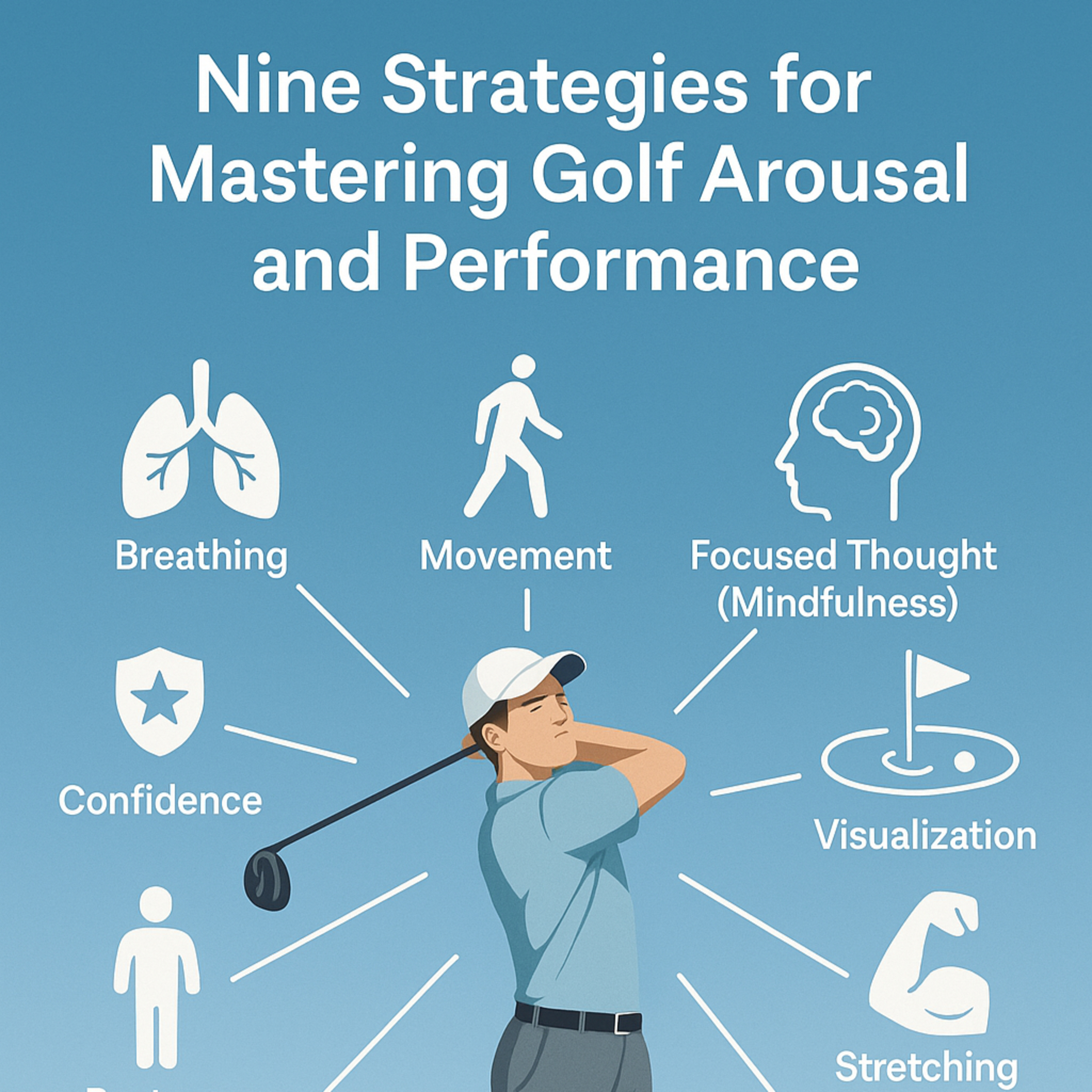
In golf, controlling your nervous system—especially under pressure—is key to consistent performance. Excitement, fear, or anticipation all trigger physiological arousal that can disrupt rhythm, focus, and decision-making. To play your best, you must learn to manage this internal energy.These nine strategies form the foundation of performance coaching. They are simple, trainable, and highly effective when practiced consistently.Your autonomic nervous system regulates involuntary functions like breathing, heart rate, and muscle tone. It consists of two branches:The sympathetic system (arousal/activation)The parasympathetic system (calming/recovery)What high arousal causes:Elevated heart rate and blood pressureShallow breathing or breath-holdingMuscle tension and physical tightnessRacing thoughts and reduced concentrationHow it affects performance on the course:Mental overload: You lose focus and presence.Rushed motion: Swing tempo breaks down.Loss of control: Focus shifts from process to outcome.Physical stress: Breathing tightens, coordination suffers.With proper tools, you can train your body and mind to stay composed and perform under pressure.1. BreathingSlow, deep breathing is the fastest way to calm the nervous system. Breathe in deeply, then exhale twice as long. Use your breath to reset before each shot, after a poor shot, or during delays. It clears your mind and reduces tension.2. MovementHow you move reflects how you feel. Fast, jerky movements signal internal stress. Deliberate, rhythmic movement supports inner calm. Walk smoothly. Grip the club with purpose. Calm movement leads to calm execution.3. Focused Thought (Mindfulness)Stay in the moment. Focus only on the shot at hand—not the last hole or your score. Train your mind to return to the present every time it wanders. Say to yourself: “I’m here. This is the shot.”4. VisualizationMentally rehearse your shot before every swing. Visualize the ball flight, bounce, and roll. Picture the swing and feel its rhythm. The clearer your image, the more effective the result. Visualization links intention with execution and builds confidence.5. RoutineA reliable pre-shot routine provides structure in high-pressure situations. Include:EvaluationVisualizationBreathingExecutionTrain your routine until it becomes automatic—especially when under stress.6. StretchingLight stretching helps release hidden tension in the shoulders, neck, and hands. It also resets your tempo and supports relaxed movement. Stretch briefly before a round or between holes if tension builds.7. PostureYour posture reflects your mental state. Stand tall with an open chest and relaxed shoulders. Good posture improves breathing and reduces nervous tension. Stay aware of your body language before and after every shot.8. BiofeedbackTechnology (like heart rate monitors) can show how your body reacts to pressure. But even simple awareness—like noticing shallow breathing or clenched fists—can serve as feedback. Respond with a calming breath or movement adjustment.9. ConfidenceConfidence is not arrogance—it’s a belief in your ability to respond. Build it through preparation, experience, and inner dialogue. Say to yourself: “I’ve done this before. Trust your process.” Confidence stabilizes your decisions and emotions under pressure.These strategies are not isolated. They reinforce one another to build readiness and control. With consistent practice, they help you:Stay focused in the momentManage tension before it interferesBuild a dependable pre-shot processPlay with rhythm and confidenceGreat golf doesn’t happen by force. It comes when body and mind work together—fluid, calm, and committed. That’s how you enter the zone.This system works—on the course and in life.The Nine Strategieswww.Golf247.eu
Embed this episode
NOW PLAYING
#244 Nine Strategies for Mastering Golf Arousal and Performance
No transcript for this episode yet
Similar Episodes
No similar episodes found.
Similar Podcasts
No similar podcasts found.