
EPISODE · Jun 9, 2026 · 16 MIN
244 | The Weight You're Carrying
The Weight You're Carrying — When the Exhaustion Isn't About the WorkThere's a kind of tired that sleep doesn't touch. You take the day off, sleep well, run a clean service — and still drive home feeling heavy. This episode is for the chef who keeps waiting for that weight to lift with one more vacation, one more good hire, one more season that doesn't crush them — and is starting to suspect it never will.Register for the free monthly Culinary Leadership Lab: a live working space for chefs ready to lead without losing themselves "This didn't start as obligation. It started as love."The Tired Sleep Doesn't TouchYou know the feeling. Solid service, food went out, team was locked in, guests were happy. You did everything right and you still feel heavy. Not frantic. Not chaotic. Just weighed down, and you can't quite name it.Here's the reframe that runs through the whole episode: what if that exhaustion isn't a sign you're weak or burned out or not cut out for this? What if it's information? Because the weight you're carrying usually isn't coming from the work. It's coming from something older than that.Emotional Labor Without AuthorshipThe chefs who show up most depleted almost never identify the right source of the weight. It's the hours. It's the team that won't step up. It's a business that never stops taking. All true. But underneath it, almost every time, there's something else — emotional labor without authorship.Managing the energy in a room, holding the container, absorbing the tension, keeping people steady — that's real work, and it costs something. In a kitchen it falls on the leader invisibly, without acknowledgement and without end. What makes it unbearable isn't the labor. It's doing it without ever consciously choosing it. It just accumulates. And what started as care becomes exhaustion. What started as love becomes weight you didn't even remember picking up. The Chef in the Black ForestYears ago, on a balcony in the Black Forest in Germany, Adam watched a chef step out a side door between lunch and dinner prep. No rush. He grabbed a basket and walked into the trees for 40 minutes — foraging, unhurried, present, like the work and the rest were part of the same thing instead of opposites.That image came home to a high-volume kitchen of ticket stacking and noise, and a belief that slowing down had to be earned. Adam kept telling himself the next job would feel right. Better kitchen, better team, better ownership. The next job came, and the one after that, and the feeling didn't — because the problem was never the kitchen. It was what he carried into every kitchen. He'd confused the weight with the love.------------------Stop chasing stars and start building a career that actually works. Join the National Champions at A-B Tech in Asheville for hands-on training that respects the hustle without losing the soul. Real tools for real chefs .------------------- How We Got ConditionedWe came into this with open hearts. We fell in love with the craft, with the choreography of a kitchen firing on all cylinders. But the industry we walked into had a very specific set of ideas about what dedication looked like, and we absorbed them before we had language to question them. Dedication looked like staying the longest. Commitment looked like absorbing the most. Caring looked like never setting anything down.So we learned to conflate sacrifice with love — to treat the weight as proof of our investment. Nobody handed us a contract to hold other people's motivation as our personal responsibility. It happened through the culture, through the chefs who modeled it, through an industry that rewarded endurance over presence and called it excellence. That's not a character flaw. That's conditioning. What's Actually in the BagThe first step out is naming what's actually in there. You carry other people's moods — you read the room before you read the board. You carry other people's motivation, feeling responsible when someone won't perform. You carry unspoken expectations you never agreed to. And you carry the gap between the chef you imagined you'd be and the chef the business requires you to be. Most of us carry it all silently, as if it's just part of the deal. It doesn't have to be.The Authorship ResetWhen did you stop choosing this? Not when did it get hard — when did you move from *I choose this* to *I don't have a choice?* Because choosing nothing is still a choice, and choices can be revisited. The refrain to take from this episode: this didn't start as obligation. It started as love. Love without authorship turns into obligation. Obligation without boundaries turns into resentment. And resentment is just love that's lost its way.The reset is three steps — on paper, not in your head. One: name what you're carrying that isn't yours. Two: name what you're choosing today. Three: release one expectation you never agreed to. Pick one. Just one. The reset isn't a reinvention. It's a reclamation.-----------------------You wouldn't run a kitchen with broken equipment, so why are you redlining your own body? Carolina Health & Wellness** helps you find your peak with TRT and peptide therapy. Stop grinding through the fatigue. Visit here and get 1% better today.------------Chapters00:00 - Invisible Load 02:31 - Carrying What Isn't Yours 04:08 - The Black Forest Lesson 06:39 - Love and Conditioning 08:09 - Naming the Weight09:35 - Choosing Again 11:02 - The Authorship Reset 13:43 - What We Learned 14:52 - Closing Thanks -----------------Research LinksAB Tech Culinary Program Carolina Health & WellnessLike, Follow & Subscribe to Chef Life Radio Podcast Copyright Chef Life Media LLCStay Tall & Frosty. And Lead from the Heart. Adam.
Embed this episode
What this episode covers
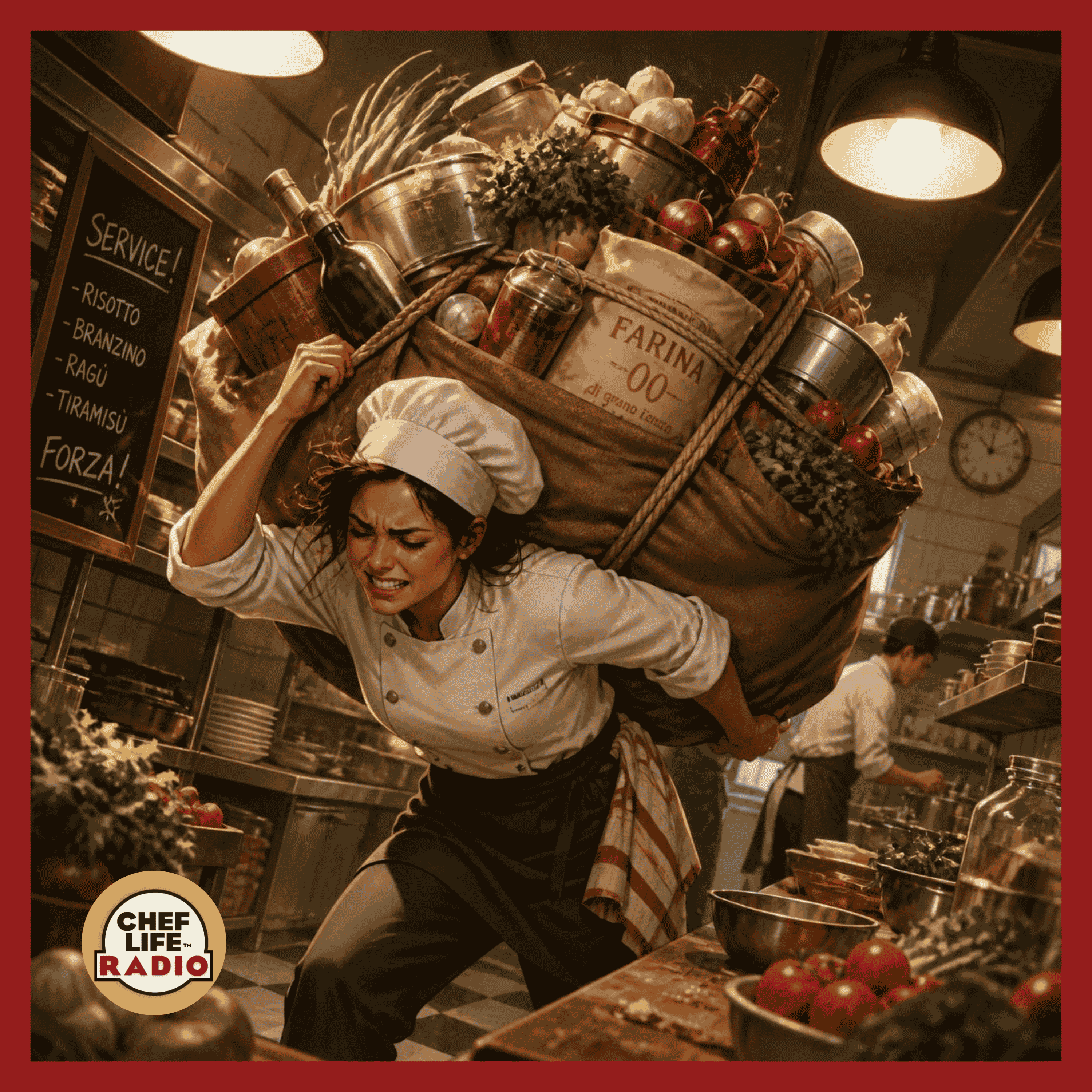
This episode focuses on a kind of exhaustion that sleep does not fix. The host describes it as an invisible load: the weight of things carried over time that may not actually belong to the chef, but still feel personal and constant. He explains that many chefs mistake this weight for burnout caused by hours, staffing, or the demands of the business. Instead, he argues that the deeper issue is emotional labor without authorship — carrying other people’s moods, motivation, and expectations without ever consciously choosing to do so. The episode includes a memory from the Black Forest, where the host saw a chef leave the kitchen, walk into the trees, and return with gathered ingredients. That image stayed with him because it represented a different relationship between work and rest, one that felt connected, present, and unforced. He contrasts that memory with the culture many chefs absorb in high-pressure kitchens, where sacrifice is treated as proof of commitment and endurance is rewarded more than presence. Over time, that can lead chefs to confuse love of the craft with obligation, and care with carrying everything. The host outlines what he calls the “authorship reset,” a three-step practice done on paper: name what you are carrying that is not yours, name what you are choosing today, and release one expectation you never agreed to. He closes by returning to the idea that the work began as love, and that the goal is not to love less, but to carry with more intention.
Ready to play
244 | The Weight You're Carrying
No transcript for this episode yet
Similar Episodes
No similar episodes found.
Similar Podcasts
No similar podcasts found.