
EPISODE · Mar 10, 2026 · 7 MIN
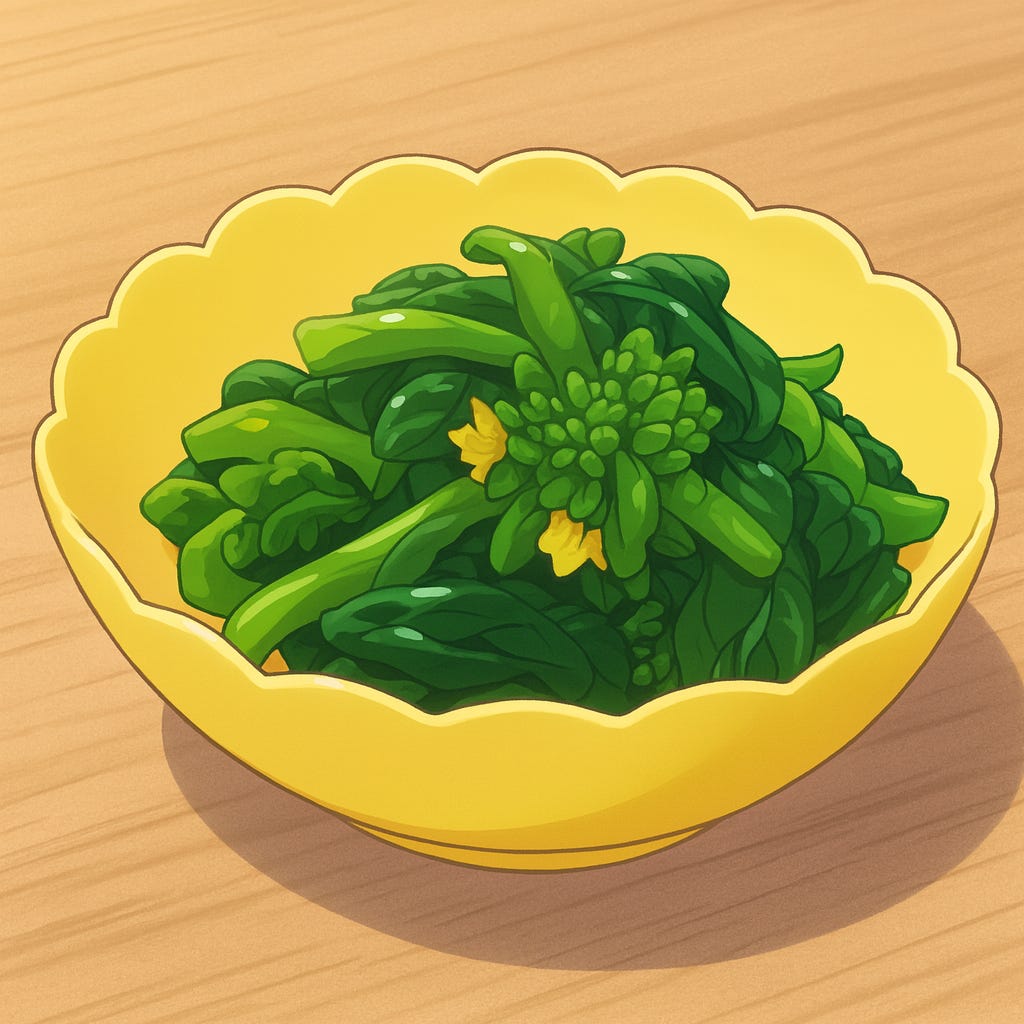
#26 Learn Japanese: Cooking Practice in Kansai Dialect | Izakaya Recipe: Nanohana no Karashi-ae (Week 2)
from Learn Delicious Japanese · host Learn Delicious Japanese
This is a free preview of a paid episode. To hear more, visit learndeliciousjapanese.substack.com#26 Learn Japanese: Cooking Practice in Kansai Dialect | Izakaya Recipe: Nanohana no Karashi-ae (Week 2)Level 3 Week 2 — the kitchen comes alive! This week, Nami and Namihei roll up their sleeves and cook なのはなのからしあえ (mustard-dressed canola flowers) from start to finish — entirely in Kansai dialect. Every chop, splash, and squeeze gets its own onomatopoeia, and Namihei's energetic instructions turn a simple recipe into a full sensory experience: 「さあ、なのはなをとうにゅう!ざっぱ〜ん!」Master the cooking verbs that power every Japanese kitchen: あらう (to wash — じゃばじゃば), きる (to cut — ざくっ), わかす (to boil — ぼこぼこ), ゆでる (to blanch — ざっぱ〜ん), しぼる (to squeeze — ぎゅっ), ねる (to knead/mix to a paste), あえる (to dress/toss), くわえる (to add). Discover the full world of にほんりょうりのぎおんご — the onomatopoeia that makes Japanese cooking come alive. Learn the three pouring expressions that every home cook needs: ちょろり (a thin trickle), たらり (a slow drizzle), たっぷり (generously/plenty) — and feel the rhythm they create together: ちょろり、たらり、たっぷり! Understand the essential technique of いろどめ — why plunging blanched nanohana immediately into れいすい (cold water) locks in その beautiful みどりいろ (green color) through きゅうげき (rapid) cooling, and why even 30 extra seconds of blanching can dull the color to a flat olive tone. Explore the key distinction between あえる (gentle dressing that preserves texture — the heart of あえもの cuisine) and まぜる (thorough mixing), and discover why あえもの is one of the most fundamental categories in Japanese cooking. Learn new Kansai cooking instruction expressions: 〜しますよと (warm action lead-in), とうにゅう!(dramatic ingredient drop), じかんや!(time's up!), 〜なるで〜!(it'll become ~!), and feel how Kansai dialect makes every step of cooking feel like an exciting performance. Dive into the culture of なにわりょうり (Osaka cuisine) — why うすくちしょうゆ (light soy sauce) is the seasoning of choice over dark soy sauce, and how the Osaka cooking philosophy of 「そざいのあじをいかす」(bringing out the natural flavor of ingredients) shapes every dish. Hear Nami's growing ease with Kansai: 「なんか「〜や」とか「〜やろ」って、したしみやすいかんじがするわ。」 And Namihei's reflection: 「かんさいべんは、ひとをちかづけるちからがあるんや。りょうりもおなじやで。」Follow the complete step-by-step なのはなのからしあえ recipe narrated with full onomatopoeia — including how to dissolve こなからし (mustard powder) すこしずつ (little by little) to avoid lumps, when to squeeze (ぎゅっ) and when to toss lightly (さっと), and why たべるちょくぜんにあえる (dressing just before eating) is the golden rule. Plus five new アレンジバリエーション focused on added ingredients and creative pairings: ちりめんじゃこいり (with crispy toasted dried baby sardines — a Kansai izakaya favorite), ゆずこしょうあえ (yuzu citrus pepper for fragrant heat), おひたしふうからしあえ (dashi-soaked ohitashi style), なのはなとたまごのからしあえ (with hard-boiled egg for beautiful spring colors), and からしあえのいなりずしのぐ (mixed into sushi rice for Kansai-style たわらがた inari sushi). Perfect for intermediate learners (JLPT N3-N2) ready to cook in Japanese, deepen their onomatopoeia vocabulary, and feel the warmth and rhythm of Kansai dialect in the kitchen — one ざくっ, one ざっぱ〜ん, one ぎゅっ at a time.📚Check Out the Full Study Guide on Substack https://learndeliciousjapanese.substack.com/
Embed this episode
NOW PLAYING
#26 Learn Japanese: Cooking Practice in Kansai Dialect | Izakaya Recipe: Nanohana no Karashi-ae (Week 2)
No transcript for this episode yet
Similar Episodes
No similar episodes found.
Similar Podcasts
No similar podcasts found.