
EPISODE · Mar 17, 2026 · 6 MIN
#27 Learn Japanese: Tasting in Kansai Dialect | Izakaya Recipe: Nanohana no Karashi-ae (Week 3)
from Learn Delicious Japanese · host Learn Delicious Japanese
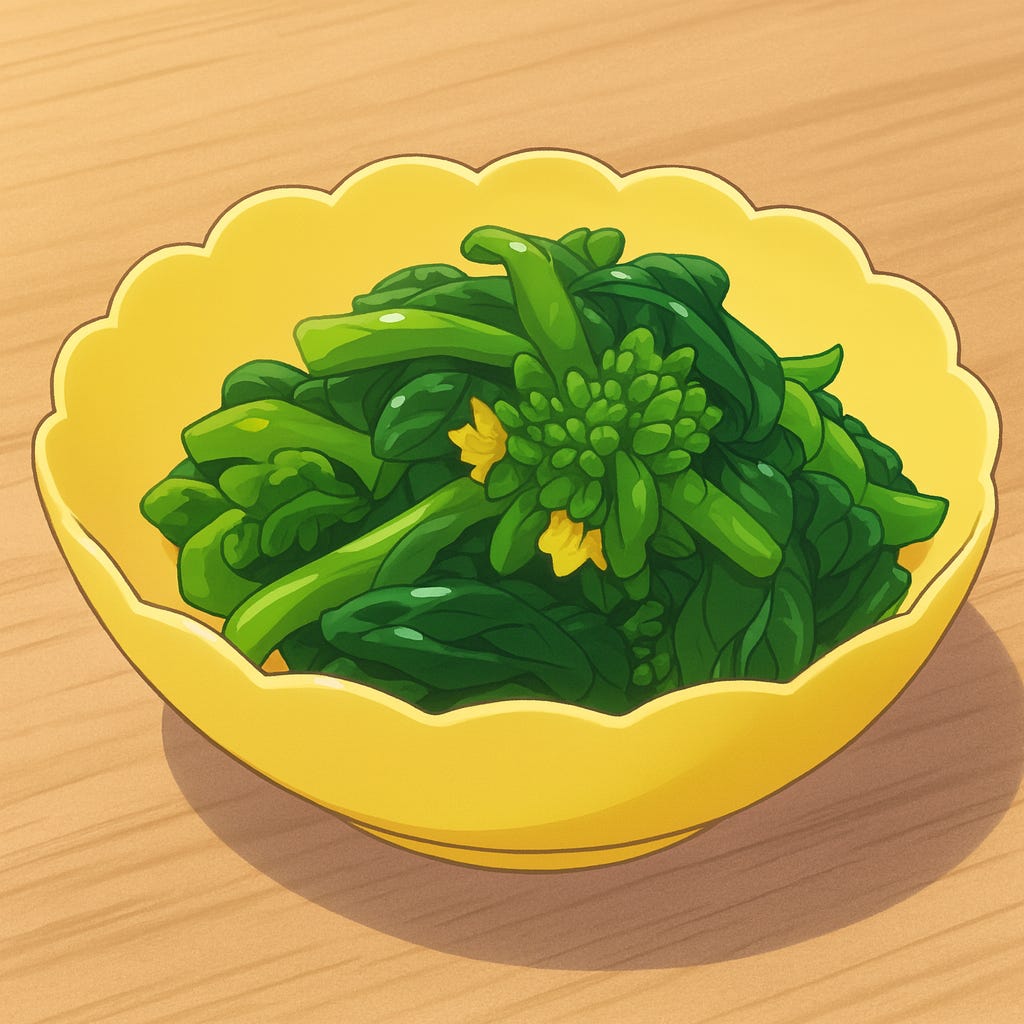
This is a free preview of a paid episode. To hear more, visit learndeliciousjapanese.substack.com#27 Learn Japanese: Tasting in Kansai Dialect | Izakaya Recipe: Nanohana no Karashi-ae (Week 3)Level 3 Week 3 — the moment we've been waiting for: the first bite! This week, Nami finally tastes the なのはなのからしあえ (mustard-dressed canola flowers) she made last week — and Namihei guides her through every layer of flavor entirely in Kansai dialect. Experience the three-act taste of spring: 「さいしょはにがいけど...あとからからしのからみと、だしのうまみがきて...おいしい!」Master the core flavor vocabulary that every Japanese food lover needs: にがみ (bitterness), からみ (spiciness/heat), うまみ (savory depth), and さっぱり (light and refreshing) — and learn how to describe flavors that arrive in sequence with the essential pattern あとから〜がくる (then ~ arrives/follows). Discover the concept of おとなのあじ — "adult taste" — and why the bitterness that children reject becomes the very thing adults treasure in Japanese spring cooking. Understand why はるのにがみ is celebrated rather than minimized in Japanese food culture, and how spring vegetables like なのはな are considered a seasonal gift whose bitterness is believed to cleanse the body after winter. Learn Kansai expressions for tasting and emotional reaction: どうや?(how is it?), それや!(that's it! / exactly!), ほんまやなあ (how true...), ほな (well then / in that case), ええかんじ (nice feeling / that's good!), やろ?(isn't it?), やからなあ (that's why... / because...) — and feel how directly Kansai dialect carries emotion: 「かんさいべんは、きもちがストレートにつたわるんが、ええところやな。」Explore the world of にほんしゅのペアリング (sake pairing) as Namihei recommends ならの「はるしか」とくべつじゅんまい (Harushika Special Junmai from Nara) — and discover the vocabulary of sake: じゅんまいしゅ (pure rice sake), さっぱり (clean and refreshing style), くちあたり (mouthfeel), あとくち (finish/aftertaste), and why light sake and spring bitterness bring out the best in each other. Learn the poetic grammar pattern 〜をつつみこむような — "a [flavor] that seems to wrap around [another flavor]" — and discover how Japanese food language moves between the literal and the philosophical. Touch on one of the most untranslatable feelings in Japanese: せつない — a bittersweet, tender melancholy that spring uniquely carries — and hear Namihei connect it to the taste in Nami's mouth: 「そのにがみも、きっとじんせいのあじやで。にゃー!」 Explore the aesthetics of もののあわれ and why Japanese spring, with its わかれ (farewells) and であい (new encounters), is the season most soaked in emotion. Plus five new アレンジバリエーション focused on completely different cooking methods — distinct from the dressing variations in Week 1 and the topping pairings in Week 2: なのはなのおひたし (soaked in dashi broth with katsuobushi — the same vegetable, a completely different expression), なのはなとベーコンのいためもの (stir-fried raw with garlic and a じゅわっと soy sauce finish — ready in 10 minutes), なのはなのまぜごはん (folded さっくり into warm rice with sesame oil), なのはなのはるまき (wrapped in spring roll pastry and fried golden — the green flowers visible right through the wrapper), and なのはなのしらあえ (the Kansai izakaya classic — bitterness wrapped gently in smooth tofu and sesame). Perfect for intermediate learners (JLPT N3-N2) ready to talk about flavor as feeling, explore Kansai emotional expression, and discover why in Japanese cooking — and in life — にがみ is not something to avoid, but something to savor.📚Check Out the Full Study Guide on Substack https://learndeliciousjapanese.substack.com/
Embed this episode
NOW PLAYING
#27 Learn Japanese: Tasting in Kansai Dialect | Izakaya Recipe: Nanohana no Karashi-ae (Week 3)
No transcript for this episode yet
Similar Episodes
No similar episodes found.
Similar Podcasts
No similar podcasts found.