
EPISODE · Aug 19, 2025 · 40 MIN
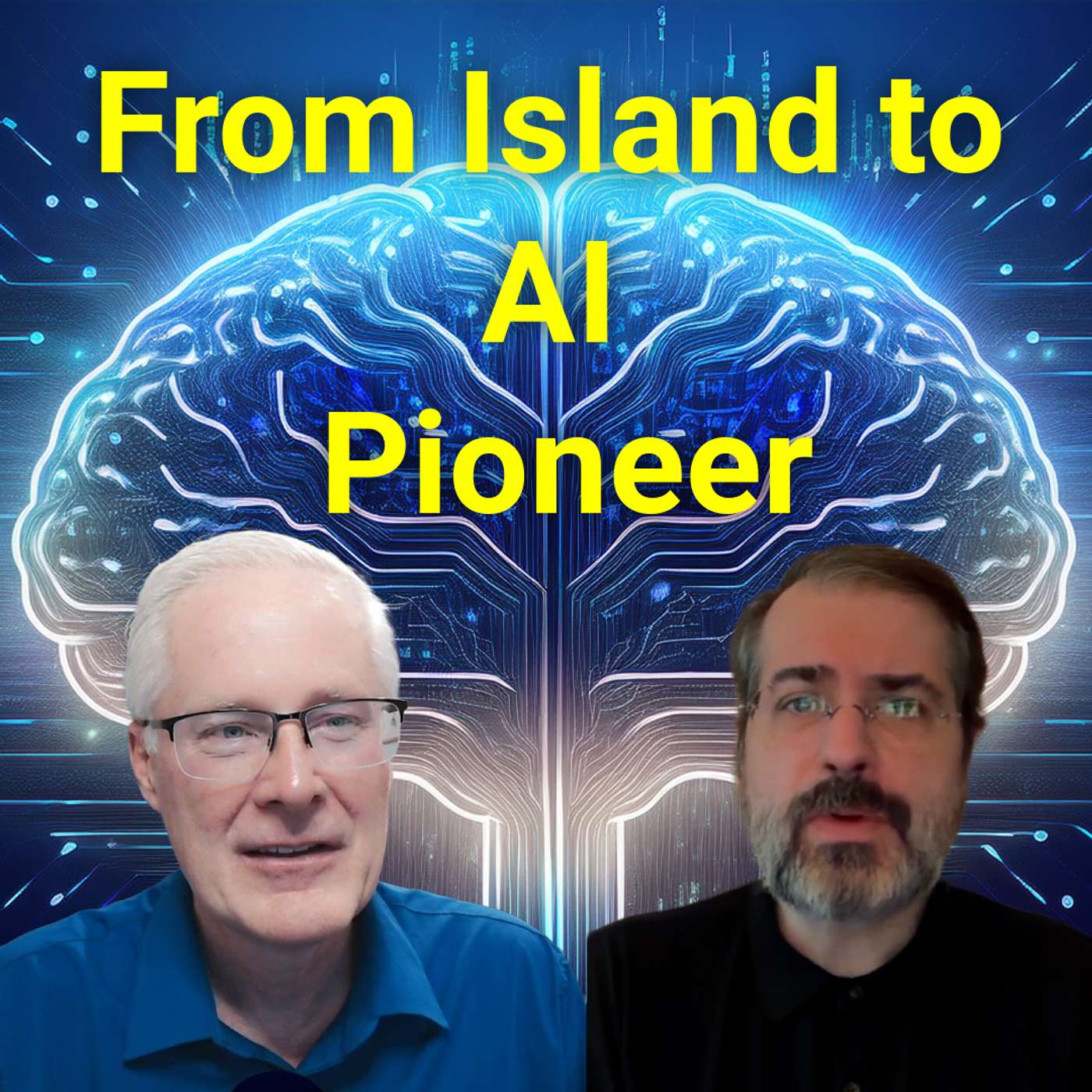
#285 From Island to AI Pioneer: Igor Jablokov on ChatGPT and Innovation
from Embracing Digital Transformation · host Dr. Darren Pulsipher
Check out my new book AI Augmented Teams on Amazon or on my website paidar.ai/books.In this compelling episode of "Embracing Digital Transformation," host Dr. Darren welcomes Igor, the founder of Pryon, an AI expert, to discuss the intersection of artificial intelligence, knowledge management, and organizational innovation. With an impressive background that includes leading an early AI team at IBM and founding pivotal startups in the development of AI technology, Igor shares his unique insights on digital transformation in today's competitive landscape. Key points covered in this episode include the importance of AI in enhancing business processes, how organizations can leverage knowledge clouds for better decision-making, and the critical distinctions between generative AI and retrieval-augmented generation. Join us for an enlightening discussion that will give technologists and business leaders actionable strategies to harness the power of AI effectively. ## Takeaways - AI, a transformative force, is reshaping industries by enhancing access to information and optimizing business processes, paving the way for a brighter future. - Knowledge clouds, in simple terms, are [brief explanation]. They enable organizations to consolidate disparate data sources, thereby enhancing their decision-making capabilities. - A key to effective AI implementation is understanding the different types of data (public, published, proprietary, and personal), empowering the audience with knowledge and insight. - Retrieval-augmented generation (RAG) offers a more reliable and accurate alternative to traditional generative AI by basing responses on authoritative sources. - Organizations, to ensure the efficiency and security of AI applications, must prioritize data management and control, providing a sense of security and power in the digital age. ## Chapters - **0:00** - Introduction to the Podcast and Guest - **2:15** - Igor's Origin Story and Background - **5:30** - The Evolution of AI and Its Business Applications - **10:45** - The Concept of Knowledge Clouds - **15:00** - Understanding the Different Types of Data in AI - **20:15** - Advantages of Retrieval-Augmented Generation (RAG) - **25:30** - The Importance of Data Management in AI - **30:00** - Closing Thoughts and Future Trends in AI - **32:00** - How to Find More About Prion and Final Remarks Listen to the full episode for a deeper dive into these insightful topics!The landscape of technology and artificial intelligence (AI) is transforming at an unprecedented pace, significantly impacting how businesses operate and innovate. As organizations strive to keep pace with this digital transformation, leveraging knowledge effectively has become pivotal. This blog will explore the key themes surrounding this evolution, the challenges faced in knowledge management, and the actionable insights that organizations can implement to thrive.The Digital Shift: Urgent Need to Understand Knowledge Management in AIIn an era where information is generated at an unprecedented rate, understanding how to manage and utilize that knowledge is crucial for businesses. Knowledge management (KM) refers to the strategies and practices for identifying, documenting, and distributing knowledge within an organization. This process ensures that key insights and information are readily available, promoting efficiency and informed decision-making.Knowledge is typically categorized into four types: public, published, proprietary, and personal. Public information is accessible to everyone and often derived from academic and governmental sources. Published information, such as licensed content from credible sources, can be accessed under commercial terms. Proprietary information encapsulates the unique insights that define an organization, including research, patents, and operational procedures, while personal knowledge refers to sensitive data meant for individual access only.To undertake effective knowledge management, organizations need a unified system, often referred to as a "knowledge cloud." This system aggregates and analyzes various types of information while maintaining necessary access controls. By creating this centralized repository of knowledge, firms can streamline their operations, reduce redundancy, and ultimately drive innovation. The Importance of Contextualization in AIAs businesses implement AI technologies, the relevance and contextualization of data become vital. Contextualization ensures that machines, when retrieving information, can distinguish between different types of data. For example, a customer query may be related to product specifications or troubleshooting issues, requiring different responses based on the context of the inquiry. The rise of Generative-AI solutions enhances how businesses provide personalized support to users. By integrating data retrieval with contextual understanding, organizations can minimize confusion and increase satisfaction. Hence, focusing on retrieval-augmented generation (RAG), a technique that utilizes AI to retrieve and generate information based on the query's context, businesses can optimize their interaction with AI, deriving precise results from contextual data instead of relying solely on random sampling.This paradigm shift emphasizes the importance of user access controls when utilizing generative AI. Not all data is created equal; some documents have higher authority and reliability than others. By embedding the ability to assess the authority of each piece of information utilized by AI, organizations can ensure that the insights are trustworthy and relevant. Best Practices for Leveraging AI in Knowledge ManagementTo successfully integrate AI in knowledge management, organizations can follow these actionable best practices:1. **Create a Robust Knowledge Repository**: Establish a centralized knowledge cloud that brings together various forms of knowledge including structured and unstructured data. Ensure that access controls are implemented to store and access sensitive information securely.2. **Utilize AI for Data Contextualization**: Implement AI tools capable of contextualizing data by the inquiry. This enhances how AI serves users, as it provides more accurate and beneficial interactions.3. **Establish a Framework for Data Management**: Develop policies that outline how data is ingested, retrieved, and utilized. This framework should also address issues such as data duplication, authority, and updates, ensuring that users have access to the most accurate and up-to-date information.4. **Train Employees on Knowledge Management Practices**: Education is vital for effective knowledge management. Implement training programs that teach employees how to utilize the knowledge repository and understand the importance of data accuracy and contextualization.5. Encourage Continuous Feedback and Improvements: Foster a culture within the organization where employees can offer feedback on the knowledge management process. Continuously iterating on these practices is not only beneficial, but also crucial. This approach ensures that every employee feels integral to the process, leading to truly inspiring and a more robust and effective system. Conclusion: The Future Landscape of Knowledge ManagementAs digital transformation continues to shape the world, effective knowledge management through AI is no longer just a beneficial solution; it...
What this episode covers
Check out my new book AI Augmented Teams on Amazon or on my website paidar.ai/books.In this compelling episode of "Embracing Digital Transformation," host Dr. Darren welcomes Igor, the founder of Pryon, an AI expert, to discuss the intersection of artificial intelligence, knowledge management, and organizational innovation. With an impressive background that includes leading an early AI team at IBM and founding pivotal startups in the development of AI technology, Igor shares his unique insights on digital transformation in today's competitive landscape. Key points covered in this episode include the importance of AI in enhancing business processes, how organizations can leverage knowledge clouds for better decision-making, and the critical distinctions between generative AI and retrieval-augmented generation. Join us for an enlightening discussion that will give technologists and business leaders actionable strategies to harness the power of AI effectively. ## Takeaways - AI, a transformative force, is reshaping industries by enhancing access to information and optimizing business processes, paving the way for a brighter future. - Knowledge clouds, in simple terms, are [brief explanation]. They enable organizations to consolidate disparate data sources, thereby enhancing their decision-making capabilities. - A key to effective AI implementation is understanding the different types of data (public, published, proprietary, and personal), empowering the audience with knowledge and insight. - Retrieval-augmented generation (RAG) offers a more reliable and accurate alternative to traditional generative AI by basing responses on authoritative sources. - Organizations, to ensure the efficiency and security of AI applications, must prioritize data management and control, providing a sense of security and power in the digital age. ## Chapters - **0:00** - Introduction to the Podcast and Guest - **2:15** - Igor's Origin Story and Background - **5:30** - The Evolution of AI and Its Business Applications - **10:45** - The Concept of Knowledge Clouds - **15:00** - Understanding the Different Types of Data in AI - **20:15** - Advantages of Retrieval-Augmented Generation (RAG) - **25:30** - The Importance of Data Management in AI - **30:00** - Closing Thoughts and Future Trends in AI - **32:00** - How to Find More About Prion and Final Remarks Listen to the full episode for a deeper dive into these insightful topics!The landscape of technology and artificial intelligence (AI) is transforming at an unprecedented pace, significantly impacting how businesses operate and innovate. As organizations strive to keep pace with this digital transformation, leveraging knowledge effectively has become pivotal. This blog will explore the key themes surrounding this evolution, the challenges faced in knowledge management, and the actionable insights that organizations can implement to thrive.The Digital Shift: Urgent Need to Understand Knowledge Management in AIIn an era where information is generated at an unprecedented rate, understanding how to manage and utilize that knowledge is crucial for businesses. Knowledge management (KM) refers to the strategies and practices for identifying, documenting, and distributing knowledge within an organization. This process ensures that key insights and information are readily available, promoting efficiency and informed decision-making.Knowledge is typically categorized into four types: public, published, proprietary, and personal. Public information is accessible to everyone and often derived from academic and governmental sources. Published information, such as licensed content from credible sources, can be accessed under commercial terms. Proprietary information encapsulates the unique insights that define an organization, including research, patents, and operational procedures, while personal knowledge refers to sensitive data meant for individual access only.To undertake effective knowledge management, organizations need a unified system, often referred to as a "knowledge cloud." This system aggregates and analyzes various types of information while maintaining necessary access controls. By creating this centralized repository of knowledge, firms can streamline their operations, reduce redundancy, and ultimately drive innovation. The Importance of Contextualization in AIAs businesses implement AI technologies, the relevance and contextualization of data become vital. Contextualization ensures that machines, when retrieving information, can distinguish between different types of data. For example, a customer query may be related to product specifications or troubleshooting issues, requiring different responses based on the context of the inquiry. The rise of Generative-AI solutions enhances how businesses provide personalized support to users. By integrating data retrieval with contextual understanding, organizations can minimize confusion and increase satisfaction. Hence, focusing on retrieval-augmented generation (RAG), a technique that utilizes AI to retrieve and generate information based on the query's context, businesses can optimize their interaction with AI, deriving precise results from contextual data instead of relying solely on random sampling.This paradigm shift emphasizes the importance of user access controls when utilizing generative AI. Not all data is created equal; some documents have higher authority and reliability than others. By embedding the ability to assess the authority of each piece of information utilized by AI, organizations can ensure that the insights are trustworthy and relevant. Best Practices for Leveraging AI in Knowledge ManagementTo successfully integrate AI in knowledge management, organizations can follow these actionable best practices:1. **Create a Robust Knowledge Repository**: Establish a centralized knowledge cloud that brings together various forms of knowledge including structured and unstructured data. Ensure that access controls are implemented to store and access sensitive information securely.2. **Utilize AI for Data Contextualization**: Implement AI tools capable of contextualizing data by the inquiry. This enhances how AI serves users, as it provides more accurate and beneficial interactions.3. **Establish a Framework for Data Management**: Develop policies that outline how data is ingested, retrieved, and utilized. This framework should also address issues such as data duplication, authority, and updates, ensuring that users have access to the most accurate and up-to-date information.4. **Train Employees on Knowledge Management Practices**: Education is vital for effective knowledge management. Implement training programs that teach employees how to utilize the knowledge repository and understand the importance of data accuracy and contextualization.5. Encourage Continuous Feedback and Improvements: Foster a culture within the organization where employees can offer feedback on the knowledge management process. Continuously iterating on these practices is not only beneficial, but also crucial. This approach ensures that every employee feels integral to the process, leading to truly inspiring and a more robust and effective system. Conclusion: The Future Landscape of Knowledge ManagementAs digital transformation continues to shape the world, effective knowledge management through AI is no longer just a beneficial solution; it...
NOW PLAYING
#285 From Island to AI Pioneer: Igor Jablokov on ChatGPT and Innovation
No transcript for this episode yet
Similar Episodes
Apr 21, 2026 ·13m
Apr 19, 2026 ·16m
Apr 17, 2026 ·13m
Apr 13, 2026 ·11m
Apr 11, 2026 ·16m