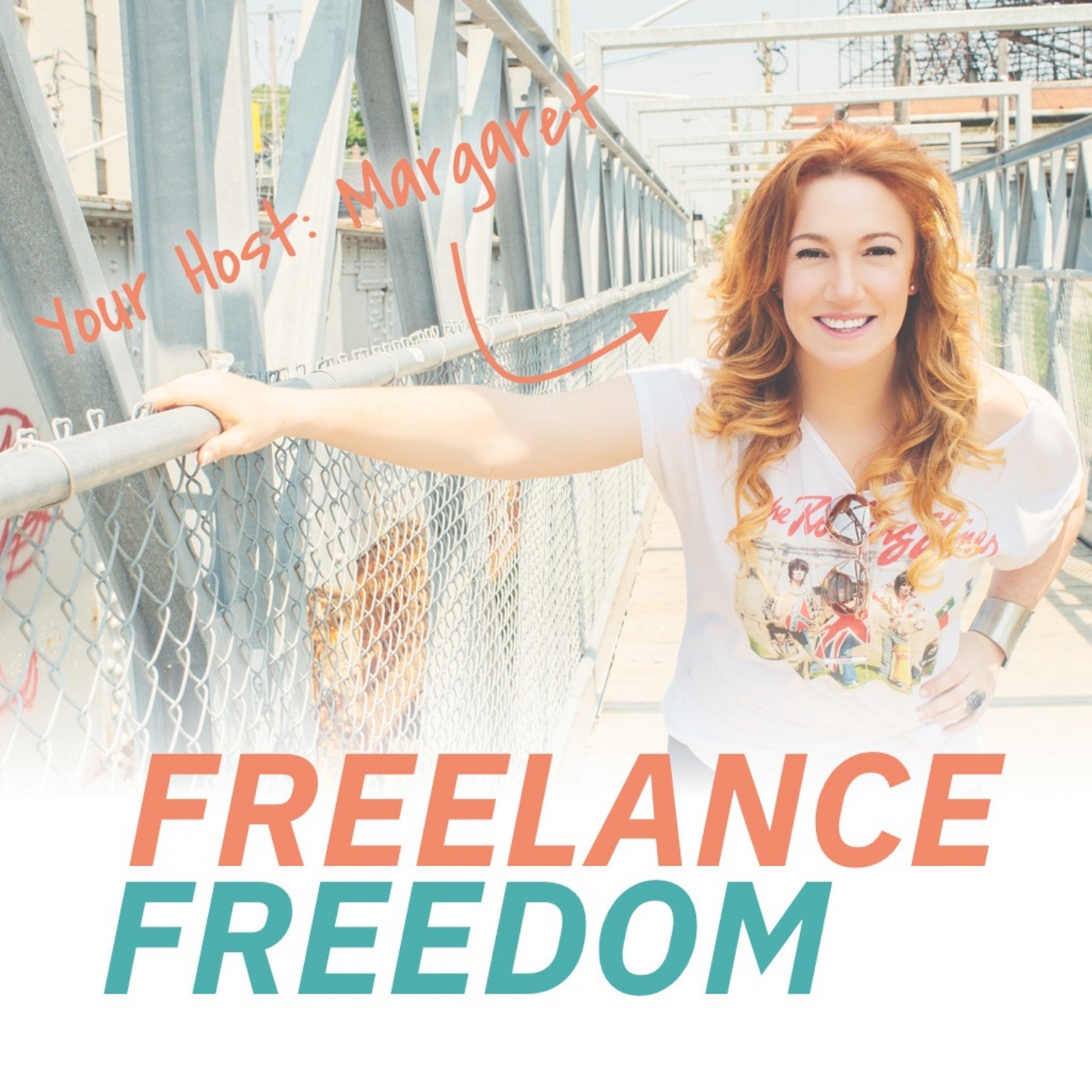
3. Where to Start episode artwork

EPISODE · Jun 13, 2019 · 39 MIN

3. Where to Start

from Freelance Freedom

Before we get ahead of ourselves, let's start where everyone does... the beginning.The top 20 questions I first get from people when they first start out20. Should I name my business my own name, or should I create a separate company name for it?The short answer is, will this company be intertwined (and reliant on) your own identity, or can it live outside of you. Also, will you ever sell your company. I can't answer this for you, but this will help you come to a more solid conclusion.4:32 -- 19. Incorporate vs. Sole Prop etc...Depends on the business structure, but basically stay as a sole prop until you earn more money than you need to live. That way, when you are making more money, you can incorporate, but you can start as a sole prop TODAY. The caveat is that if it's a highly-liable company, you may consider incorporating earlier to cover yourself from a legal perspective.We'll dive into this in 2 later episodes, one focussed around Canadian companies and taxes, and the second around American.6:16 -- 18. Do I need a website with a portfolio.Not necessarily. Most of your first clients will come from word of mouth, so they will hire you for you. Don't let lack of portfolio stop you from looking for new clients. The reality is, people make decisions from feeling, not necessarily from an intellectual place so instilling confidence in your clients, that you are right for the job is much more important than your portfolio when first starting out.7:38 -- 17. Do I charge my client tax right away?This will depend on the region you live in, so be sure to check with your local tax laws. In general, if it's optional in your region, I would suggest registering a tax number right away and charging clients. It adds to your professionalism, will allow you more "write offs" (which we'll cover in another episode), and you can claim that to get back anyways.9:12 -- 16. Do I need a contract and what should it say?Legally, the answer is yes. However, you can get some contracts online that will cover you until you until you start diving into deeper waters.I would say, it's worth investing in a lawyer to draw you up a contract after you've made your first 20K or so. That's not a rule, but let's just say if you're making 90K per year, you should probably be seeking some legal counsel to make sure your business is protected.10:35 -- 15. What does a proposal look like, and what should it include?Use a PDF or Google Doc to stat. Include the following-- Intro to project-- Breakdown of phases-- Cost breakdown-- Social Proof (optional)-- Payment schedule12:47 -- 14. Do I need project management softwares?There are sooo many! If you're just starting out, I would suggest a simple setup of Google docs and folders to get you started with a folder for client to upload image assets, and website copy.Keep a Google sheet of timeline and payment schedule in there for bonus points.13:44 -- 13. What do I charge?There are soooo many answers to this question, but here are some initial steps.1. Find out what your competitors are charging to get a ballpark2. Decide on an hourly rate, and price projects using the estimated hours x 30% buffer. You don't need to show clients that calculation, but you can use it for your own references as a starting place. 3. Value pricing: it's very difficult to value price from day 1, so we'll get into that at a later date.16:24 -- 12. How do I get referrals and testimonials for my future clients?Ask them!This might seem very awkward at first, but here's a quick script to help you along. Also, make sure to ask the verbally first towards the end of their agreement.When you start the conversation, ask...How was everything for you?How was it paced out?How was my communication?then follow up with,Hey _______,That's amazing! I would love other people to have the same experience as you, do you mind putting ________ in writing, I'd love to feature you on my site.Take the feedback, both good and bad and either turn it into a testimonial, or implement the improvements in your process.It's important to take the negative feedback as well as the positive to make changes and grow as a company.17:53 -- 11. What happens when a project goes south?Sometimes this happens. Sometimes it's your fault, and sometimes it's the clients fault. Without placing blame, it's in your best interest to go back to the contracts and proposals to gain clarification.I always give the client the benefit of the doubt, so if there was something in my contract that could be mis-interpreted, I take the hit, make the corrections, move forward and re-word + revisit my policies moving forward.The key is be present, be empathetic, be proactive, and err on the side of clarity.19:52 -- 10. How do I invoice and collect payment?There are so many optins now!For accounting purposes, I would suggest using software like Freshbooks, WaveApps, FreeAgent, Xero, Harvest or Quickbooks as you can take payment (for a fee) directly through the application. Alternatively, you can bill through either Stripe or PayPal. Truthfully, clients have their own preferences, so I actually take all of the following.-- Interac e-transfer-- Overseas wire transfer-- Venmo-- Stripe-- PayPal-- Cheque (oldschool)-- Quickbooks online paymentI would suggest having at least one way they can pay via bank (e-transfer, or cheque), and one way they can pay via credit card (PayPal or Stripe). Yes, there are fees associated with credit card payments, but those are the cost of doing business.22:58 -- 9. How do I find well paying clients?Go check out the previous episode "How to find clients"23:37 -- 8. What's the difference between a Proposal, a Contract and and Invoice? Do you need all 3?Yes, you do need all 3, however you can combine the proposal and contract together if you like.Proposal: Project outline, scope, timeline and payment schedule outlineContract: Legally binding agreement of terms signed by both parties. Contains agreement of proposal.Invoice: Payment request, methods of payment accepted, and when payment is dueOnce the contract is approved, you can use companies like HelloSign, Adobe, and Docusign to get their signatures digitally.25:44 -- 7. What is a Niche? Do I need to specialize my services?A niche is something that you're good at, or a certain customer you wish to serve that differentiates you from your peers. Serving a niche is serving a narrower group of people. Some people get freaked out when you suggest to narrow their focus, but I'm telling you, you will attract more of the right people, be able to charge more, and have less stress is you get REALLY good at just one, or a few key things.Episode on niching coming soon...27:39 -- 6. Do I need to run ads to promote myself?No! i go over so many FREE ways to get clients in the previous episode, go listen... now.28:02 -- 5. What should I have in place to look like a professional?Even though I highly encourage you to be yourself in every capacity, there are a few things you should brush up when you are looking to present yourself to clients.Here's a few:-- Make sure there's nothing incriminating on your FB and IG feeds-- Update your skillsets on LinkedIn, and have people vouch for you-- Be aware of publicly visible photographs on your profiles.29:22 -- 4. Do I have to work for Free?In my unpopular opinion, yes.If you love the project, and are invested absolutely. Don't take free jabs because you think you should, do it because you want to.30:27 -- 3. How do I respond to family and friends when they want my services for a "deal"?Generally, I don't do work for friends and family. I refer them out. However, I did in the beginning because they were projects that were close to me, and they were projects that I believed in. Also, I only do projects for FREE on my own terms, or I charge full price. I never charge discounted rates. Period.32:44 -- 2. How do clients typically pay? How many increments do you divide it into?This is typically how my payment plans work out. Feel free to swipe!> $1000 -- Everything is paid at the end of a project$2000 - $7000 -- Split into 2 payments. 50% initially, 50% on deployment$10,000 + -- 3 to 4 payments, generally spanning monthly payments. I allow some flexibility with clients, which they appreciate. I rarely split into more than 4 payments.35:10 -- 1. When does a project end? Do you offer packages? Do you need to offer support?The project for me ends when it it deployed to the final URL. This should be made clear in the contract terms.I do offer 14 - 30 days of support following deployment, and this is included in the project. You also need to make this clear, that no new features will be added during this time, but it is used to improve existing functionality, iron out bugs and general troubleshooting of existing features, as well as training.You don't need to offer any packages beyond that, but many developers offer maintenance packages that allow continuous updates to the site, usually for a monthly fee.That's it!Reach out if you have any Q's (at symbol)margreffell everywhere. Hosted on Acast. See acast.com/privacy for more information.

Before we get ahead of ourselves, let's start where everyone does... the beginning.The top 20 questions I first get from people when they first start out20. Should I name my business my own name, or should I create a separate company name for it?The short answer is, will this company be intertwined (and reliant on) your own identity, or can it live outside of you. Also, will you ever sell your company. I can't answer this for you, but this will help you come to a more solid conclusion.4:32 -- 19. Incorporate vs. Sole Prop etc...Depends on the business structure, but basically stay as a sole prop until you earn more money than you need to live. That way, when you are making more money, you can incorporate, but you can start as a sole prop TODAY. The caveat is that if it's a highly-liable company, you may consider incorporating earlier to cover yourself from a legal perspective.We'll dive into this in 2 later episodes, one focussed around Canadian companies and taxes, and the second around American.6:16 -- 18. Do I need a website with a portfolio.Not necessarily. Most of your first clients will come from word of mouth, so they will hire you for you. Don't let lack of portfolio stop you from looking for new clients. The reality is, people make decisions from feeling, not necessarily from an intellectual place so instilling confidence in your clients, that you are right for the job is much more important than your portfolio when first starting out.7:38 -- 17. Do I charge my client tax right away?This will depend on the region you live in, so be sure to check with your local tax laws. In general, if it's optional in your region, I would suggest registering a tax number right away and charging clients. It adds to your professionalism, will allow you more "write offs" (which we'll cover in another episode), and you can claim that to get back anyways.9:12 -- 16. Do I need a contract and what should it say?Legally, the answer is yes. However, you can get some contracts online that will cover you until you until you start diving into deeper waters.I would say, it's worth investing in a lawyer to draw you up a contract after you've made your first 20K or so. That's not a rule, but let's just say if you're making 90K per year, you should probably be seeking some legal counsel to make sure your business is protected.10:35 -- 15. What does a proposal look like, and what should it include?Use a PDF or Google Doc to stat. Include the following-- Intro to project-- Breakdown of phases-- Cost breakdown-- Social Proof (optional)-- Payment schedule12:47 -- 14. Do I need project management softwares?There are sooo many! If you're just starting out, I would suggest a simple setup of Google docs and folders to get you started with a folder for client to upload image assets, and website copy.Keep a Google sheet of timeline and payment schedule in there for bonus points.13:44 -- 13. What do I charge?There are soooo many answers to this question, but here are some initial steps.1. Find out what your competitors are charging to get a ballpark2. Decide on an hourly rate, and price projects using the estimated hours x 30% buffer. You don't need to show clients that calculation, but you can use it for your own references as a starting place. 3. Value pricing: it's very difficult to value price from day 1, so we'll get into that at a later date.16:24 -- 12. How do I get referrals and testimonials for my future clients?Ask them!This might seem very awkward at first, but here's a quick script to help you along. Also, make sure to ask the verbally first towards the end of their agreement.When you start the conversation, ask...How was everything for you?How was it paced out?How was my communication?then follow up with,Hey _______,That's amazing! I would love other people to have the same experience as you, do you mind putting ________ in writing, I'd love to feature you on my site.Take the feedback, both good and bad and either turn it into a testimonial, or implement the improvements in your process.It's important to take the negative feedback as well as the positive to make changes and grow as a company.17:53 -- 11. What happens when a project goes south?Sometimes this happens. Sometimes it's your fault, and sometimes it's the clients fault. Without placing blame, it's in your best interest to go back to the contracts and proposals to gain clarification.I always give the client the benefit of the doubt, so if there was something in my contract that could be mis-interpreted, I take the hit, make the corrections, move forward and re-word + revisit my policies moving forward.The key is be present, be empathetic, be proactive, and err on the side of clarity.19:52 -- 10. How do I invoice and collect payment?There are so many optins now!For accounting purposes, I would suggest using software like Freshbooks, WaveApps, FreeAgent, Xero, Harvest or Quickbooks as you can take payment (for a fee) directly through the application. Alternatively, you can bill through either Stripe or PayPal. Truthfully, clients have their own preferences, so I actually take all of the following.-- Interac e-transfer-- Overseas wire transfer-- Venmo-- Stripe-- PayPal-- Cheque (oldschool)-- Quickbooks online paymentI would suggest having at least one way they can pay via bank (e-transfer, or cheque), and one way they can pay via credit card (PayPal or Stripe). Yes, there are fees associated with credit card payments, but those are the cost of doing business.22:58 -- 9. How do I find well paying clients?Go check out the previous episode "How to find clients"23:37 -- 8. What's the difference between a Proposal, a Contract and and Invoice? Do you need all 3?Yes, you do need all 3, however you can combine the proposal and contract together if you like.Proposal: Project outline, scope, timeline and payment schedule outlineContract: Legally binding agreement of terms signed by both parties. Contains agreement of proposal.Invoice: Payment request, methods of payment accepted, and when payment is dueOnce the contract is approved, you can use companies like HelloSign, Adobe, and Docusign to get their signatures digitally.25:44 -- 7. What is a Niche? Do I need to specialize my services?A niche is something that you're good at, or a certain customer you wish to serve that differentiates you from your peers. Serving a niche is serving a narrower group of people. Some people get freaked out when you suggest to narrow their focus, but I'm telling you, you will attract more of the right people, be able to charge more, and have less stress is you get REALLY good at just one, or a few key things.Episode on niching coming soon...27:39 -- 6. Do I need to run ads to promote myself?No! i go over so many FREE ways to get clients in the previous episode, go listen... now.28:02 -- 5. What should I have in place to look like a professional?Even though I highly encourage you to be yourself in every capacity, there are a few things you should brush up when you are looking to present yourself to clients.Here's a few:-- Make sure there's nothing incriminating on your FB and IG feeds-- Update your skillsets on LinkedIn, and have people vouch for you-- Be aware of publicly visible photographs on your profiles.29:22 -- 4. Do I have to work for Free?In my unpopular opinion, yes.If you love the project, and are invested absolutely. Don't take free jabs because you think you should, do it because you want to.30:27 -- 3. How do I respond to family and friends when they want my services for a "deal"?Generally, I don't do work for friends and family. I refer them out. However, I did in the beginning because they were projects that were close to me, and they were projects that I believed in. Also, I only do projects for FREE on my own terms, or I charge full price. I never charge discounted rates. Period.32:44 -- 2. How do clients typically pay? How many increments do you divide it into?This is typically how my payment plans work out. Feel free to swipe!> $1000 -- Everything is paid at the end of a project$2000 - $7000 -- Split into 2 payments. 50% initially, 50% on deployment$10,000 + -- 3 to 4 payments, generally spanning monthly payments. I allow some flexibility with clients, which they appreciate. I rarely split into more than 4 payments.35:10 -- 1. When does a project end? Do you offer packages? Do you need to offer support?The project for me ends when it it deployed to the final URL. This should be made clear in the contract terms.I do offer 14 - 30 days of support following deployment, and this is included in the project. You also need to make this clear, that no new features will be added during this time, but it is used to improve existing functionality, iron out bugs and general troubleshooting of existing features, as well as training.You don't need to offer any packages beyond that, but many developers offer maintenance packages that allow continuous updates to the site, usually for a monthly fee.That's it!Reach out if you have any Q's (at symbol)margreffell everywhere. Hosted on Acast. See acast.com/privacy for more information.

NOW PLAYING

3. Where to Start

0:00 39:25

No transcript for this episode yet

We transcribe on demand. Request one and we'll notify you when it's ready — usually under 10 minutes.

Rich Dad's Guide to Investing II Robert T. Kiyosaki II Full Audiobook II Robert T. Kiyosaki Investing means different things to different people… and there is a huge difference between passive investing and becoming an active, engaged investor. Rich Dad’s Guide to Investing, one of the three core titles in the Rich Dad Series, covers the basic rules of investing, how to reduce your investment risk, how to convert your earned income into passive income… plus Rich Dad’s 10 Investor Controls.The Rich Dad philosophy makes a key distinction between managing your money and growing it… and understanding key principles of investing is the first step toward creating and growing wealth. This book delivers guidance, not guarantees, to help anyone begin the process of becoming an active investor on the road to financial freedom. Naturally Inspired Podcast: Health. Freedom. Lifestyle. Tammy Cuthbert Garcia Naturally Inspired Podcast is a weekly podcast where we interview health practitioners, authors, filmmakers, scientists and leading experts in the fields of health and wellness. Guests are on the cutting edge and our conversations aim to inspire listeners to think critically about health choices for better life results. Learn More At https://naturallyinspiredpodcast.com/ Yours Truly, Johnny Dollar Entertainment Radio Yours Truly, Johnny Dollar was a classic American radio drama that aired on CBS Radio from February 18, 1949, to September 30, 1962.The show starred Bob Bailey as Johnny Dollar, a freelance insurance investigator with a knack for getting into trouble. Each episode followed Dollar as he investigated a new case, from insurance fraud to murder. The show was known for its fast-paced action, witty dialogue, and iconic sound effects.The show's signature element was Dollar's expense account, which he would read aloud at the end of each episode. This often humorous list of items, such as "50 cents for chewing gum - to keep my brain working under pressure," gave listeners a glimpse into Dollar's world and personality.Yours Truly, Johnny Dollar was a huge success, running for over 600 episodes and winning numerous awards. It was one of Inside Out THE OUTSIDERS Weekly Podcast from The Outsiders a Youth Group from Freedom Chapel located in Long Island NY

Frequently Asked Questions

How long is this episode of Freelance Freedom?

This episode is 39 minutes long.

When was this Freelance Freedom episode published?

This episode was published on June 13, 2019.

What is this episode about?

Before we get ahead of ourselves, let's start where everyone does... the beginning.The top 20 questions I first get from people when they first start out20. Should I name my business my own name, or should I create a separate company name for it?The...

Can I download this Freelance Freedom episode?

Yes, you can download this episode by clicking the download button on the episode player, or subscribe to the podcast in your preferred podcast app for automatic downloads.
URL copied to clipboard!