PodParley PodParley

30 - Section 30

An episode of the A Prisoner of Morro podcast, hosted by Upton Sinclair, titled "30 - Section 30" was published on August 16, 2010 and runs 10 minutes.

August 16, 2010 ·10m · A Prisoner of Morro

0:00 / 0:00
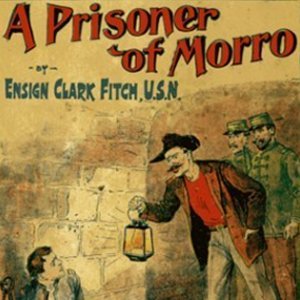
Prisoner of Morro, A by Upton Sinclair (1878 - 1968) LibriVox Upton Sinclair, born in 1878 was a Pulitzer Prize-winning American author. He wrote over 90 books in many genres. Best known for his muckraking novel, The Jungle, Sinclair also wrote adventure fiction. Many of these works were written under the pseudonym, Ensign Clark Fitch, U.S.N. A Prisoner of Morrow, published in 1898 when Sinclair was but 20 years old, is one of these efforts. The period for this work is the ten-week Spanish–American War which occurred in 1898. Revolts against Spanish rule had been prevalent for decades in Cuba and were closely watched by Americans. The main issue of the war was Cuban independence from Spain. The war was notable for a series of one-sided American naval and military victories and led to the downfall of Spain as a colonial power. Clif Faraday, a naval cadet, is the main character in this novel. Stationed on a gunboat off the Cuban island as part of the U. S. naval blockade, Clif sur A Princess of Mars (Version 3) Edgar Rice Burroughs John Carter is mysteriously conveyed to Mars, where he discovers two intelligent species continually embroiled in warfare. Although he is a prisoner of four-armed green men, his Civil War experience and Earth-trained musculature give him superior martial abilities, and he is treated with deference by this fierce race. Falling in love with a princess of red humanoids (two-armed but egg-bearing), he contrives a daring escape and later rescues the red men from the hostility of another nation of their own race. In this struggle he enlists the aid of his former captors, whom he gradually civilizes, teaching them first the practical advantages of kindness to their beasts of burden and then of casting aside centuries of communal living in favor of the nuclear family. At last he even starts them on the path to mastering the arts of friedship and diplomacy. When the failure of the atmosphere-generator threatens the planet's inhabitants with extinction, Carter's luck, memory, and sheer determina Princess of Mars (Version 3), A by Edgar Rice Burroughs (1875 - 1950) LibriVox John Carter is mysteriously conveyed to Mars, where he discovers two intelligent species continually embroiled in warfare. Although he is a prisoner of four-armed green men, his Civil War experience and Earth-trained musculature give him superior martial abilities, and he is treated with deference by this fierce race. Falling in love with a princess of red humanoids (two-armed but egg-bearing), he contrives a daring escape and later rescues the red men from the hostility of another nation of their own race. In this struggle he enlists the aid of his former captors, whom he gradually civilizes, teaching them first the practical advantages of kindness to their beasts of burden and then of casting aside centuries of communal living in favor of the nuclear family. At last he even starts them on the path to mastering the arts of friendship and diplomacy. When the failure of the atmosphere-generator threatens the planet's inhabitants with extinction, Carter's luck, memory, and sheer determin Secret Service by Albert Richardson Loyal Books Albert Richardson was a reporter for Horace Greeley’s New York Tribune when he volunteered to hazard an undercover journey through the American south, reporting incognito on the growing secession crisis in that region. With the outbreak of the Civil War in April 1861, he attached himself to the Union armies as a war correspondent, sending dispatches from the fields of battle for the next two years. Then, in May 1863, while attempting to pass a Confederate battery outside Vicksburg, Richardson found himself thrown from a burning barge into the Mississippi River, swimming for his life with a squad of Union soldiers and several other reporters. Captured as a prisoner, he was at first confident that as a civilian newspaperman he would be quickly exchanged. Instead, he was to spend the next 18 months in various prisoner of war camps. Seizing at last an opportunity for escape, he set out to cross the snowy Appalachians in the dead of winter, heading for Union lines in Tennessee, assisted by
URL copied to clipboard!