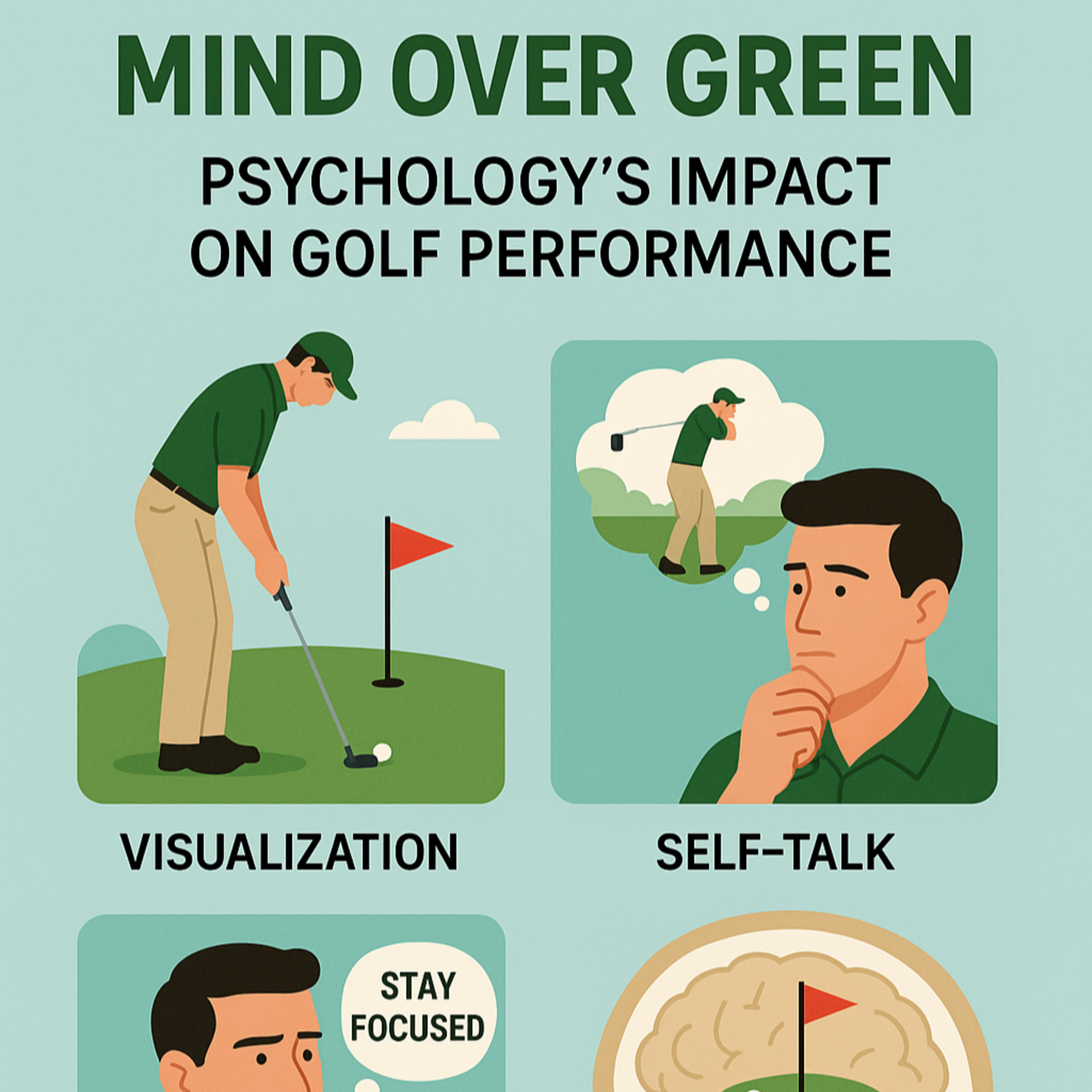
#317 Mental Skills Training and Golf Performance episode artwork

EPISODE · Aug 16, 2025 · 17 MIN

#317 Mental Skills Training and Golf Performance

from Golf 247.eu: The Global Platform for Innovative Technologies and Teaching Concepts. · host Golf247.eu

This study explored whether targeted mental skills training—specifically visualization and self-talk—could boost golf performance in recreational players. The premise was simple yet powerful: just as you can groove a swing through deliberate physical practice, you can train your mind to perform better under pressure. By narrowing the gap between absolute potential and actual performance, golfers could, in theory, become more consistent and resilient on the course.Why Mental Skills MatterTop players have long known the “five inches between the ears” often decide the match. In golf, where every shot stands alone and pressure builds across hours, mental control is as critical as ball-striking. This research drew from the concept of deliberate practice—structured, goal-driven, feedback-rich training—and applied it to two proven mental game tools.Visualization (Imagery)Visualization is mentally rehearsing shots before you hit them. It works through:Psychoneuromuscular activation: firing the same neural pathways as the actual swing.Arousal regulation: setting your ideal mental state before the shot.Scenario rehearsal: making pressure situations feel familiar.Using the PETTLEP model (Physical, Environment, Task, Timing, Learning, Emotion, Perspective), the most effective imagery is realistic, detailed, and competition-relevant. Positive outcome imagery (Motivational General Mastery) sharpens focus, builds confidence, and calms nerves.Self-TalkSelf-talk is the inner commentary you carry on between shots. It can:Direct focus toward or away from the task.Steady—or rattle—your emotional state.Boost or undermine belief in your ability.Shape decision-making under pressure.Training aims to spot negative phrases, cut their frequency, and replace them with confident, constructive messages.Study DesignUsing an ABAB single-subject design, golfers were split into visualization or self-talk groups. Baseline performance was measured, training introduced, paused, and reintroduced. Putting (10 ft, uphill) and pitching (30 yards) accuracy were tracked alongside mental skill “manipulation checks” to test whether the mental abilities themselves were improving.ResultsThe outcome? No consistent gains in putting or pitching accuracy—and no clear pattern of improvement in the mental skills tested.Golf performance: Accuracy varied widely in all phases; some players even declined slightly post-training.Visualization: No steady increase in imagery accuracy; few practiced outside sessions.Self-talk: Only one participant reported fewer negative statements; most showed no change.Why It Fell ShortSeveral factors undermined results:Limited engagement and minimal off-course practice.Weather delays that broke training rhythm.Recreational players’ lower motivation for systematic mental training.Too few consistent data points to reveal subtle trends.TakeawayWhile this study didn’t confirm short-term mental training gains for casual golfers, it doesn’t close the door on its value. For committed, competitive players training under structured conditions, visualization and self-talk remain powerful tools—capable of turning a good swing into a winning score when it matters most.www.Golf247.eu

This study explored whether targeted mental skills training—specifically visualization and self-talk—could boost golf performance in recreational players. The premise was simple yet powerful: just as you can groove a swing through deliberate physical practice, you can train your mind to perform better under pressure. By narrowing the gap between absolute potential and actual performance, golfers could, in theory, become more consistent and resilient on the course.Why Mental Skills MatterTop players have long known the “five inches between the ears” often decide the match. In golf, where every shot stands alone and pressure builds across hours, mental control is as critical as ball-striking. This research drew from the concept of deliberate practice—structured, goal-driven, feedback-rich training—and applied it to two proven mental game tools.Visualization (Imagery)Visualization is mentally rehearsing shots before you hit them. It works through:Psychoneuromuscular activation: firing the same neural pathways as the actual swing.Arousal regulation: setting your ideal mental state before the shot.Scenario rehearsal: making pressure situations feel familiar.Using the PETTLEP model (Physical, Environment, Task, Timing, Learning, Emotion, Perspective), the most effective imagery is realistic, detailed, and competition-relevant. Positive outcome imagery (Motivational General Mastery) sharpens focus, builds confidence, and calms nerves.Self-TalkSelf-talk is the inner commentary you carry on between shots. It can:Direct focus toward or away from the task.Steady—or rattle—your emotional state.Boost or undermine belief in your ability.Shape decision-making under pressure.Training aims to spot negative phrases, cut their frequency, and replace them with confident, constructive messages.Study DesignUsing an ABAB single-subject design, golfers were split into visualization or self-talk groups. Baseline performance was measured, training introduced, paused, and reintroduced. Putting (10 ft, uphill) and pitching (30 yards) accuracy were tracked alongside mental skill “manipulation checks” to test whether the mental abilities themselves were improving.ResultsThe outcome? No consistent gains in putting or pitching accuracy—and no clear pattern of improvement in the mental skills tested.Golf performance: Accuracy varied widely in all phases; some players even declined slightly post-training.Visualization: No steady increase in imagery accuracy; few practiced outside sessions.Self-talk: Only one participant reported fewer negative statements; most showed no change.Why It Fell ShortSeveral factors undermined results:Limited engagement and minimal off-course practice.Weather delays that broke training rhythm.Recreational players’ lower motivation for systematic mental training.Too few consistent data points to reveal subtle trends.TakeawayWhile this study didn’t confirm short-term mental training gains for casual golfers, it doesn’t close the door on its value. For committed, competitive players training under structured conditions, visualization and self-talk remain powerful tools—capable of turning a good swing into a winning score when it matters most.www.Golf247.eu

NOW PLAYING

#317 Mental Skills Training and Golf Performance

0:00 17:35

No transcript for this episode yet

We transcribe on demand. Request one and we'll notify you when it's ready — usually under 10 minutes.

Frequently Asked Questions

How long is this episode of Golf 247.eu: The Global Platform for Innovative Technologies and Teaching Concepts.?

This episode is 17 minutes long.

When was this Golf 247.eu: The Global Platform for Innovative Technologies and Teaching Concepts. episode published?

This episode was published on August 16, 2025.

What is this episode about?

This study explored whether targeted mental skills training—specifically visualization and self-talk—could boost golf performance in recreational players. The premise was simple yet powerful: just as you can groove a swing through deliberate...

Can I download this Golf 247.eu: The Global Platform for Innovative Technologies and Teaching Concepts. episode?

Yes, you can download this episode by clicking the download button on the episode player, or subscribe to the podcast in your preferred podcast app for automatic downloads.
URL copied to clipboard!