
EPISODE · Nov 30, 2019 · 1H 25M
38 Hans G Schantz, PhD Physics: Some History, Philosophy, and Teaching of Physics, Good and Bad
from The ReasonRx Podcast · host Michael Gold
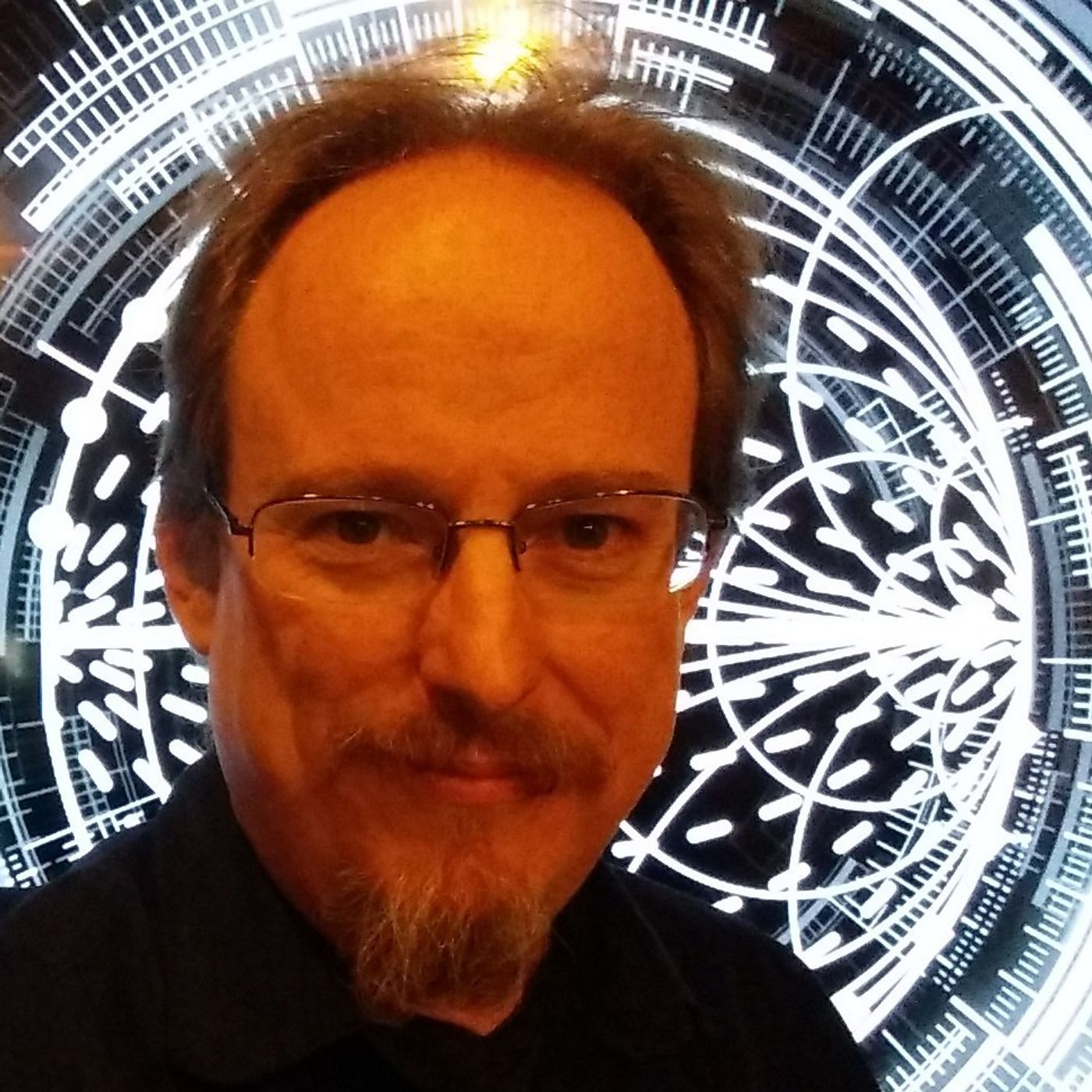
Dr. Hans Schantz joins us to for an initial discussion of physics. We first establish some context: in the history of science are many initial, unscientific rejections of valid ideas; we need to recognize science by how thinking is done, by method, not by mere authority or prestige or convention. With that said, Dr. Schantz takes us quickly through some major scientists (and their work) in the development of electromagnetic theory, then discusses -how some major physicists were self-taught-the importance of knowing the historical development of ideas-some errors in this history of physics-the importance of philosophy to physics-the relationship between (logical) induction and deduction in physics-the need for independent thought-why we need to study physics-and moreAbout Hans: Hans G. Schantz is a scientist, inventor, entrepreneur, and science fiction writer. Principal Scientist at Geeks and Nerds Corporation, he was formerly a co-founder and Chief Technical Officer of the Q-Track Corporation, and co-inventor of the company's near-field precision indoor location systems. A theoretical physicist by training, he wrote the book The Art and Science of Ultrawideband Antennas. More recently, he branched out into science fiction, authoring the Amazon top-ten alternate history science fiction techno-thriller, The Hidden Truth. Hans lives in Huntsville, Alabama. His wife Barbara, inventor of the Baby Dipper Bowl, looks after the couple's two sets of twins.You can contact Dr. Schantz at https://amzn.to/33CcKS5Contact Melanie:1. [email protected]. https://www.linkedin.com/in/melanie-katragadda-nctm-9b14522aContact Michael:1. [email protected]. http://www.goldams.com 3. https://www.facebook.com/EpistemeRx/4. https://www.linkedin.com/in/michael-gold-2883921/ To support the show and help us grow our audience -- so we have more of an impact on education and the culture -- please help us with a donation:1. https://www.patreon.com/reasonrxpodcast 2. https://www.paypal.com/cgi-bin/webscr?cmd=_s-xclick&hosted_button_id=SP6QPQKJU4XSS&source=url Also, please consider liking us on your podcast app, and leaving a rational review.And if you find an episode valuable, please share it with parents, teachers, school personnel, friends, and family. Help spread the word, help spread rational ideas for better living.Show notes :1. Dr. Schantz discussed L'Hospital, Lambert, Coulomb, Faraday, Davies, Maxwell, Heaviside, Poynting, Lodge, Hertz, Einstein, Wheatstone, Kant, Kuhn, Descartes.a. some history of elctromagnetic theory: https://en.wikipedia.org/wiki/History_of_electromagnetic_theoryb. again, some history of electromagnetic theory: https://www.britannica.com/science/electromagnetism/Historical-survey2. Hans Berger and the EEGa. https://en.wikipedia.org/wiki/Hans_Bergerb. http://scihi.org/hans-berger-electroencephalogram/3. Never Cry Wolf by Farley Mowat: https://www.amazon.com/Never-Cry-Wolf-Amazing-Arctic/dp/03168817914. Lynn Margulisa. https://en.wikipedia.org/wiki/Lynn_Margulisb. https://evolution.berkeley.edu/evolibrary/article/history_24c. https://www.bbvaopenmind.com/en/science/leading-figures/lynn-margulisa-rebel-scientist/d. recent research on and disagreement about the endosymbiotic theory of mitochondriai. https://www.the-scientist.com/daily-news/mitochondrias-bacterial-origins-upended-33345ii. https://www.sciencedirect.com/science/article/pii/S00225193173034425. Ignaz Semmelweisa. https://en.wikipedia.org/wiki/Ignaz_Semmelweisb. https://www.pbs.org/newshour/health/ignaz-semmelweis-doctor-prescribed-hand-washing6. Alfred Wegner and the theory of continental drifta. https://en.wikipedia.org/wiki/Continental_driftb. https://www.smithsonianmag.com/science-nature/when-continental-drift-was-considered-pseudoscience-90353214/7. Occam's Razora. https://en.wikipedia.org/wiki/Occam%27s_razorb. https://plato.stanford.edu/entries/simplicity/8. Newton’s Rules of Reasoning in Natural Philosophy: http://strangebeautiful.com/other-texts/newton-principia-rules-reasoning.pdf9. "Teaching Heat: the Rise and Fall of the Caloric Theory" by Dr. Michael Fowler (UVa): http://galileoandeinstein.physics.virginia.edu/more_stuff/TeachingHeat.htm10. Physics for the Inquiring Mind: The Methods, Nature, and Philosophy of Physical Science by Eric M. Rogers -- a very good physics text, though flawed a bit in its ideas about sciencea. buy on Amazon: https://www.amazon.com/Physics-Inquiring-Mind-Philosophy-Physical/dp/0691151156b. free pdf: https://archive.org/details/PhysicsForTheEnquiringMind11. Some good physics lectures by Dr. Michael Fowler: http://galileo.phys.virginia.edu/~mf1i/home.html12. Recommended books on logic and the scientific methoda. The Art of Reasoning: An Introduction to Logic and Critical Thinking by David Kelleyhttps://www.amazon.com/Art-Reasoning-Introduction-Critical-Thinking/dp/0393930785/b. Logic: An Introduction by Lionel Rubyhttps://www.amazon.com/Logic-Introduction-Lionel-Ruby/dp/1889439142/c. An Introduction to Logic by H. W. B. Josephhttps://www.amazon.com/Introduction-Logic-H-W-Joseph/dp/1889439177/d. The Logical Leap: Induction in Physics by David Harrimanhttps://www.amazon.com/Logical-Leap-Induction-Physics/dp/0451230051/e. Introduction to Objectivist Epistemology by Ayn Randhttps://www.amazon.com/Introduction-Objectivist-Epistemology-Expanded-Second/dp/0452010306/Note: I disagree that (most) any theory explains an experiment -- unless one drops context, i.e., jettisons logic and the norms of good epistemology. In which case, we are no longer in the realm of science. A proper interpretation of any experiment can logically happen only when the context for the experiment is retained and utilized, at least implicitly. We need to know "how do I know?," and that logically entails tracing all logically, scientifically, causally relevant items of knowledge back to experience and the evidence of the senses. Picture and bio courtesy Hans Schantz.Please consider liking us on your podcast app, and leaving a rational review.Email us at [email protected], [email protected], or [email protected]: https://www.linkedin.com/in/michael-gold-2883921/Gold Academy: https://goldams.comTotal Human Fitness: https://total-human-fitness.com
Embed this episode
What this episode covers
Dr. Hans Schantz joins us to for an initial discussion of physics. We first establish some context: in the history of science are many initial, unscientific rejections of valid ideas; we need to recognize science by how thinking is done, by method, not by mere authority or prestige or convention. With that said, Dr. Schantz takes us quickly through some major scientists (and their work) in the development of electromagnetic theory, then discusses -how some major physicists were self-taught -the importance of knowing the historical development of ideas -some errors in this history of physics -the importance of philosophy to physics -the relationship between (logical) induction and deduction in physics -the need for independent thought -why we need to study physics -and more About Hans: Hans G. Schantz is a scientist, inventor, entrepreneur, and science fiction writer. Principal Scientist at Geeks and Nerds Corporation, he was formerly a co-founder and Chief Technical Officer of the Q-Track Corporation, and co-inventor of the company's near-field precision indoor location systems. A theoretical physicist by training, he wrote the book The Art and Science of Ultrawideband Antennas. More recently, he branched out into science fiction, authoring the Amazon top-ten alternate history science fiction techno-thriller, The Hidden Truth. Hans lives in Huntsville, Alabama. His wife Barbara, inventor of the Baby Dipper Bowl, looks after the couple's two sets of twins. You can contact Dr. Schantz at https://amzn.to/33CcKS5 Contact Melanie: 1. [email protected] 2. https://www.linkedin.com/in/melanie-katragadda-nctm-9b14522a Contact Michael: 1. [email protected] 2. http://www.goldams.com 3. https://www.facebook.com/EpistemeRx/ 4. https://www.linkedin.com/in/michael-gold-2883921/ To support the show and help us grow our audience -- so we have more of an impact on education and the culture -- please help us with a donation: 1. https://www.patreon.com/reasonrxpodcast 2. https://www.paypal.com/cgi-bin/webscr?cmd=_s-xclick&hosted_button_id=SP6QPQKJU4XSS&source=url Also, please consider liking us on your podcast app, and leaving a rational review. And if you find an episode valuable, please share it with parents, teachers, school personnel, friends, and family. Help spread the word, help spread rational ideas for better living. Show notes : 1. Dr. Schantz discussed L'Hospital, Lambert, Coulomb, Faraday, Davies, Maxwell, Heaviside, Poynting, Lodge, Hertz, Einstein, Wheatstone, Kant, Kuhn, Descartes. a. some history of elctromagnetic theory: https://en.wikipedia.org/wiki/History_of_electromagnetic_theory b. again, some history of electromagnetic theory: https://www.britannica.com/science/electromagnetism/Historical-survey 2. Hans Berger and the EEG a. https://en.wikipedia.org/wiki/Hans_Berger b. http://scihi.org/hans-berger-electroencephalogram/ 3. Never Cry Wolf by Farley Mowat: https://www.amazon.com/Never-Cry-Wolf-Amazing-Arctic/dp/0316881791 4. Lynn Margulis a. https://en.wikipedia.org/wiki/Lynn_Margulis b. https://evolution.berkeley.edu/evolibrary/article/history_24 c. https://www.bbvaopenmind.com/en/science/leading-figures/lynn-margulisa-rebel-scientist/ d. recent research on and disagreement about the endosymbiotic theory of mitochondria i. https://www.the-scientist.com/daily-news/mitochondrias-bacterial-origins-upended-33345 ii. https://www.sciencedirect.com/science/article/pii/S0022519317303442 5. Ignaz Semmelweis a. https://en.wikipedia.org/wiki/Ignaz_Semmelweis b. https://www.pbs.org/newshour/health/ignaz-semmelweis-doctor-prescribed-hand-washing 6. Alfred Wegner and the theory of continental drift<br...
NOW PLAYING
38 Hans G Schantz, PhD Physics: Some History, Philosophy, and Teaching of Physics, Good and Bad
No transcript for this episode yet
Similar Episodes
No similar episodes found.
Similar Podcasts
No similar podcasts found.