
EPISODE · Jan 11, 2026 · 25 MIN
4.2 The Americas — Lost Memories
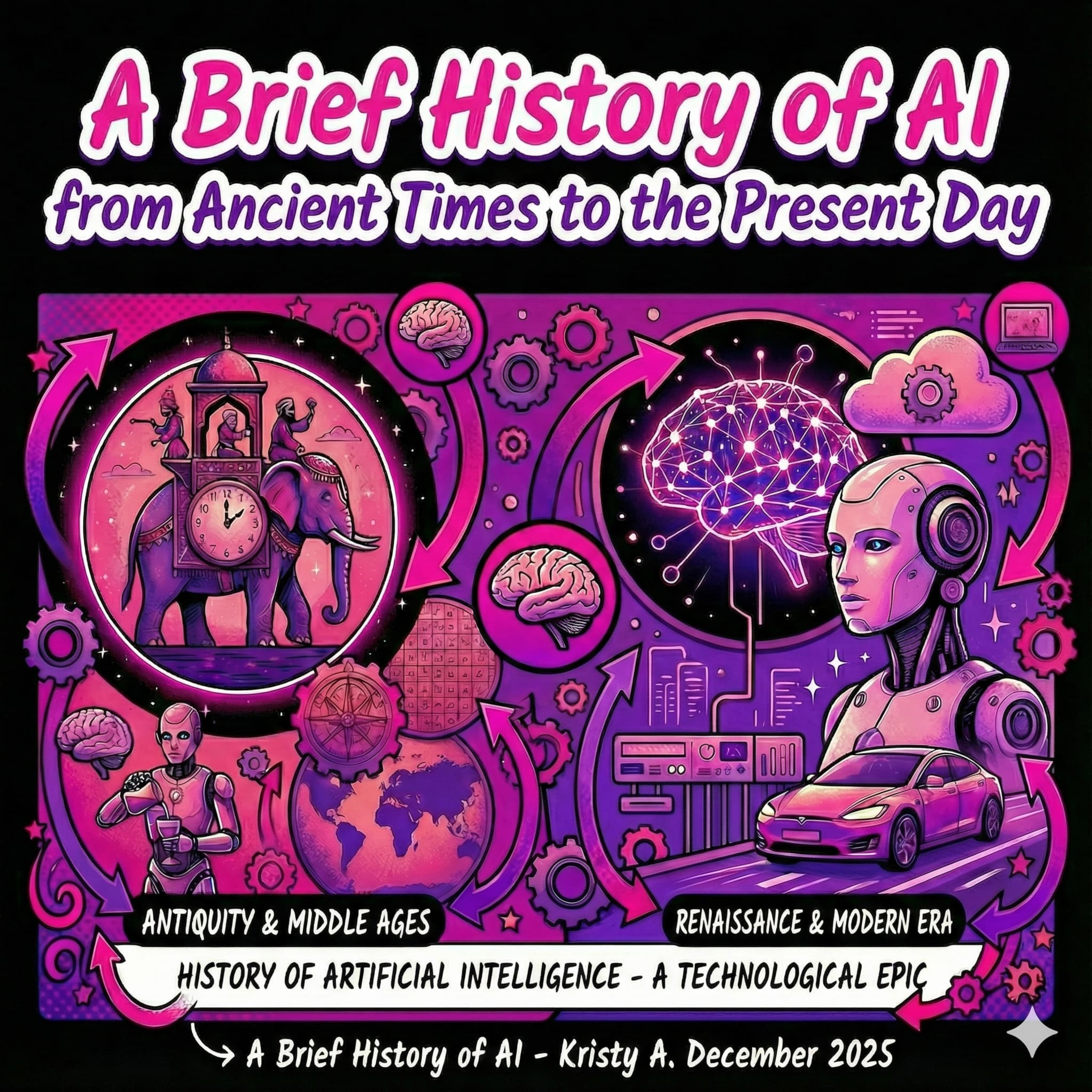
from A brief history of AI from ancient times to the present day · host Kristy Anamoutou
Lost Memories: How the Americas Invented and Forgot the Foundations of Artificial IntelligenceA knot can be a memory. A memory can be burned.On July 12, 1562, a Franciscan monk named Diego de Landa ordered twenty-seven Maya codices thrown into fire — centuries of astronomical observations reduced to ashes. Of the entire Maya civilization, four books survived. Four books to bear witness to an entire library.The Maya had independently invented zero, developed positional notation, and created three interlocking calendars allowing eclipse predictions accurate to within minutes. This was a system of calculation, prediction, and world-modeling. De Landa threw it into the fire.In the Andes, the quipu — knotted cords — stored staggering quantities of data. Position of the knot, type of knot, color of the cord: a portable computer before its time. The quipucamayocs who mastered it were human processors.In Canada, one hundred and fifty thousand Indigenous children were torn from their families between 1883 and 1996. The goal: to "kill the Indian in the child." The Truth and Reconciliation Commission called this system cultural genocide.Then came 1946. The American army presented ENIAC to the press. In the background of the photos, six women were manipulating cables — Betty Holberton, Kay McNulty, and their colleagues. They were not introduced. No one asked their names. It took fifty years for them to be recognized.The Americas are a continent of lost memories — and sometimes recovered ones. The Maya zero, the Andean quipus, the ENIAC pioneers. The cords are still there. The knots are waiting to be made.
What this episode covers
Lost Memories: How the Americas Invented and Forgot the Foundations of Artificial IntelligenceA knot can be a memory. A memory can be burned.On July 12, 1562, a Franciscan monk named Diego de Landa ordered twenty-seven Maya codices thrown into fire — centuries of astronomical observations reduced to ashes. Of the entire Maya civilization, four books survived. Four books to bear witness to an entire library.The Maya had independently invented zero, developed positional notation, and created three interlocking calendars allowing eclipse predictions accurate to within minutes. This was a system of calculation, prediction, and world-modeling. De Landa threw it into the fire.In the Andes, the quipu — knotted cords — stored staggering quantities of data. Position of the knot, type of knot, color of the cord: a portable computer before its time. The quipucamayocs who mastered it were human processors.In Canada, one hundred and fifty thousand Indigenous children were torn from their families between 1883 and 1996. The goal: to "kill the Indian in the child." The Truth and Reconciliation Commission called this system cultural genocide.Then came 1946. The American army presented ENIAC to the press. In the background of the photos, six women were manipulating cables — Betty Holberton, Kay McNulty, and their colleagues. They were not introduced. No one asked their names. It took fifty years for them to be recognized.The Americas are a continent of lost memories — and sometimes recovered ones. The Maya zero, the Andean quipus, the ENIAC pioneers. The cords are still there. The knots are waiting to be made.
NOW PLAYING
4.2 The Americas — Lost Memories
No transcript for this episode yet
Similar Episodes
Mar 26, 2026 ·1m
Mar 19, 2026 ·34m
Feb 18, 2026 ·11m
Feb 11, 2026 ·45m