
EPISODE · Nov 16, 2025 · 10 MIN
#409 The Influence of Putter Head Shape and Hosel Design on Aiming and Ball Roll in Putting
from Golf 247.eu: The Global Platform for Innovative Technologies and Teaching Concepts. · host Golf247.eu
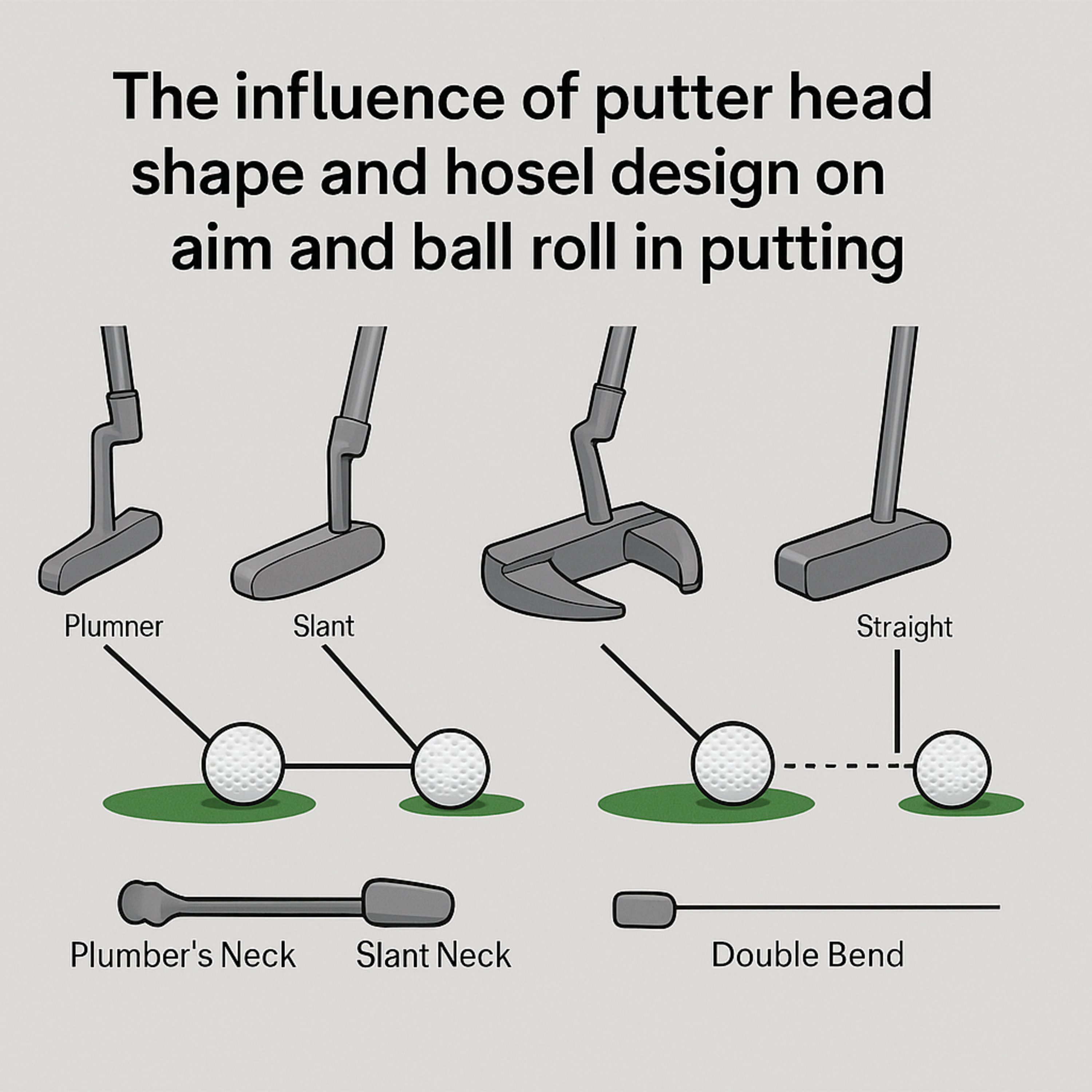
This report explains how putter head shape and hosel design affect aiming, face control, and ball roll. It outlines how blades, mid‑mallets, mallets, and high‑MOI heads match different stroke types, and how hosels—such as Plumber’s Neck, Slant Neck, Double Bend, and Center Shaft—control toe hang, offset, launch, and face rotation. The goal is to help golfers select a configuration that matches their stroke mechanics and visual tendencies.I. Influence of Putter Head ShapesA. Aiming and AlignmentPutter heads mainly influence how easily players align the face:Mallets: Strong visual guidance with multiple sightlines. High‑MOI versions (e.g., Spider X) add contrasting colors and frames, ideal for players needing structure.Blades: Minimal alignment guides; require precise visual discipline.Center Shafted: Promote symmetry and help players who struggle with setup.Mid‑Mallets: Offer moderate alignment support.B. Ball Roll and StabilityHead size and weighting determine stability (MOI):Mallet / High‑MOI: Extremely stable, resist twisting, and promote early true roll.Blades: Lower MOI, more feedback but less forgiveness on mis-hits.Center Shafted: Often face balanced, minimizing rotation for straight strokes.II. Influence of Hosel DesignsHosels determine toe hang, face rotation, and offset, all of which influence stroke type and launch consistency.A. Rotation Control via Toe HangToe hang decides how much the face naturally opens and closes:Straight Strokes:Double Bend, Center Shaft → Face balanced (no toe hang), minimal rotation.Arc Strokes:Slant Neck, Hosel-less/Post Neck → High toe hang supports strong rotation.Slight Arc:Plumber’s Neck, Short Neck → Moderate toe hang for balanced rotation and feedback.B. Offset and Launch ControlOffset influences hand position and shaft lean:Plumber’s Neck (moderate offset): Encourages forward shaft lean and consistent launch.Gooseneck (maximum offset): Hands more forward; enhances loft and visual squareness.Slant Neck (minimal offset): Harder for players needing strong visual structure.Summary of Hosel InfluenceHosels control shaft lean, launch angle, skid phase, and overall roll.Face-balanced designs limit rotation; toe-hang designs encourage controlled release.III. Matching Head & Hosel to Stroke Types1. Straight StrokeHead: High‑MOI MalletHosel: Double Bend / Center ShaftWhy: Maximum stability, minimal rotation.2. Slight Arc StrokeHead: Mid‑Mallet / BladeHosel: Plumber’s Neck / Short NeckWhy: Balanced feedback and moderate rotation.3. Strong Arc StrokeHead: BladeHosel: Slant Neck / Heel Shafted / Hosel‑lessWhy: Maximum toe flow and feel.Special NeedsAlignment Issues: Spider/Jailbird + Center Shaft or GooseneckFeel Players: Compact Blade or Mallet + Flow Neck / Hosel‑lessKey RelationshipsHosel ↔ Toe Hang ↔ Stroke PathFace-balanced = straight strokeModerate toe hang = slight arcHigh toe hang = strong arcThe hosel provides the rotation the stroke requires—like a key fitting a lock.Additional InsightsGolfers typically use the putter 30–40 times per round, far more than any other club.Maximum toe flow comes from Hosel-less/Post Neck designs.Best head shape for arcing strokes: Blade (strong arc) or Mid-Mallet/Blade (slight arc).📺 The Explainerwww.Golf247.eu
What this episode covers
This report explains how putter head shape and hosel design affect aiming, face control, and ball roll. It outlines how blades, mid‑mallets, mallets, and high‑MOI heads match different stroke types, and how hosels—such as Plumber’s Neck, Slant Neck, Double Bend, and Center Shaft—control toe hang, offset, launch, and face rotation. The goal is to help golfers select a configuration that matches their stroke mechanics and visual tendencies.I. Influence of Putter Head ShapesA. Aiming and AlignmentPutter heads mainly influence how easily players align the face:Mallets: Strong visual guidance with multiple sightlines. High‑MOI versions (e.g., Spider X) add contrasting colors and frames, ideal for players needing structure.Blades: Minimal alignment guides; require precise visual discipline.Center Shafted: Promote symmetry and help players who struggle with setup.Mid‑Mallets: Offer moderate alignment support.B. Ball Roll and StabilityHead size and weighting determine stability (MOI):Mallet / High‑MOI: Extremely stable, resist twisting, and promote early true roll.Blades: Lower MOI, more feedback but less forgiveness on mis-hits.Center Shafted: Often face balanced, minimizing rotation for straight strokes.II. Influence of Hosel DesignsHosels determine toe hang, face rotation, and offset, all of which influence stroke type and launch consistency.A. Rotation Control via Toe HangToe hang decides how much the face naturally opens and closes:Straight Strokes:Double Bend, Center Shaft → Face balanced (no toe hang), minimal rotation.Arc Strokes:Slant Neck, Hosel-less/Post Neck → High toe hang supports strong rotation.Slight Arc:Plumber’s Neck, Short Neck → Moderate toe hang for balanced rotation and feedback.B. Offset and Launch ControlOffset influences hand position and shaft lean:Plumber’s Neck (moderate offset): Encourages forward shaft lean and consistent launch.Gooseneck (maximum offset): Hands more forward; enhances loft and visual squareness.Slant Neck (minimal offset): Harder for players needing strong visual structure.Summary of Hosel InfluenceHosels control shaft lean, launch angle, skid phase, and overall roll.Face-balanced designs limit rotation; toe-hang designs encourage controlled release.III. Matching Head & Hosel to Stroke Types1. Straight StrokeHead: High‑MOI MalletHosel: Double Bend / Center ShaftWhy: Maximum stability, minimal rotation.2. Slight Arc StrokeHead: Mid‑Mallet / BladeHosel: Plumber’s Neck / Short NeckWhy: Balanced feedback and moderate rotation.3. Strong Arc StrokeHead: BladeHosel: Slant Neck / Heel Shafted / Hosel‑lessWhy: Maximum toe flow and feel.Special NeedsAlignment Issues: Spider/Jailbird + Center Shaft or GooseneckFeel Players: Compact Blade or Mallet + Flow Neck / Hosel‑lessKey RelationshipsHosel ↔ Toe Hang ↔ Stroke PathFace-balanced = straight strokeModerate toe hang = slight arcHigh toe hang = strong arcThe hosel provides the rotation the stroke requires—like a key fitting a lock.Additional InsightsGolfers typically use the putter 30–40 times per round, far more than any other club.Maximum toe flow comes from Hosel-less/Post Neck designs.Best head shape for arcing strokes: Blade (strong arc) or Mid-Mallet/Blade (slight arc).📺 The Explainerwww.Golf247.eu
NOW PLAYING
#409 The Influence of Putter Head Shape and Hosel Design on Aiming and Ball Roll in Putting
No transcript for this episode yet
Similar Episodes
No similar episodes found.
Similar Podcasts
No similar podcasts found.