
EPISODE · May 6, 2026 · 35 MIN
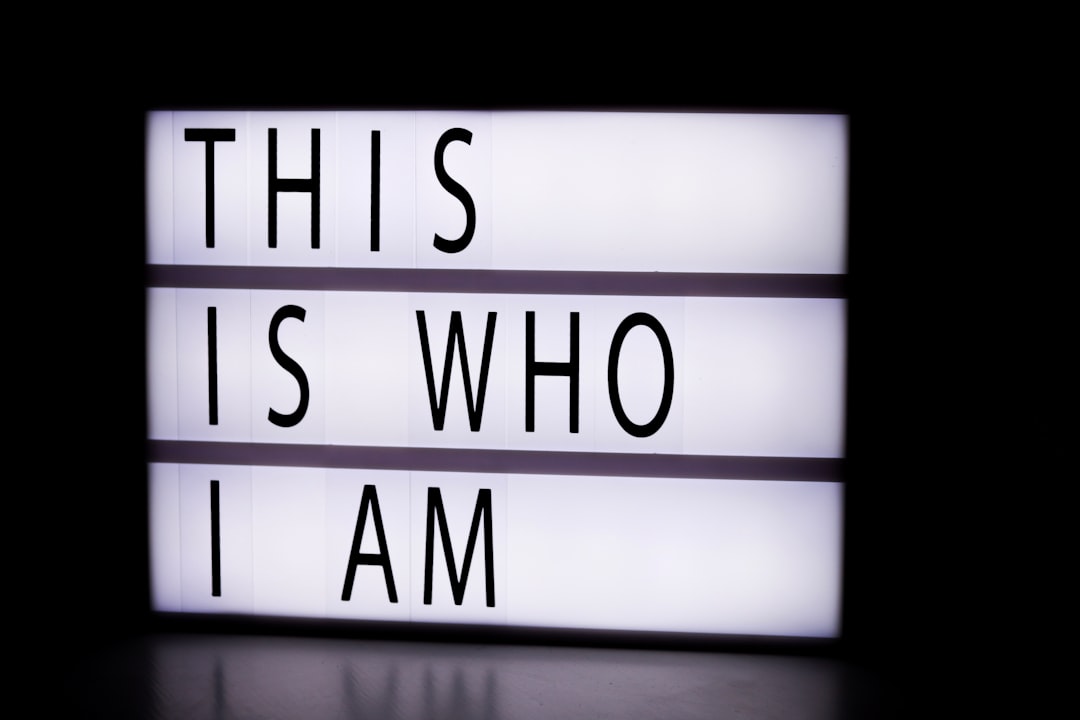
44: That's Just How I Am
from Unboxing It with Lara and Rowan · host Lara Wellman and Rowan Jette Knox
There is a fine line between “I can’t change” and “I don’t want to change”. We talk about that difference, and the times when it might be worth exploring whether or not change is something you actually want to make. If it is, what mindset shifts can you make to create it? Transcript(please note, these are not edited for accuracy so might be wonky)Rowan: I personally believe the entire reason I’m here is so that I can continue to grow and develop and help others, and et cetera, right? But I can’t do that if I stay stuck and just tell myself, “This is it,” and never push beyond that.[00:00:39] Lara: Welcome to Unboxing It. I’m Lara.[00:00:41] Rowan: And I’m Rowan.[00:00:43] Lara: And we are gonna talk a little bit about who we are and whether or not we should just accept who we are in every given moment, or whether or not there’s room to spend some time thinking about it.[00:00:58] Rowan: It’s a more complicated issue than people realize it is.[00:01:02] Lara: It is.And I think that it comes down to, you know, there’s parts of us that say, “Well, that’s just who I am,” and that means you are digging your heels in and trying to demonstrate that you are empowered and not letting other people change you. And the other side of it is that I think when people say, “That’s just who I am,” it’s because they feel like it’s the opposite of being empowered.It’s where I see people saying, like, “That’s just how it goes.” And, certainly as I just said that, I was like, “Oh, that’s what I do with feeling sick. That’s just who I am, I feel sick.” But there are things that you can do. There are ways that you can look into things. There are times when doing a little reflection means that you could change things.And once you’ve done that reflection and you come up with the end result where you’re back to the same place, “Yes, that is who I am.” I think the reason this conversation is important is the difference between, “That’s just how it is,” and, “I’ve spent time thinking about this, and I have figured out that this is how it is.”And it’s such a small difference ... Like, it’s a small difference when you say it, but it’s a big difference when you think about what went into deciding and embodying and figuring out what works for you as a human being.[00:02:30] Rowan: I have so many examples of this in my personal life, but we can talk about it in a bigger context right now, a more general context.When you kept saying it like that, when you kept going like, “ That’s just who I am,” it made me think of a dad. You know? Like a stubborn middle-aged dad- Yeah ... who’s just like, “No. I, you know, I don’t do that. That’s just who I am. I don’t do that stuff.” and that is, I think we all know a dad like that.We all know a man like that. And we know some women like that. We know a lot of people like that in general. But,I know so many men like that, especially older men, who just say, “Oh, that’s just who I am. I’m not gonna change.” And it’s almost a defiance thing. Like, I think in that particular case- It feels really tied into something else that I was talking about earlier this week on Threads.I think it was yesterday. There was a, man who was talking about how he tried to be vulnerable online, and he deleted the post because he was told by a lot of people, “Women have it worse. Women have it worse.” And so he just, he’s like, “Look, if we wanna change things, we have to leave room for men to be able to be vulnerable, too.”And this led to a much deeper conversation where he got a lot of support, including from me, because I said, “Look, I’m the same person. But I lived as a woman for over 40 years, and I was allowed to express my feelings. I was allowed to grow. I was allowed to be vulnerable. I was allowed to do those things.And then now that the world sees me as a man, Like, same person, same emotions, same everything, same level of vulnerability, and I am often encouraged to keep it to myself.” And I think when we think about a man in that context, but maybe just a lot of people in general,it’s people who have tried to explore things maybe in the past, maybe a long time ago.Maybe when they were kids. Maybe they tried to make a change, and they were shut down. They were shut down really fast. society really loves to keep people in boxes. We’ve talked about this a lot. And so how much of this is learned behavior, and how much of this is maybe fear of pushing back against that learned behavior?[00:04:46] Lara: Yeah. I think it’s probably a lot of them, or all of them. perhaps throughout your life you’ve struggled to have emotional conversations, and it went badly when you tried to. I mean, this is the example you just gave. But,, that gets reinforced to the point where you think it’s not worth trying anymore.And I don’t know that everybody thinks... I don’t even know that this makes sense, but I think that there are times when people are like, “There’s no point.” Right? “So it’s not that I’m not willing to look into it. there’s no point. I’ve tried. This has been hard my whole life.I can’t change it.” And-[00:05:26] Rowan: Mm ...[00:05:26] Lara: maybe, maybe there’s some truth to that, but there’s also the idea that you can look at something in a different way, right? It’s not, that you don’t just have to try harder You don’t have to just push harder. You don’t have to be stricter. You have to think about things and unpack it.You have to ask yourself some questions. You have to ask yourself what you’re willing to do to change it. You have to ask yourself if you believe that an alternative, ending or way of being is possible. because if you don’t believe it’s possible, it’s not gonna happen.[00:06:04] Rowan: Yeah. and also I think we need to really examine the why, right? I think genuinely when we look at changing ourselves as human beings and whether or not it is worth putting the work into making that change, maybe we are pushing against beliefs, maybe we are pushing against,intrinsic behaviors we’ve had for a really long time.Maybe we’re pushing against fear. There has to be a strong reason to do that. So whenever I’m looking at making changes in my own life, I often ask myself, “ Is what I’m doing right now, is the way I’m living right now, is the way I’m behaving right now, is that working for me?” If it’s working for me, then there’s really no reason to examine it.But if it’s not working for me, no matter how difficult it might be for me to make that change, I still have to do it. I still have to at least try to do it. Because I go back to my transness, and I know I do that a lot, but it is a very... I think trans people have a special place in society in which we do something that is very difficult to do, and that a lot of people don’t understand, and we do it anyway because we really need to.we have to. And so that’s why I keep going back to that as an example in a lot of our episodes. But I, in a lot of ways, had it made as a woman, if you will, right? I was a very successful woman in my own right. was a mother. I was a wife. I literally was, like, you know, the keynote speaker multiple times at women’s events, International Women’s Day.I was, and this will only matter to Canadians, but I was a Chatelaine Woman of the Year. I was a 2020 Woman of Influence, et cetera, et cetera. I mean, as far as women go,I was doing really well at womaning. But I was miserable I was absolutely miserable. It was like a suit that never fit me. And transitioning, especially as a public figure, especially with other trans people already in my family, bringing on the whole idea of it being a contagion or something somehow-perpetuating that kind of stereotype,, that misinformation that can really harm our community. I mean, for so many reasons, being middle-aged. I mean, It was extremely challenging to do this. But I also knew that what I was doing before and who I was before wasn’t working.It just wasn’t who I was. And so that I use as an example simply because it is an extreme example, in some ways, of The way that I’m living or who I am right now just isn’t working for me. And so at that point, do I just keep going, “Well, that’s just who I am”? Because you know what? I tried the self-acceptance thing.I tried to just be like, “Well, I’m a woman.” I mean, gosh, I could not get more woman than I was, if you really wanna look at it that way. It didn’t work. So when we are examining the idea of making changes, if it is a really difficult change, it doesn’t mean necessarily that it can’t be done. It just means that we need enough motivation to do it.[00:09:24] Lara: And potentially support. So certainly as a coach, and my work as a business coach, I always leaned a little bit more to mindset and,you know, not quite life coach-y, but, it felt like that with some people, right? Because one of the things that I could often see were mindsets and ways of being that weren’t just about, well, if you just do this thing, change your pricing, and everything will be better.It’s like some of it is you don’t believe it, and that, ... maybe you need to look at that. Some of it is around confidence. I mean, mindset impacts every little, tiny inch of our lives, right? Like, it’s everywhere. And being certain that something can’t change when the result of that thing is ultimately making you unhappy is just giving in, in my opinion, right?so if you are ultimately unhappy because of something that you think is just how you are, then to me it’s worth saying, “ Well- Can we unpack that and figure out what we can do instead? And it doesn’t always mean transitioning, right? It can mean- ... just a little bit of introspection and a little bit of...So a good one for me is what if, right? So what if this bad thing happens? What if this bad thing happens? What if this bad thing happens? And... I know it’s annoying when you’re in that mode of what if, terrible, terrible, terrible. If somebody’s like, “But what if it all works out?” Is understandably annoying.But also, if you can start to, like, even consider a little bit of what if it worked out, even if it goes along with your what if it doesn’t work out, but just, like, it’s still there as an option, that starts to change your brain. It starts to change everything about what you believe is worth trying and doing.And so sometimes it’s just considering, I’m not saying you have to believe it, I’m saying consider one alternative and try that on. Ask yourself to keep considering alternatives and see what happens. it can be as small as that. What if this is a good idea instead of something that’s going to mean something bad?And if right away you come to the conclusion that no, it is not a good idea, then that’s okay. But if there’s an option for it to be something that works, let yourself, feel that just a little bit.[00:12:02] Rowan: I like that. it’s like planting the seed and you don’t have to do anything with it just yet. You’ve planted the seed.And just allowing yourself to entertain the thought that maybe some level of change could happen is huge. And I feel like I went off on a tangent about transness, and I could already hear 2018 Twitter getting big mad at me.because ... And this is why I always, bring this up, because I do think it’s important. we do have to at least bring the idea of privilege into any conversation like this. Some people, if we go to, say all the way to transition, it’s simply not safe for them to transition, so they don’t have that option, right?There are a lot of things that can get in our way. And also I think that sometimes we can tell ourselves that there are too many obstacles in our way- As a way of not even entertaining it. So I think both can be true. I think privilege and the obstacles that some people face are very, very real and sometimes make something impossible.That’s true. And also, and I’m use myself again, sometimes we tell ourselves stories about where we’re at. Like, I remember telling myself a story for years that I could never make anything of myself because I only have a high school education.And as I’ve mentioned a million times on this podcast, I tried to go to school as a teenager, and I had a lot of obstacles, including some housing insecurity that made it very difficult for me to go to school and graduate. So I didn’t. I went back much later at 37. I graduated at 38 years old with a high school diploma.I do not have any more education than that. And for years, what I struggled with was that I could never be, I’m gonna use air quotes ‘cause this means different things to different people, successful because I didn’t have anything beyond high school. I could never be anything I wanted to be because I don’t have the education.And if you’re looking at, like, I could never be a doctor, or I could never be a lawyer, yeah, that’s true. I could never be an engineer. Truth. That’s... You actually have to go get a degree for those things. But I limited myself for such a long time. I told myself that over and over and over. the idea of even trying felt pointless.And I didn’t have that education privilege. I really didn’t. I didn’t have the money to go to school. I didn’t have the means to go to school. I had three kids at that time. Money was very tight. There was no way, in a lot of ways, that I could go to school. and that’s a story I told.But I actually did manage to become quite successful in ways that matter to me and in some ways that I thought would matter to me and then ended up not really mattering, but I digress. I have a really amazing life now. I have a life that is extremely fulfilling. I have achieved all the things I’ve always dreamed about achieving, true story, and I only have a high school education.So what changed? What changed was I stopped telling myself that I could never do anything that I set my mind to because I didn’t have enough education. So I, again, I think both things can be true at the same time.[00:15:26] Lara: And there’s just endless examples like this, right? It’s, “I’m not smart enough.” Well- Maybe you’re not smart in certain ways because not all of us are equally smart in all ways.Maybe you are taking some kind of measure of your intelligence that was not the best way to measure your intelligence and just deciding that that’s true forevermore. But no matter what, everybody has different strengths in different areas. And if you say, “Well, I struggle with this kind of thing,” and then instead we say, “Okay, so what do you not struggle with, and how can we use that to your advantage?”And if we can pinpoint that thing that feels easier for you, and move with it, then suddenly you can see opportunities you couldn’t see before. But if you’re stuck in, “I can’t do it, I can’t do it, I can’t do it,” then you’re right, you can’t do it. But if you’re willing to stop and consider other options.So an example might be if you say, “Well, I’m not a good writer,” which I’ve talked to a lot of people who’ve told me they’re not a good writer, but they’re great on video or they’re great with their hands. And those things are very important also, so lean into that and don’t tell yourself you can’t do anything because you believe that you need to be a good writer in order to be successful at anything.And I do think that’s how some people feel, right? Like, if I was going to be somebody who could be successful, I need to be like this, like this, like this, like this, whatever the list that they’ve created is. And if they don’t believe that they can be those things, then that blocks them off from success versus let’s look at, a different path, a different door, a different measure of success, and suddenly all kinds of new possibilities pop up.[00:17:20] Rowan: It really is about utilizing what you have. again, there is that nuance. There is that nuance where you have, maybe somebody isn’t a strong writer, and - they don’t have that natural ability to throw words onto paper. and there are a million people who are actually very good at writing who, don’t realize they’re good at writing so there’s that too.But if you don’t, try to figure out how to grow, and growing’s going to look different for all of us. Like, I can accept... I have an anxiety disorder, and, Lara, you were instrumental at reminding me early last year that I should really go back on my meds, right? Because I was not in a good place, and I did go back on my meds, and I take them every day, and I am in a much, much better situation because of it, so thank you.and I will always have an anxiety disorder. I know that because I have had it my entire life, since I was too young to even know what a panic attack was. I’ve always had an anxiety disorder. it’s just, that is the way my brain works, and so it is, in its own way... I don’t know if I’d go as far as to classify it as a disability, but it certainly does , get in front of a lot of things that I try to do sometimes.But I’ve stopped telling myself that I can’t do things because I have an anxiety disorder, and that’s something I did for a long time, and now I’m like, “No, you know what? I can take bigger risks even with an anxiety disorder.” What I need, though, is to find ways to manage it, and I need to work on a lot of cognitive behavioral techniques and that sort of thing so that I can manage the stress when it comes up.and so that has allowed me to move forward in my life in a way that I couldn’t when I kept telling myself, “I’m too anxious for that. I’m too anxious for that. I’m too anxious for that.” That being said, if I don’t really need to do something, like for example, going into a really loud bar environment, it completely overwhelms me most of the time.it’s just too much. Too much for my brain, too much for my anxiety. I really don’t enjoy myself, right? And I could push through, but why would I push through? there’s no need to do that unless I absolutely have to, and I don’t absolutely have to, so I just choose not to do that.But if I needed to do that for some reason, I think I would have the incentive to try and figure out how to manage that better. So it really is, for me, all about accepting who I am, and making some allowances for that, but also not using who I am as a reason not to grow in the areas that I feel I need to grow.[00:20:08] Lara: Yeah. I think the that’s just who I am part becomes like a defensive roadblock, and what we’re looking for is to ask ourselves what we want and to figure out how, and maybe if, but how it’s possible. And this comes up in lots of ways. I like to- Try to find ways to push out of my comfort zone because I find that that helps me grow.So even if we go back to the example, I’m sure I’ve talked about this on the show before, but I did a stand-up comedy course, and I had a lot of anxiety and stress in multiple parts of that experience because it was really uncomfortable. And I powered through because I wanted to have done it. If I didn’t want that experience, for example, I do not want to bungee jump.[00:20:59] Rowan: Right.[00:21:01] Lara: Same.Could I? Probably I could do it, but I really don’t want to. Therefore, pushing through the discomfort is not an incentive for me. And so whenever you say things like, “I wish I could, but I can’t,” then instead it’s more about, “I wish I could. Can I?” And that’s it. Mm-hmm. That’s the little change in what I think this conversation is important about.It’s not that you have to suddenly change things. It’s not that if you’re like, “That’s just who I am,” you have to change it all. But it is, “ Do you want to change it? Why do you wanna change it? How could it change? Are you sure that you can’t change it a little bit, even if it’s not how somebody else would expect you to change it?”But the point is that you have the ability to ask yourself what you want, decide what’s worth the effort, and do some thinking so that you’re not just stuck in, “This is what I thought it was once, 20 years ago, and therefore, that’s what it is forever.”[00:22:10] Rowan: There’s this... First of all, first of all, that was really deep.Like, could I, right? - that’s huge. - That is the key. As opposed to just completely blocking it out, it was just allowing yourself that permission to explore it, that’s huge.I forgot the other thing I was going to say, because that is just what happens when I, uh, you know- That’s[00:22:30] Lara: just who[00:22:30] Rowan: you are.Uh,yeah. That’s just who I am. Okay, I figured it out. I wanted to talk about the science behind this because I think some of this has happened because - we’ve known for a long time, because it’s very obvious, that when you’re young, you’re constantly learning. You look at a baby, and the baby grows, and the baby’s learning.And then suddenly it’s a toddler, and they’re learning new words, and then they, running. And this goes on and on, and you even watch it through, like, adolescence. And then by about 25, in most brains, the frontal lobe stops developing, and we have considered for a very long time that then people are fully formed.And so the story, the science told for a very long time is that is who we are. And we’ve talked about nature versus nurture, and there’s been a lot of back and forth about that, and whether or not we just come out the way we are, or are we made that way through experience or a little bit of both? But what has been more recent that a lot of neuroscientists are now talking about is neuroplasticity, which basically means our brains are still able to develop new neural pathways throughout our entire lives, and that is so cool.Learning that was a big part of how I learned that I could change some of my behaviors that I thought were very stuck, that they were rigid, that my brain had stopped developing. This is where I was, and then suddenly, I’m introduced, through YouTube videos by neuroscientists, to the concept of neuroplasticity.And I really encourage people to look this up. If you really think, “This is who I am and I can’t change. I can never change this,” that might be true of some things. Certainly, there are some things. Some people just have a bit more of a sense of humor. Some people are a little more laid back. Some people are a little more, forgetful.Or, like, there are certainly some things in our lives that, are not, necessarily going to change, easily at least. but neuroplasticity allows us to develop new mindsets. It allows us to develop new behaviors, and so it is never too late. I’m a very different person approaching 50 than I was even five years ago, and it’s not just because I transitioned.It’s because I allowed myself to grow. I took risks that I never thought I would take. I was like, “Ah, I’m in love. You know what I’m gonna do? Leave my cozy little Ottawa suburb that I have been in forever, where my entire family lives, and I have all these people I know, and, you know, I’m really well-connected in the city.I’m gonna pick up and move to Toronto,” which I never, ever thought I would do, always said I would never even consider. “ And I’m gonna do it for love, and I’m gonna see what happens.” And doing that was transformative. Suddenly- I am living a completely different life that suits me so much better. But the level of calm in my body, huge.it’s been a game changer. and , just the way I think about the world, I’ve had quite a, I don’t wanna call it a spiritual awakening, but I guess in a way, just how I see the world, how I see the universe, how I see other people, how I... Just everything has changed dramatically. So I do think sometimes that when we know we can grow, when we know we can change something, when we know there’s at least a hope that something can change, it really does help us because people are growing all the time.I,personally believe, and everybody’s different, but I personally believe the entire reason I’m here is so that I can continue to grow and develop and help others, and et cetera, right? But I can’t do that if I stay stuck and just tell myself, “This is it,” and never push beyond that. So yeah, going past your comfort zone, even just a little bit, even with just that thought that you were saying, Lara,of, could I?, that can open the door to so many things.[00:26:53] Lara: Yeah. I have a little list of things that I thought of while you were talking, so I’m gonna just run through some of them.[00:26:59] Rowan: While, I was, like, on my, . Large ramble. I am a man with a podcast, you know, so I mean, y-Isn’t that the whole point, that I just want everyone to listen to me?[00:27:07] Lara: Well, and the whole point for me is that I love when my brain gets excited and thinks of all the things, so this is perfect. But , the- I think the neuroplasticity thing is huge, e- especially if you’re, our age or older, Gen X or older.We were definitely taught you can’t teach an old dog new tricks, and that was really something that everybody believed was true. And then when science was like, “Actually, neuroplasticity means you can learn things all the time,” it’s just a good reminder. If you think, “I didn’t learn that, I’m now, and I can’t do it,” like, yes, you can.You can try new things. You can do new things. You can still grow and just push through things and find new ways of being. So, I think that’s such a good reminder. I was thinking of another example as we were talking about the kinds of things that people believe. It’s one I hear a lot of because of the art that I do, is like, “I’m just not a creative person.”And I don’t generally believe people when they say that because they are creative in some way, and they can find the creative endeavor that is right for them. And that’s again, that slight shift. I’m not creative. Okay. But what if you try a couple of different things and see if you like it? And that’s where if you hate it, don’t keep doing it.If you’re surprised and you want to try to, find more of those skills, then do it, right? And I think that’s ultimately what I hoped people would get out of this conversation. It’s not that we think you have to change. It’s that what my biggest hope is that you don’t think you can’t when you want to.It’s okay to want something different than you have now. It’s okay to change your mind about what you wanted before and decide that you want something new now. It’s okay to want to push into ways of being that are completely different than you used to have. If none of those things appeal to you, like maybe this conversation isn’t for you.But the point is you don’t have to feel like you’re stuck and nothing can change if you don’t want to. that’s the thing that I really hoped people would take away from this. If that’s not what you want, if you hoped that something could be different, but it feels like it couldn’t, this is when looking at it a little bit more and asking yourself a few questions could be a really interesting and worthwhile exercise.[00:29:40] Rowan: What I like to do is I like to ask myself, “Am I content?”And for a long time, I wasn’t content. There were a number of things I wanted to change. Today when I ask myself, “Am I content with who I am?” Yes, I’m very content. There’s a couple little things that I’m working on, of course. I’m always working.You know, some insecurities and, I tend to be a little defensive, which is sort of related to insecurity. So like I’m working on those things, for sure. But overall, I’m very content with who I am and where I am, so I don’t really need to change anything. If I say that’s just who I am, that’s just who I am right now.That’s okay. And you know what? If that ever stops working for me, then maybe I start to question it a little bit more. so yeah, if you are content in your life, if things are going well for you, if you are happy with who you are and how you navigate the world, great. then this conversation was not needed.If you are somebody who has resisted, personal growth or change of any kind- Because you think it’s not possible, maybe this conversation is for you- ... to at least explore it. So yeah, I think it’s a really healthy conversation to have. And if the conversation made you uncomfortable, sit with that for a little bit.Because when something has made me uncomfortable, it’s usually because deep down I need to explore it a little bit more.[00:31:07] Lara: And it’s that whole piece of, like, you can look into it without throwing yourself into a panic attack, right? we’re just stepping into little questions and ways of thinking about things that can be different to see how they feel.That’s it. It’s just a little bit of exploration.[00:31:25] Rowan: A little bit of exploration, not testosterone and top surgery. Although maybe. I mean, who knows?[00:31:31] Lara: Well, I’m just saying that’s not step one.[00:31:35] Rowan: No, it’s not step one. That’s like step 27. That’s like, it’s way down the line.[00:31:42] Lara: And just taking the time to consider things does not mean that you are now committed through to step 84, right?Like, that’s, again, part of this, is you can keep figuring things out and keep figuring out what’s best for you. And, like, let’s just see what happens.[00:31:58] Rowan: My favorite thing that I’ve seen some people do is they go, “ Okay. Yeah, I could see how that might be something I wanna look at, but I’m not gonna look at it right now, but I acknowledge the need to look at it, and I’m gonna look at it later.”That’s cool. Good for you. Maybe, you know, you don’t have the bandwidth right now, but you know it’s something you wanna look at. I commend you, right? As opposed to just r- rushing right in when maybe you’re not ready to rush right in. So yeah, it is totally okay to take everything like that at your own pace.[00:32:31] Lara: Yeah. it’s that empowered piece, right? It’s not that life is happening to you. It’s not that you don’t have control. It’s just that you do have enough control to say, “Maybe one day, but not right now.” And so keep just stretching into things. Keep asking questions. Keep questioning when you feel stuck to figure out what alternatives could exist.And that’s what I hope people take away from today.[00:32:58] Rowan: Thank you so much for joining us today. This was such a cool conversation, and it’s got me thinking all kinds of ways. if you have anything to say about this, if you are excited we talked about this, uncomfortable we talked about this, big mad that we talked about this, feel free to drop us a line.You can send us a message, via email. You can write something on our Substack. We love to hear from you. Feel free to hit the subscribe button, download all of our latest episodes. And, if you are somebody who has something to say, if you think that we have missed something important and you are someone who is knowledgeable in that area, let us know.Maybe we can have you on for an episode.[00:33:44] Lara: Love it. I will also say, if you enjoy the show, we would love some more reviews on Apple Music, Spotify, all the places. So just remember that. We appreciate your time and effort with leaving us ratings and reviews. And I think that’s it for this time. We will see you all again in two weeks.Have a great, have a great life. Have a great life. I don’t know.[00:34:10] Rowan: Have a great life.[00:34:12] Lara: But, like, not in a mean way. I mean it. I mean it. It’s a sincere-[00:34:15] Rowan: Have a wonderful- We’re just gonna leave this in. we’re leaving that one in. That’s like... Like, , this is just, complete honesty. I, I love it.let’s just blooper this thing. All right, everyone, thank you for joining us. We’ll see you next time. This is a public episode. If you'd like to discuss this with other subscribers or get access to bonus episodes, visit unboxingit.substack.com/subscribe
NOW PLAYING
44: That's Just How I Am
No transcript for this episode yet
Similar Episodes
Mar 26, 2026 ·1m
Mar 19, 2026 ·34m
Feb 18, 2026 ·11m
Feb 11, 2026 ·45m