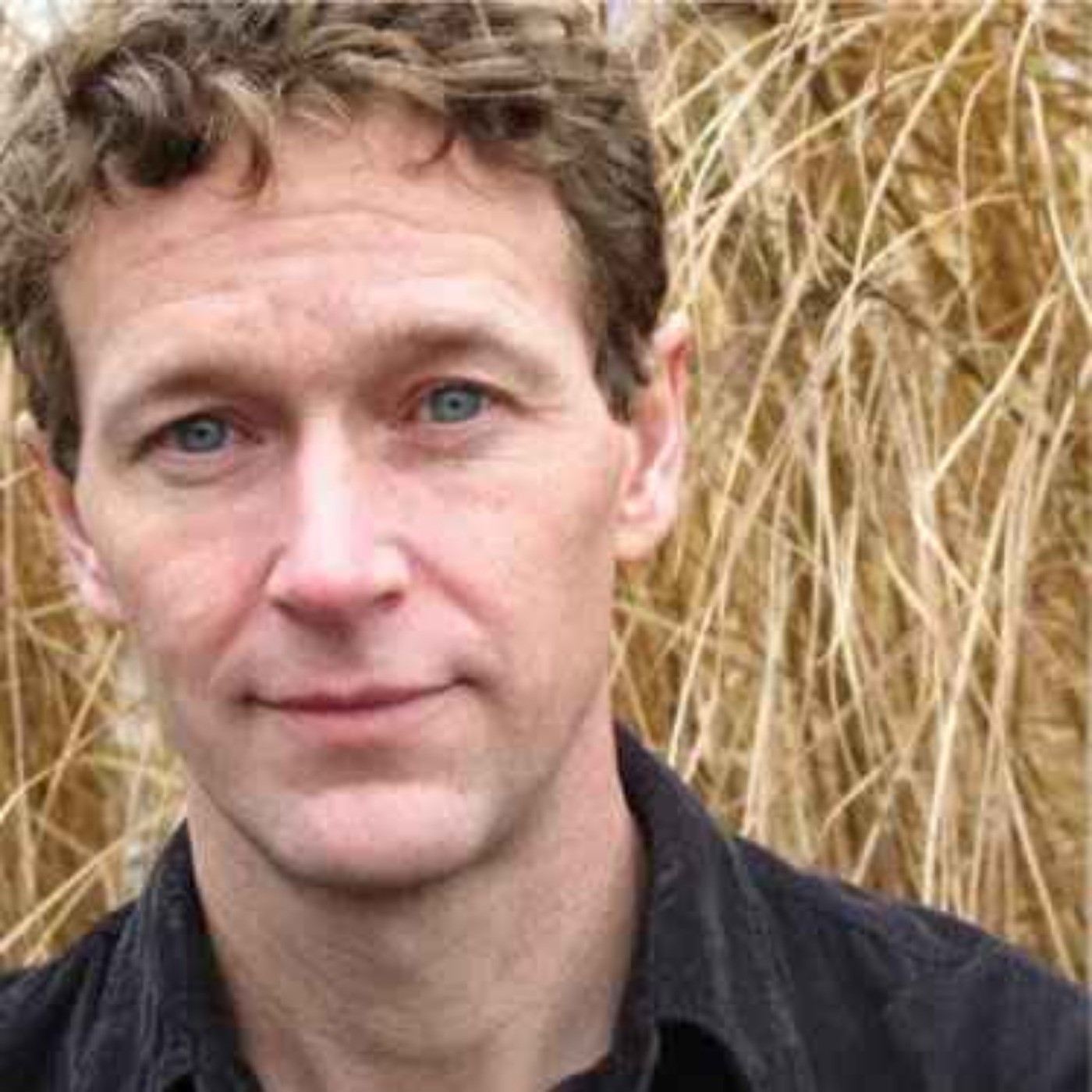
455: J. B. MacKinnon, part 2: What happens when you pay for quality? episode artwork

EPISODE · May 1, 2021 · 58 MIN

455: J. B. MacKinnon, part 2: What happens when you pay for quality?

from This Sustainable Life

Our world values cheap and disposable---in food and doof packaging, furniture, cars, and near the top of the list, clothes, especially fast fashion. The world is paying for it in the sense of overfilled landfills, plastic disrupting endocrine systems of animals including us, oil wells everywhere, garbage patches in the ocean, and so on.I see us paying the price. We're always craving. Stuff always breaks. We feel compelled to buy new phones when the old ones should have kept working. We're obese from snacking. We're twisted up inside polluting while trying to convince ourselves we're not.J. B. MacKinnon's new book The Day the World Stops Shopping examines this part of our culture and for this podcast he committed to go against that trend by buying a quality pair of jeans from a place he knew the sourcing, labor practices, and everything else, the opposite of fast fashion. He also paid significantly more for them.Was the premium worth it? Should you do the same? What can we learn from his experience?We talk about these questions and he experience from many perspectives. Here's the description of his new book, The Day the World Stops Shopping:"We can't stop shopping. And yet we must. This is the consumer dilemma."The planet says we consume too much: in North America, we burn the earth's resources at a rate five times faster than they can regenerate. And despite our efforts to "green" our consumption--by recycling, increasing energy efficiency, or using solar power--we have yet to see a decline in global carbon emissions.The economy says we must always consume more, because, as we've seen in the pandemic, even the slightest drop in spending leads to widespread unemployment, bankruptcy and home foreclosures.Addressing this paradox head-on, J.B. MacKinnon asks, What would really happen if we simply stop shopping? Is there a way to reduce our consumption to earth-saving levels without triggering an economic collapse?At first, this question took him around the world, seeking answers: from America's big-box stores, to the hunter-gatherer cultures of Namibia, to communities in Ecuador that consume at an exactly sustainable rate. Then his thought experiment came shockingly true, as the coronavirus brought shopping to a halt and MacKinnon's ideas were tested in real time.Drawing on experts ranging from economists to climate scientists to corporate CEOs, MacKinnon investigates how living with less would change our planet, our society and ourselves. Along the way, he reveals just how much we stand to gain.Imaginative and inspiring, The Day the World Stops Shopping will empower you to imagine another way. (From Random House Canada)J. B. MacKinnon is a journalist and writer who lives in Vancouver. He is also the author of the nonfiction books Dead Man in Paradise and The Once and Future World and is the co-author of the book The 100-Mile Diet, which popularized the local food movement. Hosted on Acast. See acast.com/privacy for more information.

Our world values cheap and disposable---in food and doof packaging, furniture, cars, and near the top of the list, clothes, especially fast fashion. The world is paying for it in the sense of overfilled landfills, plastic disrupting endocrine systems of animals including us, oil wells everywhere, garbage patches in the ocean, and so on.I see us paying the price. We're always craving. Stuff always breaks. We feel compelled to buy new phones when the old ones should have kept working. We're obese from snacking. We're twisted up inside polluting while trying to convince ourselves we're not.J. B. MacKinnon's new book The Day the World Stops Shopping examines this part of our culture and for this podcast he committed to go against that trend by buying a quality pair of jeans from a place he knew the sourcing, labor practices, and everything else, the opposite of fast fashion. He also paid significantly more for them.Was the premium worth it? Should you do the same? What can we learn from his experience?We talk about these questions and he experience from many perspectives. Here's the description of his new book, The Day the World Stops Shopping:"We can't stop shopping. And yet we must. This is the consumer dilemma."The planet says we consume too much: in North America, we burn the earth's resources at a rate five times faster than they can regenerate. And despite our efforts to "green" our consumption--by recycling, increasing energy efficiency, or using solar power--we have yet to see a decline in global carbon emissions.The economy says we must always consume more, because, as we've seen in the pandemic, even the slightest drop in spending leads to widespread unemployment, bankruptcy and home foreclosures.Addressing this paradox head-on, J.B. MacKinnon asks, What would really happen if we simply stop shopping? Is there a way to reduce our consumption to earth-saving levels without triggering an economic collapse?At first, this question took him around the world, seeking answers: from America's big-box stores, to the hunter-gatherer cultures of Namibia, to communities in Ecuador that consume at an exactly sustainable rate. Then his thought experiment came shockingly true, as the coronavirus brought shopping to a halt and MacKinnon's ideas were tested in real time.Drawing on experts ranging from economists to climate scientists to corporate CEOs, MacKinnon investigates how living with less would change our planet, our society and ourselves. Along the way, he reveals just how much we stand to gain.Imaginative and inspiring, The Day the World Stops Shopping will empower you to imagine another way. (From Random House Canada)J. B. MacKinnon is a journalist and writer who lives in Vancouver. He is also the author of the nonfiction books Dead Man in Paradise and The Once and Future World and is the co-author of the book The 100-Mile Diet, which popularized the local food movement. Hosted on Acast. See acast.com/privacy for more information.

NOW PLAYING

455: J. B. MacKinnon, part 2: What happens when you pay for quality?

0:00 58:01

No transcript for this episode yet

We transcribe on demand. Request one and we'll notify you when it's ready — usually under 10 minutes.

Big Old Life: Heather Blackbird interviews people on planet earth. Heather Blackbird loves asking questions. This podcast is a learning experience. Join me, Heather Blackbird, as I talk to people about their lives. Frequency of new episodes is a little all over the place and I'm learning as I go. Big Old Life is a small way of talking about the vastness of life, one person at a time. If you are reading this or found this podcast it's probably because someone you know gave you a link to it. :) Explicit Tales Of A Superstar DJ The Insomniac Spun seemingly out of nowhere from her complacent life in the corporate world, turned seemingly overnight from 16-Hour shift work and into the life of a literally starving artist and working musician, The Protagonist navigates her supposed rise to fame and superstardom on a journey through spiritual awakening, coming-of-age, and intimate self-realization--guided by an omnipresent force and equipped with the power of love, magic, and music. {Enter The Multiverse.} [The Festival Project] The Festival Project, Inc.™ is a multidimensional multimedia platform which encompasses exploratory and artistic social personifications and expressions on cosmic theory, spirituality, growth, health & wellness, philosophy and theoretic dynamics in entertainment such as music, design, film, television, radio, dance and festival culture, art, fashion, literature, and science. The Festival Project™ and its subsidiary Non-Profit, The Collective Complex © aims to challenge modern artistic and philosop Explicit The Sacred +Profane Podcast nephtaragrace The Sacred + Profane Podcast is a provocative conversation dedicated to cementing a better future for all. We specialize in unpacking the nuances of what is considered sacred and profane, particularly focusing on sex, death, and all that pertains to the circle of life. Our aim in focusing on such ”taboo” subject matter is to demystify what is unconscious, bring to light what has been known for centuries as ”the occult,” and empower the rapid transformation that is occurring on the Planet. Explicit Northern Sass and Southern Class Tay and Ani Come sit in on girl talk with Tay and Ani as we discuss life in Texas, girl math, food, wine and roasting each other. Explicit

Frequently Asked Questions

How long is this episode of This Sustainable Life?

This episode is 58 minutes long.

When was this This Sustainable Life episode published?

This episode was published on May 1, 2021.

What is this episode about?

Our world values cheap and disposable---in food and doof packaging, furniture, cars, and near the top of the list, clothes, especially fast fashion. The world is paying for it in the sense of overfilled landfills, plastic disrupting endocrine...

Can I download this This Sustainable Life episode?

Yes, you can download this episode by clicking the download button on the episode player, or subscribe to the podcast in your preferred podcast app for automatic downloads.
URL copied to clipboard!