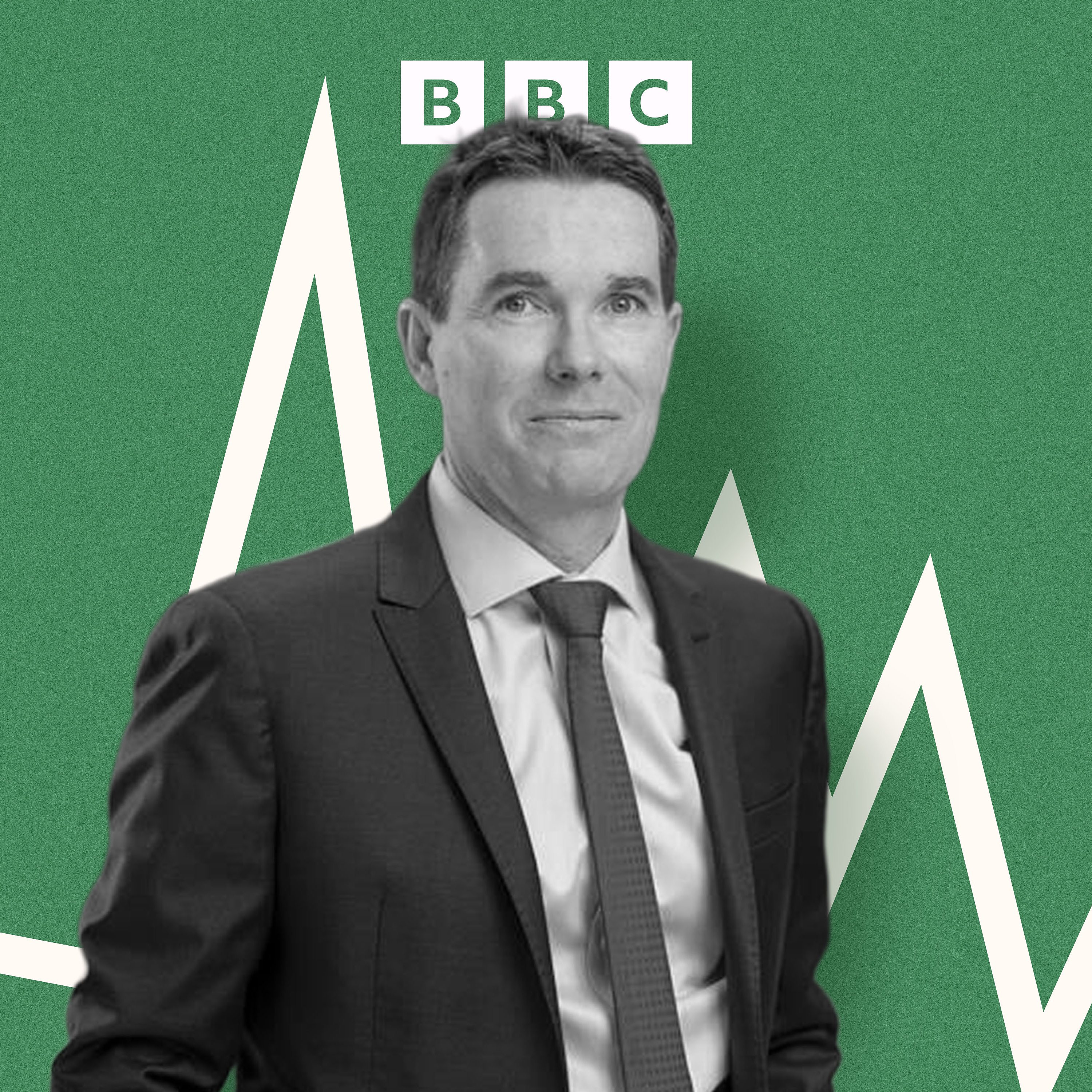
#47 Lloyd's of London CEO: Autonomous Weapons Are Rewriting War Risk episode artwork

EPISODE · Jul 1, 2026 · 48 MIN

#47 Lloyd's of London CEO: Autonomous Weapons Are Rewriting War Risk

from Big Boss Interview · host BBC News

AI and drone warfare will force a “complete reimagining” of how conflict risk is calculated and insured, the chief executive of Lloyd’s of London has warned, because traditional assumptions about how wars escalate may no longer hold.Patrick Tiernan, who runs the 337-year-old insurance marketplace, told the Big Boss Interview that autonomous weapons and AI-driven decision-making could remove the warning signs and diplomatic pauses that have historically allowed insurers to adjust cover as conflicts intensify.“When we talk about the way war is insured at the moment, it assumes that it’ll build up, that there’ll be breaks in there, and that you can increase the cover,” he said. “It’s very possible that won’t be the case as there is more drone warfare, more artificial intelligence in the decision-making. So we’re going to have to completely reimagine how we cover that.”His warning comes as governments increase defence spending and NATO allies reassess their military commitments. Tiernan said Lloyd’s must ensure it has the capacity to insure growth in defence, energy and infrastructure, while being clearer about which forms of defence it supports.He said the current risk environment is unlike anything in Lloyd’s history, with physical infrastructure, data and cyber systems, financial services and the international rules-based order all under pressure at the same time. “We are very underprepared for the risks we’re facing because we rely on things that maybe won’t be there tomorrow,” he said.Tiernan also warned that the “protection gap” between economic losses and what is actually insured is widening. He said businesses and governments can no longer assume the state will step in when disaster strikes, arguing that high debt levels mean governments may not have the same financial firepower they had in the past.He called on governments to spell out what they will and will not protect, so private capital can price the remaining risk. Businesses, he said, are being “wilfully ignorant” if they fail to understand their exposure.A major state-backed cyberattack remains one of Lloyd’s realistic disaster scenarios and could be “deeply crippling” to the global economy, Tiernan said. He added that take-up of cyber insurance remains too low, particularly among European SMEs, despite policies offering prevention and resilience support as well as financial cover.On the Strait of Hormuz, Tiernan said Lloyd’s drew on lessons from previous Gulf shipping disruption and the Black Sea closure during the Ukraine war. Insurance capacity remained available, he said, with crew safety rather than the price of cover the main factor affecting shipping.He also argued that the insurance industry, and perhaps the wider economy, has lost some of its appetite for calculated risk since the financial crisis. Pointing to opportunities in undersea data centres, autonomous vehicles and AI-led drug development, he said: “The risk of missing out is greater than the risk of overstepping.”On climate, Tiernan said Lloyd’s has added US flood, severe convective storm and fire to its realistic disaster scenarios, with flood, fire and drought all on an upward trajectory. He defended Lloyd’s continued insurance of legal, unsanctioned fossil fuel activity, but said the market should use its capital to support new energy technologies including small modular reactors, nuclear fusion and renewables.

AI and drone warfare will force a “complete reimagining” of how conflict risk is calculated and insured, the chief executive of Lloyd’s of London has warned, because traditional assumptions about how wars escalate may no longer hold.Patrick Tiernan, who runs the 337-year-old insurance marketplace, told the Big Boss Interview that autonomous weapons and AI-driven decision-making could remove the warning signs and diplomatic pauses that have historically allowed insurers to adjust cover as conflicts intensify.“When we talk about the way war is insured at the moment, it assumes that it’ll build up, that there’ll be breaks in there, and that you can increase the cover,” he said. “It’s very possible that won’t be the case as there is more drone warfare, more artificial intelligence in the decision-making. So we’re going to have to completely reimagine how we cover that.”His warning comes as governments increase defence spending and NATO allies reassess their military commitments. Tiernan said Lloyd’s must ensure it has the capacity to insure growth in defence, energy and infrastructure, while being clearer about which forms of defence it supports.He said the current risk environment is unlike anything in Lloyd’s history, with physical infrastructure, data and cyber systems, financial services and the international rules-based order all under pressure at the same time. “We are very underprepared for the risks we’re facing because we rely on things that maybe won’t be there tomorrow,” he said.Tiernan also warned that the “protection gap” between economic losses and what is actually insured is widening. He said businesses and governments can no longer assume the state will step in when disaster strikes, arguing that high debt levels mean governments may not have the same financial firepower they had in the past.He called on governments to spell out what they will and will not protect, so private capital can price the remaining risk. Businesses, he said, are being “wilfully ignorant” if they fail to understand their exposure.A major state-backed cyberattack remains one of Lloyd’s realistic disaster scenarios and could be “deeply crippling” to the global economy, Tiernan said. He added that take-up of cyber insurance remains too low, particularly among European SMEs, despite policies offering prevention and resilience support as well as financial cover.On the Strait of Hormuz, Tiernan said Lloyd’s drew on lessons from previous Gulf shipping disruption and the Black Sea closure during the Ukraine war. Insurance capacity remained available, he said, with crew safety rather than the price of cover the main factor affecting shipping.He also argued that the insurance industry, and perhaps the wider economy, has lost some of its appetite for calculated risk since the financial crisis. Pointing to opportunities in undersea data centres, autonomous vehicles and AI-led drug development, he said: “The risk of missing out is greater than the risk of overstepping.”On climate, Tiernan said Lloyd’s has added US flood, severe convective storm and fire to its realistic disaster scenarios, with flood, fire and drought all on an upward trajectory. He defended Lloyd’s continued insurance of legal, unsanctioned fossil fuel activity, but said the market should use its capital to support new energy technologies including small modular reactors, nuclear fusion and renewables.

NOW PLAYING

#47 Lloyd's of London CEO: Autonomous Weapons Are Rewriting War Risk

0:00 48:03

No transcript for this episode yet

We transcribe on demand. Request one and we'll notify you when it's ready — usually under 10 minutes.

No similar episodes found.

The Lee Olsen Show Lee Olsen CJF I want to help you improve all areas of your life by 3 types of podcasts!👉Blood, Sweat & Blessings-Interviews of normal people that have achieved BIG things!👉Series!!! For Love of the Horse- Brad Jackman DVM & Lee Olsen CJF, how to help your horse!👉Business Tips- Proven Life Changing Business Strategies with Lee Olsen Darknet Discussions Darknet Discussions Welcome to "Darknet Discussions," the podcast that gets into the shadows of the internet to bring you the most intriguing, enlightening, and sometimes unsettling stories from the dark web. Hosted by seasoned darknet aficionados, each episode of "Darknet Discussions" explores the intricate dynamics of darknet markets, cybersecurity threats, and the digital underworld. Join us as we interview experts, discuss the latest trends in cybercrime, and shed light on the technologies that operate beneath the surface of everyday internet use. Also, we occasionally go off on a tangent about something completely unrelated. RAISING THE BAR MUSICHYPEBEAST The RAISING THE BAR Podcast is dedicated to providing a fresh and unconventional broadcast platform for the biggest names in music and entertainment.The interview insight provided by the staff of MUSICHYPEBEAST separates us from the pack. The passion of RAISING THE BAR podcast is fueled by Millennial Music culture. Hosted on Acast. See acast.com/privacy for more information. Westenberg Joan Westenberg The Westenberg Podcast offers ideas, explainers, book notes, and reflections on technology, philosophy, and the human experience. Hosted by Joan Westenberg, each episode unpacks complex topics with clarity and depth, blending personal insights with thought-provoking analysis. It’s a space for exploring big questions and fresh perspectives in an accessible format.

Frequently Asked Questions

How long is this episode of Big Boss Interview?

This episode is 48 minutes long.

When was this Big Boss Interview episode published?

This episode was published on July 1, 2026.

What is this episode about?

AI and drone warfare will force a “complete reimagining” of how conflict risk is calculated and insured, the chief executive of Lloyd’s of London has warned, because traditional assumptions about how wars escalate may no longer hold.Patrick Tiernan,...

Can I download this Big Boss Interview episode?

Yes, you can download this episode by clicking the download button on the episode player, or subscribe to the podcast in your preferred podcast app for automatic downloads.
URL copied to clipboard!