
EPISODE · Jan 24, 2024 · 57 MIN
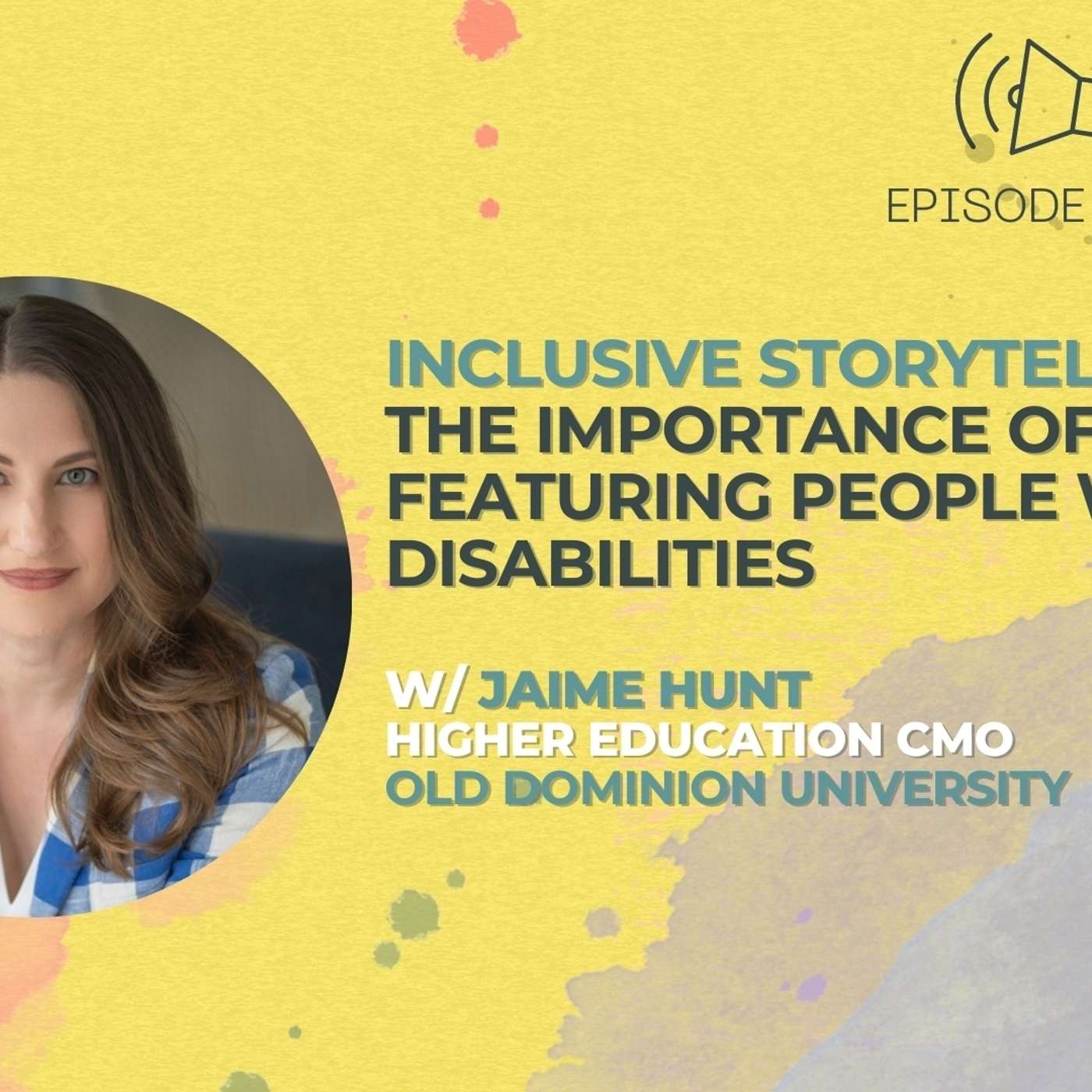
#48 - Inclusive Storytelling: The Importance of Content Featuring People with Disabilities w/ Jaime Hunt from The Higher Ed CMO
from Higher Ed Storytelling University · host John Azoni
My guest today is Jaime Hunt, Vice President and Chief Marketing Officer at Old Dominion University. Jaime is a seasoned higher ed marketer with expertise in areas like brand strategy, recruitment marketing, and digital innovation. In this episode we discuss the importance of telling authentic stories of college students with disabilities. We explore biases that still exist, and how humanizing storytelling can promote inclusion and accessibility. Key takeaways: 25% of college students report having a disability, yet they are often invisible in higher ed marketing content. Telling their stories helps promote inclusion. Students with disabilities look for information on accessibility and accommodations when researching colleges. This should be easy to find. Mental health struggles are common. Students want to know schools offer resources to support their care. Casting authentically includes students with visible and invisible disabilities. They have compelling stories beyond just their disability.Get feedback from disability services and students as you learn to tell stories inclusively. Avoid tokenization or inspiration porn. Key insights for higher ed marketers when telling stories about students with disabilities: Focus on authentic stories that showcase the full person, not just their disability. Highlight their interests, goals, and achievements. Include students with both visible and invisible disabilities. This represents the diversity on campus. Get feedback from the disability services office and students as you learn to tell inclusive stories. Avoid harmful tropes. Make information on accommodations and accessibility easy to find. This is crucial for prospective students. Address mental health struggles that are common. Showcase resources schools offer to support students' care. What types of biases or misconceptions still exist around people with disabilities? How can authentic storytelling help challenge those? Some biases and misconceptions that still exist around people with disabilities include: Assuming their disability defines them or is their sole identity. In reality, it's one aspect of who they are. Believing they are inspirational just for living with a disability. This "inspiration porn" objectifies them. Thinking certain disabilities are too stigmatized to discuss openly. This discourages people from sharing their stories. Assuming they don't have goals, interests, and achievements unrelated to their disability.Viewing them as tokens when included in marketing content. Authentic storytelling that showcases people with disabilities as multifaceted individuals can help challenge these biases. It expands perspectives and highlights shared humanity and experiences. Telling the stories of real students in all their complexity combats harmful stereotypes. Connect with Jaime: Twitter: https://twitter.com/JaimeHuntIMC LinkedIn: https://www.linkedin.com/in/jaimehunt/ TikTok: https://www.tiktok.com/@thehigheredcmoConnect with John: LinkedIn: https://www.linkedin.com/in/johnazoni/ Learn more about Unveild: https://unveild.tv Join the newsletter: https://unveild.tv/newsletter
What this episode covers
My guest today is Jaime Hunt, Vice President and Chief Marketing Officer at Old Dominion University. Jaime is a seasoned higher ed marketer with expertise in areas like brand strategy, recruitment marketing, and digital innovation. In this episode we discuss the importance of telling authentic stories of college students with disabilities. We explore biases that still exist, and how humanizing storytelling can promote inclusion and accessibility. Key takeaways: 25% of college students report having a disability, yet they are often invisible in higher ed marketing content. Telling their stories helps promote inclusion. Students with disabilities look for information on accessibility and accommodations when researching colleges. This should be easy to find. Mental health struggles are common. Students want to know schools offer resources to support their care. Casting authentically includes students with visible and invisible disabilities. They have compelling stories beyond just their disability.Get feedback from disability services and students as you learn to tell stories inclusively. Avoid tokenization or inspiration porn. Key insights for higher ed marketers when telling stories about students with disabilities: Focus on authentic stories that showcase the full person, not just their disability. Highlight their interests, goals, and achievements. Include students with both visible and invisible disabilities. This represents the diversity on campus. Get feedback from the disability services office and students as you learn to tell inclusive stories. Avoid harmful tropes. Make information on accommodations and accessibility easy to find. This is crucial for prospective students. Address mental health struggles that are common. Showcase resources schools offer to support students' care. What types of biases or misconceptions still exist around people with disabilities? How can authentic storytelling help challenge those? Some biases and misconceptions that still exist around people with disabilities include: Assuming their disability defines them or is their sole identity. In reality, it's one aspect of who they are. Believing they are inspirational just for living with a disability. This "inspiration porn" objectifies them. Thinking certain disabilities are too stigmatized to discuss openly. This discourages people from sharing their stories. Assuming they don't have goals, interests, and achievements unrelated to their disability.Viewing them as tokens when included in marketing content. Authentic storytelling that showcases people with disabilities as multifaceted individuals can help challenge these biases. It expands perspectives and highlights shared humanity and experiences. Telling the stories of real students in all their complexity combats harmful stereotypes. Connect with Jaime: Twitter: https://twitter.com/JaimeHuntIMC LinkedIn: https://www.linkedin.com/in/jaimehunt/ TikTok: https://www.tiktok.com/@thehigheredcmoConnect with John: LinkedIn: https://www.linkedin.com/in/johnazoni/ Learn more about Unveild: https://unveild.tv Join the newsletter: https://unveild.tv/newsletter
NOW PLAYING
#48 - Inclusive Storytelling: The Importance of Content Featuring People with Disabilities w/ Jaime Hunt from The Higher Ed CMO
No transcript for this episode yet
Similar Episodes
No similar episodes found.
Similar Podcasts
No similar podcasts found.