PodParley PodParley

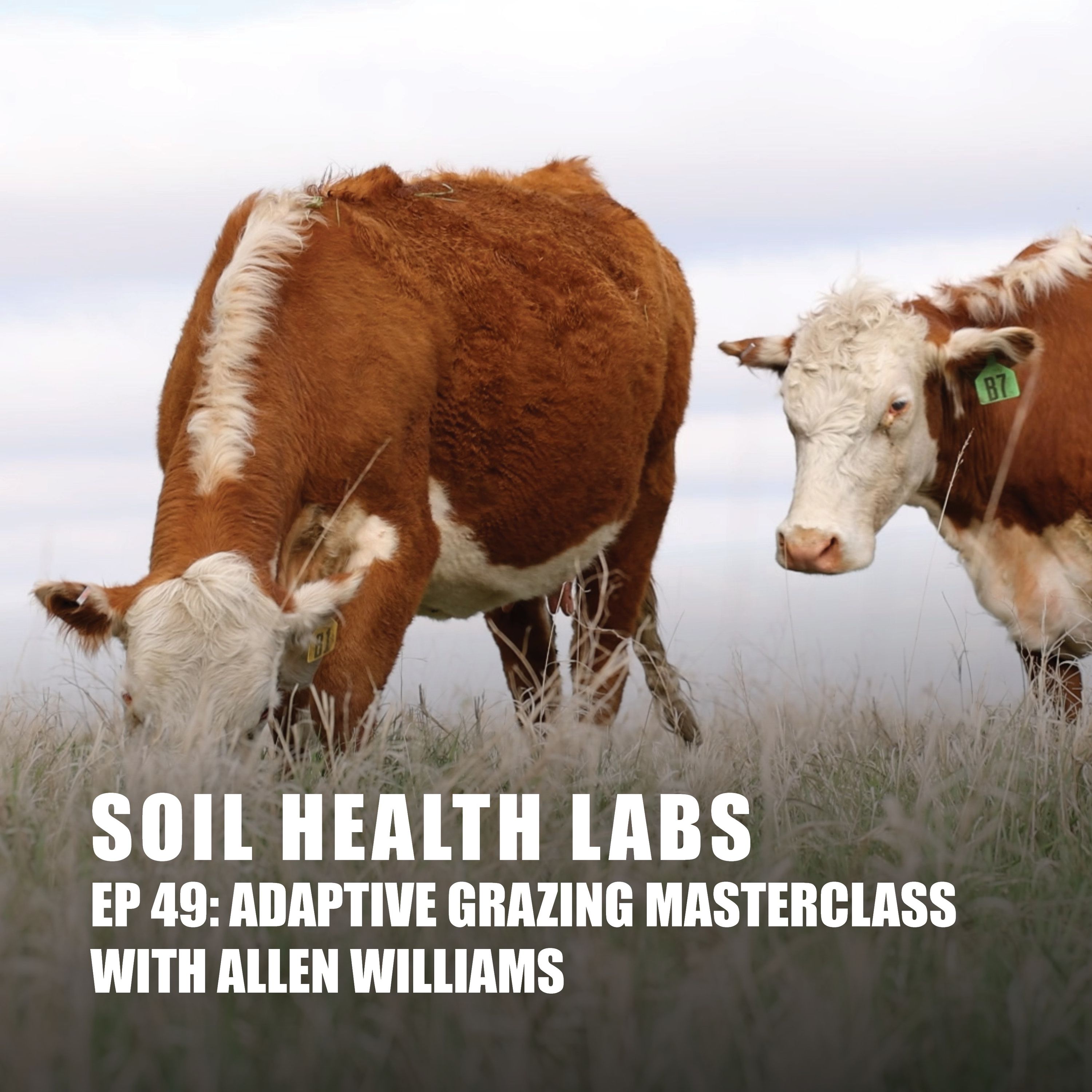
49 Adaptive Grazing Masterclass with Allen Williams

As part of our adaptive grazing management series (if you haven’t listened to the podcasts with Justin Thompson and Candice Mizera, we highly recommend the listen, especially if you are in South Dakota and want to understand more about cool season invasive grasses) Joe Dickie and Buz Kloot sat down with Allen Williams who is an adaptive grazing management practitioner, consultant and former academic. Allen grew up and went to school in the south and after his PhD, continued for 15 years in academia. Around the year 2000, Allen left the safe environs of a tenure-track professorship to start on his own in regenerative farming and ranching consulting. Since then, Allen has consulted for regenerative agriculture all over the country and the world. After exploring Allen’s interesting background, we dive into some of the basics of adaptive grazing management principles and practices. Adaptive grazing is not about a formula or a prescription, but rather a practice that is profoundly dependent on observation and constant adjustment. Allen also does a great job of demonstrating why the time invested in daily observation is ultimately less labor intensive than the labor required to feed hay all winter long, for example. Allen walks us through what we need to observe in the field, and also some of the more recent developments in the relationships between healthy soils, healthy forage and of course the health of the animal as well. Another key set of thoughts that Allen walks us through are the three rules of adaptive stewardship, namely the rules of compounding, diversity and disruption. Allen’s explanation of these alone are worth the listen. In addition to the generalities, we bring some of the examples back to practical applications that may be found in South Dakota, including the grazing of annuals and applying adaptive stewardship to the controlling of cool season invasive species (Kentucky bluegrass, smooth brome and crested wheatgrass). We hope you enjoy this podcast a much as we enjoyed talking to Allen! Notes: Fact Sheet that outlines three rules of adaptive stewardship along with the six soil health principles and the four ecosystem processes: https://understandingag.com/resources/fact-sheets/ Please search “Allen Williams Adaptive Grazing” for fact sheets, magazine articles journal articles, videos and more on Allen’s work. Take the soil health challenge: https://www.growingresiliencesd.com/challenge-gr

Episode 48 of the Soil Health Labs podcast, hosted by Soil Health Labs, titled "49 Adaptive Grazing Masterclass with Allen Williams" was published on May 1, 2023 and runs 60 minutes.

May 1, 2023 ·60m · Soil Health Labs

0:00 / 0:00

As part of our adaptive grazing management series (if you haven’t listened to the podcasts with Justin Thompson and Candice Mizera, we highly recommend the listen, especially if you are in South Dakota and want to understand more about cool season invasive grasses) Joe Dickie and Buz Kloot sat down with Allen Williams who is an adaptive grazing management practitioner, consultant and former academic. Allen grew up and went to school in the south and after his PhD, continued for 15 years in academia. Around the year 2000, Allen left the safe environs of a tenure-track professorship to start on his own in regenerative farming and ranching consulting. Since then, Allen has consulted for regenerative agriculture all over the country and the world. After exploring Allen’s interesting background, we dive into some of the basics of adaptive grazing management principles and practices. Adaptive grazing is not about a formula or a prescription, but rather a practice that is profoundly dependent on observation and constant adjustment. Allen also does a great job of demonstrating why the time invested in daily observation is ultimately less labor intensive than the labor required to feed hay all winter long, for example. Allen walks us through what we need to observe in the field, and also some of the more recent developments in the relationships between healthy soils, healthy forage and of course the health of the animal as well. Another key set of thoughts that Allen walks us through are the three rules of adaptive stewardship, namely the rules of compounding, diversity and disruption. Allen’s explanation of these alone are worth the listen. In addition to the generalities, we bring some of the examples back to practical applications that may be found in South Dakota, including the grazing of annuals and applying adaptive stewardship to the controlling of cool season invasive species (Kentucky bluegrass, smooth brome and crested wheatgrass). We hope you enjoy this podcast a much as we enjoyed talking to Allen! Notes: Fact Sheet that outlines three rules of adaptive stewardship along with the six soil health principles and the four ecosystem processes: https://understandingag.com/resources/fact-sheets/ Please search “Allen Williams Adaptive Grazing” for fact sheets, magazine articles journal articles, videos and more on Allen’s work. Take the soil health challenge: https://www.growingresiliencesd.com/challenge-gr

As part of our adaptive grazing management series (if you haven’t listened to the podcasts with Justin Thompson and Candice Mizera, we highly recommend the listen, especially if you are in South Dakota and want to understand more about cool season invasive grasses) Joe Dickie and Buz Kloot sat down with Allen Williams who is an adaptive grazing management practitioner, consultant and former academic. Allen grew up and went to school in the south and after his PhD, continued for 15 years in academia. Around the year 2000, Allen left the safe environs of a tenure-track professorship to start on his own in regenerative farming and ranching consulting. Since then, Allen has consulted for regenerative agriculture all over the country and the world. After exploring Allen’s interesting background, we dive into some of the basics of adaptive grazing management principles and practices. Adaptive grazing is not about a formula or a prescription, but rather a practice that is profoundly dependent on observation and constant adjustment. Allen also does a great job of demonstrating why the time invested in daily observation is ultimately less labor intensive than the labor required to feed hay all winter long, for example. Allen walks us through what we need to observe in the field, and also some of the more recent developments in the relationships between healthy soils, healthy forage and of course the health of the animal as well. Another key set of thoughts that Allen walks us through are the three rules of adaptive stewardship, namely the rules of compounding, diversity and disruption. Allen’s explanation of these alone are worth the listen. In addition to the generalities, we bring some of the examples back to practical applications that may be found in South Dakota, including the grazing of annuals and applying adaptive stewardship to the controlling of cool season invasive species (Kentucky bluegrass, smooth brome and crested wheatgrass). We hope you enjoy this podcast a much as we enjoyed talking to Allen! Notes: Fact Sheet that outlines three rules of adaptive stewardship along with the six soil health principles and the four ecosystem processes: https://understandingag.com/resources/fact-sheets/ Please search “Allen Williams Adaptive Grazing” for fact sheets, magazine articles journal articles, videos and more on Allen’s work. Take the soil health challenge: https://www.growingresiliencesd.com/challenge-gr
The People of Soil Health Soil Health Partnership Hosted by the Soil Health Partnership's Senior Director John Mesko, The People of Soil Health is a direct connection into the network of soil health professionals who are focused on the on-farm economic and environmental benefits of soil health. John interviews the best in the agricultural and environmental industries to discuss soil health practices and management systems, issues facing farmers, and insights from soil data sets. What is soil health? What are the benefits of cover crops and conservation tillage? How can my farm be more sustainable? What's the best way to increase organic matter in a corn field? Tune in to listen to experts answer these questions, share their experiences, and more! Soil Health Partnership - SoilSmart Soil Health Partnership - SoilSmart Podcast by Soil Health Partnership - SoilSmart The Soil Health Podcast from Menoken Farm Menoken Farm The Menoken farm is a conservation demonstration farm located in central North Dakota, owned and operated by the Burleigh County Soil Conservation District. Established in 2009, the farm's primary focus is advancing soil health through innovation and education. The Menoken Farm has become a destination for soil health enthusiasts and is visited by groups from around the world. CCSI-HAT Soil Health Podcast Conservation Cropping Systems Initiative Monthly podcast dedicated to soil health practices and systems. The podcast is produced through a partnership between the Conservation Cropping Systems Initiative (ccsin.org) and Hoosier Ag Today. It features farmers and other experts discussing a wide variety of practices: no-till, cover crops, nutrient/manure management, grazing.
URL copied to clipboard!