
EPISODE · Jul 22, 2022 · 23 MIN
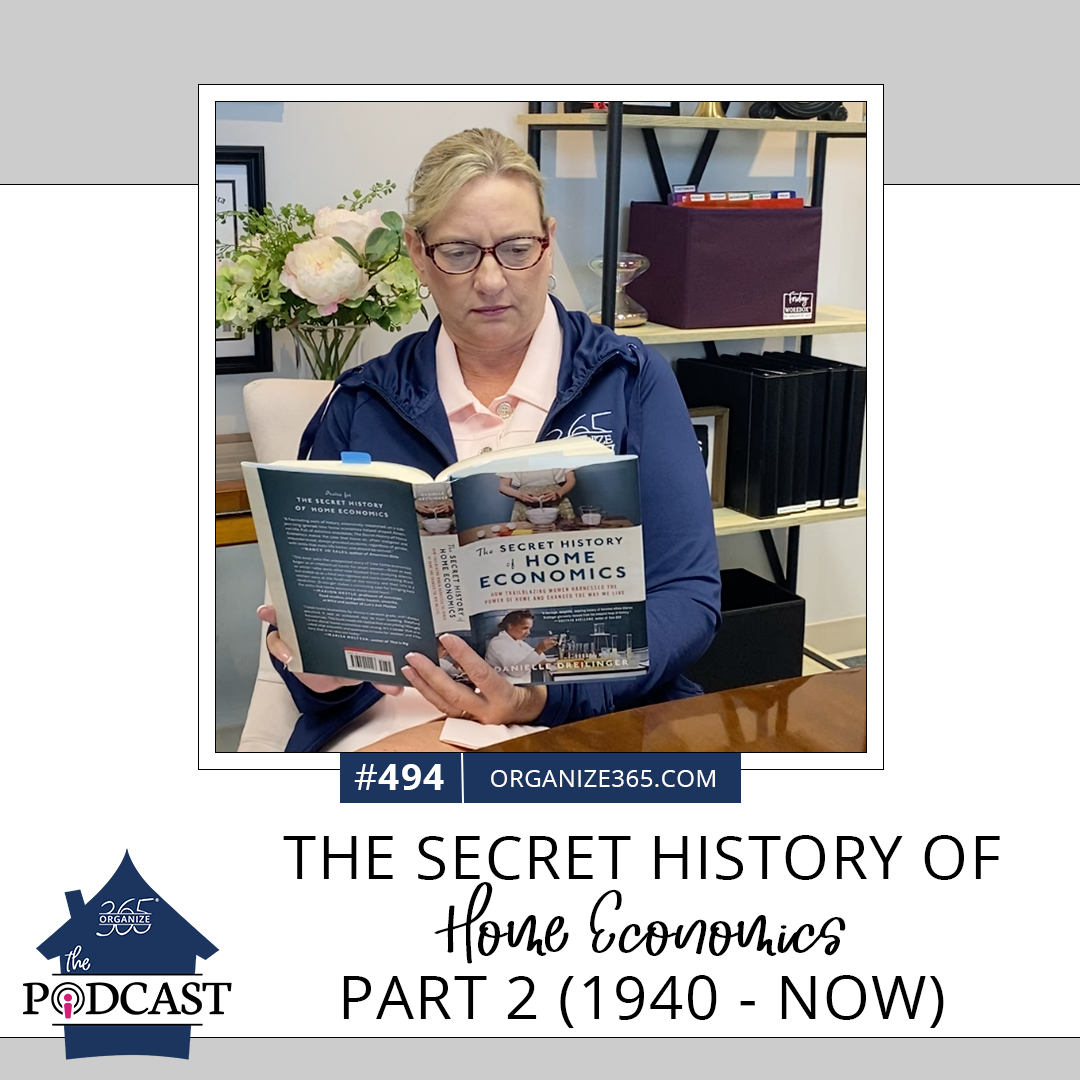
494 - The Secret History of Home Economics Part 2 (1940- Now)
from Organize 365 Podcast · host Lisa Woodruff
This is the third episode is a series on Home Economics and the book The Secret History of Home Economics by Danielle Dreilinger. In the first episode, I talked to you about my personal family history. In the last episode, we talked about how Home Economics grew and moved outside of personal homes in the 1800s and early 1900s. Listen to all of the episodes in this series: The History of Home Economics In Lisa's Family - #492 The Secret History of Home Economics Part 1 (1800-1940) - #493 In this episode, we pick up the timeline at World War II. The ending of the war brought a change with fewer women in the workforce and fewer women going to college. Two-thirds of women were married by the time they reached age 24. Despite new technology, in the 1950s, these women were still spending 52 hours a week on housework. At this time the American Home Economics Association defined Home Economics as being concerned with strengthening family life. A divide emerged. On one side were women who understood the original definition of Home Economics. They believed that what happens at home is important, is a science, and should be studied in higher education. On the other hand, there were children of the next generation like me who were taught that Home Economics was about socialization and based on what the government and consumer brands wanted for society. You either had to be a fulltime homemaker or have a fulltime career. Jobs held by men generally brought in enough income for women to have the luxury of being primary homemakers. There were still scientific advancements being made in the field of Home Economics during this time period, but brands like Betty Crocker and Johnson & Johnson were driving the narrative of what it meant to run your family. I love digging into the history of divides in thinking like this. My grandmother never understood the controversy. She said to just do the work! It doesn't matter where the work is or what the work pays. Just do the work. As we move forward, I want to talk more about the division of housework. How did housework go from being all women's work to now being a discussion about having equity at home? What I really want you to see is the invisible work that is being done at home. Much of what we do is on autopilot and was learned from our mothers and grandmothers. There is a shift in process. Everyone in the family wants to feel valued for the work that they are contributing to the family. In the next episode, I'll share how I worked myself out of being a fulltime stay-at-home mom to being a working mom who traveled for six weeks last summer. (Spoiler alert! Nothing fell apart at home while I was gone!)
NOW PLAYING
494 - The Secret History of Home Economics Part 2 (1940- Now)
No transcript for this episode yet
Similar Episodes
No similar episodes found.
Similar Podcasts
No similar podcasts found.