
EPISODE · Apr 6, 2019 · 1H 35M
5 Naturalist/biologist Kim Cabrera Discusses How Biology Tracking Helps Us All Have Fun and Learn Logic
from The ReasonRx Podcast · host Michael Gold
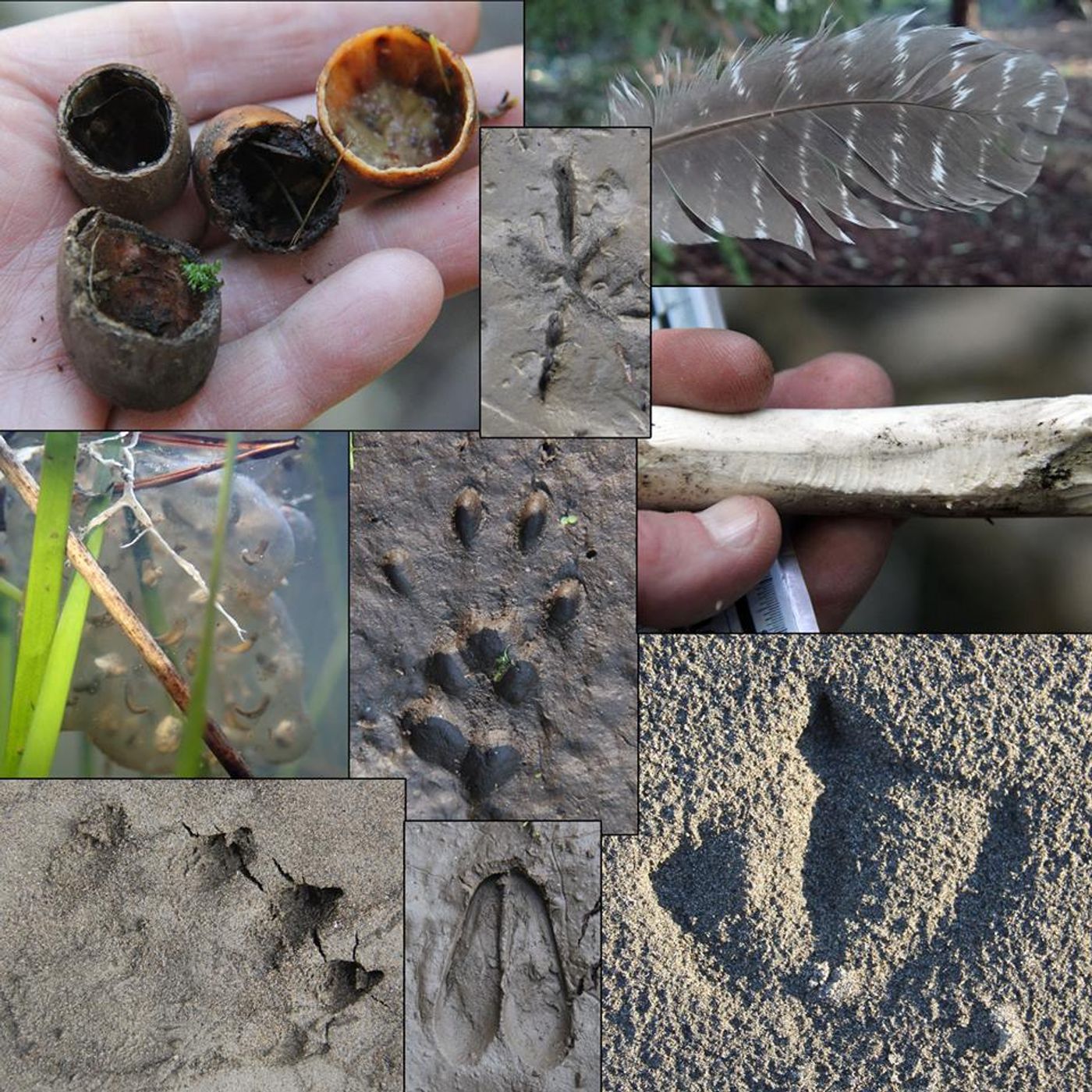
In this podcast, we talk with tracker Kim Cabrera about animal tracking, and how it can help students, teachers, and adults learn logical thinking skills and enjoy doing it. Gaining deep skills of logic and epistemology does not have to be all dry and boring. It can be and should be interesting and a joy. Kim takes us on a discussion of:-her background-how she got interested in tracking-what tracking is-as one example, how to differentiate a dog track from a cat track-how so many mistake dog tracks for mountain lion tracks-what parents can do to help their kids be more confident in nature, and confident in general-how tracking might be the source of science-how tracking is like the detective work of Sherlock Holmes-where you can track: city, suburbs, urbs, rural, country, park, nature, the wild-how you can learn to track and can track anywhere-how tracking helps us learn to observe, connect, induce, deduce, hypothesize, build theories -- i.e., helps us learn all aspects of logic and science, first hand-how, more specifically, tracking teaches us to identify, find patterns, consider context, make connections-how tracking helps us get involved in nature, stay healthy, get some good social time with othersTo support the show and help us grow our audience -- so we have more of an impact on education and the culture -- please help us with a donation:1. https://www.patreon.com/reasonrxpodcast 2. https://www.paypal.com/cgi-bin/webscr?cmd=_s-xclick&hosted_button_id=SP6QPQKJU4XSS&source=url Also, please consider liking us on your podcast app, and leaving a rational review.And if you find an episode valuable, please share it with parents, teachers, school personnel, friends, and family. Help spread the word, help spread rational ideas for better living. Rules of tracking:1. Respect the animal2. Respect yourself3. Respect the land4. Respect the lawBut what it's about: 1. Know the animal2. Know yourself3. Know the land4. Know the law5. Know the wholeIn regard to one comment Michael made in the podcast: profiling. It’s profiling he was trying to think of. That’s what criminals do: profile for weakness and vulnerability. Read, for example, the book Mindhunter by John Douglas and Mark Olshaker (not recommended for the squeamish! Read reviews before reading it so you know what you will be reading about!): https://www.amazon.com/Mindhunter-Inside-Elite-Serial-Crime/dp/1501191969/External links in three sections:I. Kim and trackingII. Nature resources, books, and moviesIII. Science and logic resourcesI. Kim and tracking1. Kim’s excellent online tracking website: https://www.bear-tracker.com1.a. Kim’s YouTube Channel: https://www.youtube.com/user/beartracker7772, Animals Don’t Cover Their Tracks FB page: https://www.facebook.com/groups/271764596196849/3. Tom Brown's Field Guide to Nature Observation and Tracking by Tom Brown Jr: https://www.amazon.com/Browns-Field-Nature-Observation-Tracking/dp/04250996604. Peterson Field Guide to Animal Tracks: Third Edition (Peterson Field Guides) by Murie, Elbroch, Peterson: https://www.amazon.com/Peterson-Field-Guide-Animal-Tracks/dp/061851743X/5. Mammal Tracks & Sign: A Guide to North American Species 1st Edition by Mark Elbroch: https://www.amazon.com/Mammal-Tracks-Sign-American-Species/dp/0811726266/6. Tracking documentary The Great Dance: https://www.youtube.com/watch?v=UisnHp0Oqc47. The Art of Tracking, the Origin of Science by Louis Liebenberg (great idea, but we need to consider whether science is essentially inductive and integrative, not deductive): https://www.amazon.com/Art-Tracking-Origin-Science/dp/08648613117.a. Liebenberg’s book online (great idea, but we need to consider whether science is essentially inductive and integrative, not deductive): https://www.cybertracker.org/downloads/tracking/The-Art-of-Tracking-The-Origin-of-Science-Louis-Liebenberg.pdfII. Nature resources, books, and movies1. iNaturlist: (also an app!): https://www.inaturalist.org1.a. North American Animal Tracking Database on iNaturlist: https://www.inaturalist.org/projects/north-american-animal-tracking-database2. Video Michael made of a Copperhead he accidentally stepped on (don't worry, the snake was OK!): https://www.youtube.com/watch?v=T6EZHemJy4Q2.a. Another Copperhead video: https://www.youtube.com/watch?v=Lb29_PEngwo2.b. And another Copperhead video: https://www.youtube.com/watch?v=eJaMC2aFgMA3. Heart of a Lion: A Lone Cat’s Walk Across America by William Stolzenburg: https://www.amazon.com/Heart-Lion-Lone-Across-America/dp/1620405520/4. Ghostwalker: Tracking a Mountain Lion's Soul through Science and Story by Leslie Patten: https://www.amazon.com/Ghostwalker-Tracking-Mountain-through-Science-ebook/dp/B07GY3YN47/5. Mind of the Raven: Investigations and Adventures with Wolf-Birds by Bernd Heinrich: https://www.amazon.com/Mind-Raven-Investigations-Adventures-Wolf-Birds/dp/00611360506. The Elephant Whisperer: My Life with the Herd in the African Wild by Lawrence Anthony and Graham Spence7. The Soul of a Horse: Life Lessons from the Herd by Joe Camp: https://www.amazon.com/Soul-Horse-Life-Lessons-Herd/dp/0307406865/8. The Nature Fix: Why Nature Makes Us Happier, Healthier, and More Creative by Florence Williams: https://www.amazon.com/Nature-Fix-Happier-Healthier-Creative/dp/0393355578/9. Last Child in the Woods by Richard Louv: https://www.amazon.com/Last-Child-Woods-Children-Nature-Deficit/dp/156512605X/10. Duma movie: https://www.imdb.com/title/tt0361715/11. Alaska movie: https://www.imdb.com/title/tt0115493/12. A list of biology and biology-related books: http://goldams.com/biology-books/13. Camp Menogyn: https://www.ymcamn.org/camps/camp_menogyn14. Find a park near you:a. https://findyourpark.com/your-parksb. https://www.yelp.com/nearme/parksc. https://www.nps.gov/findapark/index.htm15. For movements and techniques to track and move in nature better, see MovNat's YouTube Channel: https://www.youtube.com/user/MovNat16. Simple video Michael made about a section of Armadillo trail: https://www.youtube.com/watch?v=BbZxc3Pc1SEIII. Science, education, and logic resources1. Great movie clip, from the movie Infinity, showing Richard Feynman learning science (names don’t matter. you have to look at the bird): https://www.youtube.com/watch?v=SMaZOCKmcVc2. Some ideas on logic and science:a. basics of induction and deduction: https://www.youtube.com/watch?v=s_kZ9GaD57Yb. on the nature of logic: https://www.youtube.com/watch?v=uWSAub8_-Zkc. what “understanding” really is: https://www.youtube.com/watch?v=Q0cxDyHMymMd. more here: https://www.youtube.com/user/GoldAcademy3. The Art of Reasoning by David Kelley (we recommend you focus on classification, definition, argument analysis, and induction) https://www.amazon.com/Art-Reasoning-Introduction-Critical-Thinking/dp/0393930785/4. Math is simple, biology is complex:a. Wolves of Yellowstone, How Wolves Change Rivers: 1. https://www.youtube.com/watch?v=SAGEXDlUHDE2. https://www.youtube.com/watch?v=SAGEXDlUHDEb. Vitamin D function in our biology: https://lpi.oregonstate.edu/mic/vitamins/vitamin-D5. Montessori education: https://www.montessori.edu/5.a. Good, interesting bio of Maria Montessori: https://www.youtube.com/watch?v=TXqeTYHn0p46. Books by Dr. Maria Montessori:a. The Montessori Method https://www.amazon.com/Montessori-Method-Maria/dp/0805209220/b. Dr. Montessori’s Own Handbook https://www.amazon.com/Dr-Montessoris-Own-Handbook-Materials/dp/0805209212/Image courtesy Kim Cabrera.Please consider liking us on your podcast app, and leaving a rational review.Email us at [email protected], [email protected], or [email protected]: https://www.linkedin.com/in/michael-gold-2883921/Gold Academy: https://goldams.comTotal Human Fitness: https://total-human-fitness.com
Embed this episode
What this episode covers
In this podcast, we talk with tracker Kim Cabrera about animal tracking, and how it can help students, teachers, and adults learn logical thinking skills and enjoy doing it. Gaining deep skills of logic and epistemology does not have to be all dry and boring. It can be and should be interesting and a joy. Kim takes us on a discussion of: -her background -how she got interested in tracking -what tracking is -as one example, how to differentiate a dog track from a cat track -how so many mistake dog tracks for mountain lion tracks -what parents can do to help their kids be more confident in nature, and confident in general -how tracking might be the source of science -how tracking is like the detective work of Sherlock Holmes -where you can track: city, suburbs, urbs, rural, country, park, nature, the wild -how you can learn to track and can track anywhere -how tracking helps us learn to observe, connect, induce, deduce, hypothesize, build theories -- i.e., helps us learn all aspects of logic and science, first hand -how, more specifically, tracking teaches us to identify, find patterns, consider context, make connections -how tracking helps us get involved in nature, stay healthy, get some good social time with others To support the show and help us grow our audience -- so we have more of an impact on education and the culture -- please help us with a donation: 1. https://www.patreon.com/reasonrxpodcast 2. https://www.paypal.com/cgi-bin/webscr?cmd=_s-xclick&hosted_button_id=SP6QPQKJU4XSS&source=url Also, please consider liking us on your podcast app, and leaving a rational review. And if you find an episode valuable, please share it with parents, teachers, school personnel, friends, and family. Help spread the word, help spread rational ideas for better living. Rules of tracking: 1. Respect the animal 2. Respect yourself 3. Respect the land 4. Respect the law But what it's about: 1. Know the animal 2. Know yourself 3. Know the land 4. Know the law 5. Know the whole In regard to one comment Michael made in the podcast: profiling. It’s profiling he was trying to think of. That’s what criminals do: profile for weakness and vulnerability. Read, for example, the book Mindhunter by John Douglas and Mark Olshaker (not recommended for the squeamish! Read reviews before reading it so you know what you will be reading about!): https://www.amazon.com/Mindhunter-Inside-Elite-Serial-Crime/dp/1501191969/ External links in three sections: I. Kim and tracking II. Nature resources, books, and movies III. Science and logic resources I. Kim and tracking 1. Kim’s excellent online tracking website: https://www.bear-tracker.com 1.a. Kim’s YouTube Channel: https://www.youtube.com/user/beartracker777 2, Animals Don’t Cover Their Tracks FB page: https://www.facebook.com/groups/271764596196849/ 3. Tom Brown's Field Guide to Nature Observation and Tracking by Tom Brown Jr: https://www.amazon.com/Browns-Field-Nature-Observation-Tracking/dp/0425099660 4. Peterson Field Guide to Animal Tracks: Third Edition (Peterson Field Guides) by Murie, Elbroch, Peterson: https://www.amazon.com/Peterson-Field-Guide-Animal-Tracks/dp/061851743X/ 5. Mammal Tracks & Sign: A Guide to North American Species 1st Edition by Mark Elbroch: https://www.amazon.com/Mammal-Tracks-Sign-American-Species/dp/0811726266/ 6. Tracking documentary The Great Dance: https://www.youtube.com/watch?v=UisnHp0Oqc4 7. The Art of Tracking, the Origin of Science by Louis Liebenberg (great idea, but we need to consider whether science is essentially inductive and integrative, not deductive): https://www.amazon.com/Art-Tracking-Origin-Science/dp/0864861311 7.a....
NOW PLAYING
5 Naturalist/biologist Kim Cabrera Discusses How Biology Tracking Helps Us All Have Fun and Learn Logic
No transcript for this episode yet
Similar Episodes
Similar Podcasts
No similar podcasts found.