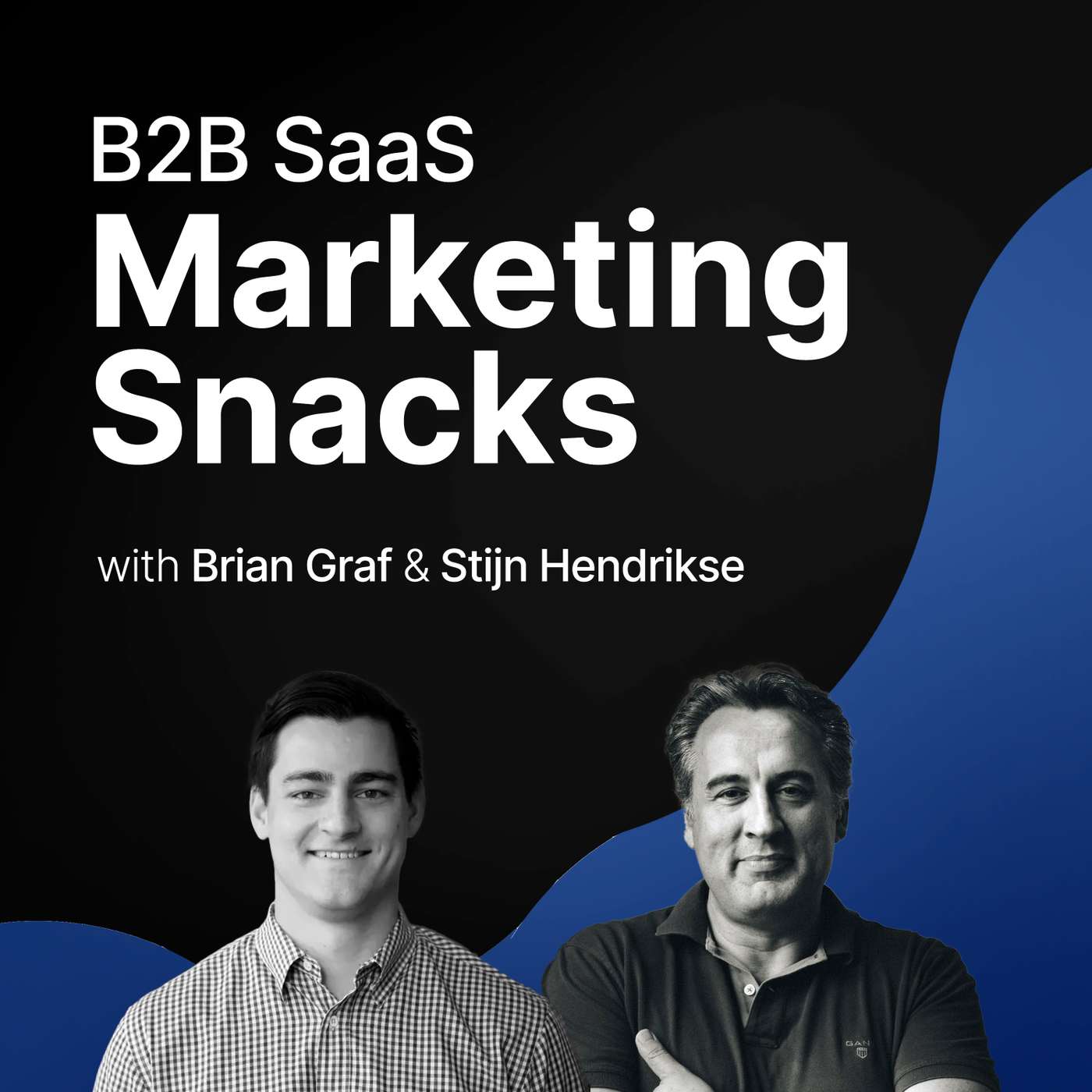
52 - Make your sales forecasts more predictable episode artwork

EPISODE · Feb 27, 2024 · 25 MIN

52 - Make your sales forecasts more predictable

from B2B SaaS Marketing Snacks · host Kalungi

Many sales forecasts are inaccurate. Let's make yours more predictable:1. Ground your projections in actual data instead of feelings. Many forecasts are based on opinion rather than actual data. If you’ve been in business for 3 or more months, you likely have access to data you can use. Let’s say you had 20 demos and 2 closed-won deals in the past three months—with this information, you can start to build a picture of your conversion rates. Roughly 10% of your demos convert to closed-won deals. And you can use that number as a starting point to calculate pipeline stage probabilities and weighted pipeline metrics based on actual historical data.2. Maintain good deal stage hygiene.Data hygiene always suffers when changes are made to pipeline stage names, conversion rate assumptions, or entry/exit criteria. This typically happens when sales or marketing leadership changes. If a stage is added or removed, it can have many downstream effects on reporting and conversion rate assumptions. The best way to avoid this is by being thoughtful and deliberate when building your deal stages—and sticking to them. Here are some best practices for deal stage setup: Only keep the necessary stages. 3–7 stages should cover most B2B scenarios. Too many stages can make upkeep harder for your sales team.Don’t allow for "parking lot" stages. Don't create stages that collect stalled deals. A typical example of this is “Discovery call no-show.” Instead of a unique deal stage, that should be converted to a property with a Yes/No value.Make stage entry/exit criteria discrete. Binary (yes/no) criteria should determine deal entry into each stage. For example, “Stage 1: Demo call scheduled” is clear, well-defined, and verifiable. A deal can only enter this stage if a prospect has a scheduled demo call calendar event with your sales rep. This is much more concrete than Stage 1: “Demoing,” which leaves room for ambiguity and subjective interpretation.Deals should only travel in one direction. Deals should never move backward in your funnel—you can’t ‘un-present’ a demo or proposal. Install rules to close out stalled deals (which inflate your pipeline), but never move deals backward.Percentage closure forecasts from stage to stage should be meaningful. For example, if a deal moves from Stage 1 to Stage 2, the change in the forecasted close rate should be significant—15% or more. If the forecast difference between two different stages is small (5%–10%), consider combining them into a single stage.Hold salespeople accountable for accurate data. What often seems like unimportant data entry has important implications for analyzing your marketing efforts, funnel dynamics, and ICP strategies.____Links shared in this episode:Stijn Hendrikse - A guide to sales strategy & performance management Stijn Hendrikse - How to coach B2B sales teamsMike Northfield - How to define an MQL for B2B SaaSTemplate - Define your marketing and sales lifecycle stagesT2D3 CMO MasterclassSubmit and vote on our podcast topics

Many sales forecasts are inaccurate. Let's make yours more predictable:1. Ground your projections in actual data instead of feelings. Many forecasts are based on opinion rather than actual data. If you’ve been in business for 3 or more months, you likely have access to data you can use. Let’s say you had 20 demos and 2 closed-won deals in the past three months—with this information, you can start to build a picture of your conversion rates. Roughly 10% of your demos convert to closed-won deals. And you can use that number as a starting point to calculate pipeline stage probabilities and weighted pipeline metrics based on actual historical data.2. Maintain good deal stage hygiene.Data hygiene always suffers when changes are made to pipeline stage names, conversion rate assumptions, or entry/exit criteria. This typically happens when sales or marketing leadership changes. If a stage is added or removed, it can have many downstream effects on reporting and conversion rate assumptions. The best way to avoid this is by being thoughtful and deliberate when building your deal stages—and sticking to them. Here are some best practices for deal stage setup: Only keep the necessary stages. 3–7 stages should cover most B2B scenarios. Too many stages can make upkeep harder for your sales team.Don’t allow for "parking lot" stages. Don't create stages that collect stalled deals. A typical example of this is “Discovery call no-show.” Instead of a unique deal stage, that should be converted to a property with a Yes/No value.Make stage entry/exit criteria discrete. Binary (yes/no) criteria should determine deal entry into each stage. For example, “Stage 1: Demo call scheduled” is clear, well-defined, and verifiable. A deal can only enter this stage if a prospect has a scheduled demo call calendar event with your sales rep. This is much more concrete than Stage 1: “Demoing,” which leaves room for ambiguity and subjective interpretation.Deals should only travel in one direction. Deals should never move backward in your funnel—you can’t ‘un-present’ a demo or proposal. Install rules to close out stalled deals (which inflate your pipeline), but never move deals backward.Percentage closure forecasts from stage to stage should be meaningful. For example, if a deal moves from Stage 1 to Stage 2, the change in the forecasted close rate should be significant—15% or more. If the forecast difference between two different stages is small (5%–10%), consider combining them into a single stage.Hold salespeople accountable for accurate data. What often seems like unimportant data entry has important implications for analyzing your marketing efforts, funnel dynamics, and ICP strategies.____Links shared in this episode:Stijn Hendrikse - A guide to sales strategy & performance management Stijn Hendrikse - How to coach B2B sales teamsMike Northfield - How to define an MQL for B2B SaaSTemplate - Define your marketing and sales lifecycle stagesT2D3 CMO MasterclassSubmit and vote on our podcast topics

NOW PLAYING

52 - Make your sales forecasts more predictable

0:00 25:47

No transcript for this episode yet

We transcribe on demand. Request one and we'll notify you when it's ready — usually under 10 minutes.

Wild WinsDay Wild WinsDay Pump the hump with WILD WINSday 🐪💪: Your 3-minute weekly video boost for leadership, sales, marketing, and business breakthroughs to WIN the day! The Course Mentors Podcast The Course Mentors Hey there, future course creator!Ever feel like turning your know-how into an online course is like trying to solve a Rubik's cube blindfolded? Well, grab your headphones because "The Course Mentors Podcast" is here to be your secret weapon!Meet Aimee and Odette (that's us!), your new best friends in the course creation world. We've been in the trenches for over a decade, and for the last five years, we've been rocking the online course space. Now we're here to spill all our secrets in bite-sized, 15-20 minute episodes that'll fit perfectly in your coffee breaks.No fluff, no filler - just real, actionable advice that'll take you from "um, what's a landing page?" to "holy moly, I just hit six figures!". We're talking everything from crafting your course to marketing it like a pro and building a business that'll have you pinching yourself.Whether you're dreaming of ditching the 9-to-5 grind, adding a sweet extra income str Take Me Off Your List Pitchfire Ryan O'Hara, CEO and founder of Pitchfire dives into the wild world of B2B marketing, demand generation, sales, and all things go-to-market with the help of some friends. Sponsored by Pitchfire. Sign up for free: https://www.pitchfire.com Digital Marketing Legend Leaks Srinidhi Ranganathan "Digital Marketing Legend Leaks" is the most popular Artificial Intelligence (AI) powered Digital Marketing Podcast on Spreaker Podcast Platform hosted by "Digital Marketing Legend" Srinidhi Ranganathan, the Human AI who is the CEO of Bookspotz.YouTube Channel - https://www.youtube.com/channel/UCXP3bY7BbMt1pXK0tPp8G4QAlso, visit https://www.bookspotz.com/ to read mind-blowing articles on AI Digital Marketing, Mind-Cloning, Immortality

Frequently Asked Questions

How long is this episode of B2B SaaS Marketing Snacks?

This episode is 25 minutes long.

When was this B2B SaaS Marketing Snacks episode published?

This episode was published on February 27, 2024.

What is this episode about?

Many sales forecasts are inaccurate. Let's make yours more predictable:1. Ground your projections in actual data instead of feelings. Many forecasts are based on opinion rather than actual data. If you’ve been in business for 3 or more months, you...

Is there a transcript available for this episode?

Yes, a full transcript is available for this episode. You can read the complete transcript on the episode page.

Can I download this B2B SaaS Marketing Snacks episode?

Yes, you can download this episode by clicking the download button on the episode player, or subscribe to the podcast in your preferred podcast app for automatic downloads.
URL copied to clipboard!