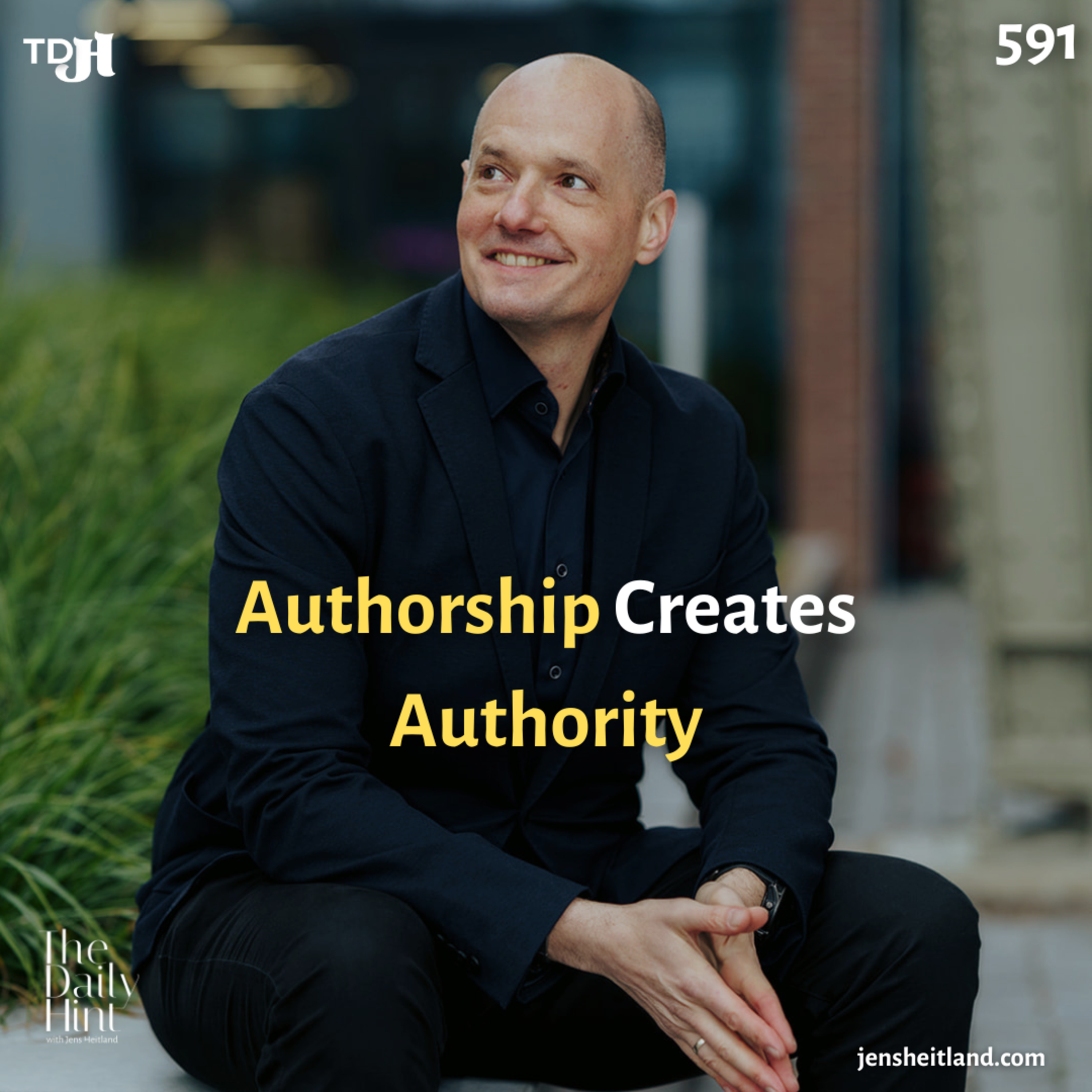
591 - Why CEO Authorship Creates a Different Kind of Thought Leadership episode artwork

EPISODE · Feb 18, 2026 · 0 MIN

591 - Why CEO Authorship Creates a Different Kind of Thought Leadership

from The Daily Hint with Jens Heitland · host Jens Heitland

Why CEO Authorship Creates a Different Kind of Thought LeadershipIn most industries, CEOs are surrounded by ideas. They read extensively. They attend conferences. They absorb insights from peers and advisors. Knowledge circulates constantly.Yet one pattern remains consistent.Most CEOs consume thought leadership. Very few create it in permanent form.At scale, this difference matters.The Environment of Executive KnowledgeYears of leadership create a deep reservoir of understanding. Strategy decisions. Market cycles. Organizational failures and recoveries. These experiences accumulate quietly over time.This knowledge tends to remain fragmented.Some of it appears in interviews. Some of it surfaces in keynote speeches. Some of it lives in internal conversations.But without structure, it remains difficult to access and easy to forget.Why Books Still Matter in a Digital WorldIn fast-moving environments, books slow things down. That is precisely their value.A book forces coherence. Ideas must be ordered. Positions must be clarified. Assumptions must be examined.For audiences, books reduce interpretation. They create a stable reference point. Over time, trust forms because the thinking remains accessible and unchanged.This effect is rarely achieved through short-form communication alone.Authorship as a Leadership SignalWhen a CEO publishes a book, the signal is not literary ambition. It is a commitment to clarity.Authorship communicates that the leader has taken time to reflect, structure, and stand behind their thinking. This does not require perfection. It requires consistency.At scale, consistency builds predictability. Predictability builds trust.The System Behind Executive AuthorshipWhat I have seen repeatedly is that CEOs rarely lack content. They lack a system.Decades of experience already exist. The challenge is capturing it without disrupting leadership rhythm.When knowledge is gathered systematically and supported by partnerships that handle structure and production, authorship becomes feasible within a defined timeframe.The book is not written in isolation. It emerges from an existing body of work.From Experience to AssetA book transforms experience into an asset.Unlike speeches or posts, it does not disappear. It remains present when the CEO is not. It continues to speak when the leader is focused elsewhere.This permanence creates leverage.The business benefits because the thinking behind it becomes visible. Stakeholders understand not only what the organization does, but how its leadership reasons.The Human Effect of Written ClarityBooks do not persuade through urgency. They persuade through presence.When readers spend time with a leader’s thinking, distance shrinks. Interpretation softens. Understanding deepens.This human effect compounds quietly. It does not depend on promotion. It depends on availability.ReflectionCEO thought leadership often focuses on immediacy. Posts. Talks. Moments of attention.Authorship operates on a different rhythm.It captures what has already been learned. It stabilizes what matters. It turns experience into structure.Over time, this structure becomes trust.Not louder.More durable.And in complex systems, durability is a form of authority.Highlights:00:00 Introduction: CEOs and the Power of Writing Books00:07 Becoming a Thought Leader: Why CEOs Should Write Books00:17 Leveraging Experience: Turning 20 Years of Know-How into a Book00:26 Strategy and Partnerships: Key Elements for Writing a Book00:43 Conclusion: Leveraging Books for Business SuccessLinks:===========================Here are the ways to work with me:Speaking: https://www.jensheitland.com/speakingLeadership Skills Assessment: https://www.wearesucceed.com/

Why CEO Authorship Creates a Different Kind of Thought LeadershipIn most industries, CEOs are surrounded by ideas. They read extensively. They attend conferences. They absorb insights from peers and advisors. Knowledge circulates constantly.Yet one pattern remains consistent.Most CEOs consume thought leadership. Very few create it in permanent form.At scale, this difference matters.The Environment of Executive KnowledgeYears of leadership create a deep reservoir of understanding. Strategy decisions. Market cycles. Organizational failures and recoveries. These experiences accumulate quietly over time.This knowledge tends to remain fragmented.Some of it appears in interviews. Some of it surfaces in keynote speeches. Some of it lives in internal conversations.But without structure, it remains difficult to access and easy to forget.Why Books Still Matter in a Digital WorldIn fast-moving environments, books slow things down. That is precisely their value.A book forces coherence. Ideas must be ordered. Positions must be clarified. Assumptions must be examined.For audiences, books reduce interpretation. They create a stable reference point. Over time, trust forms because the thinking remains accessible and unchanged.This effect is rarely achieved through short-form communication alone.Authorship as a Leadership SignalWhen a CEO publishes a book, the signal is not literary ambition. It is a commitment to clarity.Authorship communicates that the leader has taken time to reflect, structure, and stand behind their thinking. This does not require perfection. It requires consistency.At scale, consistency builds predictability. Predictability builds trust.The System Behind Executive AuthorshipWhat I have seen repeatedly is that CEOs rarely lack content. They lack a system.Decades of experience already exist. The challenge is capturing it without disrupting leadership rhythm.When knowledge is gathered systematically and supported by partnerships that handle structure and production, authorship becomes feasible within a defined timeframe.The book is not written in isolation. It emerges from an existing body of work.From Experience to AssetA book transforms experience into an asset.Unlike speeches or posts, it does not disappear. It remains present when the CEO is not. It continues to speak when the leader is focused elsewhere.This permanence creates leverage.The business benefits because the thinking behind it becomes visible. Stakeholders understand not only what the organization does, but how its leadership reasons.The Human Effect of Written ClarityBooks do not persuade through urgency. They persuade through presence.When readers spend time with a leader’s thinking, distance shrinks. Interpretation softens. Understanding deepens.This human effect compounds quietly. It does not depend on promotion. It depends on availability.ReflectionCEO thought leadership often focuses on immediacy. Posts. Talks. Moments of attention.Authorship operates on a different rhythm.It captures what has already been learned. It stabilizes what matters. It turns experience into structure.Over time, this structure becomes trust.Not louder.More durable.And in complex systems, durability is a form of authority.Highlights:00:00 Introduction: CEOs and the Power of Writing Books00:07 Becoming a Thought Leader: Why CEOs Should Write Books00:17 Leveraging Experience: Turning 20 Years of Know-How into a Book00:26 Strategy and Partnerships: Key Elements for Writing a Book00:43 Conclusion: Leveraging Books for Business SuccessLinks:===========================Here are the ways to work with me:Speaking: https://www.jensheitland.com/speakingLeadership Skills Assessment: https://www.wearesucceed.com/

NOW PLAYING

591 - Why CEO Authorship Creates a Different Kind of Thought Leadership

0:00 0:53

No transcript for this episode yet

We transcribe on demand. Request one and we'll notify you when it's ready — usually under 10 minutes.

Frequently Asked Questions

How long is this episode of The Daily Hint with Jens Heitland?

This episode is 0 minutes long.

When was this The Daily Hint with Jens Heitland episode published?

This episode was published on February 18, 2026.

What is this episode about?

Why CEO Authorship Creates a Different Kind of Thought LeadershipIn most industries, CEOs are surrounded by ideas. They read extensively. They attend conferences. They absorb insights from peers and advisors. Knowledge circulates constantly.Yet one...

Can I download this The Daily Hint with Jens Heitland episode?

Yes, you can download this episode by clicking the download button on the episode player, or subscribe to the podcast in your preferred podcast app for automatic downloads.
URL copied to clipboard!