
EPISODE · Mar 13, 2018 · 1H 5M
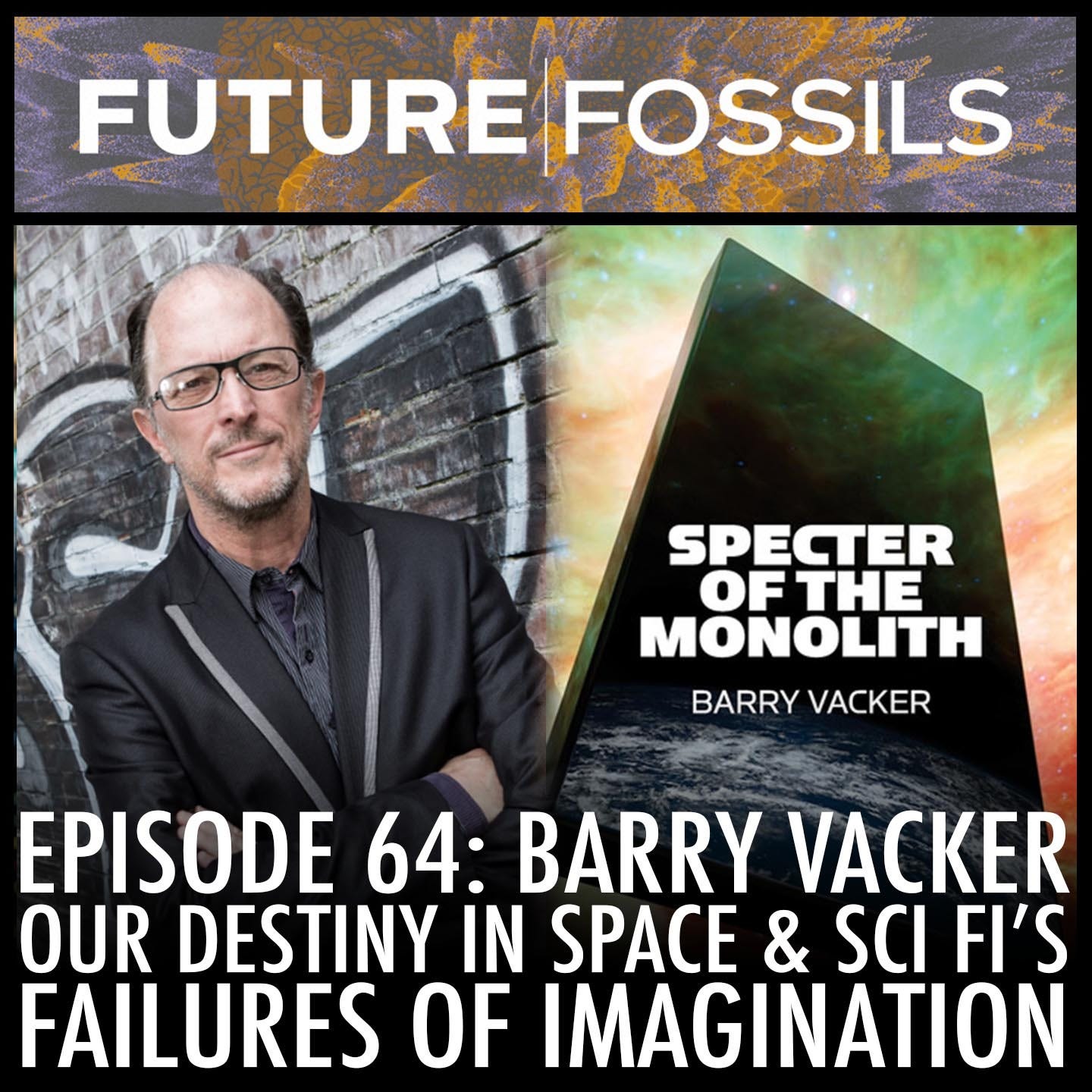
64 - Barry Vacker (Our Destiny in Space & Sci Fi's Failures of Imagination)
from Humans On The Loop · host ✨ Michael Garfield
This week: Science Fiction Übermenschen & A Critique of Space Colonization with film scholar Barry Vacker, a professor at Temple University in Philadelphia. We talk about the critique of contemporary science fiction cinema in his new book, Specter of the Monolith – pointing past the spiritual shortcomings of our relationship to space, and toward a future human being that has both grown in both technology and wisdom.Barry's Essays:http://medium.com/@barryvacker Subscribe:Apple Podcasts • Stitcher • Spotify • iHeart RadioJoin our Facebook Discussion Group!We Discuss:• How contemporary science fiction (including Blade Runner 2049) fails to live up to the promise of 2001: A Space Odyssey and articulate a transcendent vision for the future of humanity.• The role of the machine in a complete science fiction spirituality.• The different “übermenschen” presented in 2001, Altered States, Lawnmower Man, and Watchmen.• How Ancient Aliens hijacked the 2001 narrative about extraterrestrial involvement in human evolution.• How superheroes replaced gods in secular society after Nietzsche declared us the victors of the “Humans vs. God” match.• The role of the Cold War in cementing the different future visions of the United States and Russia/China.• The danger of looking to charismatic leaders of industry like Elon Musk for moral guidance in how we should enter space (specifically, extractive capitalism as the model for space migration).• The possibility and importance of preserving the Moon and Mars wilderness protection areas• …or is it our moral responsibility to spread life throughout the cosmos?• Barry’s critique of Interstellar as a film for “spore bearing” humans as opposed to “space faring” humans• Will it take an economic transition to prepare us for ethical space migration? Or a philosophical transition? Or are those not even different things?• The cultural importance of stargazing and astronomy – the sublime as the meeting place of the infinite and the infinitesimal – where awe, terror, and transcendence join without getting deities involved• The necessity for the human species to have “an explosion of awareness” – non mystically, non religiously• Space tourism: net good, or net evil? Can we reproduce the experience with VR?• Can we (or SHOULD we) baptise extraterrestrials? (Short answer: not without their informed consent?)• Colonialist and anticolonialist narratives in Avatar• Is our lack of rites of passage the reason we see a vastly disproportionate representation of “adulto-lescent” sci fi narratives?• Is Blade Runner 2049 a feminist film? Even though it fails the Bechdel test?Barry Quotes:“The superhero has emerged to make us feel like we’re still worth saving, to give us a moment of salvation at the movie theater – because when we walk out, we realize our political figures have no answers.”“2001 [is] seen as the prototypical Greatest Space Film Ever, but if you pay close attention, it’s showing a vision of space TOURISM. But when they show you the Moon, they’re not pillaging it. They’re not strip mining it. I think it’s completely ludicrous to think that we should be strip mining the Moon.”“The idea that we should be terraforming Mars in Earth’s own image…I mean, how narcissistic can you get?”“It’s time to give up these tired narratives of deities and industrial exploitation and move towards a scientific and artistic appreciation of these planets. And I don’t see that anywhere on the horizon. Very few people are questioning these tribal narratives.”“In Ridley Scott’s The Martian, there’s very little appreciation of the actual beauty of the PLANET, and in fact, Matt Damon says, ‘F Mars. I’m going to conquer this place.’ And we never see him looking at the dark skies. He would be the single human who would have had the greatest view of the skies EVER. And we don’t see any of that in The Martian. All we see is, ‘How can we transform the world’s resources into surviving?’ And that makes The Martian a very smart film, but it has a poverty of the imagination.”“I’m opposed to the propagation of human stupidity in the cosmos, nearby or faraway. I’m not opposed to us going to Mars or the Moon…but we should go as an enlightened species. We should go as space-farers, not merely spore-bearers. If we don’t alter this narrative, we know what we’re going to have: it’ll be literally ‘X Games: Moon.’ ‘The Real Housewives of Mars.’”“There’s something to be said for facing the universe as it is as best we can. Acknowledging our limitations and our humility, but also our aspirations to be more enlightened and more aware of and sensitive to our origins and our destiny, whatever it might be.”“In the quest for our meaning in the massive universe, we’ll find our destiny.” Get bonus content on PatreonSupport this show http://supporter.acast.com/futurefossils. Hosted on Acast. See acast.com/privacy for more information. This is a public episode. If you'd like to discuss this with other subscribers or get access to bonus episodes, visit michaelgarfield.substack.com/subscribe
Embed this episode
Ready to play
64 - Barry Vacker (Our Destiny in Space & Sci Fi's Failures of Imagination)
No transcript for this episode yet
Similar Episodes
No similar episodes found.
Similar Podcasts
No similar podcasts found.