64 Teaching Physics: Making Physics Relevant To Human Thought and Human Life episode artwork

EPISODE · Oct 23, 2022 · 1H 16M

64 Teaching Physics: Making Physics Relevant To Human Thought and Human Life

from The ReasonRx Podcast · host Michael Gold

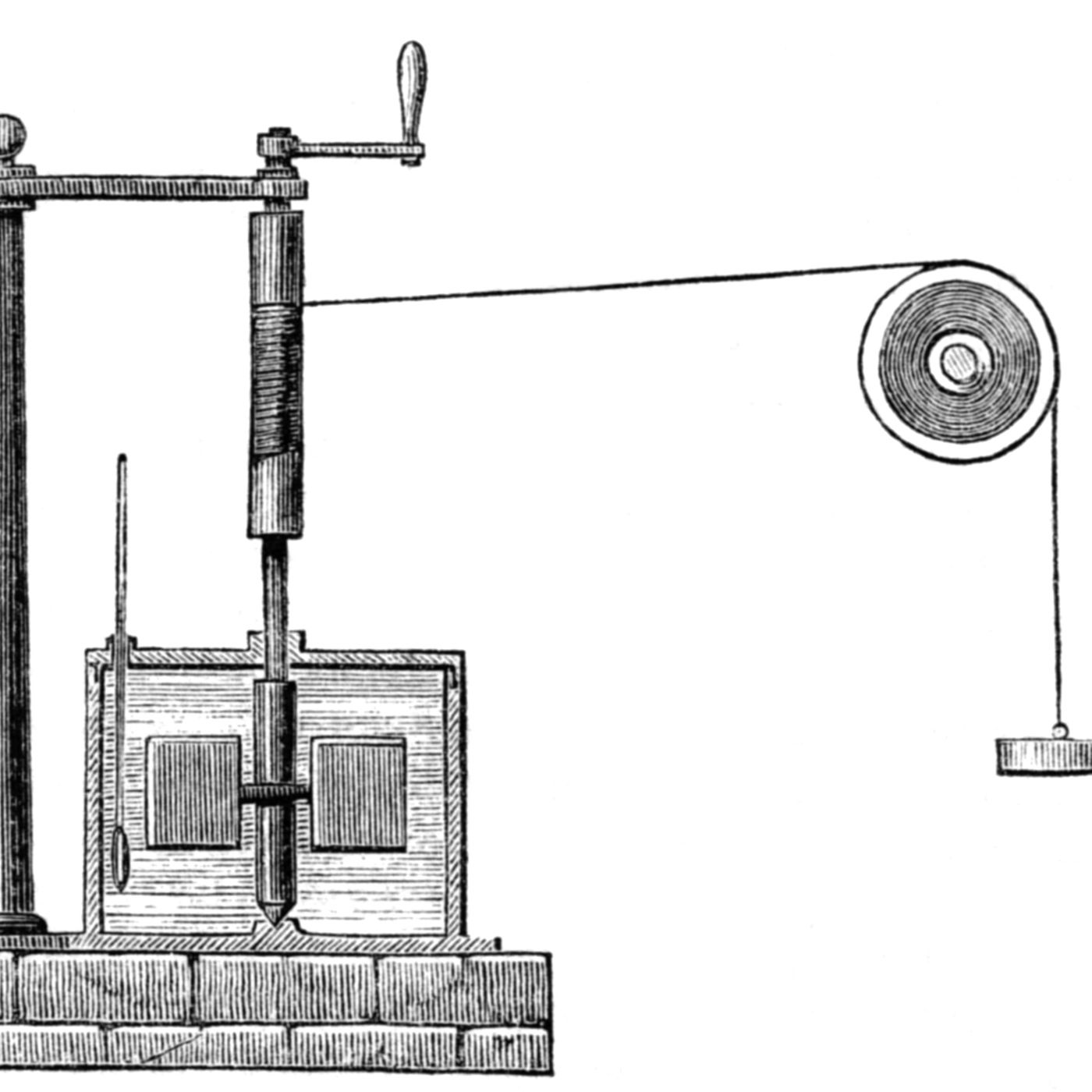
In this episode I read Dr. Michael Fowler's "Teaching Heat: the Rise and Fall of the Caloric Theory" and discuss its significance. It recommends teaching physics historically, which also helps students learn science, logic, and reasoning, which they need for using thought in the world and they need for adult life. Note: sorry for some of the reading in the episode. I was tired, so my contacts were blurry, so I could not read too well sometimes. I should have put my glasses on before I started!It's a great article with lots of lessons. How does science develop? Do scientists always accept truth and reject falsity?What does history say? Scientists are nothing more and nothing less than human — and what do humans do? How do groups, cliques, bullies, cults, etc., work? Galileo was put under house arrest and was harassed for his scientific views. Someone at his time, Bruno, was burned at the stake for saying the earth went around the sun. Ignaz Semmelweiss was ridiculed for advocating doctors wash their hands before surgery, even though he had inductive evidence and proof. James Joule was ridiculed for claiming that heat was a form of motion, because ‘all he had was hundredths of a degree to prove his point.’Scientists of his day were committed to the “caloric” theory of heat. They rejected the idea that heat was a form of motion. We see failures on the part of some "scientists" throughout human history: -rejecting Aristarchus, Copernicus, Kepler, Bruno, Galileo on heliocentrism-rejecting Kolreuter that bees pollinate plants-rejecting Berger that the EEG was a useful tool-rejecting Mayer on energy conservation-rejecting some scientists who discovered that Killer Whales live in pods-rejecting some scientists who discovered that Wolves are social pack animals, not "lone killers"-Etc. Ad Infinitum. And the social group of scientists sometimes have errant, unfounded beliefs. Jane Goodall was the one who went and actually studied Chimpanzees to find out about them, instead of merely assuming things about them. She discovered that Chimpanzees eat meat, and are not merely fruit-eaters — a discovery anyone could have made if they’d have had the independence of thought to go look. Thank goodness for Jane Goodall! This kind of thing happens some all through human history. It is with us today. Why? Humans are social animals. We are not committed only to truth, but also to the group. Of course, the group needs to be committed to reality, else it suffers, fails, and dies, to the extent it departs from truth. But we need some group commitment to survive and thrive.There is a difference between science (a method of thought), the products of science, and the scientific community. An important difference students should learn deeply. Contact Michael:1. Email: [email protected]. Gold Academy: https://www.goldams.com 3. Total Human Fitness: https://total-human-fitness.com4. Cypress Creek Ecological Restoration Project: https://ccerp.org5. LinkedIn: https://www.linkedin.com/in/michael-gold-2883921/ 6. Twitter/Instagram: EpistemeRxNotes.1. "Teaching Heat: the Rise and Fall of the Caloric Theory" by Michael Fowler, University of Virginiahttp://galileoandeinstein.physics.virginia.edu/more_stuff/TeachingHeat.htm2. More good lecture, courses, and articles by Dr. Fowler: https://galileo.phys.virginia.edu/~mf1i/home.html3. In "Scurvy: An Example of Science vs. the Scientific Community" I give an example of a failure of the scientific community to get things right.https://goldams.com/scurvy-and-science-vs-the-scientific-community/4. Introductory physics; an historical approach by Herbert Priestleyhttps://archive.org/details/introductoryphys0000prie5. Physics For The Inquiring Mind by Eric Rogershttps://archive.org/details/PhysicsForTheInquiringMind-Rogers/mode/2upImage from: https://commons.wikimedia.org/wiki/File:Joule%27s_Apparatus_(Harper%27s_Scan).pngPlease consider liking us on your podcast app, and leaving a rational review.Email us at [email protected], [email protected], or [email protected]: https://www.linkedin.com/in/michael-gold-2883921/Gold Academy: https://goldams.comTotal Human Fitness: https://total-human-fitness.com

In this episode I read Dr. Michael Fowler's "Teaching Heat: the Rise and Fall of the Caloric Theory" and discuss its significance. It recommends teaching physics historically, which also helps students learn science, logic, and reasoning, which they need for using thought in the world and they need for adult life. Note: sorry for some of the reading in the episode. I was tired, so my contacts were blurry, so I could not read too well sometimes. I should have put my glasses on before I started!It's a great article with lots of lessons. How does science develop? Do scientists always accept truth and reject falsity?What does history say? Scientists are nothing more and nothing less than human — and what do humans do? How do groups, cliques, bullies, cults, etc., work? Galileo was put under house arrest and was harassed for his scientific views. Someone at his time, Bruno, was burned at the stake for saying the earth went around the sun. Ignaz Semmelweiss was ridiculed for advocating doctors wash their hands before surgery, even though he had inductive evidence and proof. James Joule was ridiculed for claiming that heat was a form of motion, because ‘all he had was hundredths of a degree to prove his point.’Scientists of his day were committed to the “caloric” theory of heat. They rejected the idea that heat was a form of motion. We see failures on the part of some "scientists" throughout human history: -rejecting Aristarchus, Copernicus, Kepler, Bruno, Galileo on heliocentrism-rejecting Kolreuter that bees pollinate plants-rejecting Berger that the EEG was a useful tool-rejecting Mayer on energy conservation-rejecting some scientists who discovered that Killer Whales live in pods-rejecting some scientists who discovered that Wolves are social pack animals, not "lone killers"-Etc. Ad Infinitum. And the social group of scientists sometimes have errant, unfounded beliefs. Jane Goodall was the one who went and actually studied Chimpanzees to find out about them, instead of merely assuming things about them. She discovered that Chimpanzees eat meat, and are not merely fruit-eaters — a discovery anyone could have made if they’d have had the independence of thought to go look. Thank goodness for Jane Goodall! This kind of thing happens some all through human history. It is with us today. Why? Humans are social animals. We are not committed only to truth, but also to the group. Of course, the group needs to be committed to reality, else it suffers, fails, and dies, to the extent it departs from truth. But we need some group commitment to survive and thrive.There is a difference between science (a method of thought), the products of science, and the scientific community. An important difference students should learn deeply. Contact Michael:1. Email: [email protected]. Gold Academy: https://www.goldams.com 3. Total Human Fitness: https://total-human-fitness.com4. Cypress Creek Ecological Restoration Project: https://ccerp.org5. LinkedIn: https://www.linkedin.com/in/michael-gold-2883921/ 6. Twitter/Instagram: EpistemeRxNotes.1. "Teaching Heat: the Rise and Fall of the Caloric Theory" by Michael Fowler, University of Virginiahttp://galileoandeinstein.physics.virginia.edu/more_stuff/TeachingHeat.htm2. More good lecture, courses, and articles by Dr. Fowler: https://galileo.phys.virginia.edu/~mf1i/home.html3. In "Scurvy: An Example of Science vs. the Scientific Community" I give an example of a failure of the scientific community to get things right.https://goldams.com/scurvy-and-science-vs-the-scientific-community/4. Introductory physics; an historical approach by Herbert Priestley<br...

NOW PLAYING

64 Teaching Physics: Making Physics Relevant To Human Thought and Human Life

0:00 1:16:31

No transcript for this episode yet

We transcribe on demand. Request one and we'll notify you when it's ready — usually under 10 minutes.

Frequently Asked Questions

How long is this episode of The ReasonRx Podcast?

This episode is 1 hour and 16 minutes long.

When was this The ReasonRx Podcast episode published?

This episode was published on October 23, 2022.

What is this episode about?

In this episode I read Dr. Michael Fowler's "Teaching Heat: the Rise and Fall of the Caloric Theory" and discuss its significance. It recommends teaching physics historically, which also helps students learn science, logic, and reasoning, which they...

Is there a transcript available for this episode?

Yes, a full transcript is available for this episode. You can read the complete transcript on the episode page.

Can I download this The ReasonRx Podcast episode?

Yes, you can download this episode by clicking the download button on the episode player, or subscribe to the podcast in your preferred podcast app for automatic downloads.
URL copied to clipboard!