
EPISODE · Dec 6, 2024 · 16 MIN
66# Sport Biology The Human Body as a Movement Apparatus.
from Golf 247.eu: The Global Platform for Innovative Technologies and Teaching Concepts. · host Golf247.eu
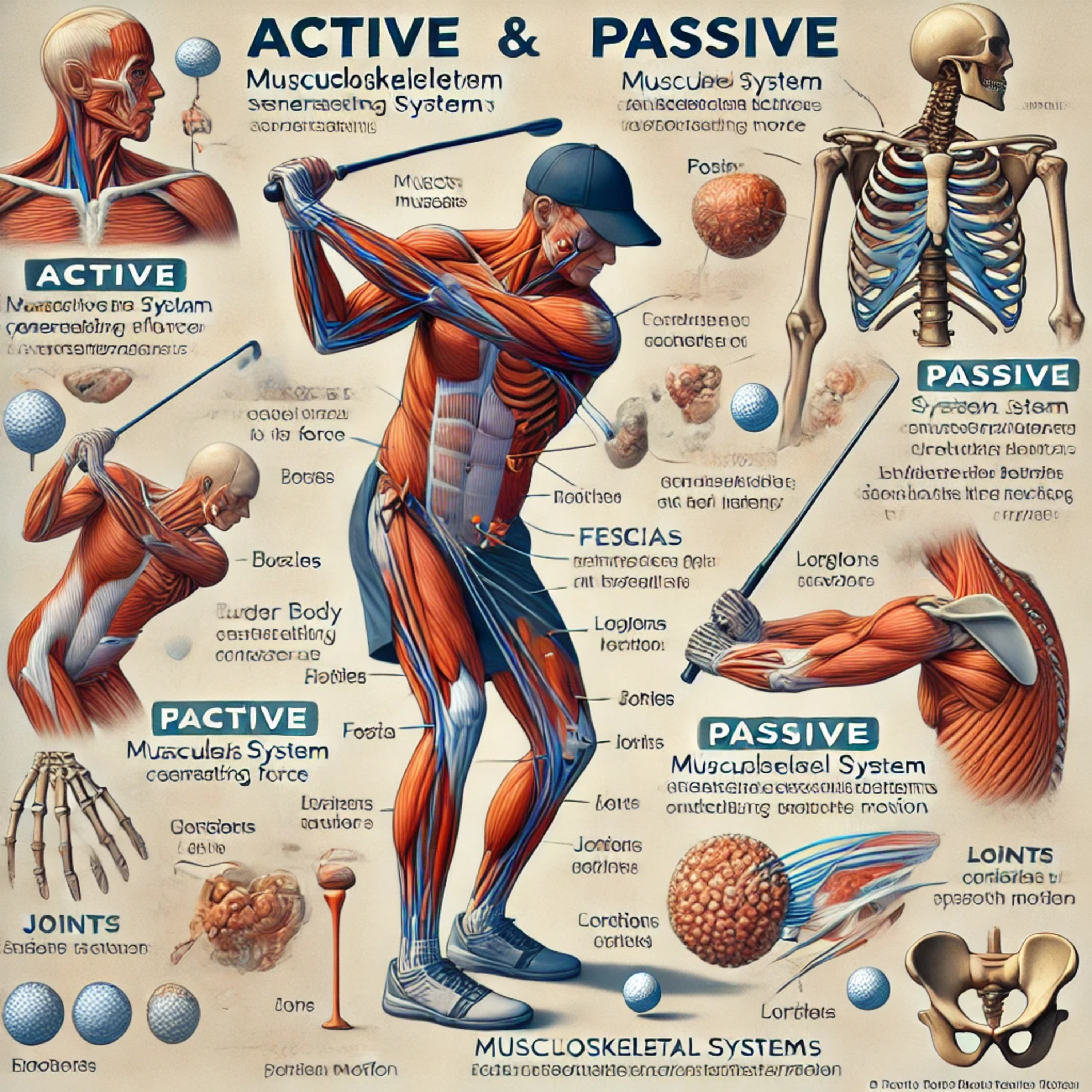
The Podcast explains the anatomy and physiology of the human musculoskeletal system in the context of sports, particularly golf. It uses the analogy of the human body as a car to describe various systems (active and passive musculoskeletal systems, cardiovascular system, respiratory system, nervous system, and energy supply) and their adaptations to training. The focus is on golf-specific injuries and their prevention, including warm-up and stretching exercises to avoid muscular imbalances. Finally, it provides recommendations for first aid and additional literature. Interaction of Active and Passive Musculoskeletal Systems in Sports The active musculoskeletal system, consisting of muscles, fasciae, and tendons, acts as the "engine" of the body, generating the force required for movement. Muscles contract, pulling on the bones of the skeleton to create movement. The passive musculoskeletal system, made up of bones, ligaments, joints, connective tissue, and cartilage, serves as the "framework" and provides anchor points for the muscles. It has two main functions: 1. Support Function: The skeleton enables an upright posture and provides support for internal organs and soft tissues. 2. Protection Function: The skeleton protects delicate organs such as the brain, spinal cord, heart, and lungs. Bones are connected by joints, which allow various types of movement. Ligaments stabilize the joints, while cartilage ensures smooth, frictionless motion. In sports, these systems interact closely: 1. The muscles of the active system generate the force applied to the bones of the passive system. 2. Bones act as levers moved by muscle contractions. 3. Joints, ligaments, and cartilage enable smooth, controlled movements of the bones. Example: Golf 1. During a golf swing, the muscles of the upper body and arms contract to transfer force to the golf club. 2. The bones of the arms and torso act as levers accelerated by muscle force. 3. The joints of the shoulder, elbow, and wrist facilitate the complex movement of the golf club. 4. Ligaments and cartilage in these joints provide stability and smooth motion. In summary, the active musculoskeletal system provides the power, while the passive system defines the structure and range of motion. Complex movements in sports are only possible through the perfect interaction of these two systems. www.Golf247.eu
Embed this episode
NOW PLAYING
66# Sport Biology The Human Body as a Movement Apparatus.
No transcript for this episode yet
Similar Episodes
No similar episodes found.
Similar Podcasts
No similar podcasts found.