
EPISODE · Jul 29, 2024 · 29 MIN
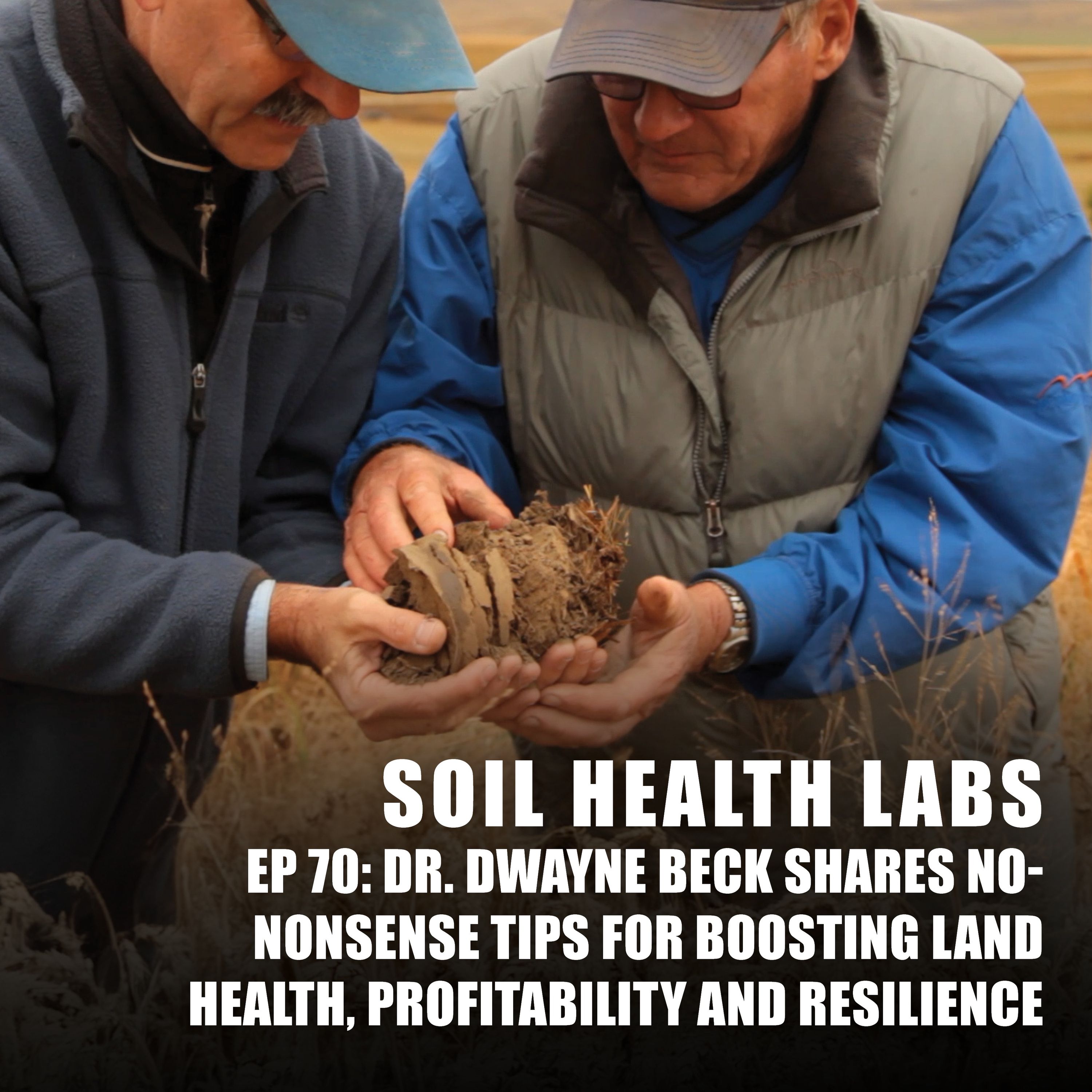
70 Dr. Dwayne Beck Shares No-Nonsense Tips for Boosting Land Health, Profitability and Resilience
from Soil Health Labs · host Soil Health Labs
In this conversation with Soil Scientist Buz Kloot, Dwayne Beck— former research manager to Dakota Lakes Research Farm— discusses the destructive effects of some traditional land management techniques, one of which being tillage. Tillage consistently disrupts soil pore structure and leads to the loss of organic matter, initiating a downward spiral towards desertification. He references the Sahara Desert as an example, which was once a grassland but turned into a desert due to the loss of nutrients.Beck highlights the importance of integrated farming practices that consider the land’s natural vegetation and climate. On his travels, particularly in Australia, he noticed significant differences in ecosystems based on rainfall patterns and soil water retention. He notes the challenge of farming in regions like Western and Eastern Australia, where the climate and soil conditions differ from grassland regions. He notes that in tree-dominated regions, water moves deep into the soil during winter, beyond the reach of grass-type crops. This creates a challenge under standard agricultural approaches; nutrients being in the soil, but too deep for crops to reach.He shares his insights on potential solutions, such as integrating perennial crops like sorghum in summer to utilize the nutrient cycles effectively. Dwayne mentions Colin Seis, who developed a system called "pasture cropping" or "grain and graze," which integrates tall grass species and winter crops to create a mixed-species system that enhances nutrient cycling and works in tandem with the seasons. He highlights the benefits of having a mix of perennials and annuals, as it more closely resembles natural ecosystems—urging farmers to not grow dependent on perennial grains. While annual crops focus on producing seeds, perennials primarily aim to survive until the next year— noting that Seis’ ‘grain and graze’ approach, while an insightful guidepost, will not work in every climate.Dwayne addresses the historical importance of megaherbivores in maintaining landscapes, and how the absence of these animals affects current ecosystems. The subsequent deficiency of deep-rooted species contributes to what he calls a leaky system: soil pH deficiencies leading to water and nutrient leakage. He references Randy Anderson's concept of a "death spiral," and emphasizes the need to restore the soil community to as close to its native condition as possible. This involves reintroducing diversity to rebuild soil’s capacity and productivity.In a follow-up conversation with Kloot, Beck discusses ongoing challenges and potential solutions for farming in the Jim River region, specifically focusing on salinity issues. Dwayne emphasizes the importance of integrating perennials into farming systems to address these issues, noting that perennials could help manage salinity, although every property will have its own unique needs.Beck highlights the benefits of having a mix of perennials and annuals, as it more closely resembles natural ecosystems. He notes how pH problems often stem from nutrient cycling deficiencies rather than input deficiencies, recounting an instance where he was asked in a conference how far a farmer would need to go to get lime. Beck’s answer was “Three feet.” He wants to remind farmers that lime is often in the soil, possibly beyond the reach of their standard crops, rather than miles away in a lime mine.Beck expressed his concern about the increasing emphasis on bio-oil crops like canola, flax, and soybeans, warning that an over-reliance on these crops could exacerbate issues in the Corn Belt. He also mentions innovative uses for crop residues, such as making lumber from corn stalks, and suggests that tallgrass plants could be harvested biennially for biomass production while still benefiting the soil. He acknowledges that while this approach is not as beneficial as grazing, it is still better than many standard agricultural practices.In all, Beck’s wealth of understanding on crop management and long-term planning underscores the need for strategic thinking in sustainable farming, and makes for an insightful conversation about regenerative land management.Additional Links:Dr Randy Anderson’s Spiral of Soil Regeneration:Part 1: https://www.growingresiliencesd.com/videos?wix-vod-video-id=6mckHaT2Giw&wix-vod-comp-id=comp-l0v2ecy2Part 2: https://www.growingresiliencesd.com/videos?wix-vod-video-id=aoT8x0VWu_I&wix-vod-comp-id=comp-l0v2ecy2Part 3: https://www.growingresiliencesd.com/videos?wix-vod-video-id=jJwtd5UtUak&wix-vod-comp-id=comp-l0v2ecy2Pasture Cropping with Colin Seis:https://www.wool.com/on-farm-research/weather-the-drought-with-regenerative-agriculture/Dakota Lakes Research Farm:http://dakotalakes.com/
Embed this episode
Ready to play
70 Dr. Dwayne Beck Shares No-Nonsense Tips for Boosting Land Health, Profitability and Resilience
No transcript for this episode yet
Similar Episodes
No similar episodes found.
Similar Podcasts
No similar podcasts found.