
EPISODE · May 5, 2026 · 1H 33M
71 Science Should Be Taught Historically and Inductively
from The ReasonRx Podcast · host Michael Gold
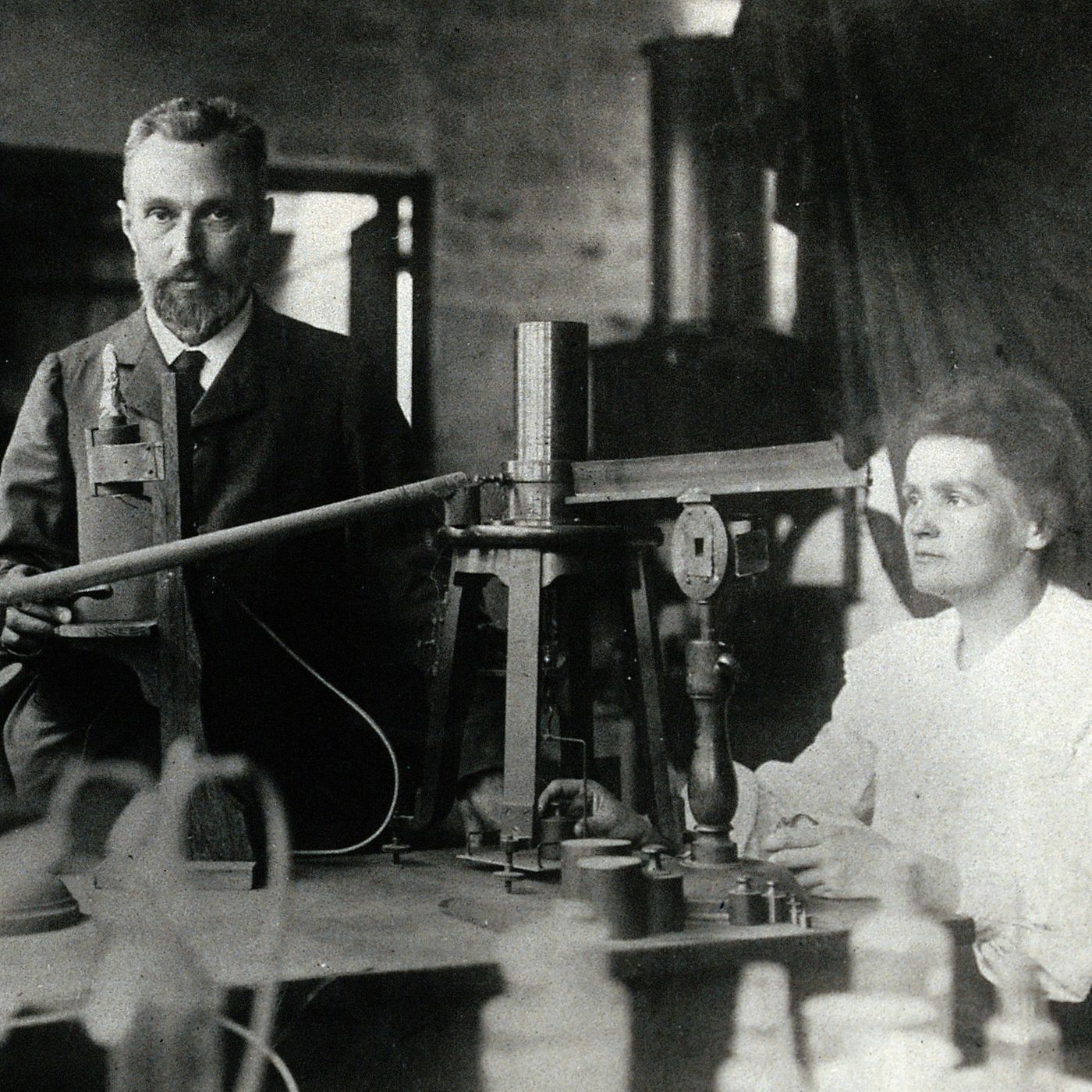
Science should be taught by following how it developed historically. There are all sorts of reasons why -- most importantly because that method fits with the nature and aims of education.The historical and inductive essence needs to be there, but how that is achieved could vary -- and should, by age, intellectual level, power of patience, etc. You could go into more or less depth and breadth, depending on the student(s). You could use some topic to capture interest, then start asking "how do you/we know???" You could start with an absraction and "reverse engineer" some inductions and theories. As long as the root in perceptual experience and the steps of abstraction are respected, and as long as principles of logic and reasoing are learned (in their practice).Notes.1. Introductory physics: An Historical Approach by Hebert Priestley https://archive.org/details/introductoryphys0000prie/page/6/mode/2up2. "For their part, Casadevall and Bosch write that science education reform should resultin scientists who are: (1) broadly interested, creative and self-directed, as were somescientists in the era of Louis Pasteur, Marie Curie, Albert Einstein, and Linus Pauling; (2)versed in epistemology, sound research conduct and error analysis, according to the‘3R’ norms of good scientific practice—rigor, responsibility and reproducibility; (3)skilled in reasoning using mathematical, statistical and programming methods and ableto tackle logical fallacies.”—From "Biomedical science education needs a newphilosophy, Johns Hopkins researchers say"https://hub.jhu.edu/2018/01/03/biomedical-science-education-reform-casadevall-bosch/3. “Teaching Heat: the Rise and Fall of the Caloric Theory” by Dr. Michael Fowler (Professor of Physics, University ofVirginia, retired)http://galileoandeinstein.physics.virginia.edu/more_stuff/TeachingHeat.htm More of his work here: https://galileo.phys.virginia.edu/~mf1i/4. Physics for the Inquiring Mind by Dr. Eric Rogers (Professor ofPhysics, Princeton University, 1942-1971). Quotes from p. 205 and from the book descriptoin on the back jacket.https://archive.org/details/PhysicsForTheInquiringMind-Rogers/page/n217/mode/2up Available for purchase on Amazon, but free pdfs can be found on the Internet. 5. “The Purpose of Education,” by Martin Luther King, Jr., published in 1947 in the the Morehouse College campus newspaper The Maroon Tiger.https://kinginstitute.stanford.edu/king-papers/documents/purpose-education6. "I fully agree with you about the significance and educational value of methodology as well as history and philosophy of science. So many people today—and evenprofessional scientists—seem to me like someone who has seen thousands of treesbut has never seen a forest. A knowledge of the historic and philosophical backgroundgives that kind of independence from prejudices of his generation from which mostscientists are suffering. This independence created by philosophical insight is—in myopinion—the mark of distinction between a mere artisan or specialist and a real seekerafter truth."—Albert Einstein (Letter to Robert A. Thorton, Physics Professor atUniversity of Puerto Rico (7 December 1944) [EA-674, Einstein Archive, HebrewUniversity, Jerusalem]. Thorton had written to Einstein on persuading colleagues of theimportance of philosophy of science to scientists (empiricists) and science.https://en.wikiquote.org/wiki/Albert_Einstein 7. The very well-done physics lectures by Dr. Walter Lewin.https://www.youtube.com/@lecturesbywalterlewin.they92598. "A human being should be able to change a diaper, plan an invasion, butcher a hog, conn a ship, design a building, write a sonnet, balance accounts, build a wall, set a bone, comfort the dying, take orders, give orders, cooperate, act alone, solve equations, analyze a new problem, pitch manure, program a computer, cook a tasty meal, fight efficiently, die gallantly. Specialization is for insects.”--Robert Heinlien (quote from the 1973 sci-fi novel Time Enough For Love)https://en.wikiquote.org/wiki/Time_Enough_for_Love9. Range: Why Generalist Triump In a Specialized World by David Epstienhttps://www.amazon.com/Range-Generalists-Triumph-Specialized-World/dp/073521448410. “Few [scientists] are philosophers. Most are intellectual journeyman, exploring locally, hoping for a strike, living for the present."--E.O. Wilson, Consilience: The Unity of Knowledge https://www.amazon.com/Consilience-Unity-Knowledge-Wilson-ebook/dp/B00P5557DK/11. “The seeker after truth is not one who studies the writings of the ancients and,following his natural disposition, puts his trust in them, but rather the one who suspectshis faith in them and questions what he gathers from them, the one who submits toarguments and demonstration and not the sayings of human beings whose nature isfraught with all kinds of imperfection and deficiency. Thus the duty of the man whoinvestigates the writings of scientists, if learning the truth is his goal, is to make himselfan enemy of all that he reads, and, applying his mind to the core and margins of itscontent, attack it from every side. He should also suspect himself as he performs hiscritical examination of it, so that he may avoid falling into either prejudice or leniency.”—Ibn al-Haytham (Abū ʿAlī al-Ḥasan ibn al-Haytham, c. 965 – c. 1040.) Source: quote at the beginning of Chapter 11, “The Physicist,” in the book The House of Wisdom by JimAl-Khalili.https://www.amazon.com/House-Wisdom-Science-Knowledge-Renaissance/dp/0143120565/Picture of the Curies from Wikipedia. Please consider liking us on your podcast app, and leaving a rational review.Email us at [email protected], [email protected], or [email protected]: https://www.linkedin.com/in/michael-gold-2883921/Gold Academy: https://goldams.comTotal Human Fitness: https://total-human-fitness.com
Embed this episode
What this episode covers
Science should be taught by following how it developed historically. There are all sorts of reasons why -- most importantly because that method fits with the nature and aims of education. The historical and inductive essence needs to be there, but how that is achieved could vary -- and should, by age, intellectual level, power of patience, etc. You could go into more or less depth and breadth, depending on the student(s). You could use some topic to capture interest, then start asking "how do you/we know???" You could start with an absraction and "reverse engineer" some inductions and theories. As long as the root in perceptual experience and the steps of abstraction are respected, and as long as principles of logic and reasoing are learned (in their practice). Notes. 1. Introductory physics: An Historical Approach by Hebert Priestley https://archive.org/details/introductoryphys0000prie/page/6/mode/2up 2. "For their part, Casadevall and Bosch write that science education reform should resultin scientists who are: (1) broadly interested, creative and self-directed, as were somescientists in the era of Louis Pasteur, Marie Curie, Albert Einstein, and Linus Pauling; (2)versed in epistemology, sound research conduct and error analysis, according to the‘3R’ norms of good scientific practice—rigor, responsibility and reproducibility; (3)skilled in reasoning using mathematical, statistical and programming methods and ableto tackle logical fallacies.” —From "Biomedical science education needs a newphilosophy, Johns Hopkins researchers say" https://hub.jhu.edu/2018/01/03/biomedical-science-education-reform-casadevall-bosch/ 3. “ Teaching Heat: the Rise and Fall of the Caloric Theory” by Dr. Michael Fowler (Professor of Physics, University ofVirginia, retired) http://galileoandeinstein.physics.virginia.edu/more_stuff/TeachingHeat.htm More of his work here: https://galileo.phys.virginia.edu/~mf1i/ 4. Physics for the Inquiring Mind by Dr. Eric Rogers (Professor ofPhysics, Princeton University, 1942-1971). Quotes from p. 205 and from the book descriptoin on the back jacket. https://archive.org/details/PhysicsForTheInquiringMind-Rogers/page/n217/mode/2up Available for purchase on Amazon, but free pdfs can be found on the Internet. 5. “The Purpose of Education,” by Martin Luther King, Jr., published in 1947 in the the Morehouse College campus newspaper The Maroon Tiger. https://kinginstitute.stanford.edu/king-papers/documents/purpose-education 6. "I fully agree with you about the significance and educational value of methodology as well as history and philosophy of science. So many people today—and evenprofessional scientists—seem to me like someone who has seen thousands of treesbut has never seen a forest. A knowledge of the historic and philosophical backgroundgives that kind of independence from prejudices of his generation from which mostscientists are suffering. This independence created by philosophical insight is—in myopinion—the mark of distinction between a mere artisan or specialist and a real seekerafter truth." —Albert Einstein (Letter to Robert A. Thorton, Physics Professor atUniversity of Puerto Rico (7 December 1944) [EA-674, Einstein Archive, HebrewUniversity, Jerusalem]. Thorton had written to Einstein on persuading colleagues of theimportance of philosophy of science to scientists (empiricists) and science. https://en.wikiquote.org/wiki/Albert_Einstein 7. The very well-done physics lectures by Dr. Walter Lewin. https://www.youtube.com/@lecturesbywalterlewin.they9259 8. "A human being should be able to change a diaper, plan an invasion, butcher a hog, conn a ship, design a building, write a sonnet, balance accounts, build a wall, set a bone, comfort the dying, take orders, give orders, cooperate, act alone, solve equations, analyze a new...
NOW PLAYING
71 Science Should Be Taught Historically and Inductively
No transcript for this episode yet
Similar Episodes
No similar episodes found.
Similar Podcasts
No similar podcasts found.