
EPISODE · Apr 27, 2026 · 22 MIN
A Conversation with MI Attorney General Nominee Eli Savit
from The Forum with Josh Cowen Podcast · host Josh Cowen
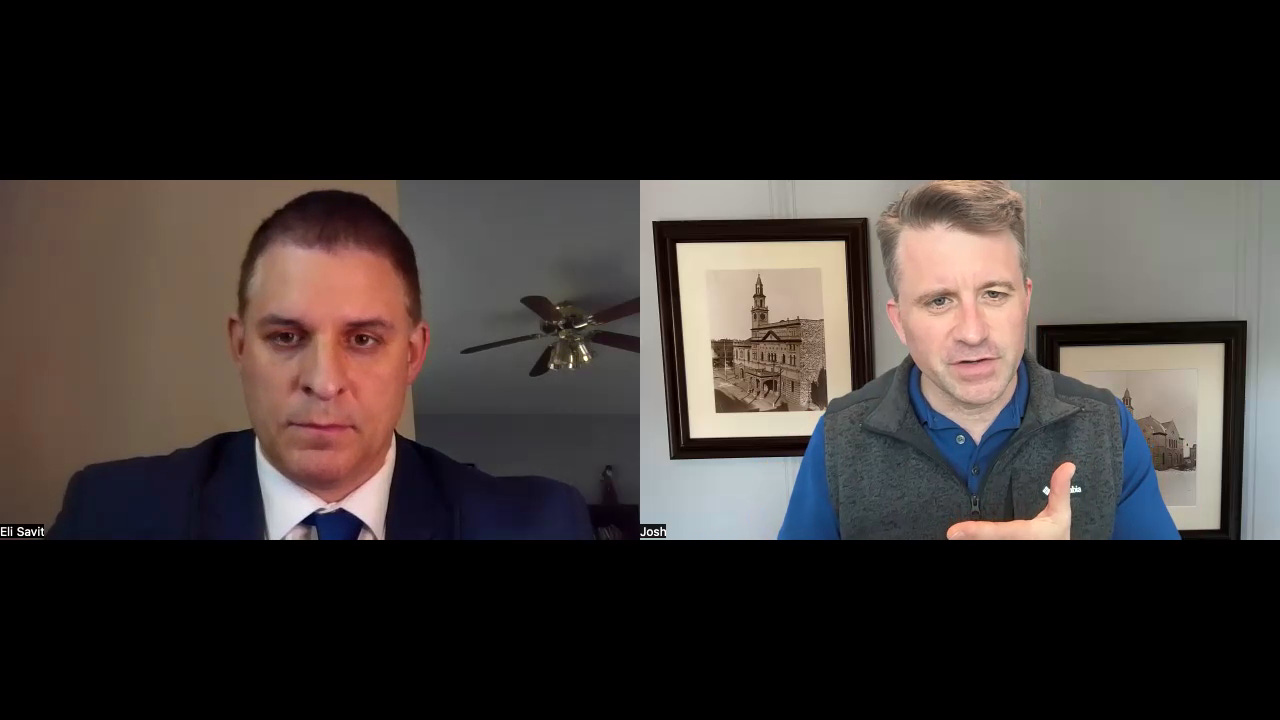
This week I’m going out of order a bit on Forum postings. Normally I’d do a Monday newsletter, with a conversation/interview scheduled for release Thursday. But I’m flipping the schedule to post my recent chat with Eli Savit, who last weekend became the de facto Democratic nominee for Michigan Attorney General.The Michigan Democratic Party convention that ultimately endorsed Savit’s bid made national news for an apparent progressive swing—and for the terrible behavior of some attendees, who booed certain candidates and speakers. A faction at the convention was also able to nominate a candidate for Regent of the University of Michigan who had made statements supporting Hezbollah in the past, raising charges of anti-Semitism from both Republicans and some Democrats.Many observers considered Eli Savit the more progressive of the two party nominees for Attorney General—although both are currently county prosecutors. Savit is the chief law enforcement official in Washtenaw County, which includes Ann Arbor and the University of Michigan.Before his election to that job in 2021, Savit served as chief legal counsel for Detroit Mayor Mike Duggan, who is himself running this cycle as an independent for the Michigan governorship. Savit also clerked for Supreme Court Justice Ruth Bader Ginsburg. While at the mayor’s office, Eli Savit helped negotiate a settlement in the Gary B. v. Whitmer case (originally called Gary B. v. Snyder, because the case was filed during Governor Rick Snyder’s term and settled during Gretchen Whitmer’s first term). The Gary B case stemmed from a complaint that the state had failed to provide children in Detroit a constitutional right to basic education when it failed to meet conditions necessary for basic levels of reading comprehension. Given this background, the broader news coming out of Michigan, and the implications of both for major legal and political questions moving forward, I wanted to chat with Eli Savit about it all. Here’s what went down.A Conversation with Eli SavitAlright, Eli Savit, thanks for being here. Let’s start with some basics. Tell us a bit about your background, who you are, and why this race you’re in now matters. I have a lot of readers and listeners who live in Michigan—but many don’t. Why do state attorneys general right now matter so much and why is Michigan so important?I’ll start with my background, just so people can get acquainted with me a little bit. My name is Eli Savit. I’m currently in my second term as the elected Washtenaw County prosecutor. For those who aren’t as familiar with Michigan: that’s Michigan’s 6th biggest county, biggest city is Ann Arbor. We also go out to Ypsilanti, Ypsilanti Township and we have a lot of rural communities as well. So it’s a pretty good cross-section of Michigan. Like I said, I’m in my second term there. That’s where I’m born and raised. I grew up in Ann Arbor, but as I like to tell our Spartan friends, which you are one of, Josh: don’t worry, you can vote for me anyway, because I did not go to the University of Michigan for undergrad.It’s not that I didn’t want to go. See, the only school that would allow a 6’4 center that can’t jump to play college basketball was not the University of Michigan. It was Kalamazoo College over on the west side of the state: tiny, tiny school, but I had a great time there. I started my career as a public school teacher. I taught eighth grade special education, general education classes.I then did go to the University of Michigan for law school. Early in my career, I had the tremendous opportunity to clerk under the late Justice Ruth Bader Ginsburg on the U.S. Supreme Court.And I’ve had a variety of experiences throughout my legal career that I think situate me well for this position at this moment. I have done civil rights and voting rights cases. I worked for the city of Detroit and led its public interest litigation program, including suing the opioid industry and being the first city in the state to do that.I went up against slumlords and land speculators, and also led the city’s efforts in the right-to-literacy lawsuit, which I know we’re going to talk about in a bit here. I’ve also been a practicing environmental lawyer and have sued corporate polluters on behalf of states and have, in fact, been part of case teams that have won the single site recovery that is the largest in the nation’s history for water pollution. So I bring all that to the table: the criminal law background, the civil rights background, the environmental background, the voting rights background, the public interest background. And this is all tremendously important for the state attorney general right now. We’re seeing a lot come out of the Trump administration in terms of violations of our civil rights and our voting rights and funding cuts to states, and the state attorney general is the one position that can go into court on behalf of the people of the state of Michigan and sue this administration or any other when they violate the law and harm the people of the state of Michigan. It’s also important, though, that we have an AG who’s going to be the backstop and enforce our state-level civil rights, and voting rights, and environmental and worker and consumer protection laws, when especially the federal government has effectively laid down its sword on so many of those issues.And if you are somebody from out of state, and you say to yourself, Why should I care about who the Michigan Attorney General is? I want you to imagine that it’s election night of 2028. And there is a challenge to the vote in Detroit, in Flint, in Saginaw on college campuses in Michigan. And the outcome of that challenge could determine who the next president of the United States is. That is a very plausible scenario. And it is really going to matter who’s in the AG’s role at that moment, because whether we fight back and how hard we fight back against attempts to disenfranchise Michiganders could literally shape the next presidential election and the future of this nation for generations to come. So, it’s an important job.There were some things that happened at the state Democratic convention that, to my mind, didn’t live up to our party’s standards.—Eli SavitYou were effectively nominated at the endorsement convention for the Michigan Democratic Party last week. There’s been some reporting that the convention “went left” with its endorsements, and concern about crowd behavior, and some really awful elements of anti-Semitism among some party activists. How do you view what happened at the convention both for who you are as a nominee and also the Democratic Party more broadly?Sure. I’m somebody that believes that we should have vehement and passionate political disagreement, but we should always be civil about it, and certainly nobody should ever feel as though they’re not welcome in our party because of who we are. And there were some things that happened at the convention that, to my mind, didn’t live up to those standards. I am never in support of booing somebody offstage when they’re trying to talk, when they’re trying to explain their positions. You know, certainly I’ve heard folks in the Jewish community which, by the way, is my community, say that they felt unsafe, they felt unwelcomed in the party, and we’ve got to make sure that we are keeping everybody in our tent, everybody in our party listening to voices from across not just the political spectrum, but voices that encompass the diversity of our party: Jewish and Muslim and Christian and Hindu, black and white, gay, straight, trans.Everyone, right? Everybody needs to feel welcome in our party, because it’s only through solidarity that we are going to move forward as a party and as a state, and as a nation. So, my focus right now, of course, is on winning in November, but also doing what I can to try to bring our party together to try to heal some of those wounds that I know are very real that people are feeling from convention last Sunday. We’ve all got to come together right now. That is the most important thing, and I take the concern seriously. Like I said, certainly don’t condone some of what happened at convention. But now it’s time to unite, and I’m going to do everything in my power to bring people together.I’ve always thought of you as a pretty pragmatic guy. Progressive, yes, but working in spaces where you have to handle a lot of different and sometimes competing priorities. You’re the Washtenaw County prosecutor but you’re running for statewide office. How will your approach change as the state’s top lawyer rather than in the county prosecutor’s office or, say, your older work as Mike Duggan’s chief legal counsel?I appreciate the description, because I do view myself as a pragmatic person, and I know folks tend to ascribe progressive views to me, and you know, fair enough. But frankly, I don’t think there’s anything particularly ideological about what I stand for right? I stand for Michiganders being able to have clean air and clean water, and I believe in preserving our natural resources.I believe that workers are entitled to be paid what they are owed, and believe in fighting back and standing up to corporations that engage in wage theft.I believe in standing up to corporations that are price gouging consumers and jacking up prices at this time of economic instability—even higher than they should be. I believe in basic civil rights and voting rights. And yeah, I believe that we need to stand up to this administration or any other—and I mean this—Democratic or Republican, that is going to harm the people of the state of Michigan in an unlawful way.I don’t think that that’s all that ideological, actually. I believe that’s what Michiganders want generally, and you know, in terms of running for statewide office, I’ve always said what I believed. I don’t anticipate having to change my message too much on to November.Because what I’ve been talking about throughout my campaign is just those basic things. Yeah, corporate polluters should be held accountable. Yes, bosses who steal from their workers should be held accountable. Yes, we shouldn’t allow corporations to price gouge us, and yes, when this administration or any other is violating our civil rights or our voting rights.We need to stand up to protect the people of the State of Michigan. I mean, that doesn’t sound too out there to me. And I really think that that’s functionally the AG’s role as the people’s lawyer.I hope to see the day that ultimately the right to a basic education is recognized by the U.S. Supreme Court. In the interim, there are real kids, real teachers, real school administrators on the ground doing the hard work and desperately needing more resources.—Eli SavitLet’s talk about education law for a minute. You’ve mentioned your work on the Gary B lawsuit on behalf of kids struggling to read in Detroit. Walk us through that case and how your work on that gives folks—especially parents and educators—a sense of your priorities as Michigan’s attorney general.So this was a case that made the really novel constitutional claim that under the Federal Constitution: children have a fundamental right to learn how to read.And it may surprise some more casual observers of education law to know that that’s not something that’s ever been recognized by the US Supreme Court. We certainly think of education and the right to an at least minimally adequate education as being fundamentals—something that the state is obligated to provide.But the truth of the matter is, the Supreme Court has never blessed that theory. Things had gotten so bad in Detroit as a result of state-initiated policies like emergency management, state takeovers, the totally unregulated for-profit charter school space in Detroit that had caused so much chaos that Detroit’s reading levels were not just low. I mean, they were well below any major American city that was comparable by a long shot.The fact in this case that has so frequently stuck out in my mind as a former 8th grade teacher is that there was an 8th grade class in Detroit where they couldn’t attract a math teacher because things had gotten so bad. Couldn’t even find a long-term sub. And so they tapped the kid that they thought was the smartest 8th grader. And they said, you’re the math teacher now, right? You teach your peers math.And if there was ever a case to be made that, you know, that’s a school in name only, and that’s an education in name only, and kids are constitutionally entitled to more, it was Detroit. It was Detroit at the time that this lawsuit was brought. So it was brought on behalf of Detroit schoolchildren, and the city was supporting the kids, and I led the city’s efforts on that.Initially this was filed in, I believe, October of 2016, and frankly, the belief was that Hillary Clinton was going to win the presidency and fill Antonin Scalia’s seat on the U.S. Supreme Court. And there might be a 5-4 liberal majority on the court. It of course didn’t happen that way. But nevertheless, ultimately, we were able to get a good decision out of the United States Court of Appeals for the Sixth Circuit, which recognized that there is such a thing as a fundamental right to read under the United States Constitution.And at that point it was really time to come to the table and work to settle the case. I participated alongside David Hecker [then president of] AFT Michigan and Tonya Allen, [then-president of the Detroit philanthropy] Skillman Foundation, and negotiations with the governor’s team and the attorney general’s office to secure a settlement, which ultimately has resulted in nearly $100 million going back into the Detroit Public School District. And I’m tremendously proud of that work and the role that I played in that case. It wasn’t—trust me—I’ll never take credit where it’s not due. There were so many great lawyers and community advocates and folks who have been working on this for years. But it’s something that’s really, really important to me. I have always believed that there is a fundamental right to an adequate education, at the very least, under the U.S. Constitution. There’s nothing that could be more fundamental.I hope to see the day that ultimately that right is recognized by the U.S. Supreme Court. In the interim, there were real kids, real teachers, real school administrators on the ground that were doing the hard work and desperately needed more resources.We got them some of that, and I’m proud of the work that we’ve done on that case. And I hope when we look back, you know, maybe in a few decades here, we’ll recognize it just as the first step to the ultimate recognition by the US Supreme Court of a fundamental right to an education.There are so many issues with the federal government right now. One of them, specifically in education, is the rise of taxpayer-funded religious schools: religious charters, perhaps. There’s a new case the Supreme Court just agreed to hear out of Colorado, which would limit states’ ability to stop tax-funded religious education providers from discriminating against LGBTQ families. How are you thinking about cases like this in the growing religious freedom/school law nexus?A couple of things. One is that here in Michigan, of course, we have actually a constitutional provision which under our state constitution prohibits public money from being used for things like religious schools, right? And religious institutions. And that’s fully consistent, in my view, with the establishment clause of the First Amendment, right? Which says that, you know, I’m paraphrasing here, but the government shall not establish a state religion, alright? And that’s been interpreted, of course, to mean that the government needs to be secular and neutral as to religion, right? I think that’s really important because we are fundamentally a country that is founded on religious freedom. And once you have the government getting involved in religion, it’s just a hop, skip, and a jump away from what, honestly, the founders of this country fled Europe from, right? Which is discrimination on the basis of your religious belief. So I believe very firmly in the Establishment Clause. I believe in protecting Michigan’s constitutional provision, which prohibits public funds from going to religious institutions. I think that’s really important to preserve religious liberty. With respect to these questions about the intersection between religious freedom and anti-discrimination laws. You know, my old boss, Justice Ruth Bader Ginsburg, was fond of a quote which I’ve always found very helpful in this space. It said: your right to raise your arm ends just where the other man’s nose begins. I am fully, fully prepared to defend everybody’s religious freedom and religious liberty. I am never going to be somebody that suggests that I or the government has any right to tell you what to believe, to tell you how to worship, to tell you what to say.That does not, however, give you license to discriminate, to harm others, right? If you voluntarily enter a space where you’re providing services, I do believe you should be subject to basic anti-discrimination laws. And you know, this is something that harkens back to the civil rights era as well, right? There were institutions that discriminated against black people in this country that grounded their discrimination in religious beliefs. And look, you can believe what you want. When you start actually discriminating against people, that’s where the other man’s nose begins, and that’s where your right to raise your arm ends.Wrapping up. You mentioned you clerked for Justice Ginsburg. What do you think she, if she were alive today, would make of the Supreme Court’s last couple years, especially with presidential immunity and the more recent Trump rulings? How do you think about the role of state attorneys general in a judicial system that ultimately stops up at the steps of the Supreme Court?Look, I don’t think that there is any real surprise when I say that I think Justice Ginsburg would be aghast at what has happened in the past several years at the United States Supreme Court. And certainly that’s true in terms of substance, right? I mean, you look at something like Roe v. Wade being overturned, you look at the real efforts by the Supreme Court to cut back on basic civil rights protections, environmental protections, constitutional protections that Justice Ginsburg dedicated her career to—I think she’d be aghast on substance.And I also think she’d be aghast on procedure. So many of these cases right now are being decided on what’s called the shadow docket. Which gets up there in an emergency posture and the Supreme Court has been just green-lighting a lot of the actions by the Trump administration, in many cases, without even providing an explanation as to why. In the case that really has just stuck out to me that they decided on this shadow docket without explanation was a case that allowed ICE to engage in what can only be described as overt racial profiling. There was a memo which said ICE could stop and detain people if they were dark-skinned, spoke English with an accent, and worked a low-wage job. I mean, that’s just racial profiling. It’s racial profiling spelled out in a government memo and on paper.The Supreme Court green-lit it and did not provide any explanation.I think that RBG would have been very troubled not only in the substance of that, but the fact that there was no explanation, no opportunity for us to understand why the Supreme Court was doing what it was doing, where the limits are. It’s just a fundamental change in the U.S. Supreme Court. Because for the entire time, almost, that Justice Ginsburg was on the Court, whether you agreed with the Court’s decision or not, you at least got an explanation. You at least got guidance as to what the law was, and you got the opportunity as a dissenter to respond to the majority’s arguments, so that maybe one day Congress could change what the law said. One of Justice Ginsburg’s famous dissents was the Lilly Ledbetter case, in which the majority held that women weren’t entitled to back pay after being subject to sex-based discrimination in their wages. And Congress read RBG’s dissent in that case and rectified that law so they would be able to do so. So her dissent played an important role.And the lack of explanation now is, I think, is something that troubles me about today’s Court and I know would have troubled her as well.As for the second part of your question, in terms of the importance of states at the Supreme Court. One of the things that I think often gets overlooked is that there are legal doctrines which provide that states have special litigation privileges in the United States Supreme Court and in federal courts.States are the entities able to sue on behalf of their people. And that’s not just against the federal government, it’s against things like corporate polluters, the opioid industry, the tobacco industry, all of these major cases that have gotten relief for the people of certain states were because states could sue on behalf of their people—and are the only entities that can do that.It’s also true that states have special privileges to go into court in a challenge with what the federal government is doing. And so it really matters, especially when we’re seeing so much coming out of Washington, D.C, and so many ways in which not just government actors at the federal level, but private actors at the corporate level are harming real people in the States. It matters whether you have a state AG who’s prepared to wield their authority to protect the people of their state. And that’s one of the reasons that I think this rule is so important right now and why everybody should care deeply about who their attorney general is.Eli Savit is the presumptive Democratic nominee for Attorney General of Michigan. You can read more about him here. On Thursday, I’ll be doing a deeper dive on one issue Eli Savit and I discussed here: the new SCOTUS case on child care and other providers that use a religious justification to turn kids away from public services. This is a public episode. If you'd like to discuss this with other subscribers or get access to bonus episodes, visit joshcowen.substack.com/subscribe
Embed this episode
Ready to play
A Conversation with MI Attorney General Nominee Eli Savit
No transcript for this episode yet
Similar Episodes
No similar episodes found.
Similar Podcasts
No similar podcasts found.