
EPISODE · Apr 29, 2026 · 1H 5M
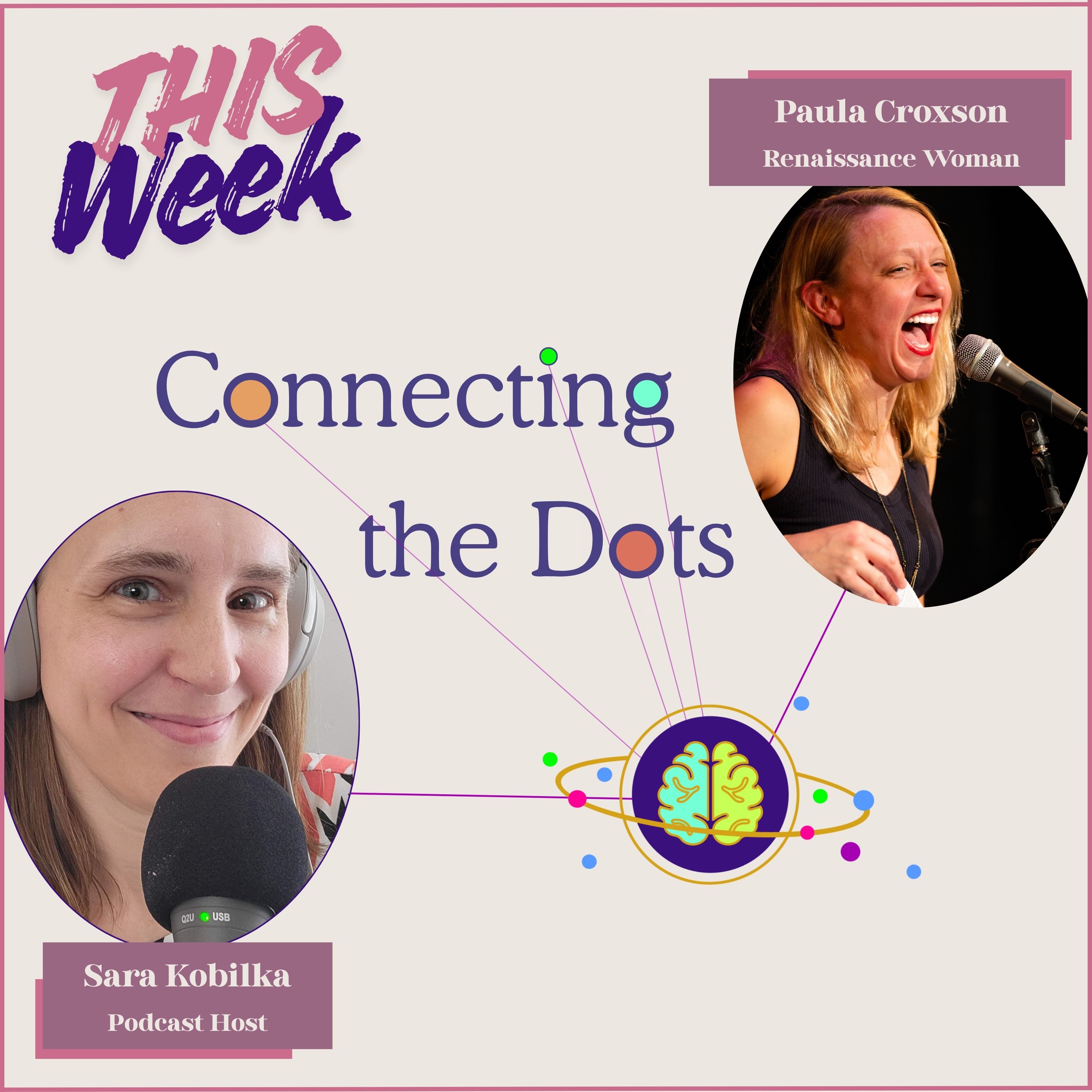
A Different Kind of Wonderful with Paula Croxson, Renaissance Woman
from Connecting The Dots with The Renaissance People
In this episode, I am joined by a fellow Renaissance Woman who has joined me in embracing that identity (you’ll learn why near the start of the show). The title of the episode is, “A Different Kind of Wonderful with Paula Croxson” but my alternative was “How Paula Came to Love Swimming in Chop”. That too will make sense later in the show. Paula has been near the top of my “dream guests” since I came up with this podcast idea so to say I’m excited is a bit of an understatement. She’s a science communicator, neuroscientist, musician and athlete among other things. The conversation was free flowing, filled with science, storytelling and metaphors galore!Promised Show Notes Materials (take a drink):Sign up for updates on my podcast and what’s happening in the Renaissance People Community.Work with me to Find Your Golden Thread Jethro Tull (jazz flutist) YouTube video of performance from 1976My LinkedIn Left Brain, Right Brain artificial choice rantArticle from Business Insider where Michelle Obama explains why she too is disgusted by the question, “What do you want to be when you grow up?”The Man Who Mistook His Wife for a Hat by Oliver SacksOliver Sacks biographical informationOliver Sacks’ TEDTalk, What Hallucinations Reveal about Our MindsNeuWriteA Brief History of the Resting State: the Washington University Perspective by Abraham Z Snyder and Marcus E RaichleReview of the split brain work that Brenda Milner was part of (credit also to Mike Gazzaniga for this research)Story ColliderPaula’s 2013 Story Collider talk: When Your Grandmother Forgets Who You AreEp. 9 A Mind for Memory with Brian Skellenger, SurvivalistIf you want to become a better storyteller, I highly recommend the podcast The Story Letter with Micaela Blei.Stellate CommunicationsEp. 8 Bringing Worlds Together Full Circle with Jess Rowell, Renaissance Woman discusses “find your audience’s why” to help answer “what do you do?”Sign up for Brain Dump on May 1, 2026 (or if you missed it, sign up for my Renaissance People newsletter to find future opportunities)Paula’s greatest accomplishment post Instagram | FacebookCholla walking inspiration LinkedIn postStellate CommunicationsFollow Paula on Social Media:Facebook | LinkedIn | Instagram | BlueskyA few things Paula and I discuss:Survey says…she’s a Renaissance WomanThe science vs musician choiceThe history and misconceptions of “left brain vs right brain”Renaissance Man, neuroscientists, and inspirational figure, Oliver SacksThe athletic mindset + Renaissance People = Flow StateResearch on the flow state (it’s not all woo woo)What MRIs tell us (and don’t tell us)Why the science is in the nuance and complicating the narrativePaula’s major career pivotExplaining yourself using communications 101, Know thy AudienceValues as a golden threadHow Paula stopped fighting the waves and began enjoying themImprov GameRapidish Fire QuestionsLife as an omnivertTraining our pets to do unusual thingsQuotes from the episode:(Paula) I think of boundary spanner maybe as a really useful professional term. But I feel like a Renaissance Person all the time, regardless of whether I'm behaving like a professional or not.(Paula) I feel like science and music was one of those choices that I had to make pretty early on, that I've spoken to so many people who ended up in science or as musicians who felt like they had to make that choice early on in order to define themself, to carve out what they were doing. When I say had to, I don't think anyone made me. I had a lot of really supportive people around me when I was figuring out what I wanted to be when I grew up. But I felt like it only made sense to be one or the other. And I actually stopped playing music for a really long time, while I was in graduate school. And so I sometimes forget that I'm a musician because I spent so much time creating this version of myself that was the scientist.(Sara) People sometimes have a job where they'll be a reporter and they'll be a meteorologist. So I decided, I'm gonna bring math and science back into my life. And quite a few people in the journalism program looked at me like I was absolutely nuts because I took chemistry. I took physics. I was taking calculus. And they're all like, "Why? What are you? What's wrong with you? What are you doing?" And I was like, no! I need this! This is part of me too. I can't lose that. I need to use my full brain and not "half of my brain" as the people like to talk about it.(Paula) That's how the left brain got a reputation for being the "logical", I'm using air quotes here, the "logical side of the brain". Because it rationalized. Because it got in there and it was chatty and explained away the movements of the right hemisphere, having no idea that the whole reason was because the right hemisphere of the brain had just seen a spoon and was responding to the question. So that's how that whole myth arose is because the left hemisphere of the brain talks a lot. However, that doesn't really make it more logical.(Paula) I had already been interested in the brain and how it worked. But that was one of the things that really drew me in, was reading that book. Little did I know at the time that Oliver Sacks was, himself, a real Renaissance Person!(Sara) Yeah!(Paula) He entered that part of his career, the medical part of his career, late in life and the writing and storytelling part even later in life. He was also a bodybuilder. He also swam in the open water. He had all of these facets to himself that were not just what he did for a living. I think I probably was drawn to that as much as the stories and the fascination of the brain, even though I wasn't really aware of it at the time.(Paula) I started off by joining a group called NeuWrite that was a science writing group that brought together scientists, writers, people in theater, meet people from the media, you know, to collaborate.My goal was just to write better science papers so that I could get published in my, like, niche journals, but like fancier niche journals that would get me, like tenure and promotion and funding.But I was around these people and I liked these people and I was drawn to them. And I found myself learning a lot from them in a way that I didn't learn from my colleagues who were in the same niches as me...
NOW PLAYING
A Different Kind of Wonderful with Paula Croxson, Renaissance Woman
No transcript for this episode yet
Similar Episodes
No similar episodes found.
Similar Podcasts
No similar podcasts found.