
EPISODE · Apr 23, 2026 · 31 MIN
"A Massive Welfare Project to Prop-Up Discredited Right-Wing Claims"
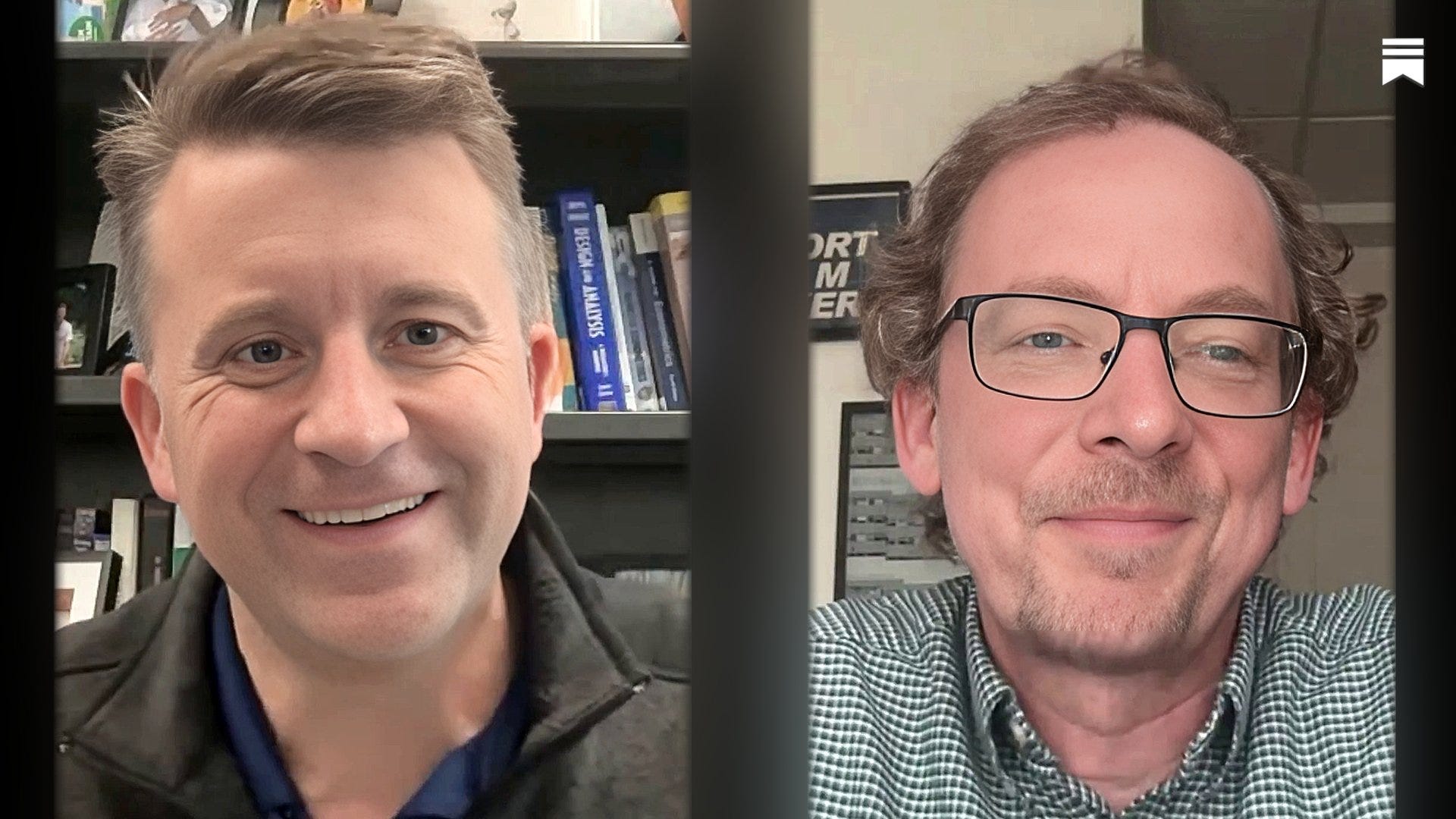
from The Forum with Josh Cowen Podcast · host Josh Cowen and Isaac Kamola
Something I’ve been writing and speaking about all over the country—culminating in my book The Privateers—is the right-wing effort to create a “counter-intelligentsia” of “soldier-scholars” to push far-right policy priorities. They’ve do so with almost unlimited cash from a handful of billionaires and a larger group of wealthy conservative patrons over time.Until 2016, most of that effort came with the formation of think tanks like the Heritage Foundation, masquerading as vehicles for serious conservative scholarship. That also included some investment in a handful of colleges and universities, the most famous of which is Hillsdale College in my own state of Michigan. More recently, and especially in Trump’s second term, the American Right has been waging a non-stop effort to undermine and destabilize higher education itself. That’s come not only through well-covered efforts to force political concessions from elite institutions like Harvard, Penn, and Columbia, but also a more quiet but perhaps more threatening attack on the accreditation processes that thousands of institutions use to train students and raise resources. I wanted to talk about all of this with someone on the front-line warning about those threats—and what’s being done about it. So today’s conversation is with Dr. Isaac Kamola from the Center for the Defense of Academic Freedom at the Association for American University Professors. A Conversation with Isaac KamolaLet’s level set, tell me a bit about AAUP’s Center for the Defense of Academic Freedom and the work you guys are doing over there right now.So the AAUP is the organization in the United States that has really established the principles and standards around academic freedom. The very basic ways that universities have run since the founding of the AAUP in 1915, things that we take for granted like the institution of tenure, the principles of shared governance, the definition of academic freedom, the practice of faculty and committees and hiring and all of that stuff is laid out by the AAUP.It has a very extensive record developing policies and standards. However, in the last few decades, as we know, the attacks on academic freedom aren’t coming only from universities and administrators, which is what the AAUP was created to defend against—professors being fired by their institutions—we now know that the attack on a higher education is coming from legislatures, a governor’s Twitter feed, online trolls, foreign governments, et cetera.So the AAUP Center for the Defense of Academic Freedom is really designed to help faculty understand what academic freedom is so that they can better defend it publicly, but to also explain to the broad audience, to the broad public what academic freedom is, why it’s important, and why it’s the heartbeat of American higher education. So that’s part of why I’m here today.So there’s this new project called the Commission for Public Higher Education which is basically being pushed by some of the right-wing think tanks I’ve done some battle with in recent years. You guys are trying to raise some alarms about this. Tell us what’s going on and why we should care about it.The Commission for Public Higher Education, the CPHE, is an effort to create a accrediting agency. And accreditation is a highly wonky thing to discuss. But the real takeaway is that it’s an effort to lock in a right-wing MAGA attack on higher education. The attacks that are coming out of the legislatures in states like Florida and Texas, as well as out of the federal government, those efforts to redefine and capture and ideologically transform what higher education is. What the CPHE would do would be to tie those into the accreditation process itself, to create it part of the bureaucracy of American higher education that will outlast Governor Abbott, will outlast Trump, will outlast DeSantis, and really bake in these MAGA attacks on higher education into the way that academic institutions are accredited.On the dollars and cents side of this particularly: I know academics want to talk about what’s at stake for our various liberties and the role educationon—including higher education—plays in democracy. But this is also about dollars and cents. My institution MSU employs 12,000 people. It’s a huge part of Michigan’s economy. What do you want folks to know about the impact of right-wing attacks on universities as they relate to economic and community impacts?That’s really important. So historically, accreditation has served as the guardrails to make sure that the federal funding of higher education goes to institutions. So student loan money: federal grants go to institutions that are deemed creditable, that provide quality education: that they are doing so without political interference, that are doing so based on clear academic standards and principles.And accrediting agencies are historically significant. They’re nonprofit organizations created primarily of educators and people in the education field and engage in peer review. So in the same way that a scholar writes an article and then their peers examine that article to see if it meets the standards of quality scholarship, the accreditation system is a similar thing where there’s a peer review process whereby the academic institution is itself evaluated to make sure that it’s providing a quality product.What the CPHE does is instead it takes that out of a nonprofit independent entity and puts it in the hands of states. So right now there’s six states that are interested or six states and state systems that are interested in being part of the CPHE. The CPHE was proposed by the DeSantis administration, and he called it an effort to combat woke in higher education.The principles behind the CPHE were laid out in Project 2025 and basically a way to impose preferred MAGA ideas onto higher education institutions. And what this would mean is that the states that have done the most to attack higher education—states like Texas, Florida, North Carolina, Tennessee that have some of the most repressive laws—will create an accrediting agency that will then accredit their own state institution.So this is just akin to the fox guarding the hen house.We know that outside of accreditation, the American Right is going after higher education in a number of ways. You’ve got the big attacks on elite institutions, Trump trying to bully different kinds of complicity along a pretty vague goal related at different times to “woke,” “DEI,” their claims of anti-Semitism and so on. I have my own thoughts on this but what do you think the goal here really is for these people?So I think that there are a number of goals. One of them is an ideological capture of institutions of higher education. As universities become more central to public life, to cultural life, to the economy, then it becomes more important for those who seek political power to capture those institutions. And also, I think that there’s just also a massive grift issue at work.I think that in terms of these attacks on schools, for example, “forcing critical race theory on students” or having “indoctrinating students” through their DEI office— these absurd claims that MAGA politicians are making. I think it’s important to first recognize that higher education has been in crisis, right?It’s too expensive. It’s underfunded. More people want higher education that can afford it. There’s a real crisis of higher education. The crisis that is definitively not taking place is that conservative students take my class in which we talk about race and then they feel guilty or I “brainwash them.”But in order to address the real crises in higher education, that would require an incredible amount of resources, an incredible amount of investment in infrastructure, an incredible investment in making society more equitable and inclusive to broad populations of people that are increasingly demanding that they be part of American society as full citizens.And that’s what happened in the Black Lives Matter protests in 2020, right? These are some the largest protests in American history. And students demanding, parents, and citizens from all walks of life demanding that their institutions, higher education, K-12, libraries, city governments, state governments, federal governments, corporations, et cetera, be more representative and recognize the great diversity in America.And what’s happened is that those ideas of a more inclusive and equitable society are deeply threatening to people. And so weaponizing things like critical race theory or DEI becomes a way to deal and to kind of distract the American public from what’s actually going on, which is a real crisis of higher education that needs to be addressed through a concerted effort for democracy, equality, and justice, and a redistribution of resources at a massive scale.And instead, we’re being told that the big threat to higher education is that students are forced to take a training in which they feel guilty about themselves,A, it’s not happening, and B, it’s not the issue that is actually concerning American citizens.Just sticking with anti-Semitism for a moment. We need to acknowledge anti-Semitism is real—including on college campuses—as is Islamophobia and any other number of issues. Frankly, there’s some anti-Semitism on the left that I’m not comfortable with and needs to be called out. How is your center balancing out and trying to find the right line between freedom of speech on the one hand and hate speech on the other?I think this is a really important question. I think it is the question of higher education, right? Because academic institutions are required both in terms of what those institutions are and what their mission is, but also in terms of the laws that surround academic institutions to be spaces of free expression where people can express their viewpoints.They’re also required by law and by their mission to be places that all people feel welcome in and can participate in as equals and that they are spaces that are inclusive, and are free from discrimination, right?And so you have this tension, which is a real serious tension, and one that is really the heart and soul of what higher education is, is thinking through exactly where that line is.I think it’s important to start there. Like how you find that correct balance is just impossible. So the best thing that institutions can do is try to answer that as best as possible. So in thinking about academic freedom, it’s really important that there’s clear policies in place, that institutions have clear policies. And those policies are designed to help the institution as a community find that middle ground.So the way that this pertains according to AAUP standards around academic freedom as they pertain to faculty in particular, for example, if a faculty member said something in their teaching or in their research that was deemed to be anti-Semitic, then there could be a complaint that was brought against them and there should be a procedure on campus. And there is a hearing that has due process and that the AAUP does a lot of work to lay out exactly what that hearing should entail.It should include a lot of fact-finding and a scholarly discussion. So for example, I’m coming today from a Palestinian Prisoner Day event, where people read poems and letters from prisoners in Palestinian prisons that were deeply—some of those letters were deeply critical of the state of Israel, deeply critical of Zionism as a political project—and according to the IHRA definition of anti-Semitism may be considered anti-Semitic. evaluates kind of what that where that line is.And that that’s not something that the governor of Florida or the governor of Texas gets to decide. Like “oh that chant or that piece of writing or that law review article is anti-Semitic or is not.” But instead that there’s a process that’s put in place. And that process involves the community figuring out where that line is based on its clearly designed policies.And this is exactly what went wrong during the encampments and the protests in recent years, is that there was lots of college campuses do have these policies in place. And yet there is so much external pressure, so much accusation, in a really complex situation.Sometimes an anti-Semitic thing was said at a protest, but condemned by the protesters. It took place. It happened. But it wasn’t what the people who are convening the protest endorsed and they in many instances, explicitly condemned it.So how is it that you evaluate where that line is, is something that you need those clear policies for?It should be part of the education and pedagogical process, right? That a community figures out using its own policies, using its own peer assessment to find out where that line is. But when you get a bunch of external actors piling on, especially those who may not have the best interest in the institution who are continuing a culture war attack on higher education, who have very partisan reasons to attack and delegitimize the university and are taking instances of anti-Semitism or instances that may be anti-Semitic that in another day would have been handled at the campus level and weaponizing them into a national story, that’s when you get into a lot of problems.I think that the issue of questions of speech, it really should come down to campus policies and the enforcement of those policies and the fundamental recognition that this is a complicated issue.JD Vance famously said “the professors are the enemy.” There is this new Center for Intellectual Freedom at the University of Iowa that hard-launched with Chris Rufo as a guest. I know a number of law faculty and political science faculty nationally where loudest clamors for “academic freedom” come from the Right. These guys claim “academic freedom” too and what it really means is an excuse to push right-wing priorities and—in the language of universities and research—fast-track and even invent research literatures to use in court cases and to push conservative litigation. That’s the playbook. How do you think about a kind of non-partisan concept or definition of academic freedom that exists apart from and above capture by the Right.It’s a great question. I mean, I think of the creation of the new academic centers, such as the Center for Intellectual Freedom at University of Iowa, as kind of a massive welfare project to prop up claims and arguments that have been widely discredited within higher education.And so I think that, for example, there is a narrative on the MAGA Right that basically says there’s a bunch of woke professors who are trying to indoctrinate students.And they’re teaching feminism and they’re teaching, you know, about structural racism and critical race theory.There is not a professor waking up one day saying: “you know what? I’m a feminist. I’m going to shove it down my students’ throats,” right? But it’s instead the product of decades and decades and decades of very, very serious research.Critical race theory, as you know, is, a multi-decades long intellectual project carried out primarily by scholars of color that doesn’t agree with itself entirely, has lots of its own debates and disagreements, and has produced a very, very robust understanding of how the law works.Another example, that came from decades and decades and decades of work, similarly, a lot of ideas that we kind of take for granted now were minoritarian positions not so long ago.In the 1950s, the claim that you needed to study women in history to understand American history would have seemed laughable at institutions where it was just primarily white male historians who were talking about the great white men who made American history.But scholars work for decades, right? Writing the papers, doing archival work, writing the books, teaching the classes, creating the journals, creating the centers, creating the program, doing all of that to make a set of arguments that are now incredibly relevant.And so what these “centers of civic life” are doing is they’re basically saying certain revanchist ideas about the way American greatness is are widely discredited. And we don’t like that because we prefer those ideas. Those are the ideas that we were inspired by when we were 20 and kids aren’t exposed to those now.Those are the ideas that prop up a kind of vision of meritocracy where the poor are poor because they don’t work hard—that’s a very useful myth to tell—but a story of structural racism deeply undermines that. Demonstrating that lifetime wealth and lifetime life expectancy is based on the arbitrariness of one’s skin color is now a robust finding not just in the humanities and in the social sciences but in the medical sciences and across the academy.And so those ideas are deeply threatening and because they can’t be or they haven’t been or people don’t want to do the work of discrediting them through scholarly venues, they instead put the thumb on it on the scale and basically say, “no, we prefer that these discredited ideas were mainstream.”And this is not quiet, right? So if you look at the 1776 Commission, a report that came out right at the last days of the first Trump administration, they say this explicitly. This whole notion that it’s an interesting thought experiment to think about American history through the arrival of slaves on the continent—i.e. The 1619 Project—the whole idea that that might be an interesting way to think about American history, they say in the 1776 Commission: “no, what we need to do is teach that great white male history and that there’s no other way. And anybody else who teaches other kinds of history hates America, et cetera, et cetera.”That’s that’s the kind of worldview that they’re pushing. And I think is deeply, deeply scary.Victor Ray calls what’s happening at the University of Iowa the Right’s attempted authoritarian takeover of higher education. And I think that’s right, is that certain ideas are threatening to certain people with incredible wealth and privilege and who benefit under the status quo. There’s other ideas that have been produced through free exchange, deliberation, hard work, scholarship, teaching, pedagogy, that have developed ways of seeing the world in which that doesn’t have to be the case, right? And that’s deeply threatening to those who are committed to maintaining the hierarchies in the society that we live in now.Isaac Kamola is director of the Center for Defense of Academic Freedom at AAUP. This is a public episode. If you'd like to discuss this with other subscribers or get access to bonus episodes, visit joshcowen.substack.com/subscribe
Embed this episode
Ready to play
"A Massive Welfare Project to Prop-Up Discredited Right-Wing Claims"
No transcript for this episode yet
Similar Episodes
No similar episodes found.
Similar Podcasts
No similar podcasts found.