
EPISODE · Dec 14, 2025 · 21 MIN
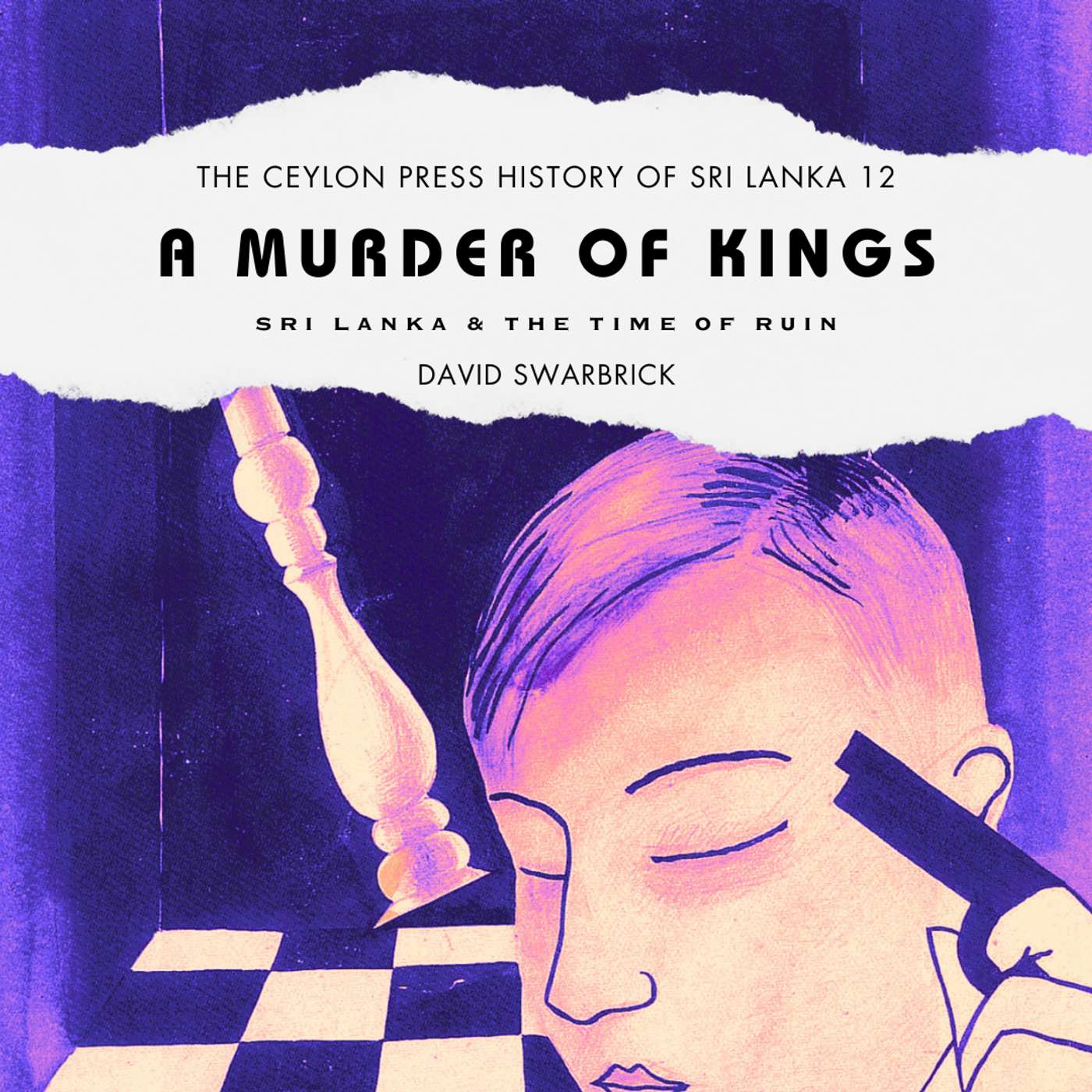
A Murder of Kings: The Ceylon Press History of Sri Lanka 12
from The Sri Lanka Podcast: The Ceylon Press History of Sri Lanka · host The Ceylon Press
Two periods of state-sponsored homicidal self-indulgence were now to grip the kingdom. The first killings broke out in 195 CE, and the second in 248 CE. Both were leavened by brief moments of stability that, with seconds to spare, prevented the country from collapsing altogether and gave it a modest but life-affirming breathing space. Such pirouetting on political tightropes was hardly a novelty. The Vijayans, the previous dynasty, had indulged in much the same – fuelling at least four periods of regicide covering several decades and prompting at least two civil wars over six hundred plus years of dynastic reign. To this, the Lambakannas added these two more, bringing the total number of regicide bacchanalia to at least six since Prince Vijaya had first set foot on the island back in 543 BCE. It is doubtful whether any other contemporary kingdom on the planet showed such record-breaking prowess. Few, if any, that came later would have dynasties that possessed such a complete set of dark skills as to trump this dubious achievement. This particular lethal phase was, in retrospect, modest by the standards of what was to follow. But this is not to detract from its disruptive consequences, nor its mystery. Over two years, three kings were to occupy the throne in a succession swifter even than a Fred Astaire and Ginger Rogers foxtrot. On Kanittha Tissa’s death in 193 CE, his son, Cula Naga, assumed power, only to be assassinated by his brother Kuda Naga in 195 CE. Kuda Naga was then dispatched to the uncertain fields of reincarnation when his own brother-in-law, Siri Naga I, had him killed in 195 CE. The only hint to help explain what might have promoted all this, mere family politics aside, is a famine mentioned in The Mahavamsa: “so small a quantity of food were the people reduced in that famine,” it notes, referring to the brief reign of Kuda Naga, when, it said, “the king maintained without interruption a great almsgiving”. Famine is no friend of political stability, and if it was the cause behind Cula Naga’s murder, the latter food banks set up by his brother Kuda Naga were insufficient to calm the situation. There is no corroborating archaeological evidence to help us understand this dismal and murky period of national madness, though such evidence exists for other periods. Stone inscriptions, for example, carry an unusually high degree of importance in Sri Lanka, where the climate quickly destroys any organic material used to record events. And, unlike other sources, they have better weathered the repeated theft and destruction carried out on the country by its many occupiers - be they Tamil or European. But of the four thousand stone inscriptions discovered in Sri Lanka, only one and a half thousand have been adequately recorded and preserved. Written in Sinhala, Tamil, Brahmi, Pali, and even Chinese, Arabic, Persian, and Sanskrit, they most typically record donations to temples, the rules governing the maintenance of religious places, the establishment of tanks, and how local officials should administer water resources. But so far, none of them has been of any help in understanding this particular period of Sri Lankan history. This may change as many more inscriptions indubitably await discovery. In 2023, for example, the most significant stone inscription ever found on the island was uncovered in Polonnaruwa, measuring forty-five feet in length and eighteen feet in height. But none found and deciphered so far have helped us with this period as the second century CE slipped, blood-drenched, into the third. Buildings tell the story of the times, but no buildings or even repairs of any significance can be dated to this precise period. Coins also help validate the historical record, and some of the island’s coins date back to the third century BCE. Their symbols, dates, the metal they are made of, the craftsmanship, and the place where they were found – all tell their own stories, but very few date from this very early period of Sri Lankan history. And those that do exist suffer from poor cataloguing and storage - and a great deal of theft, including a record heist involving over one thousand silver punch-marked coins dating back two thousand years held in the custody of the Archaeology Department; and of which now only sixteen coins remain. Pottery is also an essential voice in the historical record. Many shards of marked pottery have been excavated, most engraved with but two or three characters. But the joined-up study of ceramic inscriptions is a journey that academics have yet to undertake in its entirety, despite the earliest example of such artefacts in South Asia being found in Sri Lanka, on a pottery shard dating back to the fourth century BCE in Anuradhapura. Nor is there anything in the country’s surviving Ola Leaf books to help contextualise this period. These books were written on the leaves of Palmyrah Palms that had been carefully processed - like paper. It is thought that over 75,000 such books exist, written in Sinhalese, but most date from the eighteenth and nineteenth centuries, and although some record earlier texts, nothing of consequence records this period of history. In fact, only four Ola Leaf books from a much earlier period have survived, dating back just over five hundred years; and the most important of them are kept in the National Museum of Colombo, Peradeniya University, the British National Museum, and the Paris National Museum. Here was an unfinished whodunnit in which the author had time to chuck in plenty of bodies but ran out of time to add the clues. Not even the combined forces of Sherlock Holmes, Lord Peter Wimsey and Hercule Poirot would be able to explain the who and why of these brutal Lambakanna years. Conjecture, built on the flimsiest of evidence, is therefore all we have for this time. But one conclusion is inescapable – that after so long a period of steady rule, one hundred and twenty-six years, during which the kingdom had been painstakingly rebuilt after decades of Vijayan regicidal induced disintegration, it must have dealt a shocking correction and reminder to the country: how easily are the good times squandered. However, by 195 CE, with Kuda Naga murdered and his brother-in-law, Siri Naga I, on the throne, a fifty-year salvage space opened out for the realm, the game of thrones having been temporarily closed down. Family politics took a backseat to good governance. For Siri Naga, however bleak the past few years had been for the kingdom, it was now time for some healing. The king, as religiously minded as the best, earmarked a massive chunk of state revenue for religion, starting with predictable piety, in this area. Reigning for 20 years, he found time and resources to make good some of Anuradhapura’s most celebrated sacred buildings - the great stupa of Ruwanweliseya, said to house more of Lord Buddha’s relics than anywhere else in the world; a fine new set of stone steps leading to the sacred Bo tree itself...
What this episode covers
Two periods of state-sponsored homicidal self-indulgence were now to grip the kingdom. The first killings broke out in 195 CE, and the second in 248 CE. Both were leavened by brief moments of stability that, with seconds to spare, prevented the country from collapsing altogether and gave it a modest but life-affirming breathing space. Such pirouetting on political tightropes was hardly a novelty. The Vijayans, the previous dynasty, had indulged in much the same – fuelling at least four periods of regicide covering several decades and prompting at least two civil wars over six hundred plus years of dynastic reign. To this, the Lambakannas added these two more, bringing the total number of regicide bacchanalia to at least six since Prince Vijaya had first set foot on the island back in 543 BCE. It is doubtful whether any other contemporary kingdom on the planet showed such record-breaking prowess. Few, if any, that came later would have dynasties that possessed such a complete set of dark skills as to trump this dubious achievement. This particular lethal phase was, in retrospect, modest by the standards of what was to follow. But this is not to detract from its disruptive consequences, nor its mystery. Over two years, three kings were to occupy the throne in a succession swifter even than a Fred Astaire and Ginger Rogers foxtrot. On Kanittha Tissa’s death in 193 CE, his son, Cula Naga, assumed power, only to be assassinated by his brother Kuda Naga in 195 CE. Kuda Naga was then dispatched to the uncertain fields of reincarnation when his own brother-in-law, Siri Naga I, had him killed in 195 CE. The only hint to help explain what might have promoted all this, mere family politics aside, is a famine mentioned in The Mahavamsa: “so small a quantity of food were the people reduced in that famine,” it notes, referring to the brief reign of Kuda Naga, when, it said, “the king maintained without interruption a great almsgiving”. Famine is no friend of political stability, and if it was the cause behind Cula Naga’s murder, the latter food banks set up by his brother Kuda Naga were insufficient to calm the situation. There is no corroborating archaeological evidence to help us understand this dismal and murky period of national madness, though such evidence exists for other periods. Stone inscriptions, for example, carry an unusually high degree of importance in Sri Lanka, where the climate quickly destroys any organic material used to record events. And, unlike other sources, they have better weathered the repeated theft and destruction carried out on the country by its many occupiers - be they Tamil or European. But of the four thousand stone inscriptions discovered in Sri Lanka, only one and a half thousand have been adequately recorded and preserved. Written in Sinhala, Tamil, Brahmi, Pali, and even Chinese, Arabic, Persian, and Sanskrit, they most typically record donations to temples, the rules governing the maintenance of religious places, the establishment of tanks, and how local officials should administer water resources. But so far, none of them has been of any help in understanding this particular period of Sri Lankan history. This may change as many more inscriptions indubitably await discovery. In 2023, for example, the most significant stone inscription ever found on the island was uncovered in Polonnaruwa, measuring forty-five feet in length and eighteen feet in height. But none found and deciphered so far have helped us with this period as the second century CE slipped, blood-drenched, into the third. Buildings tell the story of the times, but no buildings or even repairs of any significance can be dated to this precise period. Coins also help validate the historical record, and some of the island’s coins date back to the third century BCE. Their symbols, dates, the metal they are made of, the craftsmanship, and the place where they were found – all tell their own stories, but very few date from this very early period of Sri Lankan history. And those that do exist suffer from poor cataloguing and storage - and a great deal of theft, including a record heist involving over one thousand silver punch-marked coins dating back two thousand years held in the custody of the Archaeology Department; and of which now only sixteen coins remain. Pottery is also an essential voice in the historical record. Many shards of marked pottery have been excavated, most engraved with but two or three characters. But the joined-up study of ceramic inscriptions is a journey that academics have yet to undertake in its entirety, despite the earliest example of such artefacts in South Asia being found in Sri Lanka, on a pottery shard dating back to the fourth century BCE in Anuradhapura. Nor is there anything in the country’s surviving Ola Leaf books to help contextualise this period. These books were written on the leaves of Palmyrah Palms that had been carefully processed - like paper. It is thought that over 75,000 such books exist, written in Sinhalese, but most date from the eighteenth and nineteenth centuries, and although some record earlier texts, nothing of consequence records this period of history. In fact, only four Ola Leaf books from a much earlier period have survived, dating back just over five hundred years; and the most important of them are kept in the National Museum of Colombo, Peradeniya University, the British National Museum, and the Paris National Museum. Here was an unfinished whodunnit in which the author had time to chuck in plenty of bodies but ran out of time to add the clues. Not even the combined forces of Sherlock Holmes, Lord Peter Wimsey and Hercule Poirot would be able to explain the who and why of these brutal Lambakanna years. Conjecture, built on the flimsiest of evidence, is therefore all we have for this time. But one conclusion is inescapable – that after so long a period of steady rule, one hundred and twenty-six years, during which the kingdom had been painstakingly rebuilt after decades of Vijayan regicidal induced disintegration, it must have dealt a shocking correction and reminder to the country: how easily are the good times squandered. However, by 195 CE, with Kuda Naga murdered and his brother-in-law, Siri Naga I, on the throne, a fifty-year salvage space opened out for the realm, the game of thrones having been temporarily closed down. Family politics took a backseat to good governance. For Siri Naga, however bleak the past few years had been for the kingdom, it was now time for some healing. The king, as religiously minded as the best, earmarked a massive chunk of state revenue for religion, starting with predictable piety, in this area. Reigning for 20 years, he found time and resources to make good some of Anuradhapura’s most celebrated sacred buildings - the great stupa of Ruwanweliseya, said to house more of Lord Buddha’s relics than anywhere else in the world; a fine new set of stone steps leading to the sacred Bo tree itself...
NOW PLAYING
A Murder of Kings: The Ceylon Press History of Sri Lanka 12
No transcript for this episode yet
Similar Episodes
Mar 26, 2026 ·1m
Mar 19, 2026 ·34m
Feb 18, 2026 ·11m
Feb 11, 2026 ·45m