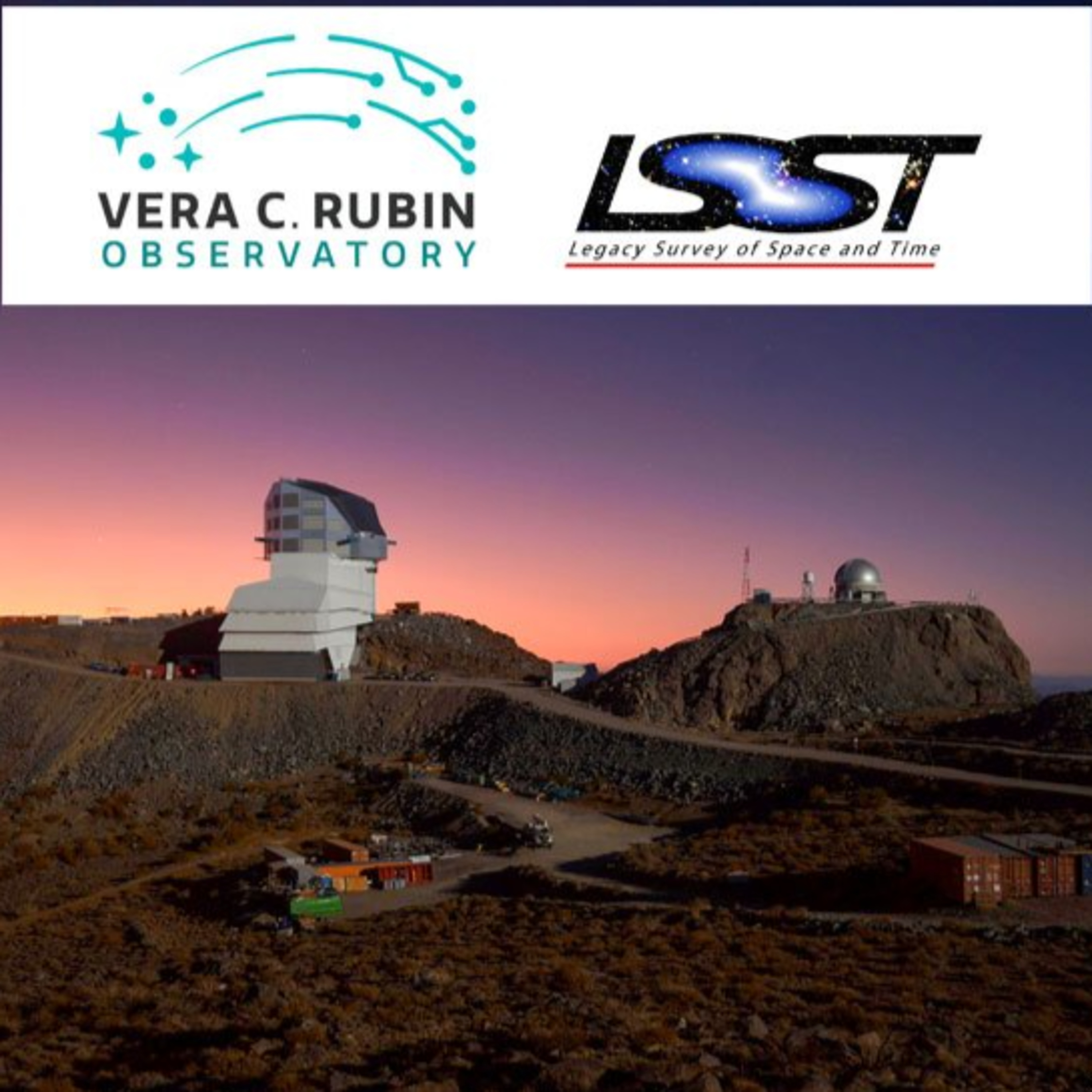
AAS2RTO: Taming the Transient Data Deluge from LSST episode artwork

EPISODE · Jan 24, 2025 · 15 MIN

AAS2RTO: Taming the Transient Data Deluge from LSST

from Multi-messenger astrophysics · host Astro-COLIBRI

* **Introduction:** * The Vera C. Rubin Observatory's Legacy Survey of Space and Time (LSST) will soon produce an unprecedented amount of transient astronomical data, with around 10 million alerts every night. * This data deluge requires intelligent tools to prioritize the most scientifically valuable events for follow-up, especially spectroscopic observations. * This podcast discusses AAS2RTO, a new tool designed to address this challenge. * Reference: Sedgewick et al. (2025) "AAS2RTO: Automated Alert Streams to Real-Time Observations" * **What is AAS2RTO?** * AAS2RTO is a Python-based tool for prioritizing transient candidates for follow-up observations. * It uses a **greedy algorithm** to rank candidates based on a user-defined "score". * The score is calculated from various factors that consider observed properties of the transients, their visibility from a given location, and user specified criteria. * AAS2RTO is not a broker but rather works with data streams that have already been pre-filtered by brokers. * AAS2RTO is designed to be flexible and adaptable to different telescopes and scientific goals. * **How AAS2RTO Works:** * AAS2RTO ingests transient data from alert brokers like fink, ALeRCE and Lasair, which process data from surveys like the Zwicky Transient Facility (ZTF). * It can also incorporate data from other sources like the Asteroid Terrestrial-impact Last Alert System (ATLAS) and the Transient Name Server (TNS). * AAS2RTO filters candidates based on preliminary scores before fitting models to the lightcurves, such as SALT2 models for Type Ia Supernovae (SNe Ia), in order to estimate the time of peak brightness. * It calculates a final score for each candidate, considering factors like brightness, age, proximity to peak brightness, and visibility from the observing site. * AAS2RTO generates a ranked list of candidates that is continuously updated. * **Example Science Case: Type Ia Supernovae** * The tool was tested on the prioritization of Type Ia Supernovae (SNe Ia) close to their peak brightness. * AAS2RTO uses lightcurve fitting to predict the time of peak brightness. * It uses factors such as the latest magnitude, the number of detections, the proximity to peak brightness, the rising light curve, and the time since the first observation to prioritize candidates. * It also takes into account the visibility of the candidate from the observing site. * The tests with archival ZTF data show the tool can estimate the time of peak brightness with a precision of ±1.3 - 2.1 days. * **AAS2RTO in the Context of Other Schedulers** * AAS2RTO uses a greedy algorithm similar to other telescope schedulers, and is very flexible, quickly responding to new data and conditions. * AAS2RTO is different from schedulers for facilities with competing programs, as it is designed for a single scientific goal, and does not normalize priority scores. * Other schedulers use different approaches, such as integer linear programming solutions to provide globally optimal solutions. * AAS2RTO’s visibility factor accounts for how long a candidate will be visible during the night. * **Conclusion:** * AAS2RTO is a valuable tool for prioritizing transient candidates from LSST for spectroscopic follow-up. * Its flexible design allows for adaptation to different telescopes and scientific objectives. * It will be used to help optimize observations with the Danish 1.54m telescope, among others. Acknowledements: Podcast prepared with Google/NotebookLM. Illustration credits: Rubin Obs/NSF/Aura

* **Introduction:** * The Vera C. Rubin Observatory's Legacy Survey of Space and Time (LSST) will soon produce an unprecedented amount of transient astronomical data, with around 10 million alerts every night. * This data deluge requires intelligent tools to prioritize the most scientifically valuable events for follow-up, especially spectroscopic observations. * This podcast discusses AAS2RTO, a new tool designed to address this challenge. * Reference: Sedgewick et al. (2025) "AAS2RTO: Automated Alert Streams to Real-Time Observations" * **What is AAS2RTO?** * AAS2RTO is a Python-based tool for prioritizing transient candidates for follow-up observations. * It uses a **greedy algorithm** to rank candidates based on a user-defined "score". * The score is calculated from various factors that consider observed properties of the transients, their visibility from a given location, and user specified criteria. * AAS2RTO is not a broker but rather works with data streams that have already been pre-filtered by brokers. * AAS2RTO is designed to be flexible and adaptable to different telescopes and scientific goals. * **How AAS2RTO Works:** * AAS2RTO ingests transient data from alert brokers like fink, ALeRCE and Lasair, which process data from surveys like the Zwicky Transient Facility (ZTF). * It can also incorporate data from other sources like the Asteroid Terrestrial-impact Last Alert System (ATLAS) and the Transient Name Server (TNS). * AAS2RTO filters candidates based on preliminary scores before fitting models to the lightcurves, such as SALT2 models for Type Ia Supernovae (SNe Ia), in order to estimate the time of peak brightness. * It calculates a final score for each candidate, considering factors like brightness, age, proximity to peak brightness, and visibility from the observing site. * AAS2RTO generates a ranked list of candidates that is continuously updated. * **Example Science Case: Type Ia Supernovae** * The tool was tested on the prioritization of Type Ia Supernovae (SNe Ia) close to their peak brightness. * AAS2RTO uses lightcurve fitting to predict the time of peak brightness. * It uses factors such as the latest magnitude, the number of detections, the proximity to peak brightness, the rising light curve, and the time since the first observation to prioritize candidates. * It also takes into account the visibility of the candidate from the observing site. * The tests with archival ZTF data show the tool can estimate the time of peak brightness with a precision of ±1.3 - 2.1 days. * **AAS2RTO in the Context of Other Schedulers** * AAS2RTO uses a greedy algorithm similar to other telescope schedulers, and is very flexible, quickly responding to new data and conditions. * AAS2RTO is different from schedulers for facilities with competing programs, as it is designed for a single scientific goal, and does not normalize priority scores. * Other schedulers use different approaches, such as integer linear programming solutions to provide globally optimal solutions. * AAS2RTO’s visibility factor accounts for how long a candidate will be visible during the night. * **Conclusion:** * AAS2RTO is a valuable tool for prioritizing transient candidates from LSST for spectroscopic follow-up. * Its flexible design allows for adaptation to different telescopes and scientific objectives. * It will be used to help optimize observations with the Danish 1.54m telescope, among others. Acknowledements: Podcast prepared with Google/NotebookLM. Illustration credits: Rubin Obs/NSF/Aura

NOW PLAYING

AAS2RTO: Taming the Transient Data Deluge from LSST

0:00 15:59

No transcript for this episode yet

We transcribe on demand. Request one and we'll notify you when it's ready — usually under 10 minutes.

The 48 Laws of Power by Robert Greene (Full Audiobook) Robert Greene Amoral, cunning, ruthless, and instructive, this multi-million-copy New York Times bestseller is the definitive manual for anyone interested in gaining, observing, or defending against ultimate control – from the author of The Laws of Human Nature.In the book that People magazine proclaimed “beguiling” and “fascinating,” Robert Greene and Joost Elffers have distilled three thousand years of the history of power into 48 essential laws by drawing from the philosophies of Machiavelli, Sun Tzu, and Carl Von Clausewitz and also from the lives of figures ranging from Henry Kissinger to P.T. Barnum.Some laws teach the need for prudence (“Law 1: Never Outshine the Master”), others teach the value of confidence (“Law 28: Enter Action with Boldness”), and many recommend absolute self-preservation (“Law 15: Crush Your Enemy Totally”). Every law, though, has one thing in common: an interest in t API Intersection Stoplight Building a successful API requires more than just coding. It starts with collaborative design, focuses on creating a great developer experience, and ends with getting your company on board, maintaining consistency, and maximizing your API’s profitability.In the API Intersection, you’ll learn from experienced API practitioners who transformed their organizations, and get tangible advice to build quality APIs with collaborative API-first design.Jason Harmon brings over a decade of industry-recognized REST API experience to discuss topics around API design, governance, identity/auth versioning, and more.They’ll answer listener questions, and discuss best practices on API design (definition, modeling, grammar), Governance (multi-team design, reviewing new API’s), Platform Transformation (culture, internal education, versioning) and more.They’ll also chat with experienced API practitioners from a wide array of industries to draw out practical takeaways and insights you can use.H MTG PodQuest Echoblade Studios Podcast reporting events relating to Magic: The Gathering Puzzle Quest, and specifically covering ”The Gods of Theros” multi-coalition for the online game Magic: The Gathering--Puzzle Quest. Can be enjoyed by any players of MTGPQ or anybody with ears. Maybe.TRIGGER WARNING: A LOT of nerdy stuff. Possibly an occasional vulgarity, though we keep that to a minimum. Passive Investing Podcast The Real Estate Women The Passive Investing Podcast is a round table discussion where we teach you how to create a stream of passive income through Multi Family investing. Crystal, Candy, Colleen & Tamara dive into the classroom, board room and living room on Multi Family real estate investing, with Guests Matt Pichney, Rod Khleif, and Julie Holly pulling up a chair to share stories and insight on their areas of expertise. Whether you’re trying to jump into real estate to free yourself from the grind of the 9-5, to build a stream of passive income or to create generational wealth, join us at the table!

Frequently Asked Questions

How long is this episode of Multi-messenger astrophysics?

This episode is 15 minutes long.

When was this Multi-messenger astrophysics episode published?

This episode was published on January 24, 2025.

What is this episode about?

* **Introduction:** * The Vera C. Rubin Observatory's Legacy Survey of Space and Time (LSST) will soon produce an unprecedented amount of transient astronomical data, with around 10 million alerts every night. * This data deluge requires...

Can I download this Multi-messenger astrophysics episode?

Yes, you can download this episode by clicking the download button on the episode player, or subscribe to the podcast in your preferred podcast app for automatic downloads.
URL copied to clipboard!