
EPISODE · Aug 17, 2023 · 25 MIN
Abjad Languages
from The Bible as Literature · host The Ephesus School
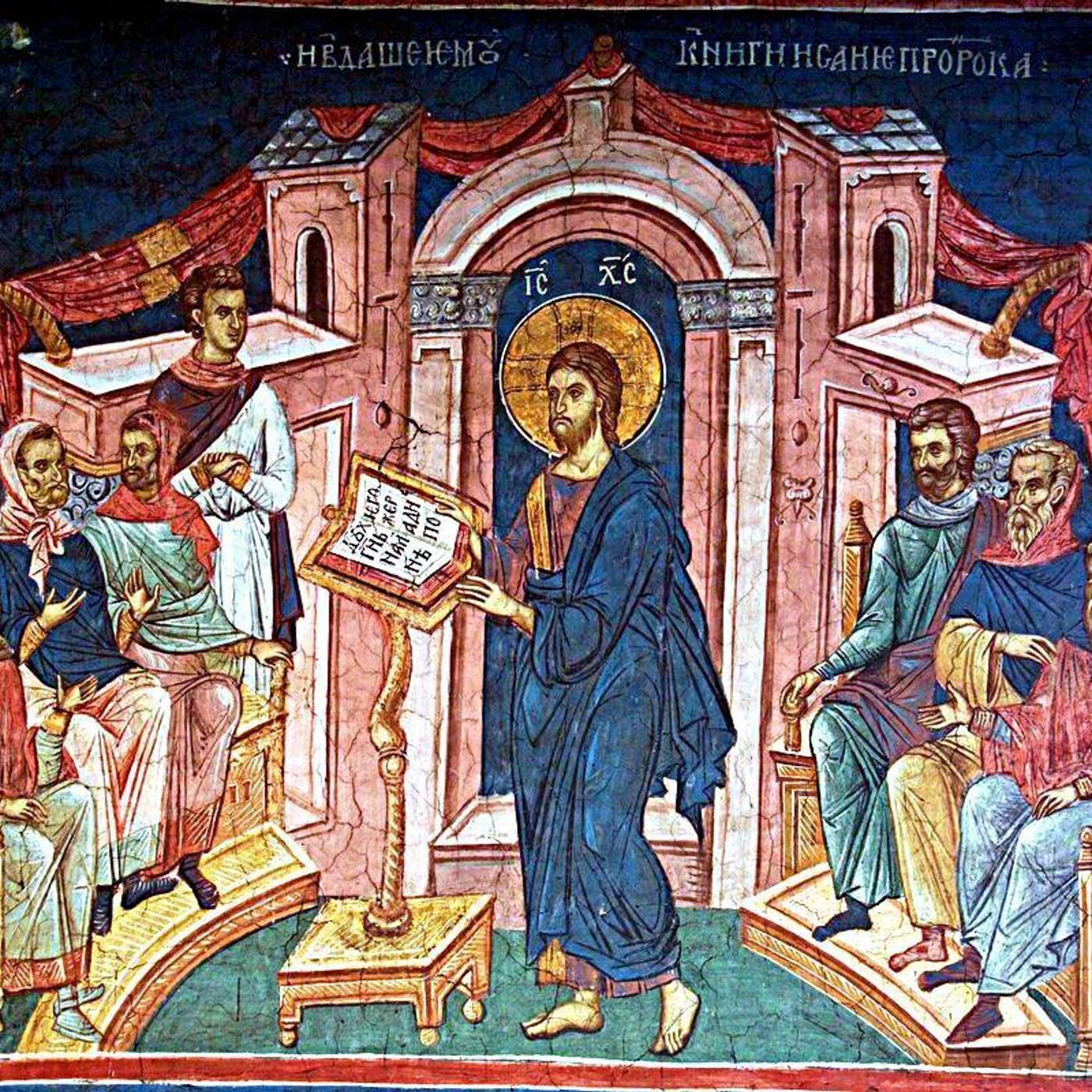
In his 1990 article, “Fundamentals of Grammatology,” Peter T. Daniels proposed the Arabic term “abjad” to describe a type of Semitic script “that denotes individual consonants only.” Such languages force the reader to infer vowel sounds as they read the text. The term abjad is derived from the original (pre-Islamic) order of the first four letters of the Arabic alphabet (ʾalif, bāʾ, jīm, dāl), which correspond to other Semitic languages, notably, “Hebrew and Semitic proto-alphabets: specifically, aleph, bet, gimel, and dalet.”For most, when discussing the Hebrew text of the Bible, the Masoretic text is an assumed reference point. However, insofar as the Masoretic was vocalized by someone else, its fidelity to the original is as much an interpretation as any English translation.The answer is not a better translation. The solution—rather, the challenge—is for modern disciples of the Bible to submit to the original, unvocalized Hebrew text. This means learning to read Hebrew texts without vowels in the same way that modern Arabs read the morning newspaper, which is printed without vowels.Only then will students of the Bible be liberated from the tyranny of the tower builders of Genesis 11, who impose control through their interpretations, part and parcel of their imperial languages.Richard and I discuss Luke 4:14-15. (Episode 495)Wikipedia contributors. “Abjad.” *Wikipedia*, July 2023, en.wikipedia.org/wiki/Abjad#cite_note-4.; Daniels, Peter T. "Fundamentals of Grammatology." *Journal of the American Oriental Society*, 1990, https://doi.org/602899. Accessed 18 Aug. 2023, pp. 727-731. ★ Support this podcast on Patreon ★
What this episode covers
In his 1990 article, “Fundamentals of Grammatology,” Peter T. Daniels proposed the Arabic term “abjad” to describe a type of Semitic script “that denotes individual consonants only.” Such languages force the reader to infer vowel sounds as they read the text. The term abjad is derived from the original (pre-Islamic) order of the first four letters of the Arabic alphabet (ʾalif, bāʾ, jīm, dāl), which correspond to other Semitic languages, notably, “Hebrew and Semitic proto-alphabets: specifically, aleph, bet, gimel, and dalet.”For most, when discussing the Hebrew text of the Bible, the Masoretic text is an assumed reference point. However, insofar as the Masoretic was vocalized by someone else, its fidelity to the original is as much an interpretation as any English translation.The answer is not a better translation. The solution—rather, the challenge—is for modern disciples of the Bible to submit to the original, unvocalized Hebrew text. This means learning to read Hebrew texts without vowels in the same way that modern Arabs read the morning newspaper, which is printed without vowels.Only then will students of the Bible be liberated from the tyranny of the tower builders of Genesis 11, who impose control through their interpretations, part and parcel of their imperial languages.Richard and I discuss Luke 4:14-15. (Episode 495)Wikipedia contributors. “Abjad.” *Wikipedia*, July 2023, en.wikipedia.org/wiki/Abjad#cite_note-4.; Daniels, Peter T. "Fundamentals of Grammatology." *Journal of the American Oriental Society*, 1990, https://doi.org/602899. Accessed 18 Aug. 2023, pp. 727-731. ★ Support this podcast on Patreon ★
NOW PLAYING
Abjad Languages
No transcript for this episode yet
Similar Episodes
Mar 26, 2026 ·1m
Mar 19, 2026 ·34m
Feb 18, 2026 ·11m
Feb 11, 2026 ·45m