
Every episode of NPR's It's Been A Minute Podcast starts with a question about how culture shapes our lives. Are we spending too much on other people's weddings? Is social media bad for your mental health? We're here for your right to be curious.
One big question at a time. Follow It's Been A Minute wherever you get your podcasts. This is Fresh Air, I'm Tanya Mosley, and my guest today, award-winning actor Oscar Isaac, was still deep inside one of the most consuming roles of his career, playing Victor Frankenstein, when director Lee Sung-jin came calling for him to star in the second season of his Netflix series Beef. In Beef, Oscar plays Josh, the manager of an upscale Los Angeles country club.
He's polished and charming, but underneath that smooth exterior, his life is falling apart because he's stealing from the club, and underneath the facade, his marriage is also falling apart. Oscar said at first he had a hard time connecting to this character. But it helped when an acting coach told him to try to bring the character of Victor Frankenstein into the role. How would Victor feel, being trapped inside of Josh's small life?
This is exactly what Oscar needed to step into the character. In this scene from the series, Josh and his wife, Lindsey, played by Carrie Mulligan, are home after spending the day of the country club. They get into an argument, which turns into a full-blown fight, with both of them saying the worst things a married couple could say to each other. It's intense.
You like doing that stuff. You like doing it. I just got really good at pretending it. You get privileged access to titans in every industry, and you love it.
Who are these titans? We get to be friends with politicians and CEOs. We have dinner with Bono. You think that they're your friends, but they're not your staff.
You're an employee. They pay you to be around. Well, one of us has to get paid. Maybe if we had a little more income, I wouldn't have to do this job that you find so repulsive.
Well, I gave you my entire inheritance, and we're still completely underwolves. You bring up my mother right now. I will lose my s***. I do not regret a dime we spent on her.
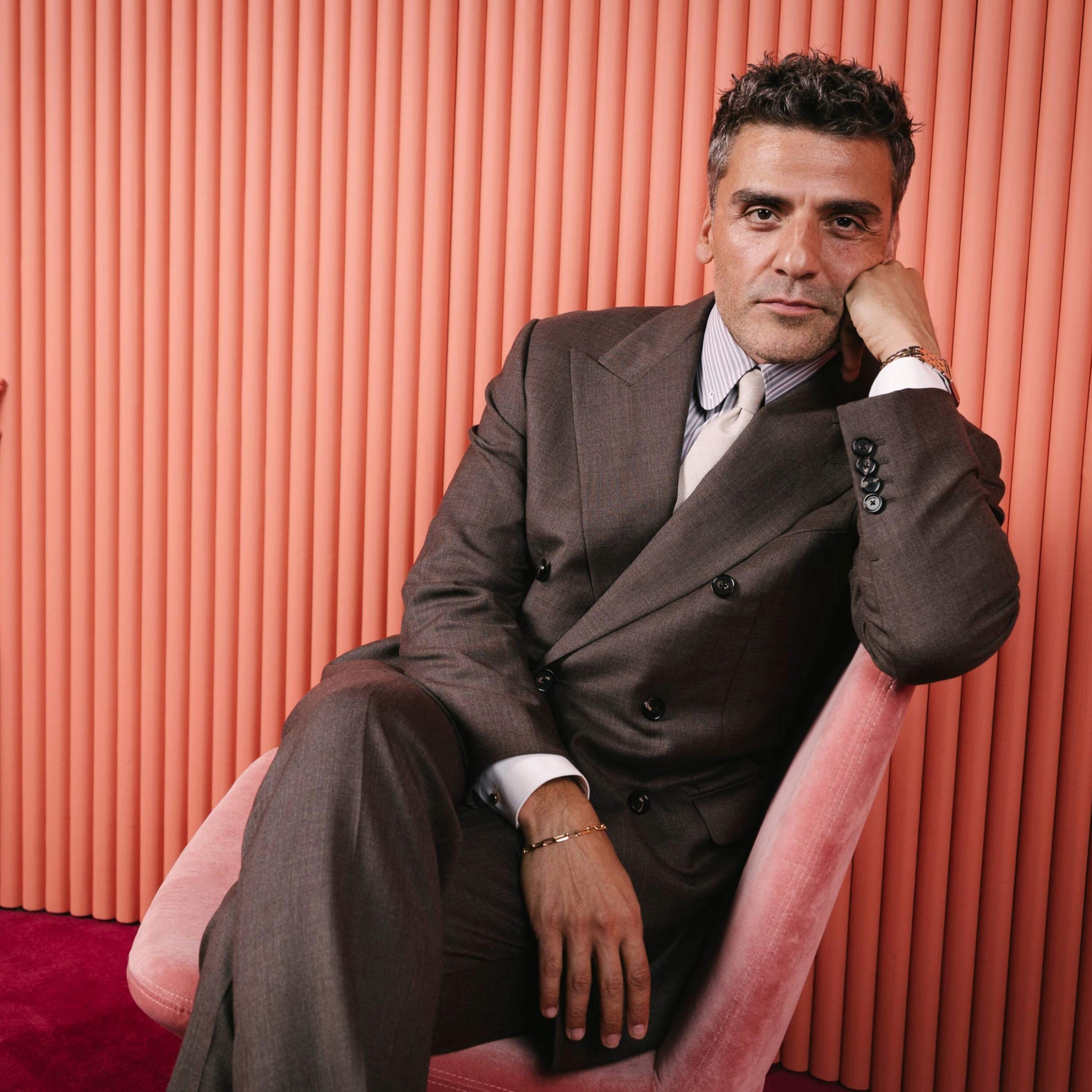
Oscar Isaac is a Golden Globe winner who has moved between indie films and global franchises from Shakespeare to Star Wars. His films and TV work include Inside, Lewin Davis, Dune, Card Counter, Scenes from a Marriage, and Most Recently, Frankenstein. Oscar Isaac, welcome back to Fresh Air. Thanks, Sonia.
You're very happy to be here. We're going to get to that intense fight in just a second. I said, when we were shooting that, I said, I hope that on my In Memoriam clip. It will just be me screaming, we had dinner with Bono.
I know, right? I know. But first I want to talk to you about this thing this acting coach told you to bring Victor into the room. Why was that the key to unlock this character, Josh?
Well, it's interesting because it's almost accurate. There's elements that are. But the time frame was actually, I was in the midst of shooting already, and I was kind of losing my voice a bit. I just felt like my throat was always so tight, and I was having a hard time, and there's this wonderful acting teacher, Gulu Kim Gilliam, and I met with her, and I said, I'm having a really hard time.
I don't know. And on the way over, I was actually thinking about Victor and how much fun that was, and then she had a great idea, like, let's bring Victor back and let him talk to Josh. And so we did this exercise where it's a form of hypnosis, and then she was like, now let Victor come and speak. And he came back, and he was just so angry to be stuck in this little tiny man.
And so that feeling of being strangled was coming a bit from that. And it wasn't about letting go of that, because that's an important part of the character. But yeah, it was a really interesting exercise to kind of bridge that gap, because sometimes yeah, you're playing with energy, and the nervous system is eight months or something of working on Frankenstein, and then a tiny break, and then I was right into doing beef. So to kind of have a physiological mindfulness about how to move into the new character was great.
You described Josh as living in a small life, but he manages this world with a lot of old money and privilege. Can you explain that a bit more? Yeah. So Josh Martin, he works, he is the general manager of Monovis the Point Country Club, very elite, lots of athletes, as he says in the clip, titans of every industry, and he is the GM, and he worked his way up from the barn cart.
He's been there since he was 16 years old, and it's taken a lot of work to get where he is, but he's great with people, and he's an incredibly hard worker, and his love language is service as well. But behind that, it's not a selfless service. I think he wants access, and there's something in him that feels he'll never be somebody that can become a member, and this is the closest he can get to have access to this kind of life. Yeah, at the end of the day, he is the help for lack of a better term.
That's right. That's what his wife says to him. They're not your friends. They're the help.
Thinking about this character, Josh, and beef, he doesn't belong there really, but his way of giving back is through service, and then there is this fight where we just see another side of him. So he's charming to all of the people who are part of the club, but at home, this fight he has with his wife. I mean, we heard a little bit of it in the intro. It gets worse.
Lindsey, his wife, picks up a golf club. You tell her, thank God, we don't have kids, stuff like that. So I'm thinking about you pulling from your role as Victor Frankenstein. In his case, specifically, his cruelty kind of comes from a wound he can't look at directly.
Where does Josh's cruelty live? I mean, is it someplace different? Is that frustration? I think with Josh, it's the rejection that she's saying.
It's like the kind of I see through this identity that you created with Victor Frankenstein. He had no doubts. The whole movie, he has very little doubt, which was a very freeing thing to play up until the moment of creation. And then after that, it's kind of all doubt.
And that's when he kind of goes in within himself and ossifies. But this Josh is very different. Josh is mostly doubt and mostly reactionary. He's constantly trying to control the situation, which is what a lot of these GMs do as well.
And he says, I let people win all the time. That's what I do. And I remember talking to somebody that has a job and he said, I'd go and he wants me to play tennis with him. And I'm a really good tennis player.
And we get a pro to come on as well. And we play. And I'm like, do you let him win? And he's like, of course I have to let him.
Like not by a bunch, but I can't destroy his time there. You know, that's not the point. So I just found out very interesting and, you know, and how little of a personal life one has in that situation, you know, it all gets mushed and melded together. You did research.
You spoke with someone who really has that job. I did. Yeah, I did. It was a couple of people.
It's a very strange foreign world to me. Although I did work at a golf club for a few months when I was 16, but it was it was more like a there's more like weddings that would happen in the small golf club. And I was a bit more of like a waiter, but it was a yeah, I heard a lot of the same. Wedding songs over and over again, and had to get out of there.
But but you know, I was like, you could imagine something, you know, that's about the age that Josh was when he started and he decided, no, this is my way in. And you know, I did it in Lake Worth, Florida. This is in Montecito, very different vibe. But but I think he really sees like I've got something and I've got something special and people like me and I understand people and I understand how to make them feel good.
And I think yeah, he sees he sees a way into this life. There's a there's a clip I want to play that kind of shows a little bit of the dirty work in the background and also his own issues that he's dealing with. So in this clip, he's on the golf course with one of the younger workers in the club, Ashley, who's played by Kaylee Smaney. And she's one of the young employees who witnessed that explosive fight between you and your wife in the show.
And in the scene, Josh is nervous that Ashley and her boyfriend will tell people about the fight. So he's trying to bribe her. Let's listen. You know what?
We never we never thank you guys for bringing back the wallet. So I should have given this to him, but I'm. Oh, gosh. Oh, you don't have to do this.
No, please insist. You got to get tips all the time. It's fine. Not all the time.
No. Really? Okay. Okay.
Ashley, you know, our members pay a lot of money to come here. 300k initiation fee. Did you know that? Yeah, I know it's so crazy.
Yeah, it's so crazy, right? You know why they pay so much to come here? Um, the golf? Yeah.
The golf, the courts, the exclusivity, the discretion. People need a place where they can feel safe. Where they can pretend everything is okay. It's the land of make believe.
Do you follow? I think so. Yeah. Do you though?
Because like when your fiance comes and visits my wife unannounced, I start to wonder is everything okay? Do you not want to make believe? Because if you don't, you know, I can find somebody who doesn't. No, no, no, I want to make believe, sir.
Yeah? Yes. You do? Good.
That's great for you, Ashley. Okay. You're doing great. Keep up the good work, all right?
That's my guest today. Oscar Isaac in the new season of beef with actress Kaylee Spainy. Lee Sung-jin has said he made the deliberate choice to make you and your wife millennials and the younger couple, Gen Z. You guys talked about that.
You and Kerry Mulligan had you before the conversation with Kerry reflected on the generational differences. You know, I, um, I think it's time. Yeah. I mean, it's like that's what's also so fun about it.
I mean, he's, you know, the satirical nature that Lee Sung-jin finds in this whole thing and for us to be able to really explore that, you know, the things that are annoying about Gen Z and the things that are really annoying about millennials, these, all of these stereotypes and to be able to kind of lean into some of those things unapologetically, like kind of embrace the cringe and also have compassion for those things. That's part of embracing it. And, you know, the judgments, the way that he plays with the audience's judgments, you know, you, you form very quick judgments of these people because it's easy to because they're kind of horrible. And, and then suddenly those expectations get turned on their heads because people start behaving in ways that, you know, I was just relating to you and now you're doing something so awful.
I don't even understand what's happening. Yeah. And then there's also then that understanding that, oh my gosh, what would I do if I was in that situation? Because your character is stealing, but it's for his mom's medical bills, you know?
Right. So that's the thing. The thing that when, when do we feel justified in doing whatever it takes to get ours? You know, that's the great TV on Burnett to the music for Lou and Davis.
He's got a great line. One of his songs that's nothing is as dangerous as belief. And, you know, when you believe you've been wronged, it entitles you to whatever you want to make that wrong right. And, and seeing how they, you know, they say, okay, well, up to a point, right up to this line.
Okay. This isn't, this is this stealing? It's not ish. The more dire the circumstances get.
And then when he sees, you know, I think he's somebody that believed in the system, to a certain extent, Josh, he's made it to where he's at by working hard and by not, you know, cheating, not doing any of that stuff. And you just got to be good, keep your head down, work hard. You're going to get what you want. It's going to that immigrant idea.
He comes from that immigrant family. And, and then he gets to a certain point and it's like, no, he realizes everybody is looking out for themselves. Everyone's cheating, especially the clients of this club. And we have a right to get, to get ours as well.
And it's a, I remember we were rehearsing and I was like, okay, if this, you know, in spiritual terms, it's like, oh wait, there is in a guide. So it doesn't matter what we do. It's kind of idea. There's no big eye in the sky watching that's going to, you know, it's keeping a list of that I do it right or do I do it wrong.
And so that it's like, oh, no one's watching. Well, then why, why am I doing the right thing for who's benefit? Okay, Oscar, I want to get into Frankenstein for a moment. And you have called, I've heard you a few times call del Toro's Frankenstein a Mexican melodrama.
And I have never heard it describe that way. What made it then? Okay, because he is, you know, he wanted to approach it that way and invited certainly me and all of us to approach it that way, which, which was, you know, for him, it was a very autobiographical telling, at least in the expression of the film. And yeah, it was, it was just the way that we would approach every day.
There was kind of this maximalist thing that was happening, but that was deeply, deeply felt. I mean, it's like listening to a carrillo, you know, it's like a mariachi music where it's so passionate and because it's just like, it's such a deep, deep expression of both and expression and and celebration of both joy and pain at the same time. So I think it was that kind of point of view that was very exciting. We have said that we spoke exclusively in Spanish to one another, which was so nice for me.
I hadn't had that experience, certainly not with a director. I was really just with my mom and my aunt. So it felt like a real familial thing to do. And it's my mother tongue.
So there was just something that just went deeper. It just went to some other part of my brain that usually isn't accessed in that way. And so you describe it because I've heard that from people before, especially around language like Spanish in your first time, actually being directed in Spanish. Did it unlock or add a dimension?
I think it was just like a directness and a simplicity. Even with me, you know, my vocabulary is not great. You know, maybe eighth, ninth grade, maybe and Spanish. And so I would, you know, I would just, no matter what the question was, I would force myself to just express it in Spanish to a man.
There was something about having to find the simplest way of saying what I wanted to say that I don't know. I was a very interesting experiment. And since then we speak nearly every day. And yeah, I've gained this incredible family member.
I mean, it's, he's so passionate. I also describe him as the Mexican Buddha. You know, he has such wisdom and such generosity and zero pretension, but also cares deeply about the work that he does as well. So it's just, you know, he's just an incredible human being and a real advocate for other people and advocate for other people's work.
He doesn't ever trash anyone's work or speak negatively. I just found him to be an incredible example of how to be a person in this world, how to be a man, how to be an artist. That sounds special to now have this daily friendship with a director, is that common for you? I mean, not like this.
This has been a, this is a real family member of mine now. Like there's a real closest and I have definitely got become friends with a lot of people I've worked with. It's such an intimate setting and you go to deep places. And that's one of the things that is really special about this work.
You know, we are carnival. We are circus people, but like we need to hold on to each other because it is such a strange bubble to be in and it's such an elusive thing that we're searching for that we're trying to find together. And it's often a very humiliating experience. It's a humbling experience to be an actor.
Yeah, it's to be an actor. I think to be an artist, particularly to be a performance artist, you know, to your own self, your body and your voice. That's the materials that you're working with. I mean, that's the high wire act.
I think is watching somebody battle their own ego and embarrassment. And, you know, and some people do it effortlessly and other people do lots of other wild things to battle that and to do that with a character with incredible writing and all of that adds to this kind of astounding feat, at least for me when I watch it and thinking about it, like those great performances. We're like, how is that happening? And knowing how hard it can be to allow oneself to kind of get out of the way to let something happen.
Our guest today is award-winning actor Oscar Isaac. We'll be right back after this short break. I'm Tonya Mosley and this is Fresh Air. This message comes from Wise, the app for international people using money around the globe.
You can send, spend, and receive in up to 40 currencies with only a few simple taps. Be smart, get Wise, download the Wise app today, or visit Wise.com Teas and C's apply. Hi, this is Molly C. V.
Husker, digital producer at Fresh Air. And this is Terry Gross, host of the show. One of the things I do is write the weekly newsletter. And I'm a newsletter fan.
I read it every Saturday after breakfast. The newsletter includes all the week shows, staff recommendations, and Molly picks timely highlights from the archive. It's a fun read. It's also the only place where we tell you what's coming up next week and exclusive.
So subscribe at WHY.org slash fresh air and look for an email from Molly every Saturday morning. This is Fresh Air. I'm Tonya Mosley and my guest today is actor Oscar Isaac. Recently, a documentary about the 2017 public theater production of Hamlet has been making its way to audiences.
It captures a deeply personal period in Isaac's life when his mother was dying. His first child was about to be born and his wife, Elvira, was filming. Your wife filmed this life-changing year of you. And before we get into it a little bit more, I just want to know how it feels to have this most intimate chapter of your life now available for audiences to watch.
Well, when you put it that way, horrible. No, it's a, you know, there's a bit enough time that's gone that it's I feel happy. I think it's a miracle that it exists is really how I feel about it. When all these things were happening, originally we started the workshop Sam Gold directed it and I wanted to do Hamlet for a long time.
We worked on the scenes when we were at school together. And all the rows and cranes at the illness during the scenes, we kind of did them all as a little one-act play. And we always talk. At school, at Juilliard.
At Juilliard, yeah. And we talked about us doing it one day. And so finally, it was the moment we were getting it all together. And Elvira was such a great documentarian and we weren't filming a lot of the time.
We were living together and been together for a while. And that was kind of something that we would do out and make music and she'd film it. She'd be like, wow, I'll film the workshop. And she started to and then my mother got sick.
She was pregnant and she just kept filming. And as she kept filming, I said, she said, I just don't know what else to do. It's just, it's like her version of journaling and I said, okay, but you got to know that these are maybe just home movies. I don't know if they're going to see that.
She's like, of course, of course. And so that kind of was the understanding that this is something that she needed to do for herself because this is happening to her life as well. And so that's she kept on and she kept doing it and she kept filming. And it was challenging in many ways, you know, we got married shortly after and and it was difficult to, because of the union rules to be able to film rehearsals and I sort of receding as the play went on because also my voice and just because I didn't have anything to give when I'd come home and have my wife waiting with the camera.
And so, so she put it away after a while. And then about a year and a half ago, she took the hard drives out and started looking at it and slowly started piecing things together and eventually put together this really beautiful documentary about a group of people coming together to make an impossible thing and how strange it is, you know, this off-Broadway play, you know, it's your tablet, but it's, you know, the peak behind the curtain of kind of what it costs to do this stuff. For me, I say it feels almost like a film about a band making an album. You know, it's very much about a place and a time, but it's yeah, it's a it is it's very intimate and it's it's revealing, but I think it's revealing in a way that's hopefully useful for people who are interested in making their life to the artist.
I want to play actually a clip from from the doc, if you don't mind, and it's some it's a moment between you and the director sangle, this director of Hamlet. And you guys are talking about how you are processing the grief of your mother, but also how you process life. Let's listen. We do we do are definitely I do I do because it's the only way that I try to find me is I find meaning is like through yeah, the play is the thing and I literally was like sobbing and then the moment that I was able to think about the play a little bit, it got me out of there.
It's like literally the place, the only salvation that I could find is to think about the play is that she went through everything that the character that he talks about, like she all those things like the lucidity, like the funniness that the then the screaming about dreams and the in the distrust of the people that she loved most and and then trying to wrap inside to some place of peace by the end, you know, it was like all of everything. Yeah, so you're actually confronting that. Yeah, that was my guest Oscar Isaac along with director Sam Gold in the new documentary King Hamlet. Oscar what an extraordinary connection between the play Hamlet and your mother's experience her last days.
You know, it's funny. I listened to that night. There's two things one that I find positive, which is which certainly that's what work and creative work and art and these things that they do. They can help us, they give architecture to some things that feel so formless and scary and hard to understand and comprehend, you know, to be able to see, you know, within a week of my mother becoming quite lucid and then traveling through all these different versions of different weather patterns of herself, the many selves that she lived her life and then to see a connection with the journey of the character of Hamlet through that entire play that was really revealing and amazing thing just to think of what an incredible piece of work Hamlet is.
But the other thing I hear that I have compassion for that guy speaking that was me is the feeling that I need to be saved from feeling sad that my mom passed. You know, I kind of want to say, you don't need to get saved from that. It's okay. You can feel really sad that your mom's dead.
You don't have to be rescued from that. This idea that I need to get out of my discomfort and the only way I can get out of this horrible situation, I feel bad. So I need something to make me not feel bad and that's my work and that maybe that I know, you know, looking back. That's the first place I went, you know, parents getting divorced.
I'm going to learn how to learn all the words to this play, you know, and suddenly play, you know, I feel alone at school. I do a play. Oh, now I got all these friends and people are looking at me and you know, it was always a solution, you know, it was a solution which is has a great positive effect. Like that's a good solution.
There's lots of bad solutions to feeling lonely and bad, but that's a positive one. But I can hear that. I just I can hear maybe after a while a bit of a perhaps a maladaption that that is not necessary anymore. Let's take a short break.
If you're just joining us, my guest is actor Oscar Isaac. We'll be right back. This is fresh air. When did you realize fully that acting for you was more than a craft that you enjoyed and that you were good at, but also the way that you process life?
Pretty, pretty early on. Yeah, pretty early on. I think there was a sense of, I don't know how to be a good son, student, friend, boyfriend, partner, any of those things, citizen, but I know that if I can figure out this part, I can solve this puzzle, then everything will make sense. And that, you know, that was pretty early on where I would accept like, I'm a little bit of a vulture of my own life.
You know, there's, I'm in an experience, but there's always a little other part that's watching and, you know, eating up a little bits and pieces of real life that's happening and going to use that for something later. Sorry. I'm just thinking about what you're saying because I feel like you're talking about me. Really?
Do you relate to that? Yeah, relate to it. I feel like I'm always living in, because you know, I'm an observer, so I'm an observer of life. So I'm always observing processing and thinking about how it's also going to turn around and help me in my work.
But I mean, that's, but it's also authentically me. So I, so, so I kind of come to this place where I'm accepting it, but I used to feel a lot of guilt towards you. I mean, I would feel a lot of guilt towards it and then I did have to get to a place where I was like, well, I think I was like that first and then this thing is like, well, you're like this, here's something you can do with that thing that makes you feel guilty or weird, right? But, but I think it's also speaks to a sense of feeling on the outside all the time, you know, just feeling a little bit on the outside on the edge of existence.
And that allows me to never fully be there because, you know, I'm not really a participant. I kind of pretend I'm participating, but I'm always a little bit on the outside. And, and like I said, that that was useful for a really long time, I'm less interested in that kind of that way of being now, just anything out of curiosity for something else. And I'm curious to see if how badly the work is going to suffer from it.
So you're not interested in that anymore, but like, have you found a way to take yourself out of that way of being? I'm asking for a friend. I don't know, I mean, without getting so into all the, you know, the therapy of all that stuff. But certainly, you know, therapy helps a lot.
Meditation has helped a lot just to quite, you know, that's what I say. I think oftentimes to their disappointment when young actors can come up to like, what's a one piece of advice? I'm like, figure out how to train your mind to be your friend, you know, whatever that takes. I don't know if it's a meditation or that, but finding a good relationship with your mind where it's a friendly relationship and it's not your enemy or your coach all the time or your angry coach, or I think for me that that's taken a long time to really be aware of when I can say to whatever patterns coming up be like, thank you, but don't need that right now.
Yeah, that's been a helpful way. And to be honest, has helped with the work as well to just be to have more space in my mind and not so much chatter allows me to be able to hear things better and to be more present with my scene partner and to allow for other things to come up, whether it's better in the end as far as the finish part of it in the moment, it's a lot more it's a much more enjoyable way of working. Okay, before we wrap, I have to ask you about your music. People who follow your career know that you were a musician and your young life and you're known for this character that you played a folk musician from inside Lewin Davis, but you revealed recently on late night with Jimmy Fallon that you and your sons have a band.
What's it called again? Please. Okay, that's really a punk rock name. Please featuring cool dude.
Wait, who's the cool dude? That's my oldest son. He's kind of like he's got his own thing. So he just, you know, we're one of the projects that he works with, but they happen as much lately.
It's like, actually they've got the other, they're doing their drumming lesson right now. They're really into playing drums and they're so musical. But you know what, the bands, I got to be honest, it's a little on hiatus for the last couple of months. It's like suddenly they're just not as into jamming with that.
Maybe I got too much. I think I got too into it. You think, yeah, because you know that happens when parents get too serious about it. Yeah, I just killed the vibe.
I actually want to play a clip, two clips actually from that late night performance you're talking about it. The first clip is your son singing followed by a clip of you singing the song that you guys put together. Let's listen. And then here's you picking up the guitar.
Okay, now I know this is where you lost it. I think this is why please broke up because you were on the tonight show. Yeah, like, you know, man, you killed it. It's only not in a good way.
We're underground punk band. You can't go on tonight. Right. I know, you know, I mean, I love seeing that though that had to be really great to like have this connection with your sons from the place that you started to find your artistic voice.
Yeah, no, it is. And like, you know, those are all his own lyrics and to find a reason to do that and to play it and playing it for them. I mean, they were laughing at that. It was so fun.
It's a really fun thing to share with them. It's something my dad shared with me. He played music all the time and would record music and had guitars and things around the house. And and that was a real connection for he and I as well.
We really bonded over that. And so I was like, I want to have instruments readily available at all times just in case inspiration strikes and they want to go down and play. And that's been a really lovely thing. Are you playing for yourself as well?
Sometimes at times, yeah, I still do a bit for myself. It's interesting because when I get a little extra low, I'm like, you know what? I haven't played in a while. And I play and that that feels really good.
Oscar Isaac, it's been such a pleasure to talk with you. And thank you so much. Thank you so much for the pleasure. Oscar Isaac stars in season two of the Netflix series beef.
Coming up TV critic David Bean Cooley reviews the new Apple TV series, Margo's got money troubles. This is fresh air. Margo's got money troubles based on the 2024 novel by Rufy Thorpe is now an eight part TV series on Apple TV that stars Elle Fanning, Michelle Pfeiffer and Nick Offerman. Our TV critic David Bean Cooley has this review.
Margo's got money troubles is created for television by David E. Kelly, who wrote her co-wrote several of the eight episodes. Kelly's impressive TV career goes all the way back to LA law, Allie McBeal, Pickett Fences and Boston legal. But more recently, he's made a specialty of adapting other writers novels for TV.
Those include Margo's got money troubles by Rufy Thorpe. But also Kelly's adaptations of the novels Big Little Lies and Nine Perfect Strangers, both of which starred Nicole Kidman. She's in Margo too, playing a lawyer with a colorful background, but she's only one of many talented jewels in this show's crown. Others include Kelly's wife Michelle Pfeiffer, currently starring in the Madison, Nick Offerman from Parks and Recreation, Devs and The Last of Us, and veteran stars Greg Keneer and Marcia Gayhart.
Appearing with all of them in the title role is Elle Fanning, who was so great as a comic Catherine the Great in the TV series called The Great. Here, she plays Margo Millet, a promising first-year student at California Community College. Her eventually odious literature professor praises her writing has an affair with her, gets her pregnant, then ghosts her, all within the show's opening episode. Margo decides she wants to have the baby anyway, which upsets her mother Cheyenne, a flamboyant woman, played by Michelle Pfeiffer.
You know me well enough, when I get scared. God, when I got pregnant with you, I was terrified. You kept me. One night's Dan from a guy who picked you up at Hooters.
I mean, what would possess you? I thought he was the one. Your dad. You didn't even know his name.
I guess I'm going to have to tell Dad, by the way, if I decide to keep it. Promise that I keep him in a loop on the big stuff. Yeah, when was the last time you talked to him? Not in a while, closer to never than recently.
The Dad, played by Nick Offerman, eventually shows up on Margo's doorstep. He's a former pro wrestler named Jinx, and his exploits inside the ring might sound like comic relief for a broad caricature. But like Margo's mother and Margo herself, these characters have depth and darkness and can be serious as well as amusing. When Jinx returns to reunite with Margo after hearing of her pregnancy, he confesses that he's come straight from rehab after years of drug abuse.
How bad did it get? You know, I've had multiple surgeries on my spine over the years. Not taking the pain pills wasn't an option. Taking him is prescribed was an option.
Hoarding him, abusing him, taking a lot of wounds. And then it was heroin, I'm determined not to go back to that place. You know, I love you. Do you know that, Dad?
The money troubles in the title mount up for Margo after her baby is born. And her unusual solution for paying the bills is to open an only fan's account. Some of the offerings and interactions on that site can be quite sexual and quite lucrative. Margo keeps it PG-rated, first by writing playful prose, then by appearing in still photos, and finally by producing and starring in saucy sci-fi themed videos.
Her goal is to keep her source of income secret and completely apart from her private life. But that goal fails. And because Margo's got money troubles is as realistic as it is fanciful, the ramifications of her actions are real and sometimes painful. She experiences shaming, regret, even legal troubles, which I mention only because in a single courtroom scene playing an eccentric judge, actor Paul McCrain almost steals the show from all these other powerful players.
As a judge in a David Kelly drama, he's as much fun as Ray Wollstone was in picket fences. Even the characters you expect to be peripheral or one-dimensional end up surprising you in this mini-series, and the dynamics of friends and family are equally complicated. Margo and Cheyenne yell at each other a lot, but they also demonstrate a delightful mother-daughter bond. During a road trip to Vegas in a convertible, they sing along with a bandon as the car stereo blares a vintage song.
A song that some would poignantly describes them both. Margo's got money troubles, includes instances of casual nudity, but they never sing gratuitous. Fanning throws herself into this role in a way that's both vulnerable and empowering, and it's an enthralling performance to witness. Nicole Kidman doesn't show up until halfway through, but wow, is she worth the wait.
And when she and Pfeiffer finally get to share the screen, Margo's got money troubles is pure gold. There are so many strong performances here and so many rich characters that it's riveting from start to finish. And in between those two points is one wild and brazen emotional ride. TV critic David Bean Cooley reviewed the new Apple TV series, Margo's Got Money Troubles.
On the next fresh air, New Yorker staff writer Zack Helfan on the career of former pro wrestling executive Linda McMahon. As President Trump's Secretary of Education, she's embraced the mission to dismantle her department with gusto, sending half her employees lay off notices within a week of her confirmation. Helfan describes her style as that of a friendly grandmother wielding a hatchet. I hope you can join us to keep up with what's on the show and get highlights of our interviews.
Follow us on Instagram at NPR Fresh Air. Fresh Air's executive producer is Sam Berger. Our technical director and engineer is Audrey Bentham. Our interviews and reviews are produced and edited by Phyllis Myers, Ann Marie Boldenato, Lauren Krenzel, Theresa Madden, Monique Nazareth, Thea Chaloner, Susan Yuckindi, Anna Bellman, and Nico Gonzalez Whistler.
Our digital media producer is Molly C.B. Nesper. Urbordishorak directs the show. With Terry Gross, I'm Tanya Mosley.