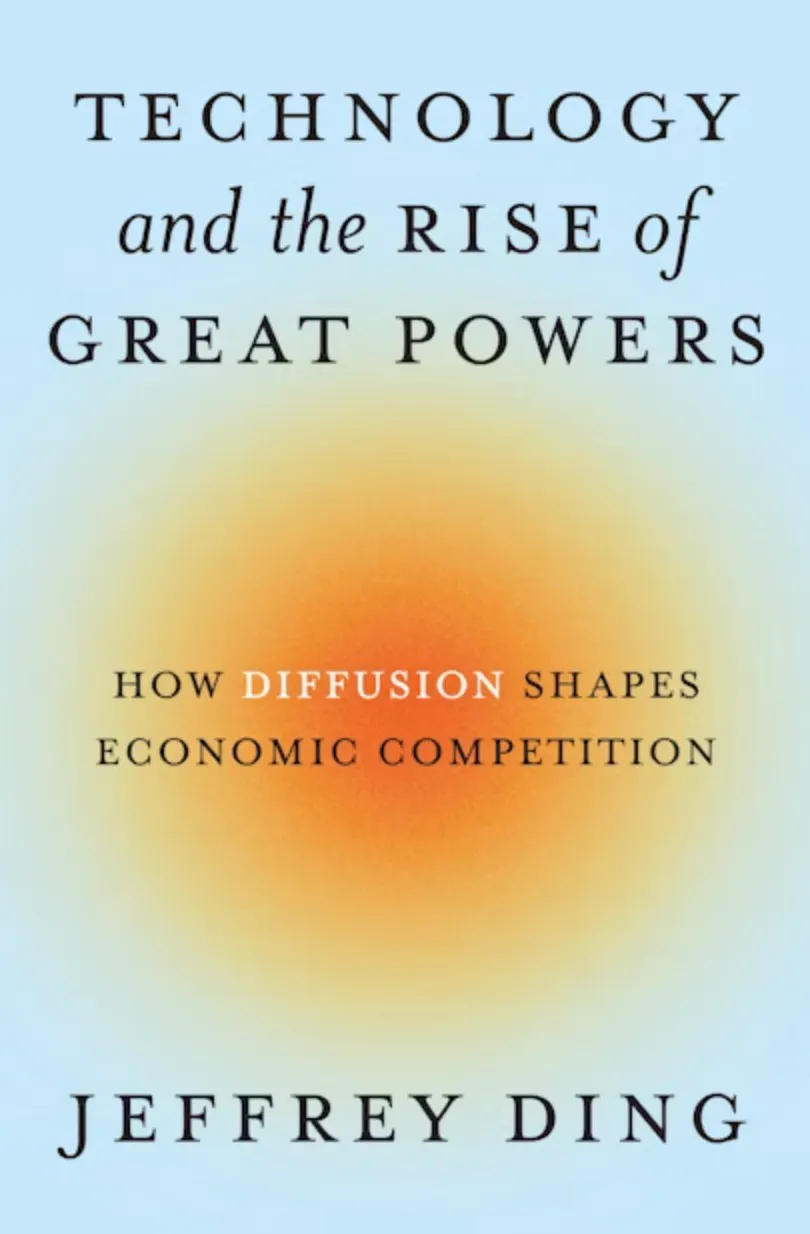
AI and the Rise and Fall of Great Powers episode artwork

EPISODE · Aug 28, 2024 · 1H 11M

AI and the Rise and Fall of Great Powers

from ChinaTalk · host Jordan Schneider

Jeffrey Ding is a professor at George Washington University, leading US scholar on China’s AI, and the creator of the ChinAI Substack. In honor of the publication of his new book, Technology and the Rise of Great Powers, enjoy this interview with Jeff from the ChinaTalk archives. Jeff Ding argues in a 2023 paper that great powers must harness general-purpose technologies if they want to achieve global dominance. That is, diffusion capacity (not just innovation capacity) is critical to economic growth — and China actually fares much worse in diffusion capacity than mainstream narratives imply. In this show, we discuss the historical underpinnings of that argument and apply it to AI today — drawing out policymaking lessons spanning centuries of technologically driven great power transitions. We also get into: Why long-term productivity growth is driven by the diffusion of general-purpose technology, and what makes this so crucial for great power competition; Historical lessons from the UK, Soviet Union, US, and Germany illustrating the cultural and policy roadblocks to tech diffusion; The importance of decentralized systems, and how this helped America win the Cold War Why China’s diffusion capacity lags behind its innovation capacity, and how America should avoid getting locked into any one technological trajectory. Co-hosting is Teddy Collins, formerly of DeepMind and the White House Office of Science and Technology Policy. Outro music: 分享那奇沃夫/Prodby玉的单曲《亚克西》(Youtube Link) Learn more about your ad choices. Visit megaphone.fm/adchoices

Jeffrey Ding is a professor at George Washington University, leading US scholar on China’s AI, and the creator of the ChinAI Substack. In honor of the publication of his new book, Technology and the Rise of Great Powers, enjoy this interview with Jeff from the ChinaTalk archives. Jeff Ding argues in a 2023 paper that great powers must harness general-purpose technologies if they want to achieve global dominance. That is, diffusion capacity (not just innovation capacity) is critical to economic growth — and China actually fares much worse in diffusion capacity than mainstream narratives imply. In this show, we discuss the historical underpinnings of that argument and apply it to AI today — drawing out policymaking lessons spanning centuries of technologically driven great power transitions. We also get into: Why long-term productivity growth is driven by the diffusion of general-purpose technology, and what makes this so crucial for great power competition; Historical lessons from the UK, Soviet Union, US, and Germany illustrating the cultural and policy roadblocks to tech diffusion; The importance of decentralized systems, and how this helped America win the Cold War Why China’s diffusion capacity lags behind its innovation capacity, and how America should avoid getting locked into any one technological trajectory. Co-hosting is Teddy Collins, formerly of DeepMind and the White House Office of Science and Technology Policy. Outro music: 分享那奇沃夫/Prodby玉的单曲《亚克西》(Youtube Link) Learn more about your ad choices. Visit megaphone.fm/adchoices

NOW PLAYING

AI and the Rise and Fall of Great Powers

0:00 1:11:30

No transcript for this episode yet

We transcribe on demand. Request one and we'll notify you when it's ready — usually under 10 minutes.

Frequently Asked Questions

How long is this episode of ChinaTalk?

This episode is 1 hour and 11 minutes long.

When was this ChinaTalk episode published?

This episode was published on August 28, 2024.

What is this episode about?

Jeffrey Ding is a professor at George Washington University, leading US scholar on China’s AI, and the creator of the ChinAI Substack. In honor of the publication of his new book, Technology and the Rise of Great Powers, enjoy this interview with...

Can I download this ChinaTalk episode?

Yes, you can download this episode by clicking the download button on the episode player, or subscribe to the podcast in your preferred podcast app for automatic downloads.
URL copied to clipboard!