
EPISODE · Feb 12, 2026 · 1 MIN
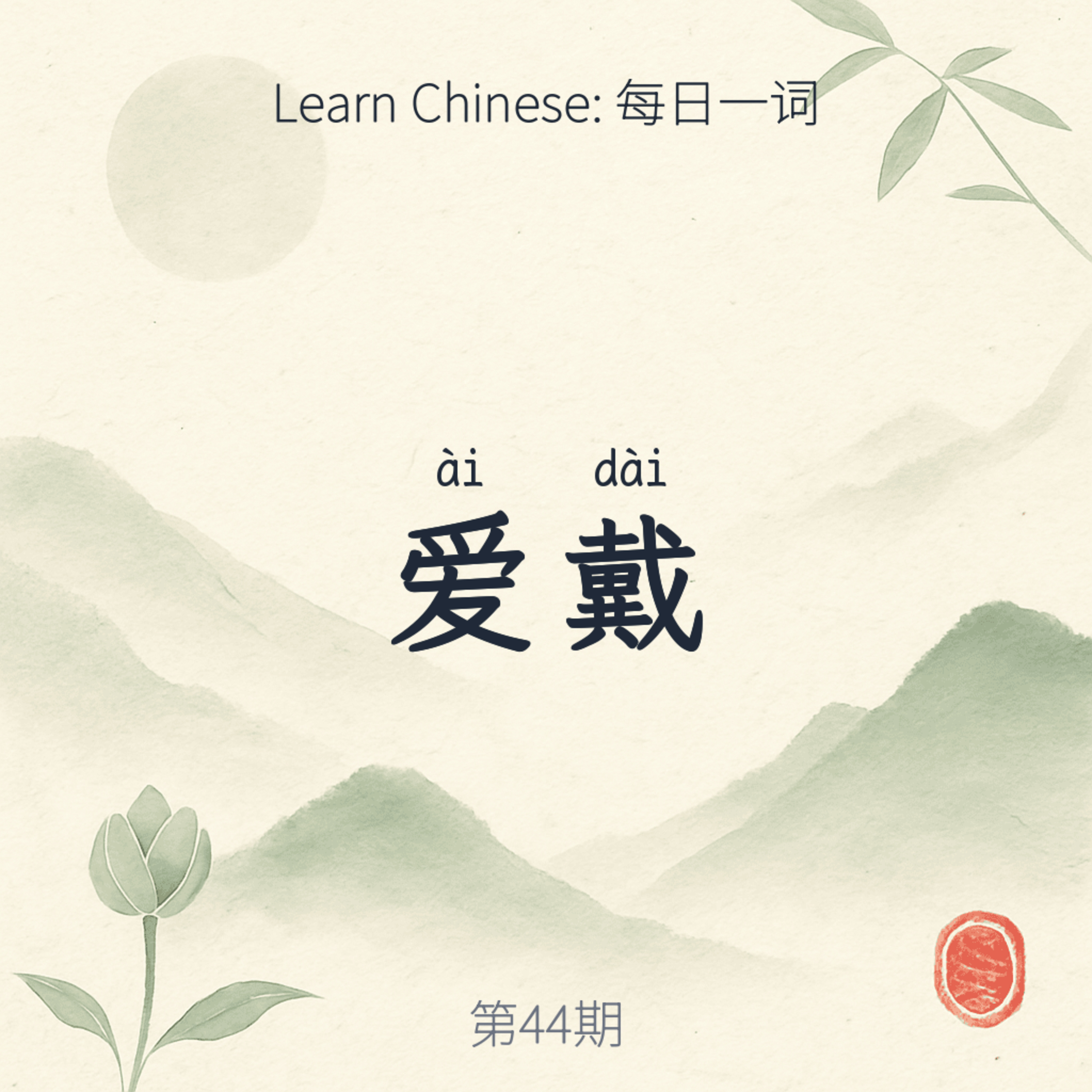
爱戴 (ài dài)
from Chinese Word of the Day | 每日一词 · host Gallant Guo
特师的每日一词,2026年2月12日的词汇是:爱 ài 戴 dài释义 Definition爱戴的意思是因尊敬、钦佩而衷心拥护,多用于下级对上级、群众对领袖或德高望重者的情感。爱戴 (ài dài) means to sincerely support someone out of respect and admiration, often used to describe the feelings of subordinates towards superiors, the masses towards a leader, or towards a person of high virtue and prestige.例句 Example《中国国家人文地理》中,有篇文章是这样用这个词的:「观明是一个非常廉洁自律的人,他重视工商业发展,不搞特权,反对浪费,深受百姓爱戴。」这里说的是一位清正廉洁的官员因为为民造福而得到人民的尊敬与拥护。In the book 'China National Human Geography,' an article uses the word like this: 'Guan Ming is a very honest and self-disciplined person. He values industrial and commercial development, does not seek privileges, and opposes waste, and is deeply 爱戴 by the common people.' This describes an upright official who, because he worked for the benefit of the people, gained their respect and support.你知道吗? Did You Know?「爱戴」和「爱护」都包含关爱之意,但用法不同。「爱戴」强调自下而上的敬爱(如人民爱戴领袖),而「爱护」多用于对晚辈、弱者或事物的珍惜(如爱护儿童、爱护公物)。这个词常出现在历史人物评价或新闻报道中,例如:「这位老教授学识渊博,平易近人,深受学生爱戴。」Both 爱戴 (ài dài) and 爱护 (ài hù) contain the meaning of care and affection, but their usage is different. 爱戴 (ài dài) emphasizes a bottom-up kind of respect and love (e.g., the people 爱戴 the leader), while 爱护 (ài hù) is mostly used for cherishing juniors, the vulnerable, or objects (e.g., 爱护 children, 爱护 public property). The word 爱戴 (ài dài) often appears in evaluations of historical figures or news reports, for example: 'This old professor is knowledgeable and approachable, and is deeply 爱戴 by his students.'
Embed this episode
Ready to play
爱戴 (ài dài)
No transcript for this episode yet
Similar Episodes
No similar episodes found.
Similar Podcasts
No similar podcasts found.