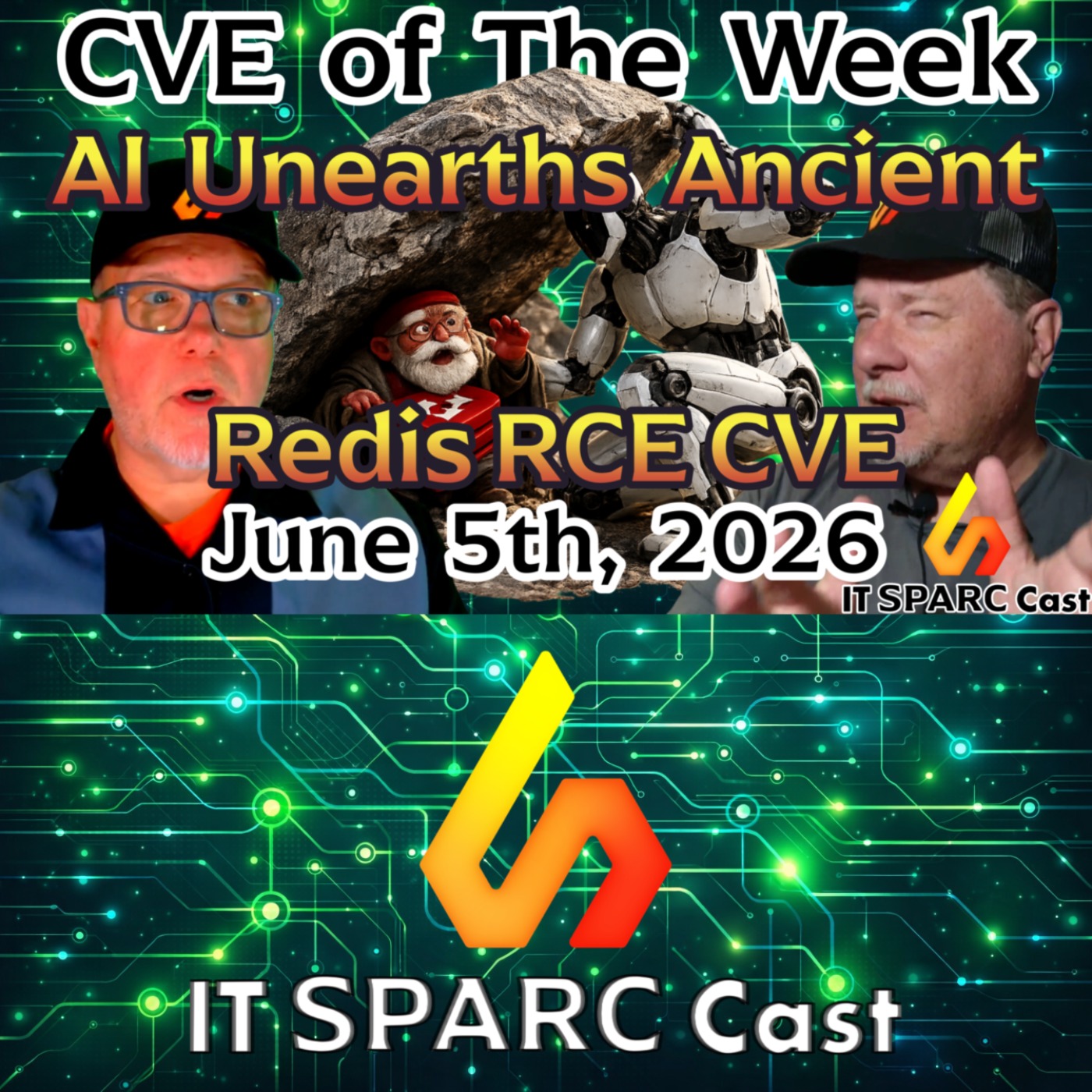
AI Finds a Redis Vulnerability Humans Missed for Two Years episode artwork

EPISODE · Jun 5, 2026 · 9 MIN

AI Finds a Redis Vulnerability Humans Missed for Two Years

from IT SPARC Cast

An autonomous AI security tool has discovered a critical Redis remote code execution vulnerability that remained hidden for more than two years. In this episode of IT SPARC Cast – CVE of the Week, John and Lou discuss CVE-2026-23479, why Redis is such a critical part of modern cloud infrastructure, and how AI is fundamentally changing vulnerability discovery, patch management, and enterprise security operations.⸻📄 Show Notes🚨 CVE of the Week: Redis Remote Code Execution (CVE-2026-23479)This week we’re looking at CVE-2026-23479, a high-severity Redis remote code execution vulnerability discovered by an autonomous AI security tool called Xint Code.Redis is one of the most widely deployed databases in cloud computing, meaning many organizations may be affected even if they don’t realize Redis is running somewhere in their environment.The vulnerability stems from a use-after-free bug in Redis blocked-client handling logic introduced in Redis 7.2.⸻⚠️ Why This MattersAn authenticated attacker can exploit the vulnerability to achieve arbitrary operating system command execution on the Redis host.Potential impacts include:Remote code execution (RCE)Server compromiseLateral movementPrivilege escalation through exploit chainingWhile no active exploitation has been reported, public exploit details are now available.The bigger story is that AI found a serious vulnerability that human review missed for over two years.⸻🛠️ Mitigation Steps for CVE-2026-23479✅ Patch Redis ImmediatelyUpgrade to a fixed version:Redis 7.2.14Redis 7.4.9Redis 8.2.6Redis 8.4.3Redis 8.6.3or later versions as available.✅ Restrict Redis AccessLimit authenticated usersRemove unnecessary privilegesRestrict network exposureBlock direct internet access whenever possible✅ Review Authentication ControlsBecause exploitation requires authentication:Rotate credentialsReview user permissionsImplement least-privilege access✅ Monitor for Suspicious ActivityWatch for:Unexpected Redis commandsUnusual process creationUnauthorized shell executionPrivilege escalation attempts⸻🤖 The Real Story: AI vs. AI SecurityThe vulnerability itself is serious.The larger trend may be even more important.AI tools are now:Finding vulnerabilities fasterAnalyzing source code at scaleDiscovering flaws humans missThis means organizations must rethink patch management.Traditional “Patch Tuesday” approaches may no longer be sufficient.John and Lou discuss a future where:AI finds vulnerabilitiesAI develops fixesAI monitors infrastructureAI defends against AI-driven attacks⸻🔧 Enterprise RecommendationsAssign dedicated personnel to vulnerability monitoringDeploy automated alerting systemsUse AI-assisted security analysisReview hot-patching capabilitiesReevaluate maintenance window policiesThe era of weekly patch cycles may be ending.⸻💬 Listener FeedbackThanks to listener Alex for pointing out that the Microsoft Exchange vulnerability discussed in a previous episode remains unpatched.It’s a reminder that even when vulnerabilities are publicly disclosed, vendor response times can vary dramatically.⸻📣 Wrap UpAre your current patch management processes fast enough to keep up with AI-driven vulnerability discovery?📧 [email protected]🐦 @itsparccast on X⸻🔗 Social LinksIT SPARC Cast@ITSPARCCast on Xhttps://www.linkedin.com/company/sparc-sales/ on LinkedInJohn Barger@john_Video on Xhttps://www.linkedin.com/in/johnbarger/ on LinkedInLou Schmidt@loudoggeek on Xhttps://www.linkedin.com/in/louis-schmidt-b102446/ on LinkedIn Hosted on Acast. See acast.com/privacy for more information.

An autonomous AI security tool has discovered a critical Redis remote code execution vulnerability that remained hidden for more than two years. In this episode of IT SPARC Cast – CVE of the Week, John and Lou discuss CVE-2026-23479, why Redis is such a critical part of modern cloud infrastructure, and how AI is fundamentally changing vulnerability discovery, patch management, and enterprise security operations.⸻📄 Show Notes🚨 CVE of the Week: Redis Remote Code Execution (CVE-2026-23479)This week we’re looking at CVE-2026-23479, a high-severity Redis remote code execution vulnerability discovered by an autonomous AI security tool called Xint Code.Redis is one of the most widely deployed databases in cloud computing, meaning many organizations may be affected even if they don’t realize Redis is running somewhere in their environment.The vulnerability stems from a use-after-free bug in Redis blocked-client handling logic introduced in Redis 7.2.⸻⚠️ Why This MattersAn authenticated attacker can exploit the vulnerability to achieve arbitrary operating system command execution on the Redis host.Potential impacts include:Remote code execution (RCE)Server compromiseLateral movementPrivilege escalation through exploit chainingWhile no active exploitation has been reported, public exploit details are now available.The bigger story is that AI found a serious vulnerability that human review missed for over two years.⸻🛠️ Mitigation Steps for CVE-2026-23479✅ Patch Redis ImmediatelyUpgrade to a fixed version:Redis 7.2.14Redis 7.4.9Redis 8.2.6Redis 8.4.3Redis 8.6.3or later versions as available.✅ Restrict Redis AccessLimit authenticated usersRemove unnecessary privilegesRestrict network exposureBlock direct internet access whenever possible✅ Review Authentication ControlsBecause exploitation requires authentication:Rotate credentialsReview user permissionsImplement least-privilege access✅ Monitor for Suspicious ActivityWatch for:Unexpected Redis commandsUnusual process creationUnauthorized shell executionPrivilege escalation attempts⸻🤖 The Real Story: AI vs. AI SecurityThe vulnerability itself is serious.The larger trend may be even more important.AI tools are now:Finding vulnerabilities fasterAnalyzing source code at scaleDiscovering flaws humans missThis means organizations must rethink patch management.Traditional “Patch Tuesday” approaches may no longer be sufficient.John and Lou discuss a future where:AI finds vulnerabilitiesAI develops fixesAI monitors infrastructureAI defends against AI-driven attacks⸻🔧 Enterprise RecommendationsAssign dedicated personnel to vulnerability monitoringDeploy automated alerting systemsUse AI-assisted security analysisReview hot-patching capabilitiesReevaluate maintenance window policiesThe era of weekly patch cycles may be ending.⸻💬 Listener FeedbackThanks to listener Alex for pointing out that the Microsoft Exchange vulnerability discussed in a previous episode remains unpatched.It’s a reminder that even when vulnerabilities are publicly disclosed, vendor response times can vary dramatically.⸻📣 Wrap UpAre your current patch management processes fast enough to keep up with AI-driven vulnerability discovery?📧 [email protected]🐦 @itsparccast on X⸻🔗 Social LinksIT SPARC Cast@ITSPARCCast on Xhttps://www.linkedin.com/company/sparc-sales/ on LinkedInJohn Barger@john_Video on Xhttps://www.linkedin.com/in/johnbarger/ on LinkedInLou Schmidt@loudoggeek on Xhttps://www.linkedin.com/in/louis-schmidt-b102446/ on LinkedIn Hosted on Acast. See acast.com/privacy for more information.

NOW PLAYING

AI Finds a Redis Vulnerability Humans Missed for Two Years

0:00 9:05

No transcript for this episode yet

We transcribe on demand. Request one and we'll notify you when it's ready — usually under 10 minutes.

No similar episodes found.

No similar podcasts found.

Frequently Asked Questions

How long is this episode of IT SPARC Cast?

This episode is 9 minutes long.

When was this IT SPARC Cast episode published?

This episode was published on June 5, 2026.

What is this episode about?

An autonomous AI security tool has discovered a critical Redis remote code execution vulnerability that remained hidden for more than two years. In this episode of IT SPARC Cast – CVE of the Week, John and Lou discuss CVE-2026-23479, why Redis is...

Can I download this IT SPARC Cast episode?

Yes, you can download this episode by clicking the download button on the episode player, or subscribe to the podcast in your preferred podcast app for automatic downloads.
URL copied to clipboard!