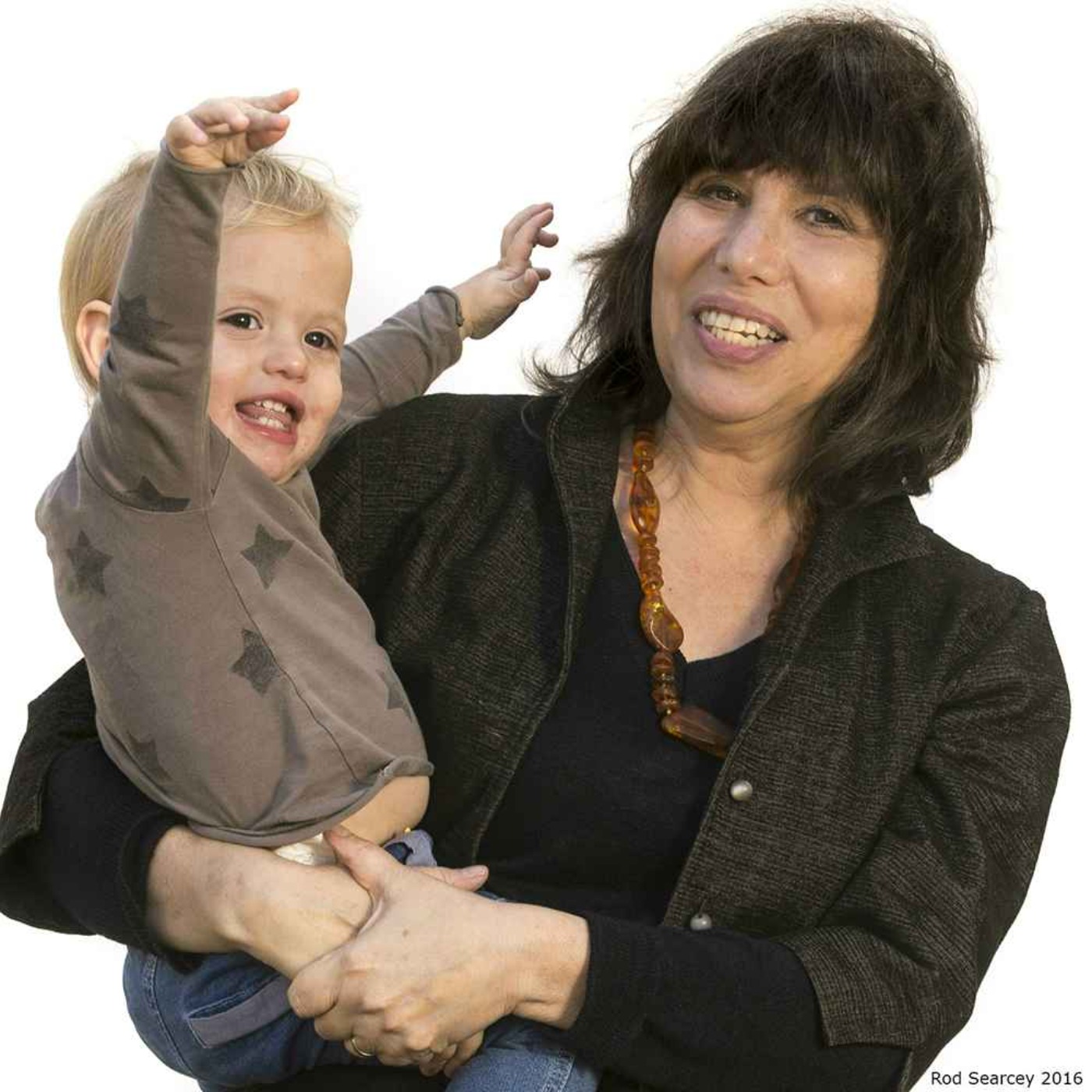
Alison Gopnik on why AI is no match for a 4-year-old episode artwork

EPISODE · Apr 17, 2026 · 1H 24M

Alison Gopnik on why AI is no match for a 4-year-old

from Berkeley Talks

Over her decadeslong career as a developmental psychologist, Alison Gopnik has observed a striking phenomenon: When children are given a new toy without an obvious use, they often outperform high‑achieving college students in figuring out how it works. While adults tend to test the most likely possibilities and quickly get stuck, children respond with playful experimentation. "What children are doing is exactly the kind of open-ended, non-utilitarian, exploratory learning that allows you to find out things about the world that you would never find out any other way,” says Gopnik, a UC Berkeley professor of psychology.  In this Berkeley Talks episode, Gopnik argues that human intelligence is not a single, general capacity, but a collection of distinct cognitive modes — exploration, exploitation and care — that are distributed across different stages of a person’s life. Childhood, she says, is evolution’s way of creating a dedicated “explorer” phase, made possible by a specialized care system provided by adults."The reason why we can have these big brains," she explains, "is because we have this period of childhood where we're protected ... and we have those older people who are there to provide the resources.” Gopnik contrasts this biological model with current artificial intelligence, noting that while large language models excel at using existing data to predict patterns, it lacks the embodied, curiosity‑driven learning of a child. To create truly intelligent systems, she suggests that we need to focus on the “intelligence of care.”“A system that develops, that changes over time, and in particular, a system that's cared for by humans or cared for by other intelligent agents — that's the secret of human intelligence,” she says. “That's the kind of system you'd need if you wanted a system that had the same kind of intelligence as humans.” This lecture took place on Nov. 5, 2025, as part of the Berkeley Distinguished Faculty Lectures in the Social Sciences.Listen to the episode and read the transcript on UC Berkeley News (news.berkeley.edu/podcasts/berkeley-talks).Music by HoliznaCC0.UC Berkeley photo. Hosted on Acast. See acast.com/privacy for more information.

Over her decadeslong career as a developmental psychologist, Alison Gopnik has observed a striking phenomenon: When children are given a new toy without an obvious use, they often outperform high‑achieving college students in figuring out how it works. While adults tend to test the most likely possibilities and quickly get stuck, children respond with playful experimentation. "What children are doing is exactly the kind of open-ended, non-utilitarian, exploratory learning that allows you to find out things about the world that you would never find out any other way,” says Gopnik, a UC Berkeley professor of psychology.  In this Berkeley Talks episode, Gopnik argues that human intelligence is not a single, general capacity, but a collection of distinct cognitive modes — exploration, exploitation and care — that are distributed across different stages of a person’s life. Childhood, she says, is evolution’s way of creating a dedicated “explorer” phase, made possible by a specialized care system provided by adults."The reason why we can have these big brains," she explains, "is because we have this period of childhood where we're protected ... and we have those older people who are there to provide the resources.” Gopnik contrasts this biological model with current artificial intelligence, noting that while large language models excel at using existing data to predict patterns, it lacks the embodied, curiosity‑driven learning of a child. To create truly intelligent systems, she suggests that we need to focus on the “intelligence of care.”“A system that develops, that changes over time, and in particular, a system that's cared for by humans or cared for by other intelligent agents — that's the secret of human intelligence,” she says. “That's the kind of system you'd need if you wanted a system that had the same kind of intelligence as humans.” This lecture took place on Nov. 5, 2025, as part of the Berkeley Distinguished Faculty Lectures in the Social Sciences.Listen to the episode and read the transcript on UC Berkeley News (news.berkeley.edu/podcasts/berkeley-talks).Music by HoliznaCC0.UC Berkeley photo. Hosted on Acast. See acast.com/privacy for more information.

NOW PLAYING

Alison Gopnik on why AI is no match for a 4-year-old

0:00 1:24:50

No transcript for this episode yet

We transcribe on demand. Request one and we'll notify you when it's ready — usually under 10 minutes.

Carnivores Don't Get Sunburn - Carnivore Diet Talks Carnivores Don't Get Sunburn - Carnivore Diet Talks Welcome to “Carnivores Don’t Get Sunburn,” where we have fun and explore the carnivore diet and its transformative power. Join us as we uncover real stories from individuals who have thrived on this diet, defying convention and embracing optimal health. Plus, stay tuned for our upcoming documentary featuring diverse carnivores overcoming health challenges. Learn more at www.carnivoredietdocumentary.com.Excitingly, we’re working on an upcoming documentary where we’ll feature carnivores from various walks of life, conquering diverse health challenges. Join us on this journey and learn more at www.carnivoredietdocumentary.com.Join us in uncovering the power of the carnivore diet. Prepare to be inspired, informed, and empowered to embrace optimal health and well-being.Welcome to “Carnivores Don’t Get Sunburn: Unveiling Real Stories of the Carnivore Diet.” Stay tuned for our upcoming documentary. Discover how this lifestyle can transform lives. Learn more at www.carnivoredietdocumentary.com IT IS WHAT IT IS with SHALLZ - SHALLY ZOMORODI Shally Zomorodi What?  "It is what it is" with ShallZ – Shally ZomorodiWhen? WeeklyHow long? 35 minutesEvery week, Mother of 4, wife, morning TV news anchor and ultimate hostess, Shally Zomorodi talks about life - its up's and downs and how to stay on track in her weekly podcast, ‘It is what it is.’  Known for her high energy, infectious smile and ability to see the cup as half full Shally talks about all things in life and how to work through its challenges. From parenting, marriage, friendships, current events to how to smile when it just seems impossible ‘It is what it is’ is the perfect podcast to help inspire you to dance through the rain. Tracking Nuclear Weapons Programs Center for Strategic and International Studies The CSIS Proliferation Prevention Program talks to experts about transparency and nuclear weapons. Cover Stories with Chess Life US Chess Chess Life Editor John Hartmann talks to the authors of each month's Chess Life cover story.

Frequently Asked Questions

How long is this episode of Berkeley Talks?

This episode is 1 hour and 24 minutes long.

When was this Berkeley Talks episode published?

This episode was published on April 17, 2026.

What is this episode about?

Over her decadeslong career as a developmental psychologist, Alison Gopnik has observed a striking phenomenon: When children are given a new toy without an obvious use, they often outperform high‑achieving college students in figuring out how it...

Can I download this Berkeley Talks episode?

Yes, you can download this episode by clicking the download button on the episode player, or subscribe to the podcast in your preferred podcast app for automatic downloads.
URL copied to clipboard!