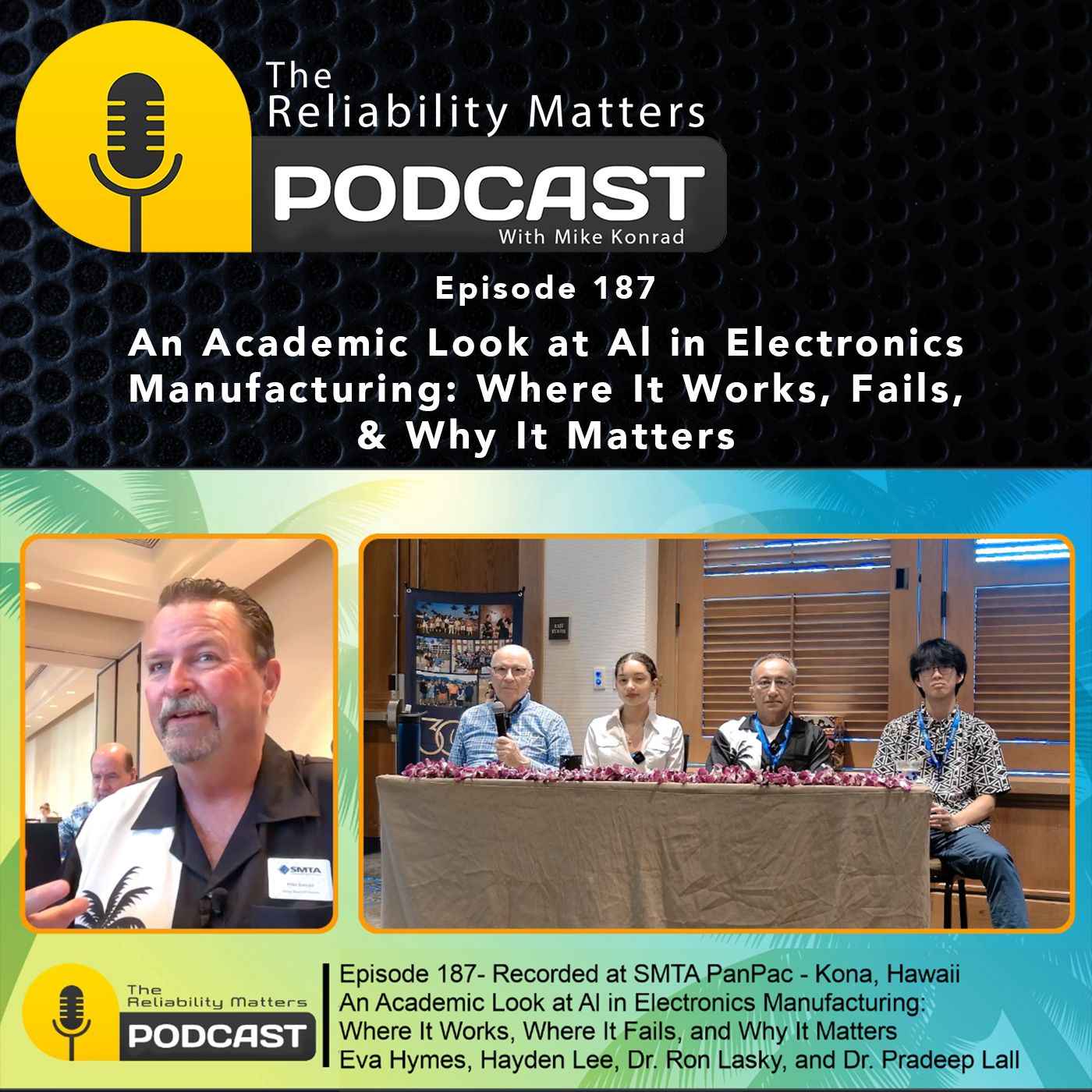
An Academic Look at Al in Electronics Manufacturing: Where It Works, Fails, & Why It Matters - # 187 episode artwork

EPISODE · Mar 10, 2026 · 53 MIN

An Academic Look at Al in Electronics Manufacturing: Where It Works, Fails, & Why It Matters - # 187

from Reliability Matters · host Mike Konrad

Artificial intelligence is being promoted as the next revolution in electronics manufacturing, but what happens when the people evaluating it aren’t traditional AI experts, aren’t software vendors, and aren’t selling anything? Today’s conversation brings together engineers and professors who live at the intersection of education, reliability, and real-world manufacturing to separate meaningful progress from speculation.Each episode brings together engineers, researchers, and industry leaders to examine best practices, emerging technologies, and real-world lessons, always with a focus on data, physics, Best practices, and long-term performance.Today’s episode is a little different—and the setting couldn’t be better. I’m recording live from the Big Island of Hawaii, in Kona, at the SMTA Pan Pacific Strategic Electronics Symposium, better known as PanPac.At PanPac, academia meets industry in a way that’s truly unique. Leading international universities join forces with CEOs, inventors, senior engineers, and decision-makers from around the world. This is where the brightest research collides with the most pressing industry challenges — and sparks solutions that drive the future of electronics. I’m honored to be the conference chair, especially on this 30th anniversary of PanPac.This episode is all about “AI in Action: Progress, Pitfalls, and the Future of Electronics.”Artificial intelligence is becoming a frequent topic in electronics manufacturing—from inspection and process optimization to predictive maintenance and reliability modeling. But rather than approaching this conversation from the standpoint of AI evangelists or software developers, we’re taking a different path.My panelists are: Eva Hymes, Hayden Lee, Dr. Ron Lasky, Dr. John Evans, and Dr. Pradeep Lall. None of today’s panelists claim to be AI experts. Instead, they are engineers and professors who sit at the intersection of education, engineering, and real-world manufacturing challenges. Their perspective is grounded in physics, data, reliability science, and decades of experience teaching the next generation of engineers—many of whom will be working alongside AI-driven tools whether they choose to or not.Because all of our panelists come from academia, this conversation intentionally steps back from hype and buzzwords. We’ll focus on how AI is actually being used, where it shows promise, where it introduces risk, and where critical gaps still exist—especially in high-reliability electronics manufacturing. And because PanPac serves the electronics manufacturing community, we’ll keep this discussion connected to the factory floor, workforce readiness, education, and long-term product reliability. We’ll also touch on broader societal questions, including how AI is shaping engineering education and professional intuition.So if you’re looking for a grounded, thoughtful discussion on AI—one rooted in engineering reality rather than marketing claims—this episode is for you.

Artificial intelligence is being promoted as the next revolution in electronics manufacturing, but what happens when the people evaluating it aren’t traditional AI experts, aren’t software vendors, and aren’t selling anything? Today’s conversation brings together engineers and professors who live at the intersection of education, reliability, and real-world manufacturing to separate meaningful progress from speculation.Each episode brings together engineers, researchers, and industry leaders to examine best practices, emerging technologies, and real-world lessons, always with a focus on data, physics, Best practices, and long-term performance.Today’s episode is a little different—and the setting couldn’t be better. I’m recording live from the Big Island of Hawaii, in Kona, at the SMTA Pan Pacific Strategic Electronics Symposium, better known as PanPac.At PanPac, academia meets industry in a way that’s truly unique. Leading international universities join forces with CEOs, inventors, senior engineers, and decision-makers from around the world. This is where the brightest research collides with the most pressing industry challenges — and sparks solutions that drive the future of electronics. I’m honored to be the conference chair, especially on this 30th anniversary of PanPac.This episode is all about “AI in Action: Progress, Pitfalls, and the Future of Electronics.”Artificial intelligence is becoming a frequent topic in electronics manufacturing—from inspection and process optimization to predictive maintenance and reliability modeling. But rather than approaching this conversation from the standpoint of AI evangelists or software developers, we’re taking a different path.My panelists are: Eva Hymes, Hayden Lee, Dr. Ron Lasky, Dr. John Evans, and Dr. Pradeep Lall. None of today’s panelists claim to be AI experts. Instead, they are engineers and professors who sit at the intersection of education, engineering, and real-world manufacturing challenges. Their perspective is grounded in physics, data, reliability science, and decades of experience teaching the next generation of engineers—many of whom will be working alongside AI-driven tools whether they choose to or not.Because all of our panelists come from academia, this conversation intentionally steps back from hype and buzzwords. We’ll focus on how AI is actually being used, where it shows promise, where it introduces risk, and where critical gaps still exist—especially in high-reliability electronics manufacturing. And because PanPac serves the electronics manufacturing community, we’ll keep this discussion connected to the factory floor, workforce readiness, education, and long-term product reliability. We’ll also touch on broader societal questions, including how AI is shaping engineering education and professional intuition.So if you’re looking for a grounded, thoughtful discussion on AI—one rooted in engineering reality rather than marketing claims—this episode is for you.

NOW PLAYING

An Academic Look at Al in Electronics Manufacturing: Where It Works, Fails, & Why It Matters - # 187

0:00 53:53

No transcript for this episode yet

We transcribe on demand. Request one and we'll notify you when it's ready — usually under 10 minutes.

Hyperfluent Hypio Hyperfluent transmits straight from the heart of Hyperliquid, where culture, creativity, and capital converge. Anchored by the architects of Hypio—the decentralized cultural virus—each episode archives the minds engineering the blockchain built to house all finance. These conversations are traceable artifacts in HyperEVM’s evolution: not just what’s being built, but why it matters, how it mutates, and where it’s taking us next. Listen in for the blueprints, the blind spots, and the narrative weapons shaping tomorrow’s markets.Hyperfluent: learn the language, ride the wave, spread the strain. Mobile Money by moomoo Mobile Money by moomoo Hear from seasoned traders, financial influencers, and industry insiders as they discuss money matters and market news and share their personal finance stories.Disclaimers: https://www.moomoo.com/us/support/topic4_523 Somali Motivation podcast Istahil Aideed At the heart of the Somali Motivation Podcast lies a profound mission: to uplift, inspire, and catalyze personal growth in the lives of our listeners. With a steadfast dedication to mental health awareness and domestic abuse awareness, our podcast embraces vulnerability, encourages healing, and fosters resilience within the Somali community and beyond. Through heartfelt conversations, expert insights, and shared experiences, we create a warm and welcoming space where every voice matters. Join our transformative journey as we embark on a quest to empower our community, spark meaningful change, and weave a tapestry of hope and strength. Together, we can make a difference, one episode at a time. The Up and to the Right | Small Business | Practical, Actionable, Sustainable Improvements beyond50percent Welcome to Up and to the Right, the no-nonsense podcast where we blend your passion with proven business principles and practical tips, empowering you to create the impact and success you envision.Hosted by Stephen Krausse, the show covers what matters to small business owners, startups, and people interested in becoming entrepreneurs. No buzzwords and no hyped-up trends!A graduate of Colorado State University's College of Business, Stephen has an academic background that compliments over 25 years of business operations and management experience. He started his first business as a freshman in college in 1987, recording and producing demo tapes for local bands. Since that time, he’s been involved with numerous successful small businesses, including the operation and management of a niche high-tech company with customers and suppliers worldwide.As a business professional by education and trade, he works with select business owners to blend their passion with proven principles, givi

Frequently Asked Questions

How long is this episode of Reliability Matters?

This episode is 53 minutes long.

When was this Reliability Matters episode published?

This episode was published on March 10, 2026.

What is this episode about?

Artificial intelligence is being promoted as the next revolution in electronics manufacturing, but what happens when the people evaluating it aren’t traditional AI experts, aren’t software vendors, and aren’t selling anything? Today’s conversation...

Can I download this Reliability Matters episode?

Yes, you can download this episode by clicking the download button on the episode player, or subscribe to the podcast in your preferred podcast app for automatic downloads.
URL copied to clipboard!