
EPISODE · Jan 17, 2026 · 48 MIN
AN ARTIFICIAL HISTORY OF NATURAL INTELLIGENCE: Time travelling the mind.
from BRAINLAND
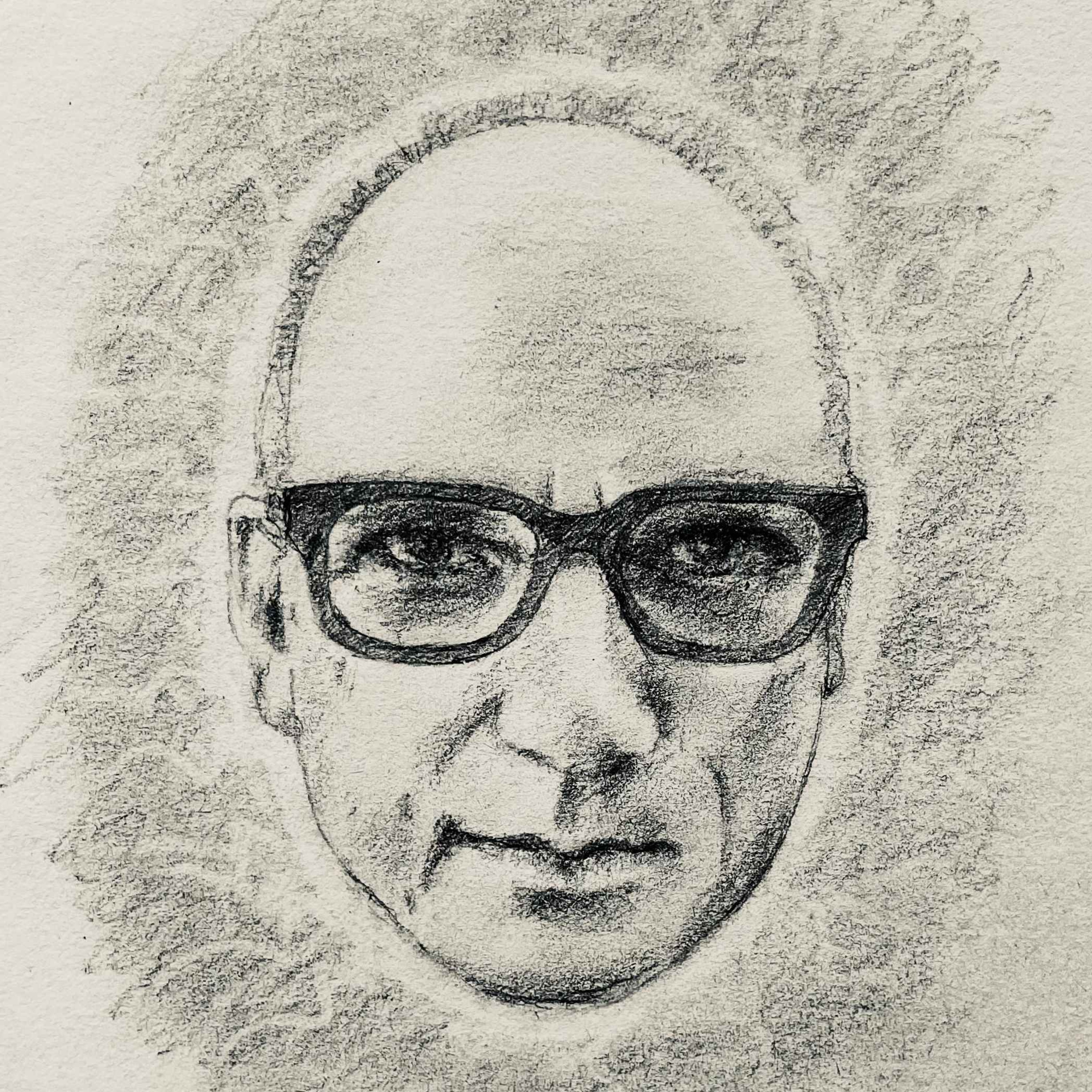
In this episode David Bates discusses his recent book An Artificial History of Natural Intelligence: Thinking with machines from Decartes to the digital age', a masterly survey of the history of intelligence and its aids. The book is the summation of 20 years of scholarship, a kind of time travel of the mind, and the range of topics we cherry-pick include the influence of automata on Descartes's thinking and pocket watches on Kant's, Spinoza's 'bloodworms', Peirce's hypothesis as 'emergency thought', Hughling Jackson on the brain as a continuously evolving organ, the origin of the notion of brain plasticity, Wolfgang' Köher's chimps and Alan Turing's 'spiritual machines'. Lyotard wrote that 'technology wasn't invented by us. Rather the other way round'. Discuss....or just have a listen.Participants:David W. Bates, Professor, Department of Rhetoric, University of California, Berkeley https://vcresearch.berkeley.edu/faculty/david-batesKen Barrett, visual artist, writer and retired neuropsychiatrist: http://www.kenbarrettstudio.co.ukDavid's book: An Artificial History of Natural Intelligence: https://press.uchicago.edu/ucp/books/book/chicago/A/bo212878817.htmlOpening music: Prelude to the opera Brainland, composed by Stephen Brown. Brainland the opera website: www.brainlandtheopera.co.ukPortrait sketch by KB Hosted on Acast. See acast.com/privacy for more information.
What this episode covers
In this episode David Bates discusses his recent book An Artificial History of Natural Intelligence: Thinking with machines from Decartes to the digital age', a masterly survey of the history of intelligence and its aids. The book is the summation of 20 years of scholarship, a kind of time travel of the mind, and the range of topics we cherry-pick include the influence of automata on Descartes's thinking and pocket watches on Kant's, Spinoza's 'bloodworms', Peirce's hypothesis as 'emergency thought', Hughling Jackson on the brain as a continuously evolving organ, the origin of the notion of brain plasticity, Wolfgang' Köher's chimps and Alan Turing's 'spiritual machines'. Lyotard wrote that 'technology wasn't invented by us. Rather the other way round'. Discuss....or just have a listen.Participants:David W. Bates, Professor, Department of Rhetoric, University of California, Berkeley https://vcresearch.berkeley.edu/faculty/david-batesKen Barrett, visual artist, writer and retired neuropsychiatrist: http://www.kenbarrettstudio.co.ukDavid's book: An Artificial History of Natural Intelligence: https://press.uchicago.edu/ucp/books/book/chicago/A/bo212878817.htmlOpening music: Prelude to the opera Brainland, composed by Stephen Brown. Brainland the opera website: www.brainlandtheopera.co.ukPortrait sketch by KB Hosted on Acast. See acast.com/privacy for more information.
NOW PLAYING
AN ARTIFICIAL HISTORY OF NATURAL INTELLIGENCE: Time travelling the mind.
No transcript for this episode yet
Similar Episodes
No similar episodes found.
Similar Podcasts
No similar podcasts found.